
HR Tech SaaS may earn a commission when you buy through links on this page. Our recommendations are editorial and never paid for.
- Beqom handles complex, global compensation programs well, but its implementation overhead and enterprise price point make it hard to justify for many organizations.
- Several alternatives match Beqom on merit cycle management, pay equity, and incentive modeling without requiring a six-month deployment.
- The right alternative depends on whether you need a dedicated comp platform, a comp module inside a broader HRIS, or something that sits between the two.
- CaptivateIQ, Aeqium, and Compport are the most credible purpose-built alternatives for mid-market and enterprise teams that want configuration without consulting fees.
- If you are already on SAP, Workday, or Oracle, their native comp modules deserve a fair evaluation before you add a standalone vendor.
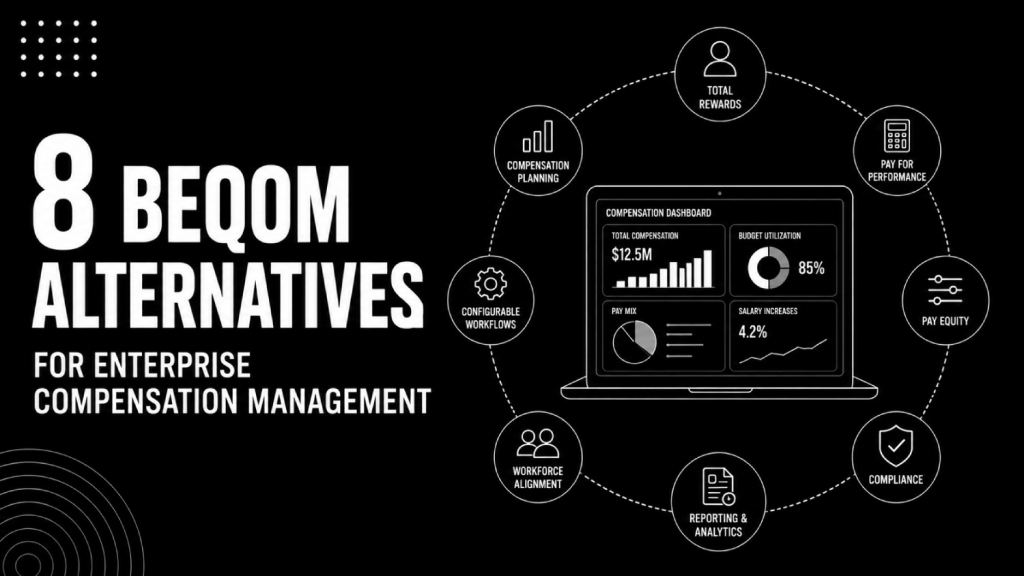
The best Beqom alternatives for enterprise compensation management are CaptivateIQ, Aeqium, Compport, HRSoft, Payscale Ascent, SAP SuccessFactors, Pave, and CompAnalyst. Each covers merit cycle management, bonus planning, and pay equity analysis, though they differ sharply on configurability, HRIS integration depth, and total cost of ownership. The right choice depends on your headcount, your existing HCM stack, and how complex your incentive structures actually are.
Why Are Enterprise Comp Teams Looking for Beqom Alternatives?
Beqom is a legitimate enterprise comp platform. It handles global incentive plans, complex sales compensation, and pay equity workflows that simpler tools cannot. The issue is not capability. The issue is that most organizations do not need everything Beqom offers, and they pay for it whether they use it or not.
Implementation timelines stretch into months. Admin complexity is high. And when your comp team needs to make a mid-cycle change, getting it done without involving IT or an implementation partner is harder than it should be. For organizations running straightforward merit cycles with some bonus planning, the overhead-to-value ratio does not hold up.
A secondary driver: pay transparency legislation in the US, UK, and EU is forcing comp teams to move faster on equity analysis and salary banding. Tools that can turn those workflows around in days rather than weeks matter now in ways they did not three years ago. Several newer alternatives were built specifically for this environment. Beqom was not.
How to Evaluate a Beqom Alternative Before Shortlisting
Before running through the list, get clear on three things that will eliminate half the options immediately.
First, what is your actual comp complexity? Sales incentive compensation with multi-tier commission rules is a different problem than merit and bonus planning for a 2,000-person company. Most organizations overestimate their comp complexity and end up paying for configurability they never touch.
Second, what does your HRIS integration need to look like? A standalone comp platform that cannot sync bidirectionally with Workday, SAP, or Oracle in real time will create data reconciliation work every cycle. That hidden cost compounds annually.
Third, who administers the tool? Comp platforms designed for HRIS admins and those designed for comp professionals are meaningfully different. A tool that requires SQL-level logic to maintain is not a good fit for a two-person total rewards team.
These three questions will tell you whether you need a dedicated comp platform, a HCM-native module, or a lighter mid-market tool. The vendors below are organized accordingly. For a broader evaluation framework, the HR software buying checklist covering HRIS, payroll, and HCM platforms covers the vendor due diligence questions worth running on any shortlisted vendor.
| Vendor | Best For | HRIS Integrations | Merit Planning | Pay Equity | Pricing Model |
|---|---|---|---|---|---|
| CaptivateIQ | Sales comp + merit | Workday, SAP, Salesforce | Yes | Limited | Quote-only |
| Aeqium | Mid-market merit cycles | Workday, BambooHR, HiBob | Yes | Yes | Quote-only |
| Compport | Enterprise merit + LTI | Workday, SAP, Oracle | Yes | Yes | Quote-only |
| HRSoft | Large enterprise, US-heavy | Workday, SAP, ADP | Yes | Yes | Quote-only |
| Payscale Ascent | Market data + comp planning | Workday, SAP, Oracle | Yes | Yes | Quote-only |
| SAP SuccessFactors | SAP shops, global enterprise | Native SAP | Yes | Yes | Per-user, quote-only |
| Pave | High-growth tech companies | Workday, BambooHR, Rippling | Yes | Yes | Quote-only |
| CompAnalyst | Market pricing + pay equity | Multiple HCMs | Yes | Yes | Quote-only |
CaptivateIQ: Best for Organizations Combining Sales Comp and Merit Planning
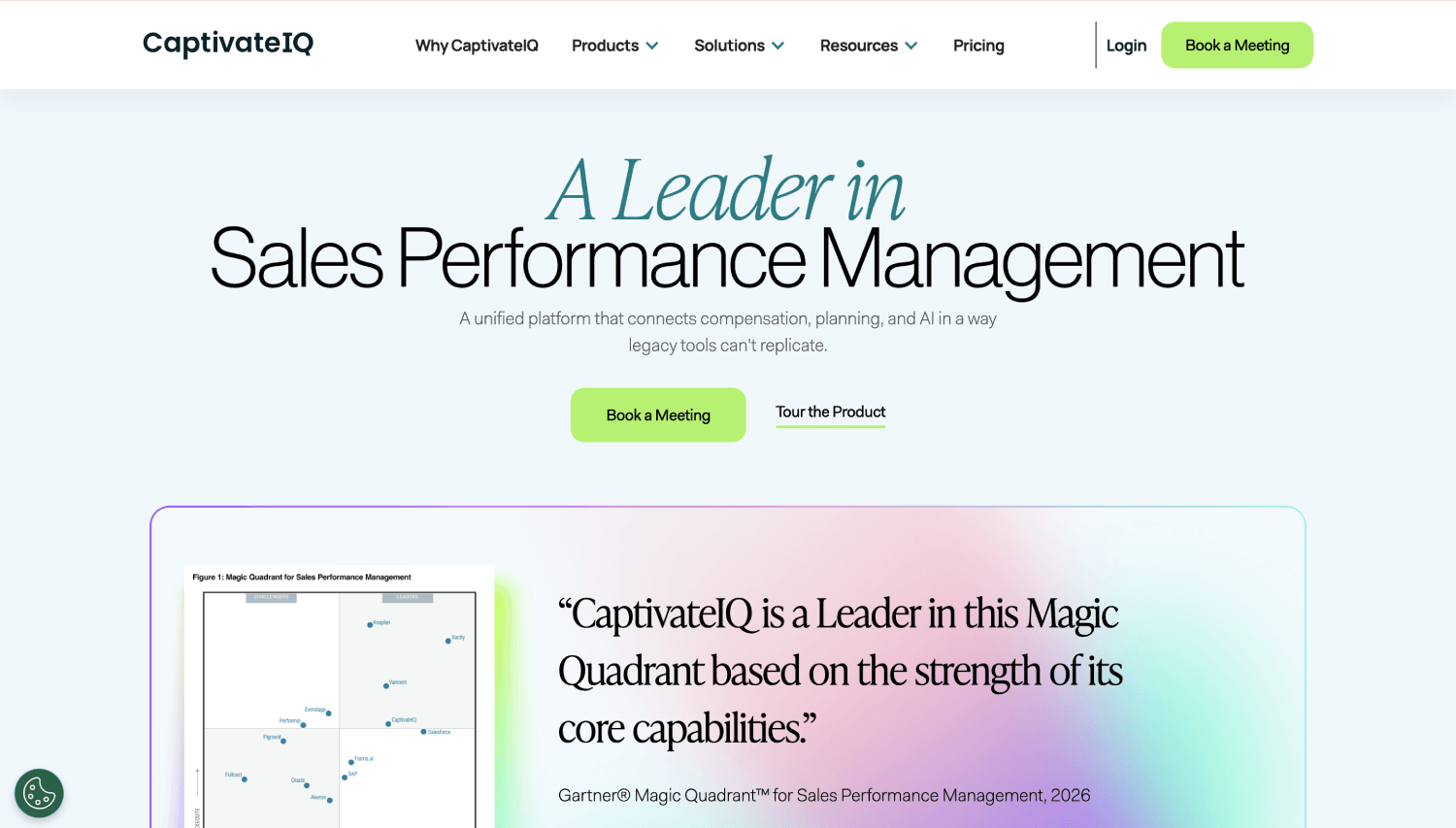
CaptivateIQ built its reputation on sales incentive compensation, specifically the problem of replacing error-prone spreadsheet commission calculations with a live, auditable model. That core strength carries over into its broader compensation suite, which now covers merit cycles, bonuses, and equity.
The platform’s standout feature is its spreadsheet-like formula interface. Comp administrators who know Excel can configure commission plans and merit matrices without writing code or relying on professional services. That is a genuine differentiator compared to Beqom, where configuration changes typically require vendor involvement.
Where CaptivateIQ is weaker: pay equity analytics are not as deep as dedicated equity tools, and organizations with no sales compensation complexity are paying for architecture they do not need. It integrates with Workday, Salesforce, and SAP SuccessFactors, so the data pipeline works if you are on standard stacks. Pricing is quote-only.
Aeqium: Best Purpose-Built Merit Planning Tool for Mid-Market Enterprise
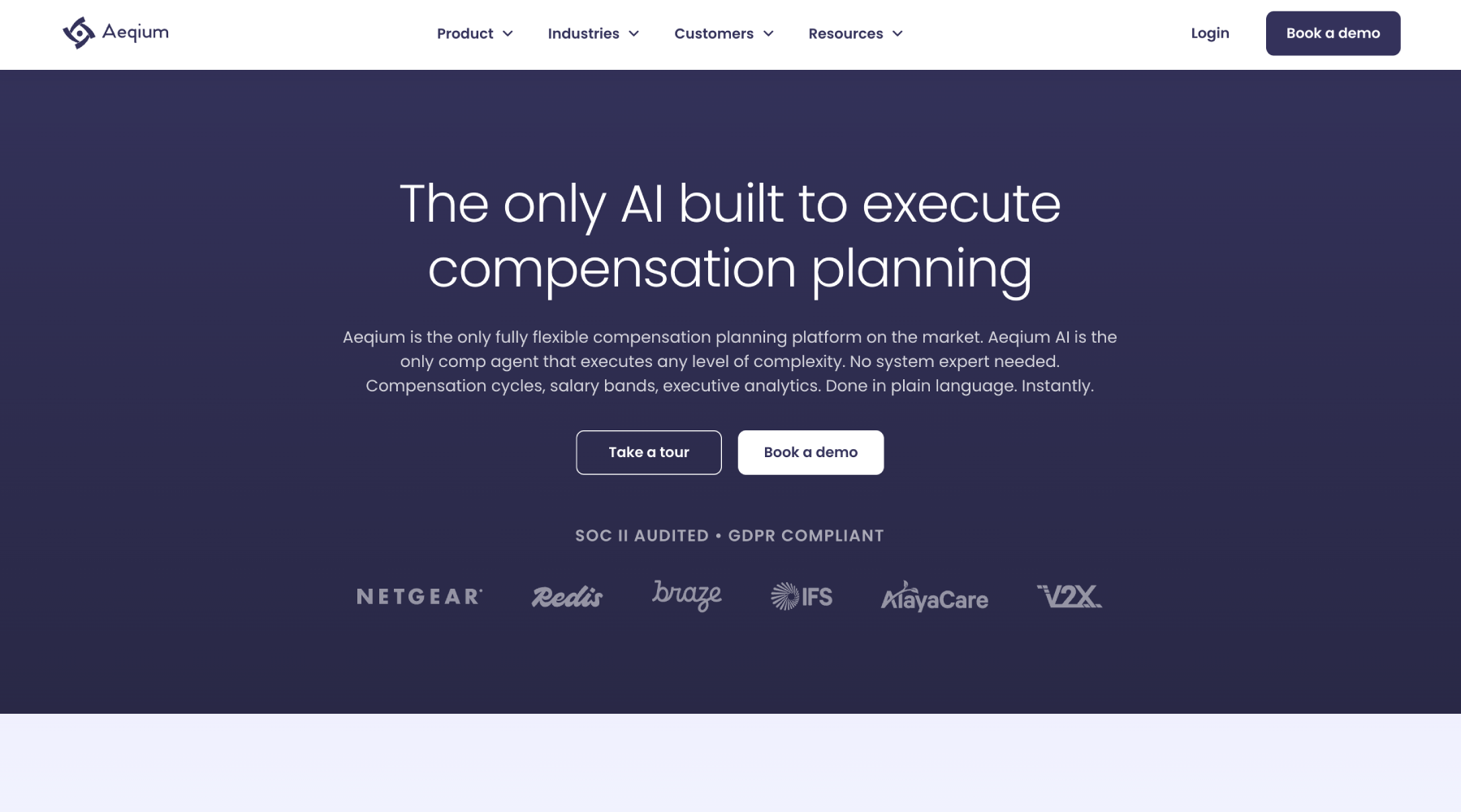
Aeqium is the most comp-professional-friendly tool on this list. It was designed for the people who run merit and bonus cycles, not for HRIS admins or IT teams. The configuration model reflects that: comp leaders can build out merit matrices, budget pools, and manager worksheets without tickets to an implementation team.
The merit cycle workflow is clean. Budget allocation, manager review, approval routing, and final export to payroll all live in one place. Aeqium integrates with Workday, BambooHR, HiBob, and several other HRIS platforms through pre-built connectors, which shortens the data setup work considerably.
Pay equity reporting is included, which matters given current pay transparency mandates. Aeqium appears consistently in independent comparison lists for Beqom alternatives, including ranking in the top results on G2 and similar review platforms. The main limitation is that it is not the right tool for highly complex variable pay or long-term incentive plans. If your comp program is merit plus annual bonus with some equity grants, Aeqium likely covers it. If you are running tiered sales commissions or LTIP modeling, look elsewhere.
Compport: Best Enterprise Alternative With LTI and Flexible Workflows
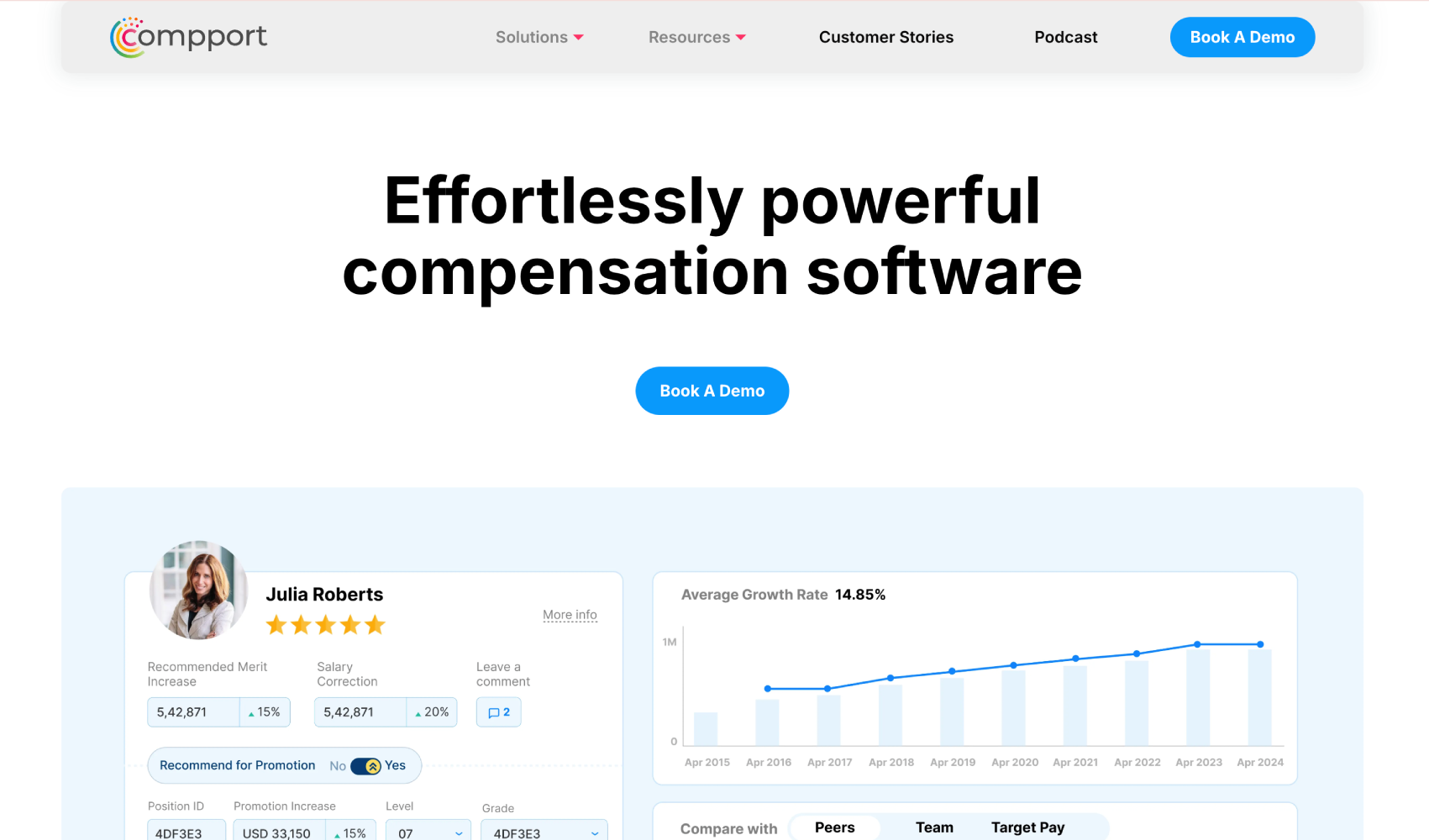
Compport is a dedicated compensation management platform built for enterprise organizations that need to handle merit, short-term incentives, and long-term incentive plans in a single tool. It covers variable pay modeling, total rewards statements, and pay equity analysis, which puts its feature set closer to Beqom’s than most alternatives on this list.
The configuration model is more flexible than Beqom’s for many use cases. Workflow customization, approval chains, and budget modeling can be adjusted by comp administrators rather than requiring vendor-side changes. Compport integrates with Workday, SAP SuccessFactors, and Oracle HCM, and it surfaces frequently in independent Beqom competitor roundups.
One honest note: Compport is newer and less established than Beqom. Reference checks matter here. Ask prospective references specifically about post-go-live support quality and how the vendor handles cycle-over-cycle configuration changes. Pricing is quote-only.
HRSoft: Best for Large US Enterprises Running Complex Merit Cycles
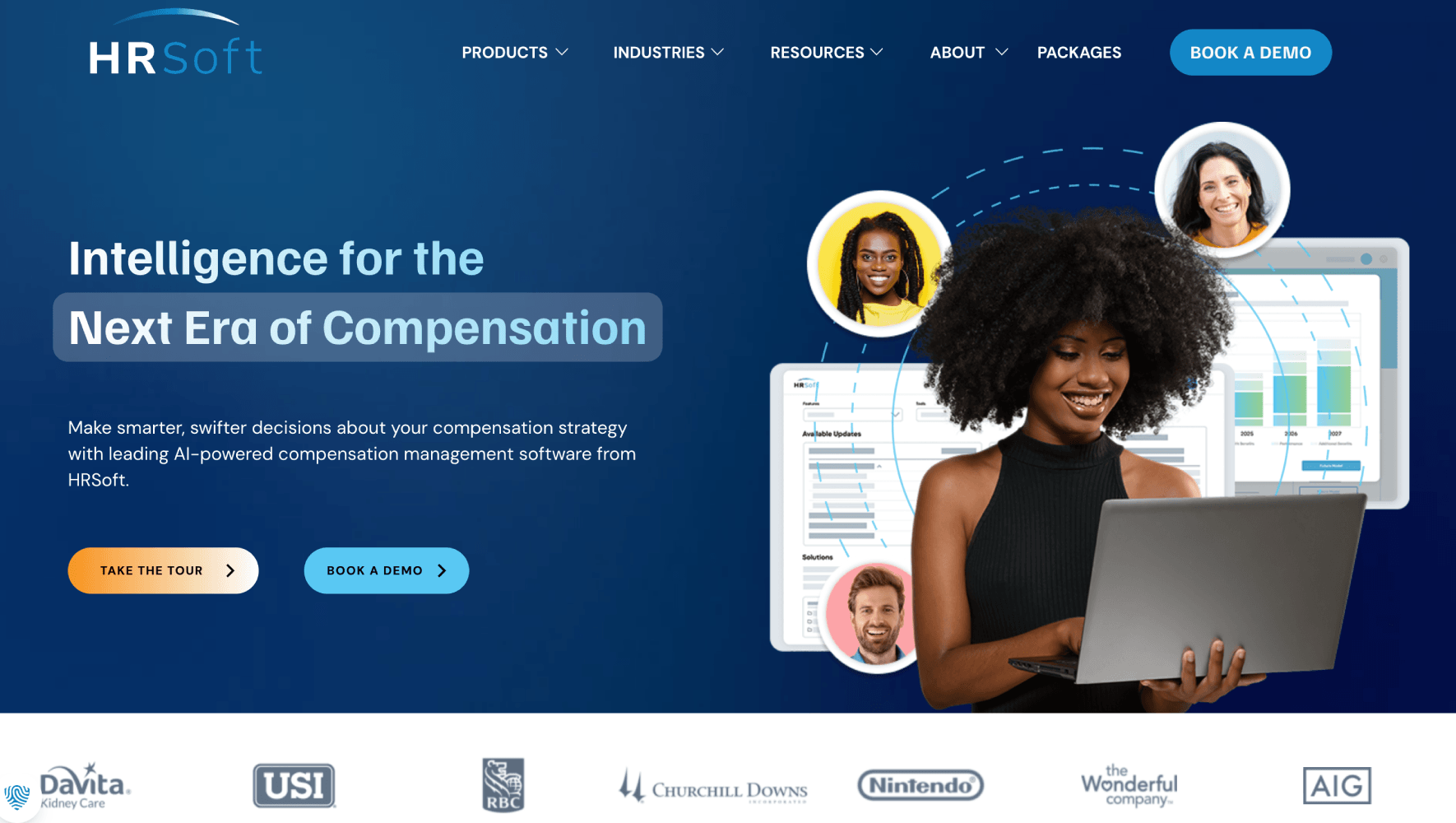
HRSoft (formerly CompXL) has been in the enterprise compensation space long enough to have handled most of the edge cases large organizations encounter. It covers merit planning, bonus modeling, sales comp, and equity, with a focus on organizations that have complex approval hierarchies and multi-country comp structures.
HRSoft integrates with Workday, SAP SuccessFactors, Oracle, and ADP. The integration list is one of its genuine strengths compared to newer entrants. Implementation is not lightweight, but the documentation and configuration model are more comp-admin-friendly than Beqom’s in practice.
The platform appears in multiple independent comparison rankings for Beqom compensation management alternatives. It is not the right choice for organizations that need a fast deployment or a low-overhead toolset. For large enterprises with dedicated total rewards teams and complex multi-region programs, HRSoft deserves to be on the shortlist.
Payscale Ascent: Best When Market Data and Comp Planning Must Connect
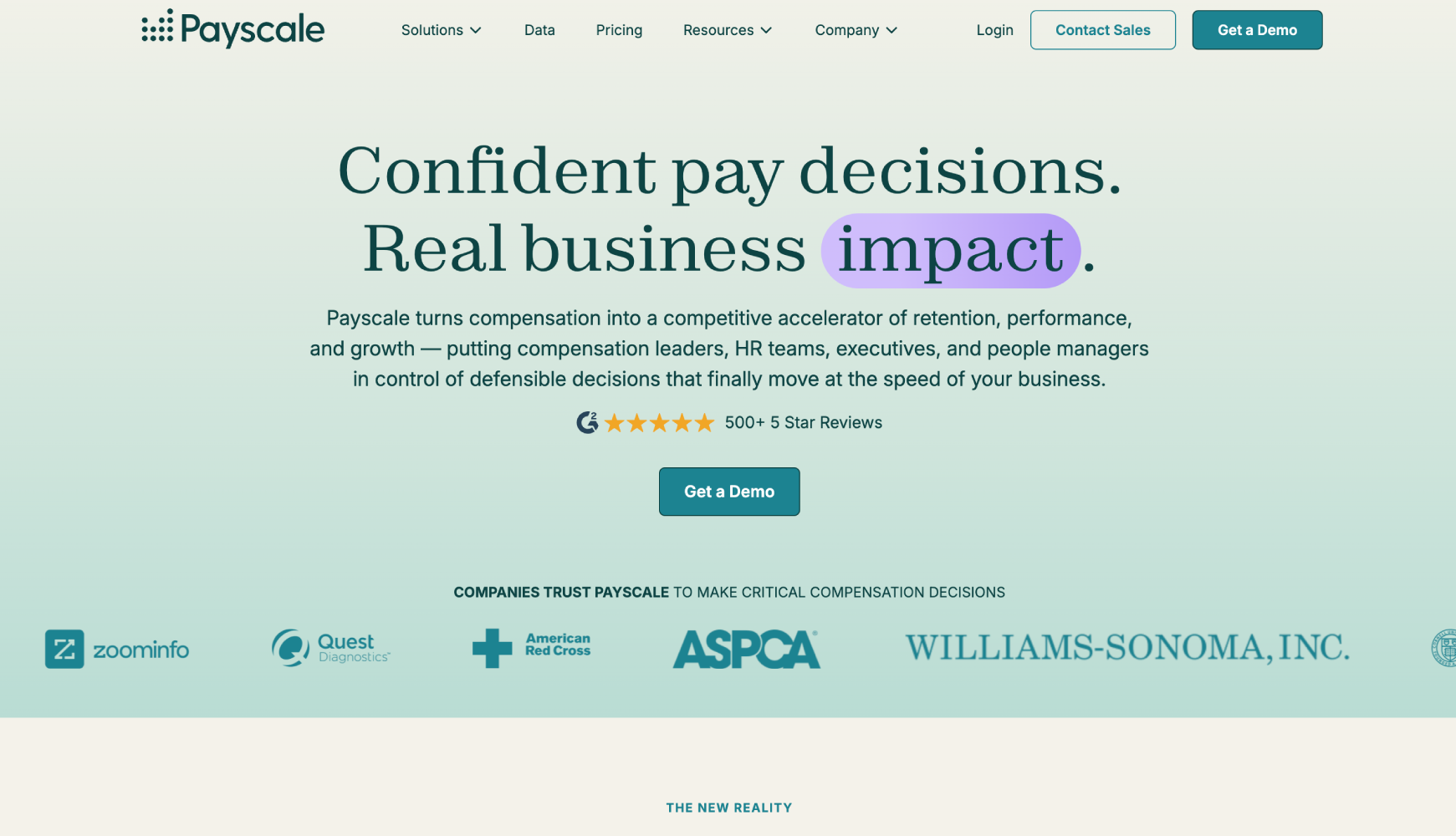
Payscale Ascent combines compensation management with Payscale’s market pricing data, which is the real differentiator. Most comp platforms require you to import salary survey data from a separate source and map it manually. Payscale Ascent embeds that data natively into the planning workflow.
For organizations that are actively building or rebuilding salary bands, the combination of market benchmarking and merit planning in one tool saves meaningful time. Pay equity analysis uses the same data foundation, which keeps inputs consistent across the comp review cycle.
Payscale Ascent integrates with Workday, SAP SuccessFactors, and Oracle, and it appears in the top results for Beqom alternatives across multiple review platforms. The trade-off is depth: for organizations with highly complex incentive structures or global LTI programs, Ascent’s functionality is more constrained than Beqom or Compport. Pricing is quote-only. If you want a broader look at how compensation software connects to performance management workflows, the comparison of compensation management software that integrates with performance data covers several adjacent platforms.
SAP SuccessFactors Compensation: Best for Organizations Already on SAP
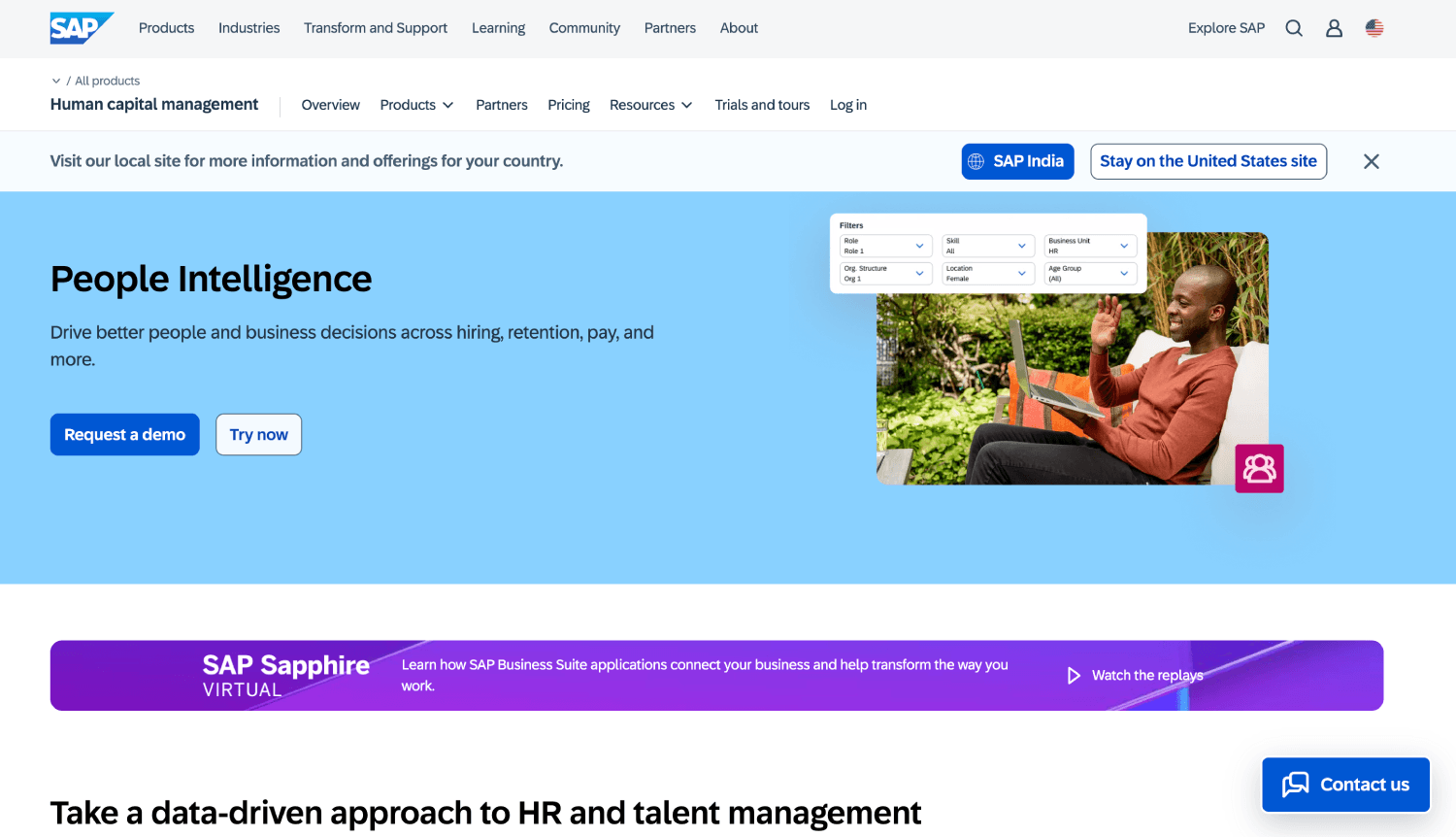
SAP SuccessFactors Compensation is not always the most exciting option, but for organizations running SAP HCM or SuccessFactors as their system of record, the integration case is compelling. Employee data, org structure, and compensation data share a single source of truth, which eliminates the sync errors that plague standalone comp tools connecting via API.
The module covers merit planning, bonus management, and pay equity analytics. Global configuration is strong given SAP’s enterprise heritage, and the approval workflow engine handles complex hierarchies without custom development. SAP’s AI features under the Joule umbrella are developing, though comp-specific AI capabilities are still maturing relative to dedicated vendors.
The honest downside: SuccessFactors Compensation is slower to configure than purpose-built platforms, and the user interface reflects enterprise software designed before mobile-first UX became standard. Admins familiar with SAP can work with it. Users who are not will need training. If you are curious how SAP’s broader AI stack compares to Workday and Oracle in the HCM context, the Workday AI vs SAP Joule vs Oracle AI comparison covers those trade-offs in detail. Pricing is per-user and quote-only.
Pave: Best for High-Growth Tech Companies Focused on Total Compensation Transparency
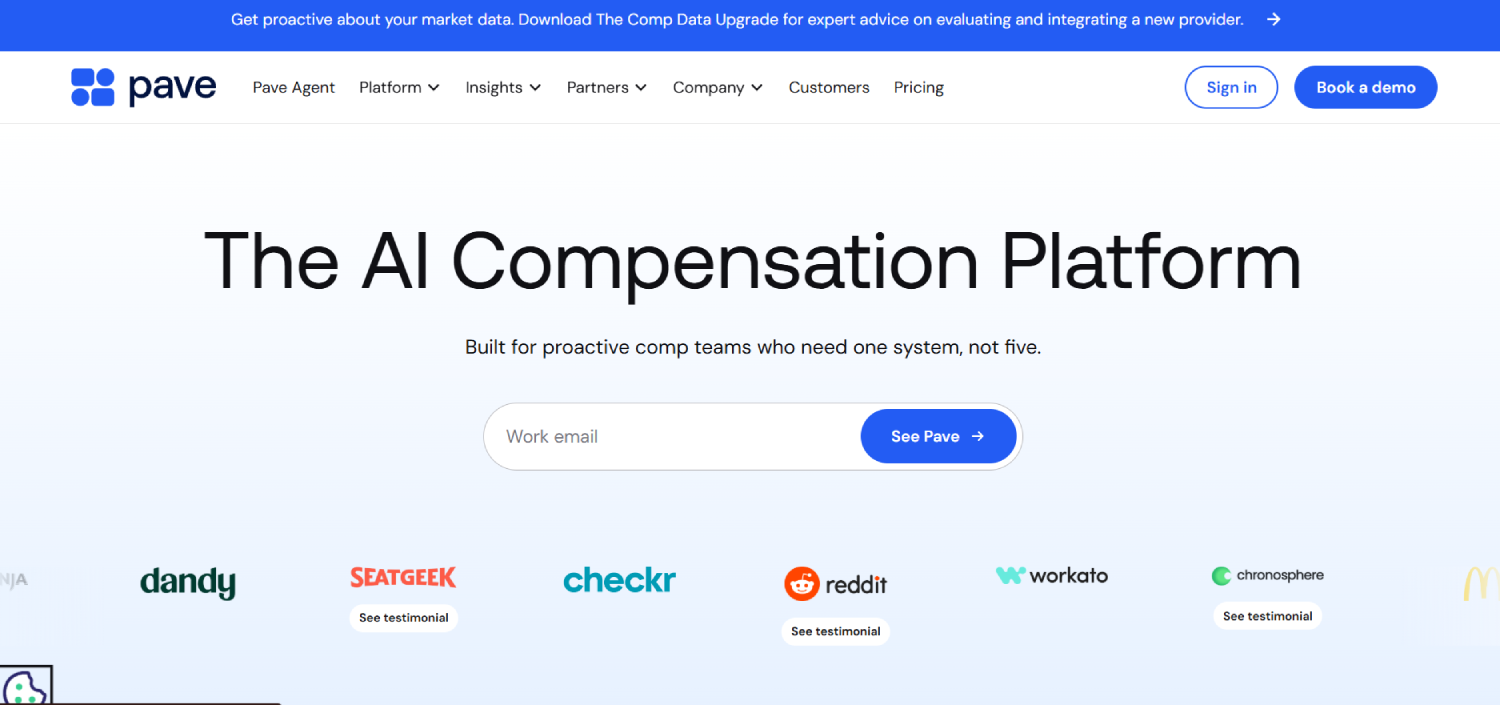
Pave was built for technology companies that pay in a mix of cash and equity and need to communicate total compensation clearly to employees and candidates. Its real-time compensation benchmarking pulls from a network of companies that share compensation data through the platform, and it feeds directly into merit and offer workflows.
The total rewards statement functionality is one of the cleanest on the market. Employees can see the value of their full package, including unvested equity, in a format that actually communicates. That matters for retention in equity-heavy compensation programs where cash-to-market gap is a real flight risk.
Pave integrates with Workday, BambooHR, Rippling, and several other HRIS platforms. It is not the right tool for complex manufacturing or non-tech organizations with traditional merit-only programs. For high-growth tech companies between 200 and 2,000 employees, Pave is genuinely worth evaluating. Pricing is quote-only. For context on how compensation connects to performance calibration workflows at this company stage, the performance calibration software comparison for mid-market teams covers complementary platforms.
CompAnalyst by Salary.com: Best for Organizations Prioritizing Pay Equity and Regulatory Compliance
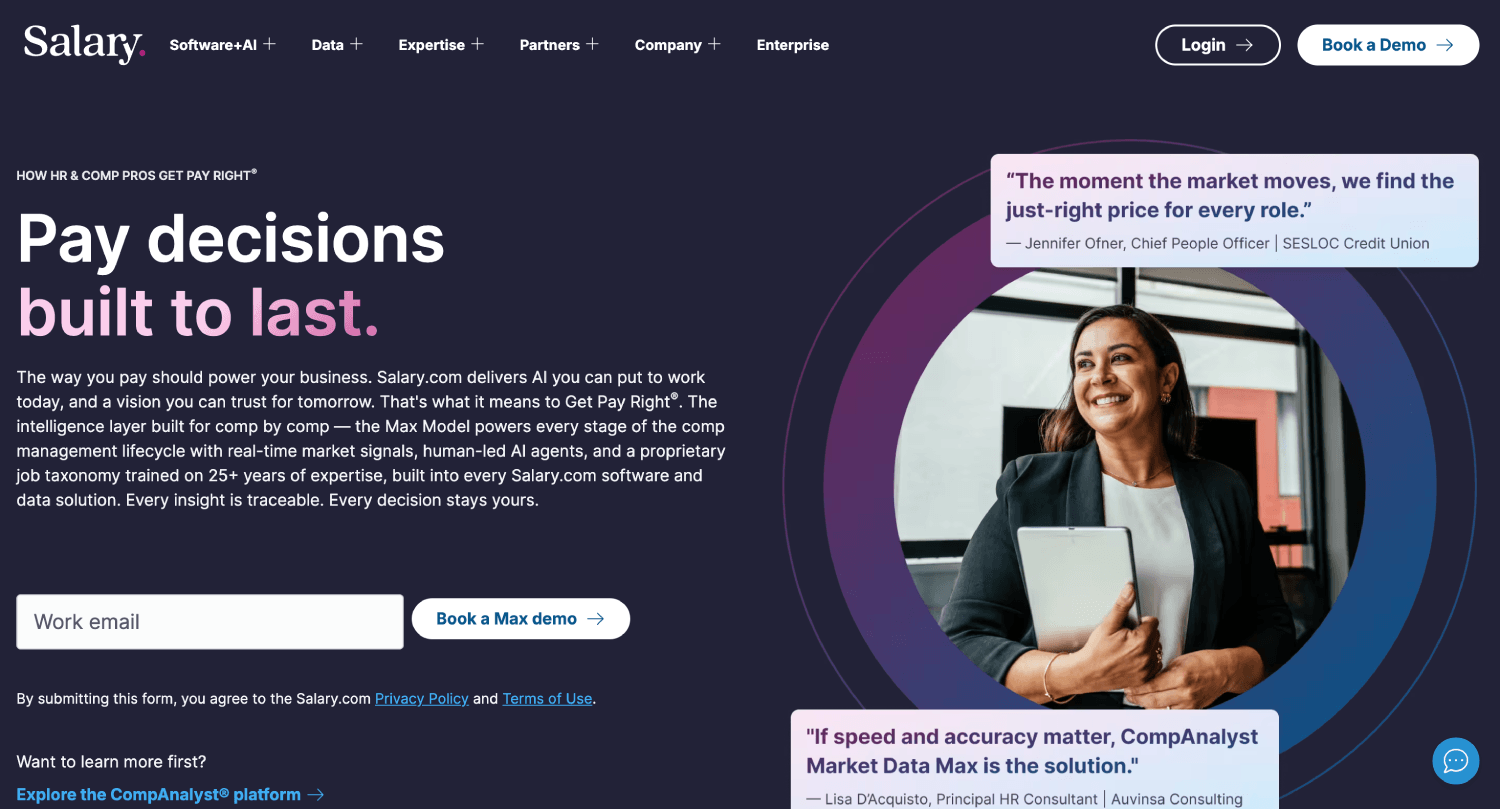
CompAnalyst, built on Salary.com’s compensation data foundation, focuses on market pricing, pay equity analysis, and comp planning in a unified workflow. The market data library is one of the larger ones in the category, covering a wide range of job families, industries, and geographies.
Pay equity reporting is a core use case, not an afterthought. For organizations facing state-level pay transparency requirements or EU pay equity directives, CompAnalyst provides the audit-ready reporting structure that compliance teams need. Job architecture and salary band management sit alongside the planning workflow, which keeps comp structures current rather than stale between cycle reviews.
Salary.com does not publish public pricing for CompAnalyst. Expect quote-based pricing tied to headcount and module selection. Implementation is less complex than Beqom for most organizations, which shortens the time to first productive merit cycle. If your primary driver for switching from Beqom is pay equity compliance rather than merit cycle efficiency, CompAnalyst should rank near the top of your shortlist. The compensation benchmarking tools comparison for US mid-market companies covers Salary.com’s benchmarking products alongside other market data options.
Which Beqom Alternative Should You Actually Choose?
Start by eliminating options based on what your comp program actually looks like, not what you think it might need in three years. Most enterprise comp programs are merit plus bonus plus equity grants. A tool like Aeqium, Compport, or Payscale Ascent covers that fully. Adding Beqom-level complexity to a program that does not require it creates admin debt that compounds every cycle.
If sales incentive compensation is a meaningful part of your comp footprint, CaptivateIQ earns serious evaluation. If you are already on SAP, start with SuccessFactors Compensation before adding a vendor integration to your stack. If total compensation transparency and benchmarking data are the primary gaps, Pave or CompAnalyst solves both problems without requiring a full comp platform replacement.
| If Your Primary Need Is… | Start With |
|---|---|
| Replacing Beqom with lower admin overhead | Aeqium or Compport |
| Sales comp plus merit planning in one tool | CaptivateIQ |
| Market data embedded in comp planning | Payscale Ascent or CompAnalyst |
| Already running SAP HCM | SAP SuccessFactors Compensation |
| High-growth tech, equity-heavy comp | Pave |
| Large US enterprise, complex approval hierarchies | HRSoft |
| Pay equity compliance as primary driver | CompAnalyst |
Frequently Asked Questions About Beqom Alternatives
What is Beqom used for in enterprise compensation management?
Beqom is a dedicated compensation management platform used by large enterprises to manage merit planning, bonus programs, sales incentive compensation, long-term incentive plans, and pay equity analysis. It supports global, multi-currency compensation programs and integrates with major HCM platforms including Workday and SAP SuccessFactors. Its primary use case is organizations with complex, multi-component compensation structures that require a dedicated system outside the native HCM module.
Which Beqom alternatives are best for merit planning specifically?
Aeqium and Compport are the strongest dedicated alternatives for merit cycle management. Both offer merit matrix configuration, manager worksheets, budget pool management, and approval routing without the implementation overhead of Beqom. Payscale Ascent adds integrated market benchmarking to the same workflow. For organizations on SAP, SuccessFactors Compensation handles merit natively without adding a separate vendor. CaptivateIQ covers merit but is primarily worth evaluating if sales compensation is also in scope.
How much do Beqom alternatives cost?
Every major Beqom alternative on this list uses quote-based pricing tied to headcount and module selection. No vendor publicly discloses per-seat rates. Salary.com’s CompAnalyst, Payscale Ascent, CaptivateIQ, Aeqium, Compport, HRSoft, and Pave all require direct conversations with sales to get pricing. As a general rule, dedicated comp platforms at enterprise scale carry meaningful annual contract values, and implementation costs are separate from license fees. Request all-in total cost of ownership from any vendor, not just license fees.
Can I replace Beqom with a native Workday or SAP module?
For many organizations, yes. Workday Compensation and SAP SuccessFactors Compensation both cover merit, bonus, and equity planning for organizations that have not exhausted those modules’ capabilities. The argument for replacing a Beqom standalone with the native HCM module is integration simplicity and reduced vendor complexity. The argument against is that native modules tend to lag purpose-built platforms on user experience and configurability for comp-specific workflows. Organizations with complex LTI or sales incentive programs are more likely to need a dedicated platform.
Is Beqom worth the cost for mid-market enterprise companies under 2,000 employees?
For most organizations under 2,000 employees, Beqom’s cost and implementation complexity do not match the program requirements. Alternatives like Aeqium, Pave, or Payscale Ascent were designed for organizations in this range and handle standard merit and bonus planning with significantly less overhead. Beqom makes more sense when you have a dedicated total rewards team, complex multi-country incentive structures, or sales compensation that requires advanced modeling. Below that complexity threshold, you are paying for capability you will not use.
What integrations should I check before selecting a Beqom alternative?
Check bidirectional sync with your HRIS first. An API that pulls employee data but cannot push comp decisions back in real time creates manual reconciliation work every cycle. Specifically verify: Workday, SAP SuccessFactors, Oracle HCM, or whatever your system of record is. Then check payroll integration. Comp approvals that require manual export to payroll introduce errors at the most consequential moment in the process. Finally, check whether ATS data feeds into the tool for offer management workflows if that is part of your scope.
How long does it take to implement a Beqom alternative?
Implementation timelines vary significantly. Lighter tools like Aeqium and Pave can reach first productive merit cycle in six to twelve weeks for organizations with clean HRIS data. More complex platforms like HRSoft or Compport, particularly for global implementations, run three to six months. SAP SuccessFactors Compensation timeline depends heavily on your existing SAP configuration. The fastest implementations happen when HRIS data is clean, job architecture is defined before kickoff, and internal ownership is dedicated rather than split across teams. The HR software implementation checklist covering data migration and integrations covers the pre-work that most teams underestimate.
What Should Drive Your Final Decision?
The common mistake in this evaluation is treating it as a features comparison. Every platform on this list covers merit planning. The differentiating factors are implementation speed, administrator experience, integration depth with your specific HRIS, and whether the vendor’s support model matches your team’s capacity to manage the tool post-go-live. A comp platform that requires vendor involvement for every workflow change is not a replacement for Beqom. It is a replication of the same problem with a different logo.
Run a structured pilot before signing. The merit cycle or bonus cycle is the real test, not a demo environment with clean data. Ask each shortlisted vendor to configure a realistic scenario from your actual program, with your integration, your approval hierarchy, and your budget logic. The gaps will appear immediately.
Switching compensation platforms is genuinely disruptive to your cycle calendar if you do it mid-cycle. The organizations that switch successfully commit to a go-live date tied to the start of a new cycle, invest in data cleanup before kickoff, and define internal ownership of the tool before implementation begins. Those three decisions matter more than which vendor you pick from this list.