
- Most employees believe their total compensation is just their salary. They are wrong by tens of thousands of dollars, and nobody is telling them.
- Total rewards statement software pulls data from your HRIS, payroll, and benefits systems and shows each employee the full picture: base pay, employer-paid benefits, retirement contributions, equity, perks, and more.
- The perception gap between what employers spend and what employees think they earn is a retention problem disguised as a pay problem. Closing it costs a fraction of what a raise does.
- The nine platforms below range from standalone statement tools to modules inside larger HCM suites, with meaningful differences in HRIS connectivity, personalization depth, and delivery method.
- Most platforms in this category are quote-based. Purpose-built standalone tools tend to sit at the more accessible end of mid-market HR software pricing , comparable to other point solutions in the compensation and benefits space , while suite-bundled options are priced at the full platform level. See the HR software pricing guide for a framework to benchmark these costs before entering vendor conversations.
The best total rewards statement software pulls compensation, benefits, retirement, equity, and perks data from your existing HR systems and generates a personalized statement each employee can actually access and understand. The top platforms include TotalRewards.io (now part of Benify), Reward Gateway, Trusaic, Payscale, CompTrak, HRSoft, Selerix BenSelect, PlanSource, and Bswift, each suited to different company sizes and HRIS environments.
Why Do Employees Systematically Undervalue Their Compensation?
Ask a software engineer what they earn. They will say $140,000. They are probably not counting the health insurance premiums their employer pays on their behalf, the employer 401(k) match, the life and disability coverage, or the learning and development budget , costs that, in aggregate, routinely add $20,000 to $40,000 or more to the true employer cost of a mid-market exempt employee. Their real cost to the company may be closer to $175,000 or $180,000, but they experience it as $140,000. (Actual figures vary significantly by benefits elections, employer match rate, and coverage tier.)
This is not a failure of intelligence. It is a failure of visibility. Benefits are paid invisibly, deducted or remitted on the employee’s behalf, and never consolidated in one place. The result is a predictable outcome: employees who feel underpaid relative to market, even when they are not. That feeling drives resignation decisions.
Total rewards statements exist to close this gap. A well-executed statement is not a PDF that HR emails in March and nobody reads. It is a personalized, always-current view of total employer spend, accessible on demand, broken down in plain language. The software that produces it needs to pull live data from your HRIS, payroll platform, and benefits carrier. A static template in Excel does not count.
If you are evaluating the broader compensation communication and management stack, the best compensation management software platforms article covers the tools that sit upstream of statements and connect pay decisions to performance data.
What Should Total Rewards Statement Software Actually Do?
Before evaluating vendors, get clear on what a real platform needs to do versus what is a nice-to-have. Many tools marketed as total rewards platforms are little more than PDF templating tools with a logo field.
A functional total rewards statement platform must do at least four things. First, it must integrate with your actual systems of record: your HRIS (Workday, BambooHR, Rippling, HiBob, ADP, UKG), your payroll system, and your benefits carrier. A platform that requires a manual CSV upload every quarter is a manual process with a UI layer, not software. Second, it must calculate employer contributions accurately, not just display what the employee contributes. Third, it must be accessible to the employee on demand, not just distributed once a year. Fourth, it must be readable by someone who does not have an HR background.
Beyond the baseline, the better platforms add personalization (statements that reflect the employee’s specific elected benefits and tenure), mobile access, manager visibility, and retention messaging that contextualizes the total value in plain English.
| Platform | Best For | HRIS Integrations | Statement Delivery | Pricing Model |
|---|---|---|---|---|
| Benify | Enterprise, global workforce | Broad (SAP, Workday, Oracle) | Portal + mobile app | Quote-based |
| Reward Gateway | Mid-market, UK/AU/US | API + common HRIS | Portal + comms campaigns | Quote-based |
| Payscale | Comp benchmarking + statements | Moderate (ADP, BambooHR) | Manager-distributed | Quote-based |
| CompTrak | Mid-enterprise comp teams | Workday, SAP, ADP | Employee self-service portal | Quote-based |
| HRSoft CWS | Complex comp structures | Broad enterprise connectors | Portal + PDF export | Quote-based |
| Selerix BenSelect | Benefits admin + statements | Payroll-focused connectors | Benefits portal embedded | Quote-based |
| PlanSource | Mid-market benefits admin | HR + carrier connections | Benefits portal embedded | Quote-based |
| Bswift | Broker-led, mid to large | Payroll + carrier feeds | Portal + PDF | Quote-based |
| Darwin (Mercer) | Global enterprise flex benefits | Broad enterprise | Portal + mobile | Quote-based |
Which Platforms Lead the Total Rewards Statement Category?
1. Benify
Benify is the most mature purpose-built total rewards platform in the category. It started in Sweden and expanded across Europe before gaining US and global clients. The platform combines a benefits marketplace, total rewards statement, and employee communication tools in a single portal.
Benify’s strength is breadth: it can display cash compensation, employer-paid benefits, pension and retirement contributions, equity, and non-cash perks in one consolidated view. Integrations with Workday, SAP SuccessFactors, and Oracle HCM are documented and production-tested. The mobile app gets consistently positive marks from HR teams who have deployed it across geographies.
Benify is not cheap and is not designed for companies under 500 employees. Pricing is quote-based and scales with headcount. If you have a complex global workforce with multi-currency benefits, Benify is the reference implementation. For a US-only company under 300 people, it is likely overkill.
2. Reward Gateway
Reward Gateway sits at the intersection of employee recognition, benefits communication, and total rewards visibility. It is strong in the UK and Australia, where it started, and has expanded meaningfully in the US market.
The total rewards statement capability inside Reward Gateway is solid but not its primary pitch. The platform leads with employee recognition and discount programs, and the total rewards visibility layer sits on top of that. For HR teams that want a single platform covering recognition, wellbeing, and compensation communication, Reward Gateway makes sense. For teams that specifically need deep total rewards analytics or complex equity display, it runs thin.
Mid-market companies in the 200 to 2,000 employee range get the most from Reward Gateway, particularly if they are already using it for recognition programs and want to add the statement layer without buying another platform.
3. Payscale
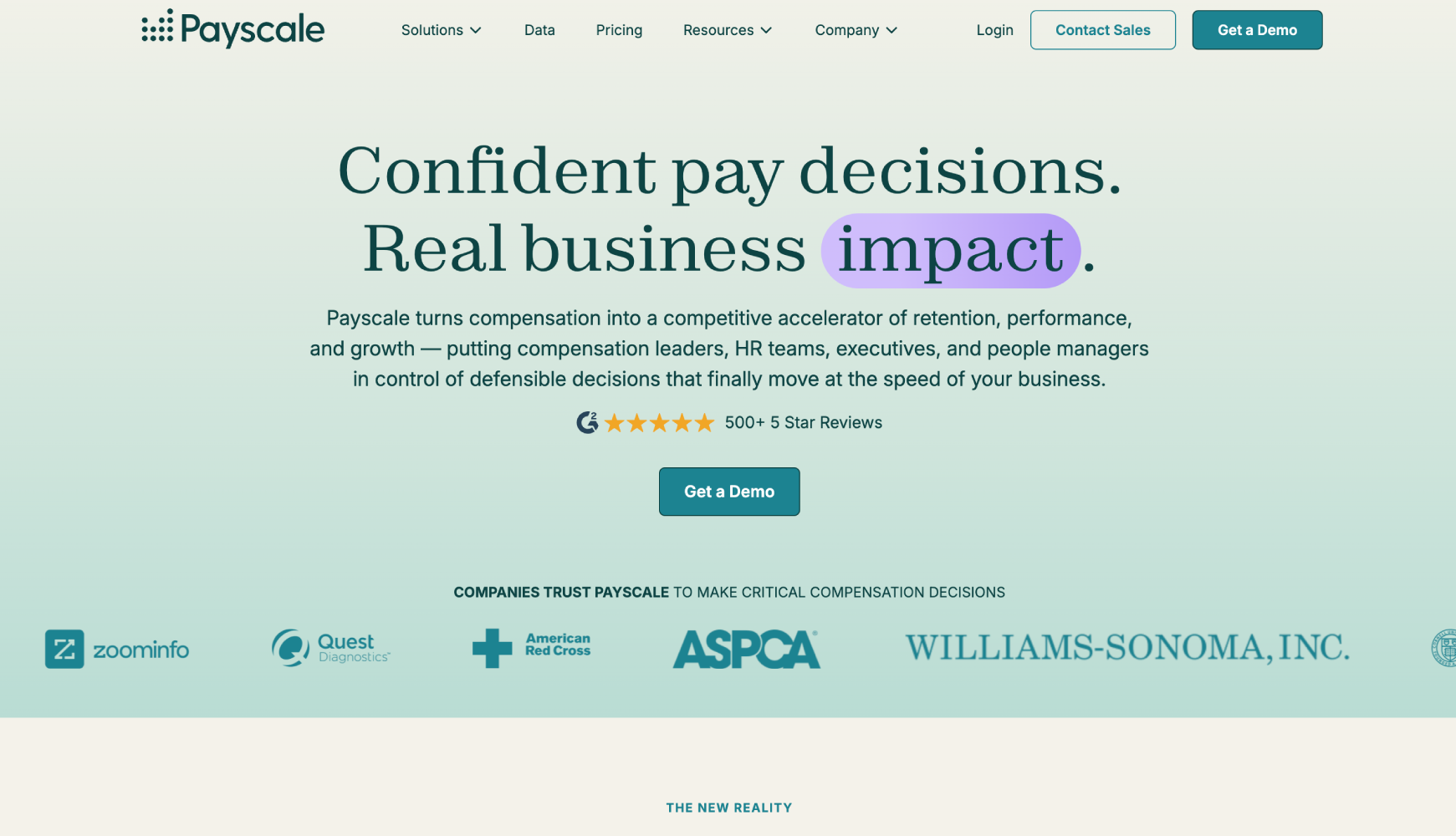
Payscale is the best option if you need total rewards statement software connected directly to a compensation benchmarking engine. Payscale’s core product is market pricing and compensation analytics. The total rewards statement capability layers on top of that, meaning statements can reference whether the employee’s pay is at, above, or below market.
That connection to market data is what differentiates Payscale from pure statement tools. If a manager wants to have a retention conversation with a high performer and needs a statement that shows both total comp value and market positioning, Payscale can support that conversation in a way that a generic statement platform cannot.
The limitation is integrations. Payscale connects to ADP, BambooHR, and a handful of others, but the integration depth for pulling live benefits carrier data is less developed than dedicated statement platforms. HR teams that need highly accurate, real-time employer contribution data from multiple carriers may find gaps.
4. CompTrak
CompTrak is a compensation management platform that includes a strong total rewards statement module. It is built for mid-enterprise companies with complex comp structures: base pay, bonus, long-term incentives, and equity, all handled in one workflow and surfaced to employees via a self-service portal.
CompTrak’s sweet spot is companies that run compensation review cycles and want the output of those cycles to flow directly into updated employee statements without manual export and re-import. The statement is a byproduct of the comp process, not a separately maintained artifact. Integrations with Workday, SAP, and ADP are available.
Smaller companies or those without dedicated comp teams will find CompTrak’s feature depth excessive. It is designed for teams that manage compensation planning as a structured cycle, not companies running basic merit increases in a spreadsheet.
5. HRSoft CWS (Compensation Workbench Software)
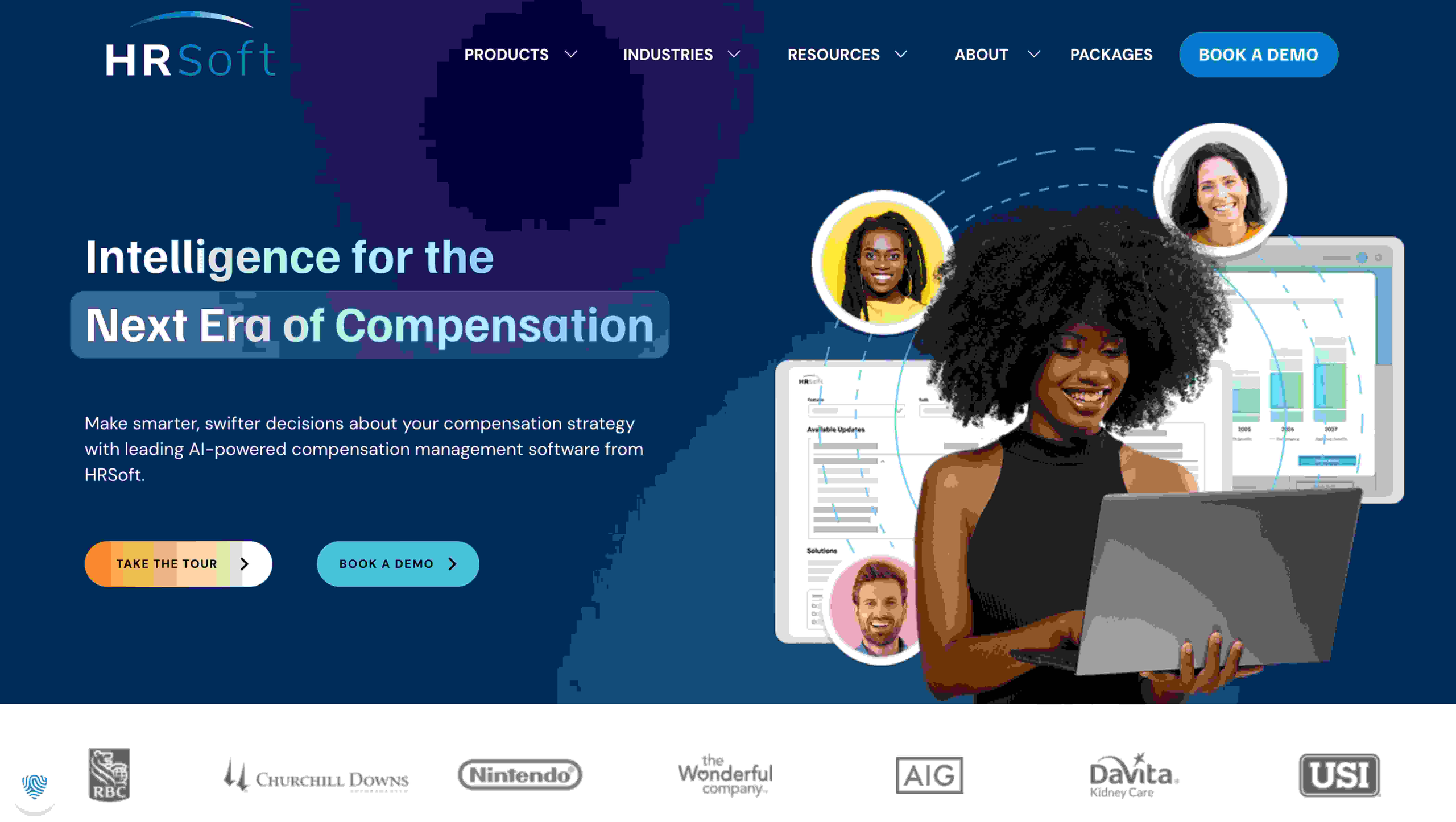
HRSoft covers the full compensation workflow from planning through communication, with total rewards statement generation as part of its Compensation Workbench Software. The platform handles complex compensation components well: merit, bonus, equity grants, deferred comp, and multi-currency scenarios.
HRSoft is a legitimate option for companies that have outgrown the comp planning modules inside their HRIS but are not ready for an enterprise platform like beqom. It handles multiple compensation programs running simultaneously, which is useful for companies with union and non-union employee populations or multiple business units with different comp structures.
Pricing is quote-based and implementation typically requires professional services engagement. This is not a self-serve tool.
6. Selerix BenSelect
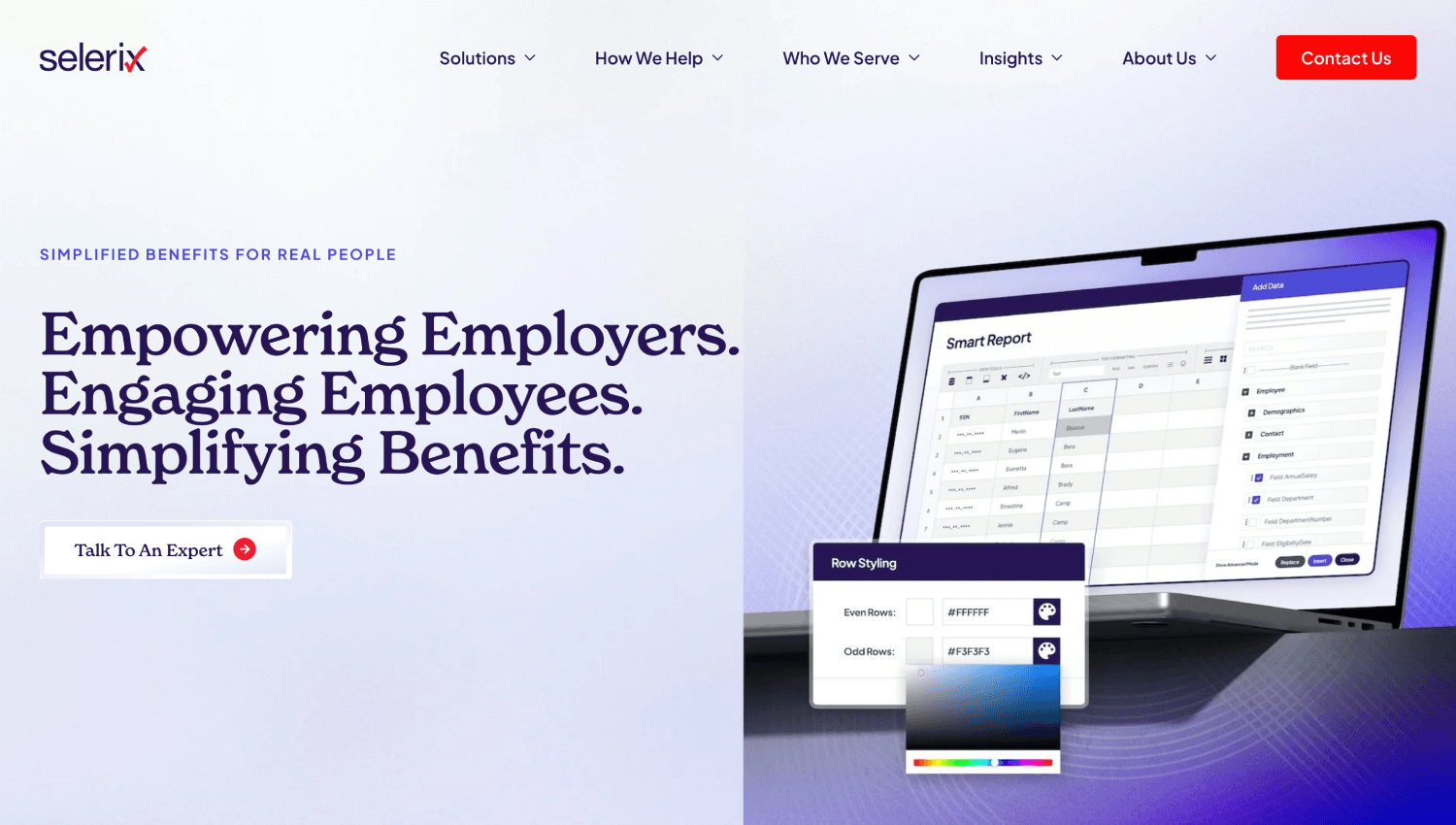
Selerix BenSelect approaches total rewards statements from the benefits administration angle. The platform is primarily a benefits enrollment and administration system, and the total rewards statement lives inside that benefits experience.
The advantage of this approach: employer contribution data is already flowing through the system because benefits transactions run through it. The statement is built from live data rather than manually entered figures. For companies that use Selerix as their primary ben admin platform, adding statement visibility is low-friction.
The weakness is that Selerix does not pull in the full compensation picture as naturally. Cash comp, equity, and non-benefit perks require manual data input or integration work. Teams looking for a complete statement across all compensation elements will need to plan for that scope carefully.
7. PlanSource

PlanSource is a mid-market benefits administration platform with total rewards statement functionality built into the employee portal. Like Selerix, it leads with benefits admin, and the statement capability is strongest when the data being displayed is benefits-centric.
PlanSource works well for mid-market US employers (typically 100 to 3,000 employees) who want an integrated benefits and total rewards experience without buying a separate statement platform. The employee portal is modern and mobile-accessible, which matters for adoption. One area to pressure-test: how PlanSource handles pulling in non-benefits compensation data from your HRIS. The integration depth varies by HRIS and may require your implementation partner to configure custom feeds.
8. Bswift
Bswift is a benefits administration platform commonly deployed through brokers and benefits consultants. Total rewards statement capability is part of the employee self-service experience, and Bswift’s carrier connectivity is among the better options in the benefits-admin-led segment of this category.
The broker-led delivery model means Bswift is often the platform chosen when a company’s benefits broker recommends it, rather than HR buying it independently. If your broker already supports Bswift, adding statement visibility is relatively straightforward. If you are evaluating platforms independently, Bswift competes well on benefits data accuracy but will require integration work to pull in full comp and equity data from an external HRIS.
9. Darwin (Mercer)
Darwin by Mercer is the enterprise-grade option for global companies with flexible benefits programs. Originally a standalone platform, Darwin was acquired by Mercer and has been positioned as a global flexible benefits and total rewards portal for large, complex organizations.
Darwin handles multi-country benefit programs, flexible benefit allowances, and total rewards visibility in markets where employer benefit contributions vary significantly by country. It is genuinely built for the global complexity that most platforms in this list are not. The trade-off is cost and implementation complexity. Darwin deployments are enterprise projects, not software purchases.
For most US mid-market companies, Darwin is the wrong category. For a global company with 2,000-plus employees across Europe, APAC, and the Americas, Darwin is worth evaluating seriously.
What Integration Depth Do You Actually Need Before Buying?
Integration is where most total rewards statement projects either succeed or become expensive maintenance burdens. Every vendor claims integrations. What matters is what data those integrations actually pull, how frequently they sync, and what happens when a data mismatch occurs.
At minimum, your statement platform needs a live feed from your HRIS for employee demographic and employment data, from your payroll system for compensation figures, and from your benefits carrier (or ben admin platform) for employer contribution amounts. Without all three, you are manually maintaining data in at least one system, which means your statements are always slightly out of date and your HR team is doing work a machine should do.
Before you sign a contract, ask each vendor three specific questions. First: which HRIS systems have production integrations (not just API access, but tested implementations)? Second: does the platform pull employer benefit contribution amounts directly from carriers or from a ben admin system, and how often does that data sync? Third: what is the process when an employee’s data in the statement does not match their payroll record?
If you are early in building out your HR tech stack and have not yet standardized your HRIS, the best HRIS platforms for 500-employee companies review is a useful starting point for understanding which HRIS choices will give you the cleanest integration path for downstream tools like total rewards platforms.
How Much Does Total Rewards Statement Software Cost?
Every platform in this category is quote-based. None publishes list pricing. What you can expect, based on how vendors position themselves in the market, is a per-employee-per-month structure that varies widely depending on whether you are buying a standalone statement tool or a module inside a larger platform.
Standalone purpose-built statement tools (closer to TotalRewards.io or older iterations of these platforms) have historically been a relatively modest per-employee cost. Platforms that bundle statements into a broader suite (Benify, Darwin, Reward Gateway) price the entire suite, so isolating the statement cost is not straightforward.
Benefits-admin-led platforms (Selerix, PlanSource, Bswift) typically embed statement functionality in the benefits admin pricing, which means you may already be paying for it if you are using those platforms. Check your existing contract before buying a separate statement tool.
Budget guidance for mid-market buyers: If you are buying a purpose-built total rewards statement tool as a standalone purchase, expect costs comparable to other mid-market point solutions in the compensation and benefits space. This category is not cheap on a per-employee basis, but even at the higher end of typical mid-market software pricing, the annual cost for a 500-person company is modest relative to a single retention-driven salary increase. For HR leaders working with tighter budgets, the benefits-admin-embedded options (Selerix, PlanSource, Bswift) are often the most cost-efficient path if you are already on one of those platforms.
The HR software pricing guide covers how to benchmark per-employee costs across the broader HR tech stack if you need a framework for your budget conversations. The hidden costs of HR software article is also worth reading before you finalize any contract in this space.
Do Total Rewards Statements Actually Affect Retention or Pay Satisfaction?
The research on perceived pay fairness consistently shows that employees who understand their full compensation package report higher pay satisfaction than employees who only see their cash pay, even when the underlying numbers are the same. People cannot value what they cannot see.
The mechanism matters here. A total rewards statement does not increase pay. It increases perceived pay by making employer benefit contributions visible. Employer-paid health insurance premiums, retirement matches, life insurance, parental leave days, and equity vesting schedules are real economic value that employees routinely discount or ignore because they never see it consolidated in one place.
The practical implication for HR leaders: if you are losing people to competitors who appear to offer similar base salaries, the gap may not be in the salary. It may be in the communication of the total value. A statement that shows an employee their true total compensation , including thousands of dollars in employer-paid benefits that never appear on a pay stub , changes the comparison they are making.
Statements are also useful in manager-led retention conversations. A manager who can pull up a personalized statement during a stay interview or a compensation review has a more concrete conversation than one who can only point to salary band documents. The best compensation benchmarking tools list is worth reading alongside this one if you want to combine market positioning data with statement visibility for those conversations.
How to Evaluate Total Rewards Statement Software: A Buyer’s Checklist
- Data sources: List every system that holds relevant compensation data (HRIS, payroll, ben admin, equity platform, expense systems). Confirm the vendor has production integrations with each before shortlisting.
- Sync frequency: Ask how often data updates in the employee-facing statement. Annual is unacceptable. Real-time or daily sync is the standard to hold vendors to.
- Employee access model: Does the employee log in on demand, or does HR distribute statements periodically? On-demand access drives significantly higher engagement than annual distribution.
- Mobile experience: If more than 20% of your workforce is deskless or field-based, mobile accessibility is a minimum requirement, not a feature.
- Customization depth: Can you add non-standard perks (commuter benefits, remote work stipends, wellness allowances)? Can you control which elements display for which employee segments?
- Manager visibility: Can managers see their direct reports’ statements to support retention conversations?
- Analytics: Does the platform report on statement open rates, time spent, and which benefit categories drive the most perceived value? This tells you whether employees are actually engaging.
- Implementation timeline and cost: Ask for a reference customer of similar size and HRIS environment. Confirm how long that implementation took and what professional services were required.
Frequently Asked Questions
What is a total rewards statement and who should receive one?
A total rewards statement is a personalized document or digital report that shows an employee the full value of their compensation package, including base salary, bonuses, employer-paid benefits premiums, retirement contributions, equity, and other perks. Every employee should receive one, but they are most impactful for employees who have been with the company long enough to have accumulated meaningful benefits contributions and for high performers who are likely targets for competitive offers.
Can total rewards statement software pull data directly from Workday or BambooHR?
Most of the enterprise-positioned platforms (Benify, CompTrak, HRSoft, Darwin) have documented integrations with Workday. BambooHR integrations are more common among mid-market-focused platforms like Payscale and PlanSource. Before assuming an integration exists, ask the vendor for a reference customer using your specific HRIS version and confirm what data fields are actually pulled, not just whether the connector exists in their marketplace.
How is a total rewards statement different from a pay stub or compensation letter?
A pay stub shows what was paid in a specific period and what was withheld. A compensation letter typically states base salary and bonus targets. A total rewards statement does neither of those things primarily. Its job is to aggregate all employer spend on that individual, including amounts the employee never directly handles, such as employer-side benefits premiums and employer retirement contributions, and present them as a unified annual value. The communication goal is different: a pay stub is a transaction record; a statement is a retention and satisfaction tool.
Do employees actually read total rewards statements?
Adoption is strongly correlated with delivery method and timing. Annual PDF distributions emailed to a work inbox get low engagement. Mobile-accessible portals where employees can check their statement at any time, particularly after benefits open enrollment or after a compensation review, get meaningfully higher engagement. The best platforms report open and engagement rates so HR can measure this directly rather than assuming. If your vendor cannot tell you statement open rates, treat that as a red flag.
Is there total rewards statement software that works for global companies with multi-currency benefits?
Yes, but the options narrow quickly. Benify and Darwin (Mercer) are the two most frequently cited platforms for genuine multi-country, multi-currency total rewards deployments. Both support displaying local currency values and country-specific benefit types. Most US-centric platforms handle USD-denominated benefits well but require custom configuration or workarounds for international employee populations.
How do total rewards statements connect to compensation planning workflows?
Some platforms, particularly CompTrak and HRSoft, generate statements as a direct output of the compensation planning cycle. When managers complete merit reviews and approvals are finalized, updated statements flow automatically to employees. Other platforms treat the statement as a separate module that requires a data sync from your comp planning tool. The direct-output model is cleaner and reduces the risk of statements being out of date relative to actual comp decisions.
What employee data is typically included in a total rewards statement?
A complete statement typically includes base salary or hourly rate, bonus (actual or target), employer-paid health insurance premiums (medical, dental, vision), life and disability insurance premiums paid by the employer, employer 401(k) or retirement match contributions, equity grants and vesting schedules, paid time off value (calculated at the employee’s hourly rate), commuter or remote work stipends, learning and development budgets, and any other employer-funded perks. The more of these elements a platform can pull from live system data rather than manual input, the more accurate and useful the statement will be.
What Should You Walk Away With After Reading This?
Total rewards statement software is a narrow category, but the buying decision has more surface area than it appears. The platform that looks best in a demo may be the most painful to implement if it cannot pull live data from your actual HRIS and benefits admin system. Start the evaluation from the integration list, not the statement design.
The retention argument for this category is real, but it requires execution discipline. A statement nobody opens does not close the perception gap. The platforms that drive measurable engagement are those with mobile-accessible portals, on-demand access, and analytics that let HR see whether employees are actually reading what has been built for them. If your vendor cannot show you engagement data from comparable deployments, push harder before signing.
For companies that have not yet standardized their benefits administration or HRIS, buying a total rewards platform now may create more integration headaches than it solves. The sequencing matters: get your data sources clean and connected first, then add the statement layer on top. The best benefits administration software for mid-market companies article is a logical next step if your benefits data infrastructure needs work before a statement platform can do its job properly.