
TLDR
- On Oct. 1, 2026, Gusto announced general availability of Gusto Business Compliance, which registers, files, and monitors state and local business obligations that follow growth, especially a first hire in a new state.
- Primary source: Gusto’s corrected PR Newswire release. The product page is gusto.com/product/business-compliance.
- The GA lands less than six months after Gusto’s April 2026 acquisition of Mosey, and ships alongside two sibling offers: Gusto HR Partners (senior HR guidance for eligible customers) and Gusto PEO (coming in the following months).
- Included capabilities called out in the release: state tax registration, annual reports, government mail monitoring, registered agent, foreign qualification, proactive deadline alerts, and a Compliance Concierge team. Product FAQ pricing: included on Gusto Premium; otherwise $85 per month per registered state.
- For buyers: this is US SMB entity and multi-state operational compliance tied to payroll/HR events, not global payroll regulatory AI and not a mid-market HCM replacement. Ask what is automated vs concierge-handled, how liability is shared when a filing is wrong, and when PEO or HR Partners is the better lane than software-only compliance.
Oct. 1, 2026 gave small-business payroll buyers a concrete compliance product story, not another agent demo.
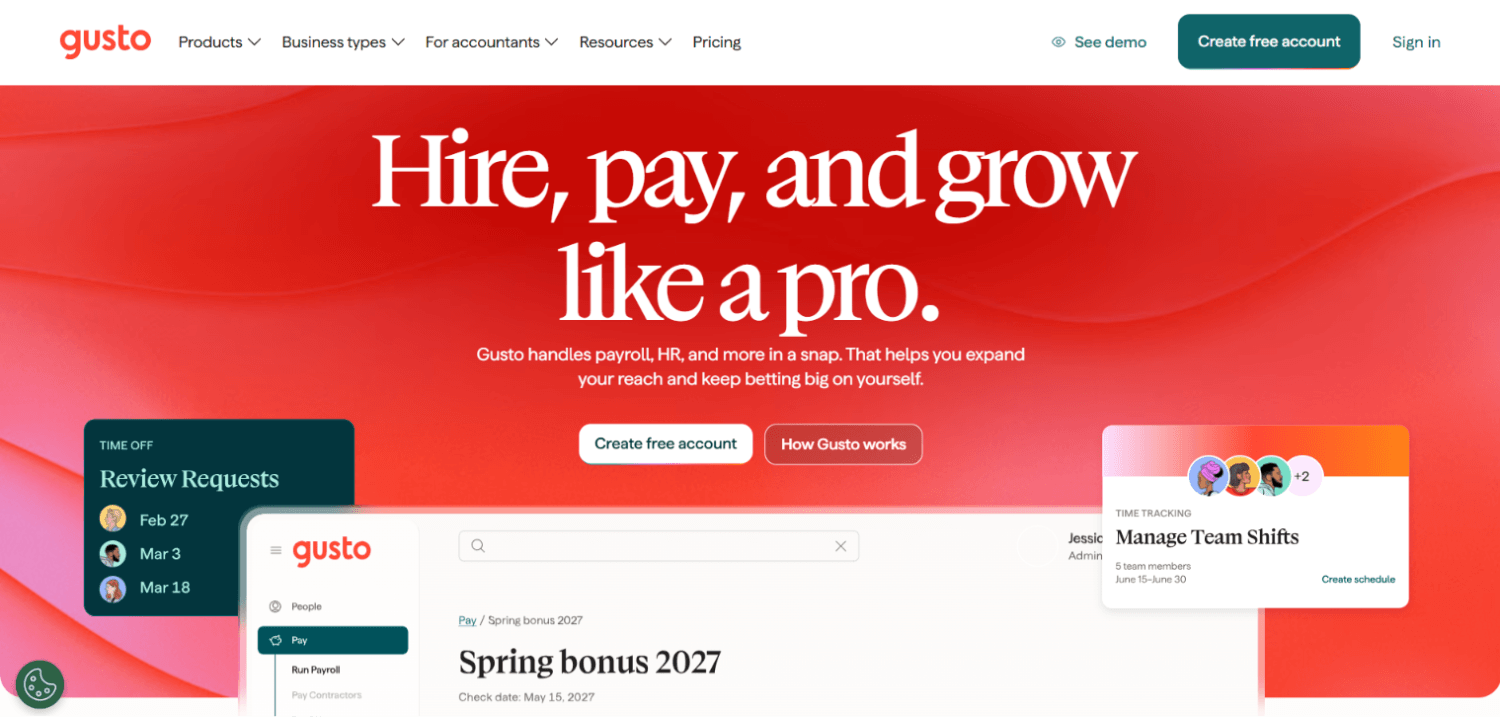
Gusto already runs payroll and HR for hundreds of thousands of US small businesses. Business Compliance uses that hire-and-expand signal to trigger state registrations and filings many owners miss when they add a remote employee in a new state. That is a different buyer question from the hub Neeyamo Compass draft (global payroll configuration AI), from enterprise agent layers on Workday or UKG, and from evergreen Gusto vs Rippling vs Justworks comparisons.
This draft sticks to the Oct. 1 GA facts, the Mosey context, pricing and packaging signals on Gusto’s product page, and the evaluation questions SMB and fractional HR buyers should ask. It is not a rewrite of multi-state payroll listicles or Gusto alternatives roundups.
What Gusto announced
Per the Oct. 1 PR Newswire release:
- Gusto Business Compliance is generally available. It automatically registers, files, and monitors state and local compliance obligations that come with growing a business, most notably when hiring an employee in a new state.
- Because Gusto already runs payroll and HR, it can see a new-state hire and act on requirements many owners do not know exist.
- The launch comes less than six months after Gusto acquired Mosey, an AI-powered business compliance platform.
- Gusto cited a recent survey where half of small business owners said they spend too much time and money on compliance, and three in four said filing federal, state, and local taxes was their most time-consuming compliance task. Treat those as Gusto-reported survey figures until you see methodology.
- Two additional offers launched in the same narrative: Gusto HR Partners (access to a senior Gusto HR leader backed by a team) for eligible customers now, with broader availability coming; and Gusto PEO, which will take on more day-to-day payroll, benefits, HR, and compliance work for eligible customers in the coming months.
Alex Kehayias, Head of Gusto Business Compliance, said: “Small business owners shouldn’t have to become compliance experts. We built Gusto Business Compliance to help handle the paperwork, registrations, and filings required by states and local agencies, so they don’t have to.”
Customer quote in the release from Chris Rupp, Founder and Managing Partner at Red Shark Digital: “With Business Compliance, you get 100% confidence that you are doing the right thing … having the peace of mind that it’s being taken care of properly and things are getting paid and filed correctly.”
Treat both quotes as vendor-supplied positioning. Your diligence still has to prove filing coverage, exception handling, and liability language for your states.
What Business Compliance includes
The release and product FAQ describe an operational package, not a legal-advice product:
- State tax registration with agencies such as Departments of Revenue and Labor when hiring in a new state.
- Annual report filing to help maintain good standing with the Secretary of State.
- Government mail monitoring for official compliance mail, tax notices, and tax rate changes inside Gusto.
- Registered agent appointment in each relevant state so legal and government correspondence has a designated recipient.
- Foreign qualification so the business is registered to operate in another state when required.
- Proactive compliance alerts for upcoming deadlines and new obligations.
- Compliance Concierge team for help during moments such as expanding to a new state.
Product FAQ add-ons called out separately: certificates of good standing, business license reports, and state account closures. Gusto also states Business Compliance is operational help, not a replacement for an accountant or lawyer.
Pricing and packaging signals buyers should verify
| Signal | What Gusto published | Buyer use |
|---|---|---|
| Business Compliance availability | GA for all Gusto customers (Oct. 1, 2026) | Confirm your plan tier and which states are already registered |
| List pricing (product FAQ) | Included on Premium; otherwise $85/month per registered state ($1,020/year per state) | Model cost for your current and planned state footprint |
| State coverage | All 50 US states (product FAQ) | Ask about local/city overlays and license add-ons in your cities |
| HR Partners | Available to eligible customers now; broader rollout soon | Ask eligibility, response SLAs, and what is advice vs execution |
| Gusto PEO | Coming to eligible customers in the following months | Separate PEO co-employment economics from software-only compliance |
| Mosey lineage | Acquisition announced April 9, 2026; GA less than six months later | Ask what happens to standalone Mosey customers and data migration paths |
Pricing and eligibility can change. Confirm the current quote in your Gusto account before budgeting.
Why this is different from payroll tax filing alone
Gusto’s own product FAQ draws a useful line: payroll compliance covers paying employees and employee-related taxes. Business Compliance covers the adjacent stack many remote-first SMBs still treat as a spreadsheet problem: Secretary of State registration, annual reports, registered agents, foreign qualification, and agency mail.
That distinction matters for buyers who already run multi-state payroll in Gusto and still get surprised by nexus and entity filings when a first hire lands in a new state. It also clarifies why this news is not the same story as best payroll software for multi-state companies or dedicated employment-law monitoring tools covered in multi-state employment compliance software.
How this differs from other hub drafts and site pages
HrTechSaas already covers nearby payroll, compliance, and Gusto-adjacent topics:
- Hub: Neeyamo Compass (global payroll compliance AI), Warp Agent, Workday Cash App + Experian, Paychex WISE Hire, Rippling AI Lab, ADP AWS Assist agents, UKG Bryte / Agentic Pay, LinkedIn Hiring Assistant 2
- Site: Gusto vs Rippling vs Justworks, best Gusto alternatives, best payroll software for multi-state companies, best multi-state employment compliance software, best HR software for mid-market companies
This draft is different:
- Same-week Gusto Business Compliance GA news (Oct. 1, 2026)
- Focus on US SMB multi-state entity/registration compliance packaged with HR Partners and a forthcoming PEO lane
- Not a Gusto vs Rippling vs Justworks decision guide and not Neeyamo’s global regulatory-configuration story
Do not merge this into the multi-state payroll listicle or the Neeyamo Compass hub draft. Different announcement, different buyer, different workflow surface.
Who should care, and what to ask
Prioritize a read-out if you:
- Already run Gusto payroll/HR and are hiring remote employees across additional US states
- Are a fractional HR or ops lead for sub-250 companies that keep missing state registrations or annual reports
- Are deciding whether software-only compliance, HR Partners advisory, or a PEO model fits the next 12 months of growth
- Previously evaluated Mosey or similar registration/filing tools and need to understand the post-acquisition Gusto packaging
Ask Gusto (and your accountant / counsel) before treating Business Compliance as set and forget:
- For each state in your footprint, which filings are fully automated versus concierge-assisted, and what artifacts can you export for your CPA?
- When a new-state hire triggers registration, what is median time-to-active tax accounts, and who owns delays with the agency?
- If a filing is late or incorrect, who carries penalties: Gusto, the concierge process, or the employer of record (you)?
- How does Business Compliance interact with local city or county obligations that sit outside statewide tax registration?
- What is included on Premium versus the $85/state add-on, and how does cost scale if you exit a state?
- For HR Partners: what decisions stay with the founder, what SLAs apply, and is the guidance limited to US employment basics?
- For the forthcoming PEO: which compliance and benefits responsibilities move under co-employment, and what cannot move?
- If you were a Mosey-only customer, what is the migration path, pricing delta, and support model onto Gusto Business Compliance?
The take: multi-state hiring just got a clearer Gusto product boundary
Gusto’s Oct. 1 story is coherent for the SMB payroll category. The hard problem for many growing teams is not calculating a paycheck. It is noticing that a first hire in another state created registrations, agents, and annual reports they never put on a calendar.
Your job is narrower. Treat Business Compliance as an operational filing and mail layer that still needs accountant oversight and clear liability language. Model the per-state fee against your expansion plan. Decide explicitly whether you need software automation, human HR Partners guidance, or a PEO. Use Gusto vs Rippling vs Justworks when the question is platform fit, and use this GA news for the separate question of how Gusto now packages entity and multi-state compliance after Mosey.
FAQ
What is Gusto Business Compliance?
Gusto Business Compliance is a generally available Gusto product, announced Oct. 1, 2026, that helps small businesses handle state tax registration, annual reports, registered agent services, foreign qualification, government mail monitoring, and related alerts, especially when hiring in a new state.
How is this different from Gusto payroll tax filing?
Payroll compliance covers paying employees and related employment taxes. Business Compliance covers broader business and entity obligations such as Secretary of State filings, registered agents, and agency mail that payroll tax filing alone does not own.
What did Mosey have to do with this launch?
Gusto acquired Mosey on April 9, 2026 and positioned Mosey’s compliance automation as the foundation for Gusto Business Compliance, which reached GA less than six months later.
How much does it cost?
Per Gusto’s product FAQ at launch coverage: included for Gusto Premium customers; otherwise listed at $85 per month per state the business is registered in. Confirm live pricing in your account.
What are Gusto HR Partners and Gusto PEO?
HR Partners gives eligible customers access to a senior Gusto HR leader for guidance on hiring, onboarding, terminations, benefits, and related HR standards. Gusto PEO is a forthcoming offer that takes on more day-to-day payroll, benefits, HR, and compliance work under a PEO model for eligible customers.
Who should evaluate this week?
US small businesses already on Gusto that are expanding into new states, plus fractional HR/ops operators who currently juggle U.S. registrations and agency mail outside payroll.
What should buyers do next?
Map your current and planned state footprint, confirm Premium vs per-state pricing, request sample filing artifacts and liability language, and decide whether HR Partners or the future PEO is a better fit than software-only compliance.