
- Recruiter marketplaces sit between a full-time hire and a 20% agency retainer, offering per-hire fees, hourly sourcing, or short-term fractional support.
- The nine platforms below range from software-engineer-specialist networks to broad professional marketplaces, with pricing models ranging from success fees to flat monthly subscriptions.
- Paraform and Codejobs both closed $40 million rounds recently, signaling investor conviction that the contingent recruiting model is still growing.
- The right marketplace depends on your hiring volume, role type, and whether you want a recruiter who works alongside your team or one who delivers candidates at the end.
- Upwork Enterprise and Toptal both surface recruiting talent but are built for general freelance work, not recruiter-specific workflows. Contact them directly if that fits your needs.
Recruiter marketplaces are platforms that connect companies directly with vetted, independent recruiters on a per-hire, hourly, or short-term contract basis, sitting between the cost of a full-time internal recruiter and a traditional contingency agency retainer. The best options for most mid-market and startup teams are Paraform, Recruiter.com, SourceWhale Marketplace, and a handful of specialist networks, depending on role type and whether you need sourcing support or end-to-end placement.
Why Are Companies Turning to Recruiter Marketplaces Instead of Traditional Agencies?
Most hiring teams frame their options as two choices: bring recruiting in-house or pay a staffing agency a substantial success fee. That framing leaves a wide middle ground unexplored. Recruiter marketplaces occupy that middle ground by connecting companies with independent recruiters, often former in-house or agency professionals, who work on a contingent, per-hire, or time-and-materials basis without requiring a long-term agency relationship.
The appeal is predictability and flexibility. You can activate a recruiter for a single engineering role, run a three-month sourcing sprint during a product launch, or bring in fractional recruiting capacity while your team is between hires. When volume drops, you stop paying. That model fits companies with unpredictable headcount plans better than either a full-time headcount or a retainer does.
The shift also reflects a broader change in how senior recruiting talent works. A growing share of experienced recruiters have gone independent, and marketplaces give them a platform to find clients without building their own business development pipeline. That supply dynamic benefits buyers: you can access recruiters with specific domain expertise (fintech, clinical, sales) who would not join your team full-time but will take a three-hire engagement.
How Do Recruiter Marketplaces Price Compared to Traditional Agencies?
Traditional contingency agencies typically charge a success fee in the range of 20 to 25 percent of first-year base salary per placement, with no refund if the hire leaves in month three. Retained search firms generally charge more, often in the 30 to 35 percent range, split across milestones. These figures reflect commonly reported industry norms; actual rates vary by agency, role seniority, and market. Recruiter marketplaces break that model in one of four ways.
| Pricing Model | How It Works | Best For |
|---|---|---|
| Success fee (lower rate) | Recruiter earns a fee on placement, typically 10 to 18% of salary, split with the platform | Companies that only want to pay on results |
| Hourly / time-and-materials | Recruiter bills hourly or weekly, no placement fee | Sourcing sprints, RPO-style augmentation |
| Flat per-hire fee | Fixed dollar amount per role closed, regardless of salary level | High-volume hiring with budget predictability |
| Platform subscription plus recruiter fee | Company pays a monthly access fee; recruiter earns a reduced success fee | Teams making multiple hires per quarter |
Marketplace placements commonly land meaningfully below traditional agency rates for equivalent roles, with the gap most pronounced in the $80,000 to $200,000 salary range. That advantage narrows for senior executive roles, where specialist search firms still hold an edge in network depth. If you want to see platform-specific cost comparisons, the best approach is to request a quote from two or three vendors and compare against your most recent agency invoices directly.
What Is the Difference Between a Recruiter Marketplace and an RPO?
A recruiter marketplace gives you direct access to individual independent recruiters. You hire the person, agree on terms, and they work your roles. An RPO (recruitment process outsourcing) provider is a company that runs your recruiting function or a portion of it, typically under a longer contract with SLAs, account management, and a team of recruiters rather than a single individual.
Marketplaces are faster to activate, more flexible, and cheaper for low-to-moderate volume. RPO makes sense when you need consistent delivery at scale, usually 50 or more hires per year, with accountability and reporting wrapped around the process. If you are comparing the two in more detail, our breakdown of RPO vs in-house recruiting costs covers the economics across different hiring volumes.
The 9 Best Recruiter Marketplaces for On-Demand Recruiting
1. Paraform
Paraform is a recruiter marketplace built specifically for startups and growth-stage companies hiring software engineers and technical roles. Recruiters on the platform browse open roles posted by companies and choose which ones to work. Companies only pay when a hire is made, the classic success fee model, with fees typically lower than traditional agency rates.
Paraform raised a $40 million Series B in 2024, which funded platform improvements and recruiter network expansion. The investor thesis is straightforward: early-stage companies cannot justify a full-time technical recruiter but also cannot afford to miss key engineering hires. Paraform targets that gap directly.
The platform works best for Series A through Series C companies filling engineering, product, and design roles. It is not the right tool for high-volume sales hiring or roles outside the technical spectrum. Recruiters self-select into roles they have relevant networks for, which improves match quality but means less-common role types may attract fewer recruiter applications.
2. Codejobs
Codejobs operates as a specialized platform connecting companies with recruiters and talent networks focused on software development and engineering roles. The company raised $40 million, signaling significant growth ambitions in the technical recruiting marketplace segment.
The platform’s focus is narrower than generalist marketplaces, which is a feature rather than a limitation for engineering-heavy teams. Recruiters on Codejobs tend to have domain-specific pipelines in backend development, DevOps, and data engineering. For teams that need depth in those disciplines rather than breadth across all functions, that specialization reduces the noise that comes from working with a generalist network.
Codejobs is worth evaluating alongside Paraform if your primary hiring need is technical. The two platforms differ in how recruiters engage with roles and how the fee structure is designed. Running both simultaneously on the same role can increase recruiter coverage without doubling coordination overhead.
3. Recruiter.com

Recruiter.com is one of the largest on-demand recruiting platforms in the US, offering access to a network of independent recruiters across a wide range of functions, including technology, finance, sales, healthcare, and operations. The platform supports multiple engagement models: hourly recruiting support, contingency placement, and recruiter-on-demand subscriptions.
The breadth of the network is the main advantage. If you need to fill roles across multiple functions simultaneously, Recruiter.com can connect you with specialists in each area from a single platform rather than requiring separate vendor relationships. The trade-off is that recruiter quality varies more than on curated specialist networks, so some due diligence on individual recruiter profiles is required before assigning roles.
Recruiter.com also offers AI-assisted candidate matching and sourcing tools layered over the marketplace, which differentiates it from pure intermediary platforms. Teams that want a blend of software-assisted sourcing and human recruiter capacity will find more here than on platforms that are purely talent networks. If you are evaluating AI sourcing tools separately, our comparison of the best AI sourcing tools and LinkedIn Recruiter alternatives covers complementary options.
4. Expert Recruiter Marketplace (SkillSyncer / Gigged.ai)
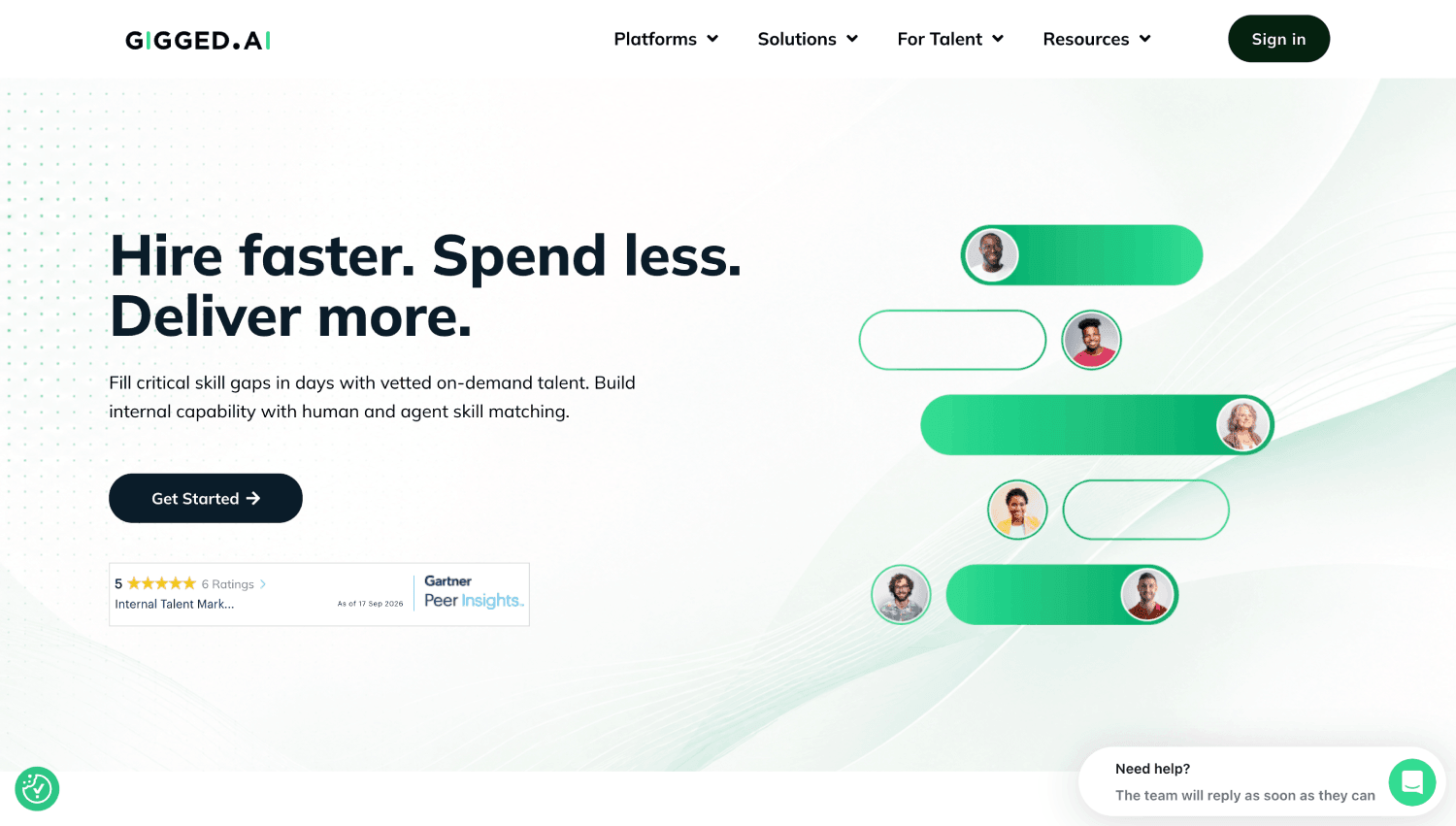
Gigged.ai focuses on connecting companies with fractional and contract recruiting talent across the UK and Europe, with growing US coverage. The platform emphasizes vetted recruiter quality over volume, running assessment and interview processes before admitting recruiters to the network.
For companies hiring across borders, particularly in the UK and EU, Gigged.ai’s geographic focus translates to recruiter networks with genuine regional candidate pipelines rather than recruiters copying LinkedIn searches in markets they do not know. The platform supports both hourly engagement for sourcing-only work and full-placement success fee arrangements. Pricing is quote-based; contact Gigged.ai directly for current rates, as the vendor does not publish standard pricing publicly.
5. Yobs (formerly Hundred5 / HiringThing adjacent networks)
Yobs positions itself as an AI-assisted recruiter marketplace where companies post roles and recruiters compete to fill them, with built-in tools for interview scheduling, candidate scoring, and ATS handoff. The AI layer is more substantive than most, handling initial candidate screening and matching against job requirements before a human recruiter takes over.
The combination of software-assisted screening and independent recruiter delivery means the platform works well for companies that want more than just access to recruiters but also want a lighter-weight workflow than a full ATS implementation. Yobs is particularly relevant for teams at the 50 to 250 employee range that do not have a dedicated recruiting operations function.
6. Hunt Club

Hunt Club operates as a network-powered search firm that sits at the higher-cost end of the marketplace category. Rather than a pure marketplace where you select and manage individual recruiters, Hunt Club uses a technology platform to mobilize a network of subject-matter experts (called advocates) who refer candidates from their professional networks into Hunt Club’s search process.
The referral-sourced model is designed for senior and executive roles where a warm introduction from a credible peer carries more weight than a cold outreach from a job board. That approach comes at a cost structure closer to traditional retained search than to a typical marketplace success fee, which means it is the right choice when role seniority justifies the investment and when your primary need is candidate quality over cost minimization.
7. Worksome
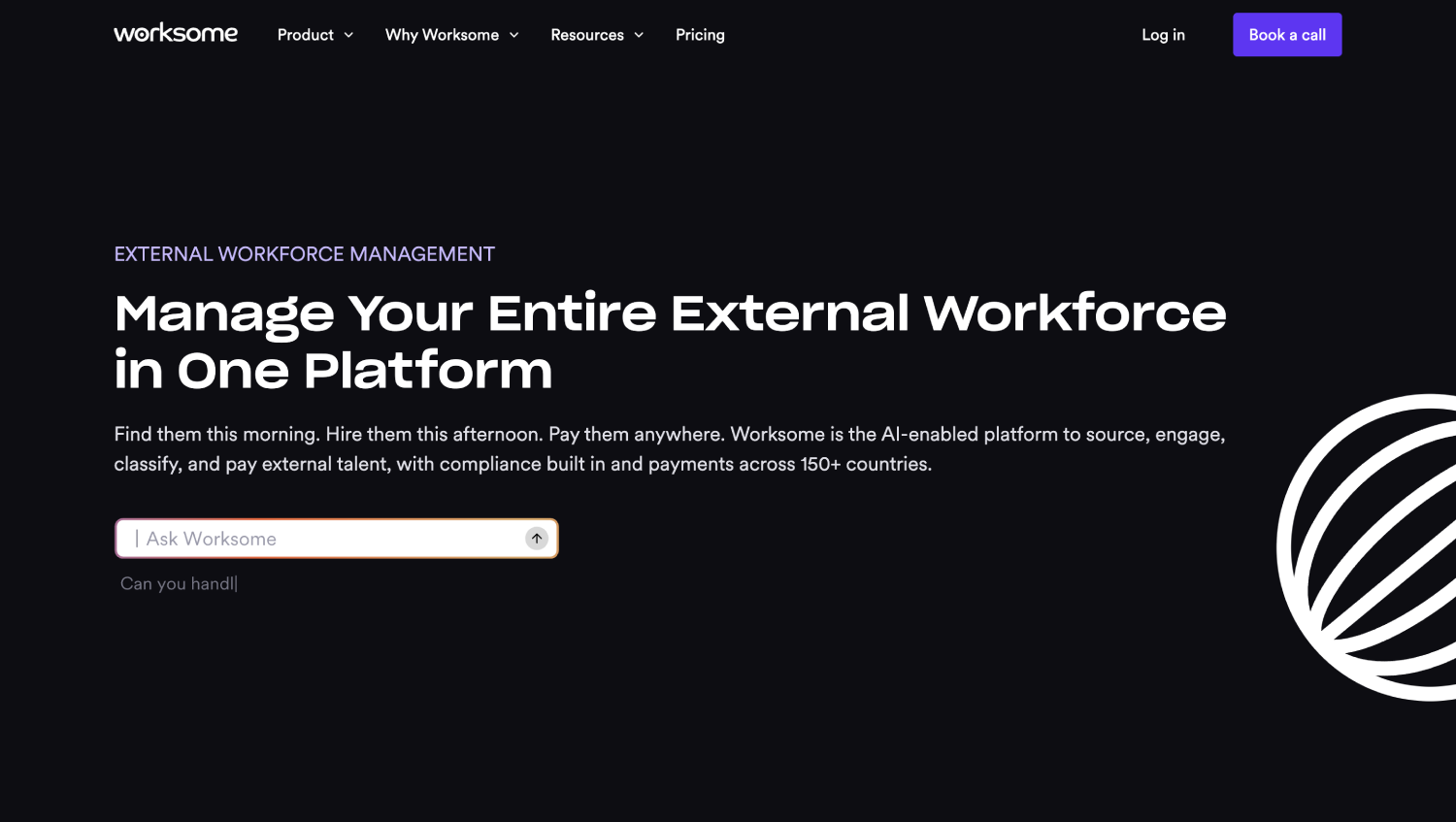
Worksome is a contingent workforce platform that includes a recruiter marketplace alongside broader contractor and freelancer management capabilities. Companies can find and engage independent recruiters directly, with Worksome handling compliance, contracts, and payments in the background.
The compliance and payment infrastructure is the differentiator. For companies hiring internationally or managing multiple contingent workers simultaneously, having that legal and operational layer built into the platform reduces administrative overhead significantly. Worksome is strong in the UK, Europe, and the US. If you are also evaluating contractor management tools more broadly, our comparison of Worksome vs Liquid vs Shortlist covers the contractor management angle in detail.
8. Trusted Talent (acquired into broader staffing networks)
Several mid-tier recruiter marketplaces have consolidated into or adjacent to staffing firm networks over the past three years. Platforms in this category, including niche boards that connect companies with vetted independent recruiters, tend to operate on a contingency model with recruiter vetting standards that vary widely.
If you are evaluating a platform in this category, the key questions are: how does the platform vet its recruiters, what happens if a placed candidate leaves within 90 days, and whether the platform holds any liability for compliance issues in the recruiter-client relationship. The answers to those three questions separate the serious platforms from directories with a marketplace label applied.
9. Hire With Near
Near focuses specifically on connecting US companies with vetted talent and recruiters in Latin America, covering roles in software engineering, sales, finance, and operations. The model is part recruiting marketplace and part EOR-adjacent service, handling contracts and payments for placements in LATAM markets.
Near is the right choice when cost arbitrage across geographies is a conscious part of your hiring strategy. A senior software engineer hired through Near in Mexico or Colombia typically costs significantly less than a US-based equivalent, with recruiter fees structured to reflect that. The platform is not for every company, but for US startups and scaleups with remote-first cultures and budget sensitivity, it provides a differentiated option that most generalist marketplaces do not cover.
A Note on Upwork Enterprise and Toptal
Both Upwork Enterprise and Toptal surface recruiting talent. Toptal maintains a curated network of freelancers that includes independent recruiters, and Upwork Enterprise supports complex freelance engagements at volume. Neither platform is built specifically for recruiter-to-hiring-company workflows the way the nine platforms above are, and neither offers recruiter-specific vetting, role-matching, or success fee structures designed around recruiting outcomes. If your use case fits their broader freelance models, contact them directly to explore whether recruiting support is a fit.
How Do You Choose Between On-Demand Recruiting Platforms?
Role type is the first filter. Technical hiring, particularly for software engineers and data roles, is best served by specialist networks like Paraform and Codejobs. Generalist hiring across functions belongs on broader platforms like Recruiter.com. Senior or executive roles warrant Hunt Club or a retained search approach, not a commodity marketplace.
Volume and timeline are the second filter. A single urgent role needs a contingency marketplace where recruiters self-assign quickly. A three-month sourcing sprint for ten roles needs a recruiter who can commit dedicated time, which points toward hourly or fractional engagement models. Platforms that only support success fees are not designed for the sprint use case.
| Platform | Best For | Pricing Model | Geography | Specialization |
|---|---|---|---|---|
| Paraform | Startups, technical roles | Success fee | US | Engineering, product, design |
| Codejobs | Engineering-heavy teams | Success fee | US | Software development |
| Recruiter.com | Multi-function hiring | Hourly, contingency, subscription | US | Broad |
| Gigged.ai | UK/EU hiring teams | Hourly, success fee (quote-based) | UK, EU, US | Broad with regional depth |
| Yobs | SMB teams without recruiting ops | Platform + placement fee | US | Broad with AI screening layer |
| Hunt Club | Senior and executive roles | Retained/premium placement | US | Network-referred candidates |
| Worksome | Contingent workforce with compliance needs | Quote-based | UK, EU, US | Contractors, including recruiters |
| Near | LATAM hiring for US companies | Placement + EOR-adjacent services | US, LATAM | Remote-first, cost-optimized hiring |
ATS integration is worth checking before you commit. Most platforms hand off candidates via email or spreadsheet, which creates manual work if your team runs Greenhouse, Lever, or Ashby. Some platforms, including Recruiter.com and Yobs, offer direct integrations. If your ATS is the center of your recruiting workflow, confirm the handoff process before signing. Our review of the best ATS platforms for mid-market companies covers which systems have the strongest integration depth across common HR stacks.
Where Do Recruiter Marketplaces Fit in a Broader Talent Acquisition Strategy?
Recruiter marketplaces are not a replacement for a talent acquisition function. They are a capacity tool. A company with two in-house recruiters and a spike in engineering demand can use Paraform to add three external recruiters for a quarter without adding headcount. A company with no in-house recruiting yet can use Recruiter.com to staff roles while deciding whether the volume justifies a full-time hire.
The biggest mistake teams make is treating marketplaces as a set-and-forget solution. External recruiters on a contingency basis need context: your culture, your compensation bands, your interview process, what “good” looks like for your team. Recruiters who get a clear brief and fast feedback loops perform significantly better than those left to guess. Budget one to two hours of your own time per week per active recruiter to manage the relationship effectively.
For teams building a broader talent acquisition infrastructure, recruiter marketplaces work best alongside an ATS, a sourcing tool, and a structured interview process. If you are auditing or building that broader stack, our guide to fractional HR leaders covers when bringing in fractional people ops leadership makes sense alongside external recruiting support. And for teams that want to understand how AI tools fit into sourcing before or alongside a marketplace engagement, our coverage of AI recruiting assistants for high-volume hiring is relevant context.
Frequently Asked Questions
What is a recruiter marketplace?
A recruiter marketplace is a platform that connects companies directly with independent or freelance recruiters on a contingency, hourly, or short-term contract basis. Companies post open roles or describe their hiring needs, and vetted recruiters on the platform compete for or select those engagements. The model differs from traditional staffing agencies in that you work with individual recruiters rather than a firm, and fee structures tend to be more flexible and lower than standard agency rates.
How much does it cost to hire through a recruiter marketplace?
Cost depends on the platform and engagement model. Success fee arrangements on most marketplaces range from 10 to 18 percent of first-year salary, compared to higher rates at traditional agencies. Hourly recruiting support rates vary by recruiter experience and market; check each platform’s published pricing or request a quote, as rates differ materially across vendors and recruiter seniority levels. Some platforms charge a platform subscription fee in addition to the recruiter’s fee. Always confirm the full cost structure directly with the platform before engaging.
Can I hire a fractional recruiter for a short-term sourcing sprint?
Yes. Platforms like Recruiter.com and Gigged.ai specifically support hourly and project-based engagements designed for sourcing sprints, rather than requiring a full placement fee model. You define the scope (roles, timeline, weekly hours), agree on a rate with the recruiter, and end the engagement when the sprint is complete. This model suits teams that need burst recruiting capacity for a product launch, funding event, or seasonal hiring surge without adding permanent headcount or signing a long-term agency contract.
What is the difference between a freelance recruiter marketplace and a staffing agency?
A staffing agency is a firm you contract with. The agency assigns internal or associated recruiters to your roles, manages the relationship, and takes full liability for the service. A freelance recruiter marketplace is a platform that introduces you to individual independent recruiters. You manage the relationship directly, which gives you more control but also more responsibility for briefing, feedback, and coordination. Marketplace fees are typically lower because you are taking on more of the management overhead that an agency would otherwise handle.
Which recruiter marketplace is best for hiring software engineers?
Paraform and Codejobs are the strongest options for technical roles, specifically software engineering, product, and data positions. Both platforms have recruiter networks with genuine technical pipelines and expertise in evaluating engineering candidates. Paraform is particularly strong for Series A through Series C startups. Recruiter.com can also surface technical recruiters but with more variability in domain depth. For LATAM-based engineering talent specifically, Near offers a differentiated option with lower cost profiles than US-equivalent hires.
How do I evaluate whether a recruiter marketplace recruiter is any good?
Check placement history on the platform, specifically roles similar to yours in function and seniority. Ask for a brief introductory call before assigning a role. Evaluate how quickly they ask clarifying questions about your hiring criteria, which is a stronger signal of quality than their stated years of experience. Give them a small, well-defined role first before assigning your most critical open position. Platforms that publish recruiter ratings and placement histories, like Recruiter.com, give you more signal upfront than those where recruiter track records are opaque.
Do recruiter marketplaces integrate with applicant tracking systems like Greenhouse or Lever?
Integration quality varies. Recruiter.com and Yobs offer ATS integrations with common platforms. Most other marketplaces hand off candidates via email, CSV, or manual entry into your ATS. Before committing to a platform, confirm the handoff workflow with your team and check whether the marketplace supports your specific ATS. Manual handoffs are manageable for low-volume hiring but create significant administrative friction when you have multiple active recruiters working multiple roles simultaneously.
The Mental Model for Making This Decision
The binary choice between a full-time recruiter and a traditional agency fee is a false constraint. Recruiter marketplaces let you disaggregate the cost of recruiting: pay for sourcing without paying for placement, or pay for placement without a retainer, or bring in a fractional recruiter for exactly the quarter you need one. That flexibility has real dollar value, and the platforms above make it accessible without requiring you to build a vendor management operation around it.
The best approach is to match the platform to the role type first, then the engagement model to your volume pattern. Technical hiring belongs on Paraform or Codejobs. Generalist or multi-function hiring belongs on Recruiter.com. Senior roles that require a warm network, not a cold outreach list, belong on Hunt Club. Regional or cross-border hiring belongs on Gigged.ai or Near.
Start with one platform, one role, and a clear brief. The recruiter marketplaces that earn repeat business do so because buyers treat the first engagement as a test, give the recruiter enough context to succeed, and iterate from there. The ones that disappoint are almost always cases where a company posted a role, waited, and expected an agency-quality outcome from a marketplace engagement without doing the management work that marketplace recruiting actually requires.