
- Interview scheduling is one of the most measurable recruiting costs most teams never measure. Coordinators at mid-market companies routinely spend 30 to 60 percent of their week on scheduling logistics alone.
- Recruiting-native scheduling tools do things Calendly cannot: they sync with your ATS, balance interviewer load, handle panel coordination across time zones, and auto-reschedule when conflicts appear.
- The top tools in this list integrate directly with Greenhouse, Lever, Workday, and iCIMS. Integration quality is the most important differentiator, not the feature list.
- Self-schedule links sent to candidates cut average time-to-schedule from days to hours. That compresses time-to-hire without adding headcount.
- Pricing varies widely. Some tools are priced per seat, others per requisition volume, and a few are add-ons inside your ATS. Know your hiring volume before you start demos.
The best interview scheduling software for most mid-market recruiting teams is ModernLoop, Prelude, or Grayscale, depending on whether your priority is deep ATS integration, panel coordination, or candidate-facing automation. All three are purpose-built for recruiting teams, sync bidirectionally with major ATS platforms, and reduce coordinator scheduling time measurably. General-purpose tools like Calendly and Microsoft Bookings lack the ATS depth and interviewer load balancing that recruiting teams need at scale.
Why Do Recruiters Still Spend Hours Every Week on Scheduling?
Scheduling interviews feels like a simple problem. It is not. A single panel interview at a company with four interviewers, a hiring manager, and a candidate across two time zones can take a coordinator 30 to 90 minutes to arrange, confirm, and document. Multiply that by 20 open requisitions and three hiring rounds per candidate, and you have a full-time job that produces zero hires.
The bigger issue is that most teams measure time-to-hire but not time-lost-to-scheduling. When you separate those two numbers, the scheduling share is usually shocking. Recruiters who implement dedicated interview scheduling software consistently report recovering several hours per coordinator per week, which either compresses time-to-hire or allows the same team to handle higher requisition volume.
Before buying, it helps to understand what these tools actually automate. The core functions are: syncing availability across interviewer and candidate calendars, generating self-schedule links candidates can use without coordinator involvement, coordinating panel slots that satisfy every interviewer’s constraints simultaneously, handling time zone conversion without manual math, and triggering reschedules when a calendar conflict appears. Tools differ significantly on how well they do each of these. For teams evaluating their broader best ATS platforms for mid-market companies, scheduling automation is increasingly a buying criterion layered on top of, not inside, the ATS itself.
What Separates Recruiting-Native Scheduling Tools From General Calendar Apps?
Calendly and Microsoft Bookings work well for one-on-one meetings. They fall apart in multi-interviewer, multi-round recruiting workflows. Neither tool natively reads your ATS for candidate status, neither surfaces interviewer load data to prevent the same three people from interviewing every candidate, and neither automatically updates your ATS record when a schedule changes.
Recruiting-native tools are built around the ATS as the system of record. They pull job requisitions, candidate stages, and interviewer rosters from your ATS. When a schedule is confirmed, they write it back. That bidirectional sync is the line that separates scheduling software from a calendar widget. For teams also evaluating AI tools that sit adjacent to scheduling, the comparison in best AI interview tools and HireVue alternatives covers the video and intelligence layer that sits on top of the scheduled interview itself.
Which Interview Scheduling Tools Are Worth Evaluating?
The tools below are evaluated on five criteria: ATS integration depth, panel coordination capability, candidate experience (self-schedule and rescheduling), time zone handling, and pricing transparency. Calendly and Microsoft Bookings are excluded from the main list for the reasons above, though both are noted where relevant as adjacents for very small teams.
| Tool | Best For | ATS Integrations | Panel Coordination | Self-Schedule Link | Pricing Model |
|---|---|---|---|---|---|
| ModernLoop | Mid-market teams on Greenhouse or Lever | Greenhouse, Lever, Workday | Strong | Yes | Quote-based |
| Prelude | Complex panel scheduling at scale | Greenhouse, Lever, iCIMS, Workday | Very strong | Yes | Quote-based |
| Cronofy | Teams building scheduling into existing tools via API | API-first, wide ATS support | Moderate | Yes | Usage-based |
| GoodTime | Enterprise teams with high interview volume | Greenhouse, Lever, Workday, iCIMS | Very strong | Yes | Quote-based |
| Grayscale | High-volume and hourly hiring | Greenhouse, iCIMS, Workday, Lever | Moderate | Yes (SMS-first) | Quote-based |
| Paradox (Olivia) | Conversational scheduling via chatbot | Greenhouse, Workday, iCIMS, SAP | Moderate | Yes (chat-based) | Quote-based |
| Ashby (built-in) | Startups and scaleups already on Ashby ATS | Native (Ashby only) | Good | Yes | Included in Ashby |
1. ModernLoop
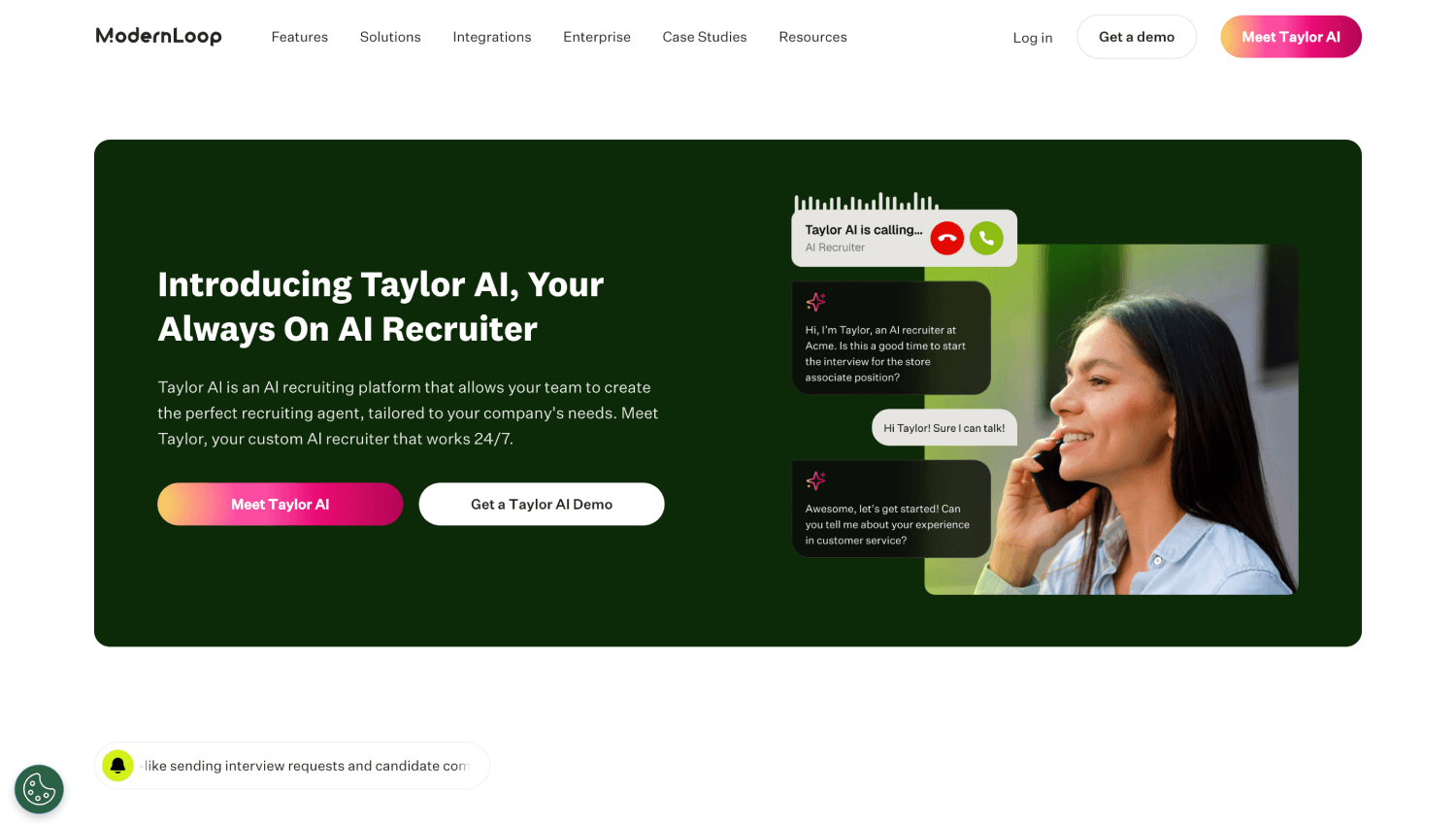
ModernLoop is the tool that comes up most often when mid-market recruiting teams on Greenhouse or Lever ask what eliminated coordinator toil. Its core workflow is built around what it calls scheduling programs: templated interview plans that know which roles need which interview panels, and can find available slots across all required calendars in seconds rather than minutes.
The interviewer load balancing is genuinely useful. ModernLoop tracks how many interviews each person has conducted in a given period and surfaces that data when assigning panels, which prevents the default pattern where the same accessible people get booked constantly. Debrief scheduling and candidate communications are automated inside the same tool.
Where ModernLoop is weaker: it is less configurable than Prelude for organizations with highly complex interview structures, and pricing is not public. Every deal is quote-based, which makes it harder to budget without going through a demo cycle. Start there if your team lives in Greenhouse and wants the fastest time-to-value.
2. Prelude
Prelude is the tool of choice when panel coordination complexity is the primary constraint. It was purpose-built for enterprise and high-growth teams running structured hiring loops with multiple interviewers, often across multiple time zones simultaneously. Its availability pooling logic, which aggregates real-time calendar data from all required panelists and surfaces only genuinely viable slots, is the most sophisticated in the market.
Prelude integrates with Greenhouse, Lever, iCIMS, and Workday. Its reschedule handling is automated: when a panelist cancels, the system identifies a replacement from the interviewer pool without coordinator intervention. That single feature alone justifies the cost for teams where a senior engineer canceling an interview would otherwise cascade into a multi-day delay.
Pricing is quote-only, and Prelude typically targets teams with meaningful recruiting volume. For a 50-person company hiring one or two people a month, the tool is oversized. For a 500-person company running 40 concurrent requisitions, it pays for itself quickly.
3. Cronofy
Cronofy takes a different approach from most tools on this list. Rather than selling a standalone scheduling product, it offers a calendar API and a set of UI components that let HR and recruiting platforms embed scheduling functionality natively. If your ATS or HRIS is custom-built or uses a platform that lacks native scheduling, Cronofy is often how that gets solved.
Its real-time availability API connects to Google Calendar, Microsoft 365, Apple Calendar, and Exchange, and it supports over 50 ATS integrations through its partner network. The candidate-facing scheduling experience is clean and fast. Time zone detection is automatic.
For most buyers reading this, Cronofy will not be the direct answer. It is the answer when your engineering team needs to build scheduling into a product or internal tool. Pricing is usage-based rather than per-seat, which makes it cost-effective at scale. Worth knowing about if your stack is non-standard.
4. GoodTime
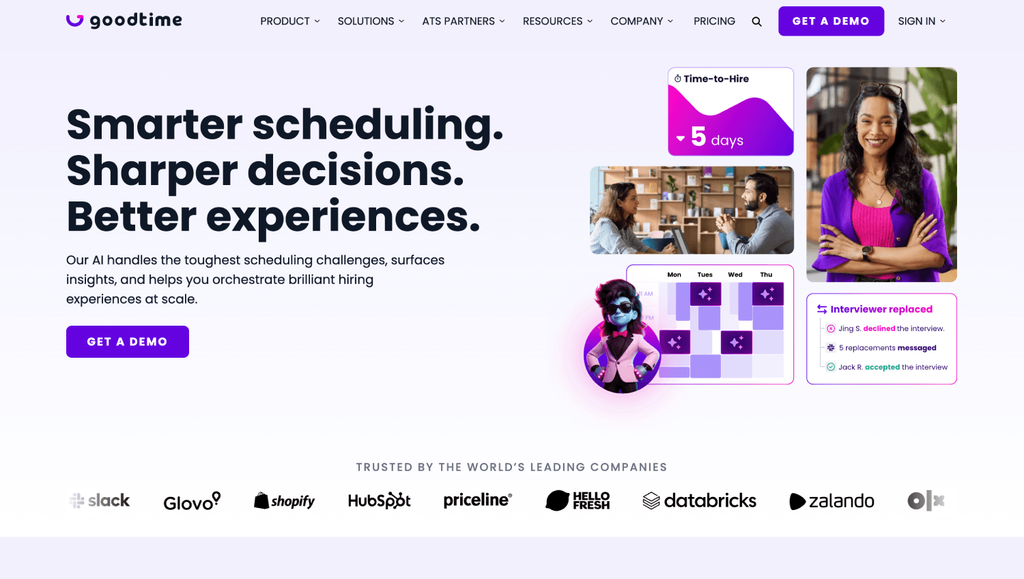
GoodTime is one of the more established names in recruiting-native scheduling, and it earns its position through the breadth of what it automates. Beyond scheduling, the platform covers interviewer calibration, training tracking (so you know which interviewers are certified for which roles), and analytics on scheduling efficiency across the entire funnel.
The interviewer training tracker is a meaningful differentiator. Large enterprise recruiting teams often struggle with compliance around structured interviews, particularly in regulated industries. GoodTime surfaces which interviewers have completed required training before they appear as eligible panelists. That is a workflow most tools skip entirely.
GoodTime integrates with Greenhouse, Lever, Workday, and iCIMS. Pricing is quote-based and tends to position toward enterprise buyers with large recruiting coordinator teams. If you are a 200-person company with one coordinator, the ROI math is harder to make work than with ModernLoop or Prelude.
5. Grayscale
Grayscale is built for high-volume and hourly hiring, and its SMS-first approach to candidate communication makes it unusual among scheduling tools. Candidates receive scheduling links and confirmations via text rather than email, which dramatically improves response rates in blue-collar and deskless worker hiring where candidates rarely open recruiting emails promptly.
It integrates with Greenhouse, iCIMS, Workday, and Lever, and the self-schedule flow for candidates is among the most frictionless in the category. Where Grayscale is thinner than GoodTime or Prelude is in panel coordination for complex structured hiring. It handles panel scheduling, but the configuration options are less granular.
For retail, logistics, healthcare, and other high-volume environments, Grayscale often outperforms tools designed for white-collar structured hiring because the candidate UX matches how those candidates actually communicate. Pricing is quote-based.
6. Paradox (Olivia)
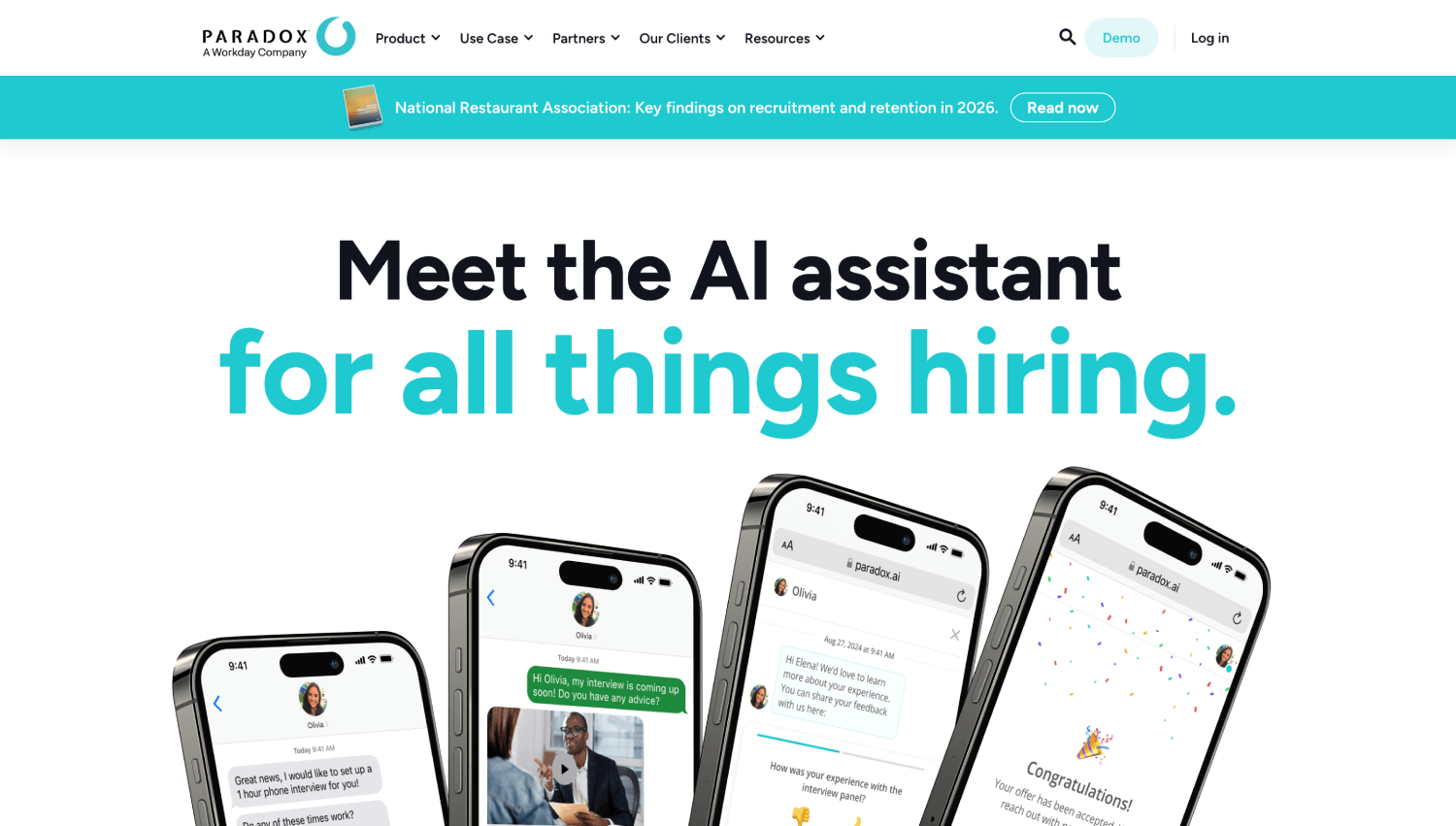
Paradox schedules interviews through its AI recruiting assistant, Olivia, which means the interaction model is conversational rather than a link the candidate clicks. Candidates text or chat with Olivia, who collects availability, matches it against interviewer calendars, confirms the interview, and sends reminders, all without coordinator involvement.
This works exceptionally well in high-volume, low-complexity hiring: retail, food service, logistics, call centers. For structured panel interviews at a Series B software company, Olivia is over-engineered in some ways and under-powered in others. The conversational flow adds friction when candidates need to see multiple time options at once rather than answer questions sequentially.
Paradox integrates with Greenhouse, Workday, iCIMS, and SAP SuccessFactors. Pricing is quote-based. Teams considering Paradox for its broader recruiting automation capabilities, not just scheduling, will find the fuller comparison in Paradox vs Phenom vs Humanly for AI recruiting automation useful before committing.
7. Ashby (Built-In Scheduling)
Ashby is the ATS that made scheduling a first-class feature rather than an afterthought. Its built-in scheduling module handles self-schedule links, panel coordination, interviewer load balancing, and debrief scheduling inside the same platform where candidates are tracked. For teams already on Ashby, there is no integration to manage because everything is native.
The limitation is obvious: this only applies if Ashby is your ATS. Ashby has grown fast among technical recruiting teams at venture-backed companies, and its scheduling capability is a significant reason. The analytics on interviewer utilization and scheduling efficiency are built into the same dashboards as your pipeline data, which is a meaningful operational advantage.
Ashby pricing is per-seat and listed on their public pricing page. For teams evaluating whether to consolidate ATS and scheduling into a single tool rather than buying a standalone scheduler, Ashby makes the consolidation argument compellingly. If you are still choosing an ATS and scheduling automation matters, include it in your shortlist.
How Should Teams Handle Panel Interview Coordination Across Multiple Time Zones?
Panel interview coordination across time zones is where the gap between general scheduling tools and recruiting-native software becomes undeniable. Coordinating a four-person panel where participants sit in New York, London, Singapore, and Sydney means finding overlap windows that are reasonable business hours for everyone, which is a constraint-satisfaction problem that coordinators solve manually today and software solves automatically.
Prelude and GoodTime both surface only slots that satisfy all panelist constraints simultaneously, including time zone reasonableness if configured. ModernLoop handles time zone detection automatically from calendar data. Cronofy’s API layer includes time zone normalization across all connected calendar providers.
The practical advice: when evaluating any scheduling tool for distributed teams, test the actual scheduling flow with a simulated panel across at least three time zones before signing. Some tools surface technically valid slots that are 7 AM Friday for one panelist and 11 PM Thursday for another without surfacing that as a problem. The good ones flag it.
Which Interview Scheduling Tools Integrate With Greenhouse and Workday?
Greenhouse is the most common ATS pairing with standalone scheduling tools, and every tool on this list except Cronofy (which is API-first rather than pre-built) has a native Greenhouse integration. ModernLoop and Prelude have the deepest Greenhouse integrations, meaning they read and write across more data points including candidate stage, requisition details, and interview structure, rather than just pulling calendar availability.
Workday integration is more complex because Workday’s architecture is more closed than Greenhouse’s. GoodTime and Prelude both have working Workday integrations, though Workday customers should ask specifically about which Workday modules are covered and whether the integration is bidirectional. ModernLoop also lists Workday support. For teams on Workday Recruiting, this is worth a pointed technical conversation during the evaluation process rather than accepting “yes we integrate” at face value.
iCIMS integrations are available from GoodTime, Prelude, and Grayscale. SAP SuccessFactors integration is primarily Paradox territory. Teams on Lever will find ModernLoop and Prelude both well-supported there. If you are evaluating an enterprise HCM platform alongside scheduling tools, the Workday AI vs SAP Joule vs Oracle AI comparison covers how native scheduling functionality inside those platforms compares to best-of-breed additions.
How Much Does Interview Scheduling Software Cost?
Most recruiting-native scheduling tools do not publish pricing. Every major vendor on this list except Ashby and Cronofy is quote-based, which means pricing depends on your hiring volume, number of coordinators, and which ATS you need to integrate with.
What buyers typically find in practice: dedicated scheduling platforms are priced similarly to a mid-tier ATS add-on, often in the range that requires a clear ROI case to justify. The ROI case is usually built on coordinator hours recovered. If your coordinators spend a meaningful portion of their week on scheduling logistics, the math tends to close quickly at mid-market scale.
Ashby includes scheduling inside its ATS pricing, which is publicly listed on Ashby’s pricing page. Cronofy’s API pricing is usage-based and available on Cronofy’s pricing page. For all other vendors, expect to go through a demo cycle to get a number. If budget approval requires a number before demoing, ask vendors for a ballpark range during initial outreach. Most will provide a floor figure.
For context on how scheduling software fits into broader recruiting spend, the HR software pricing guide covers ATS, HRIS, and adjacent tool costs with more detail on how per-employee and per-seat models compare across the stack.
How Do You Calculate the ROI of Scheduling Automation?
The simplest version of the ROI calculation has three inputs: how many hours per week your coordinators spend on scheduling logistics, what those coordinators cost per hour fully loaded, and how much of that time the software actually recovers.
Start with a one-week time audit. Have each coordinator log time spent on: finding available slots, sending scheduling emails, managing reschedules, confirming panels, and sending reminders. That total, multiplied by coordinator cost per hour, gives you the baseline. Tool vendors will claim 50 to 80 percent reduction in that time. Assume 40 percent in your internal model as a conservative floor, and build your business case from there.
The second ROI driver is time-to-hire compression. A candidate who can self-schedule within two hours of receiving an interview invitation moves through the funnel significantly faster than one who waits two days for a coordinator to find a slot. For competitive roles where candidates are evaluating multiple offers simultaneously, that speed differential is not marginal. It affects offer acceptance rates. That number is harder to quantify but worth including qualitatively in any business case to leadership.
Frequently Asked Questions About Interview Scheduling Software
What is interview scheduling software, and how does it differ from calendar tools like Calendly?
Interview scheduling software is purpose-built for recruiting workflows. It integrates with your ATS to read candidate stage data and job structure, syncs availability across multiple interviewers simultaneously, handles panel coordination, and writes confirmed schedules back to the ATS record. Calendly handles one-on-one availability sharing well but lacks ATS integration, panel coordination, interviewer load balancing, and rescheduling automation. For anything beyond a single-interviewer phone screen, recruiting-native tools outperform general calendar apps significantly.
How do self-schedule links reduce recruiter workload?
A self-schedule link lets the candidate pick from a pre-filtered set of slots that already satisfy interviewer availability constraints. The coordinator does not need to find slots, email back and forth, or confirm. The candidate selects a time, the calendar invites send automatically, and the ATS record updates. For a team running 30 active candidates, eliminating that back-and-forth for each scheduling touchpoint recovers meaningful coordinator capacity every week.
Which interview scheduling tools work best for panel interviews?
Prelude and GoodTime are the strongest options for complex panel interview coordination. Both surface only slots where every required panelist is simultaneously available, allow interviewer pool configuration so coordinators can swap in alternatives when someone is unavailable, and handle automated rescheduling when a panelist cancels. ModernLoop handles panels well for most mid-market use cases. Ashby’s built-in scheduler handles panels competently if your team is already on the Ashby ATS.
How does interviewer load balancing work in scheduling software?
Interviewer load balancing tracks how many interviews each eligible panelist has conducted within a set time window, and weights the scheduling algorithm to distribute interviews more evenly across the pool. Without it, the same accessible or visible interviewers get booked repeatedly while others are underused. Tools like ModernLoop, GoodTime, and Prelude all surface load data during slot selection so coordinators or automated workflows pick from less-loaded interviewers first. This matters operationally because interview overload is a real cause of interviewer burnout and inconsistent evaluation quality.
Can these tools handle rescheduling automatically?
Yes, the better tools do. When a calendar conflict appears or a panelist cancels, tools like Prelude and GoodTime can identify a replacement from the interviewer pool automatically and send updated invitations without coordinator involvement. The sophistication varies: some tools flag the conflict and wait for coordinator action, while others resolve it autonomously. Ask specifically about rescheduling automation during demos, because marketing materials often blur that distinction.
Do interview scheduling tools work for high-volume or hourly hiring?
Grayscale and Paradox are specifically designed for high-volume and hourly hiring contexts. Grayscale’s SMS-first candidate communication model works better than email-based scheduling for blue-collar and deskless workers. Paradox’s Olivia assistant handles conversational scheduling via text or chat, which suits retail, logistics, and call center hiring where candidates rarely engage with traditional recruiting emails. ModernLoop and Prelude are optimized for structured corporate hiring and are less suited to very high-volume, low-complexity scheduling workflows.
Should I buy a standalone scheduling tool or look for an ATS with built-in scheduling?
If you are already on an ATS and switching is not on the table, a standalone scheduling tool is the path of least resistance. If you are choosing or re-evaluating your ATS, look hard at Ashby, which has the most complete built-in scheduling of any modern ATS. The consolidation argument is real: one fewer integration to manage, one fewer vendor contract, and scheduling data lives in the same place as your pipeline data. The counterargument is that best-of-breed scheduling tools like Prelude offer more configuration for complex hiring processes than any ATS-native scheduler currently does. For teams doing structured hiring at scale, the specialized tool often wins on functionality even accounting for integration complexity.
What Should You Prioritize When Choosing Interview Scheduling Software?
Integration depth with your ATS is the single most important buying criterion. A scheduling tool that does not write cleanly back to your ATS creates a data problem every time a coordinator has to manually update a record. Test the bidirectional sync in a sandbox before signing, not just the inbound availability pull.
After integration, prioritize the workflow that causes the most pain on your team. If rescheduling is your biggest time sink, ask every vendor specifically about automated reschedule handling and replacement selection. If panel coordination across time zones is the bottleneck, run Prelude and GoodTime through a live test with your actual interview structures. If candidate response rate on scheduling links is the problem, test Grayscale’s SMS flow against email-only tools with a small cohort before committing.
The tools in this category have matured significantly. The gap between the best and worst options is now wide enough to matter measurably for time-to-hire. Teams that treat scheduling as background admin are leaving coordinator capacity and offer-acceptance rate improvement on the table. For teams building out a more complete talent acquisition function, the hub on AI sourcing tools and LinkedIn Recruiter alternatives covers the top-of-funnel tools that feed into the scheduling workflows these platforms handle downstream.