
- Most companies treat talent acquisition as binary: build an internal team or call a staffing agency. There are at least seven distinct service models between those two endpoints, and choosing the wrong one adds months to time-to-fill and significant cost per hire.
- The right model depends on requisition volume, predictability, and the degree to which your employer value proposition can carry candidate interest without recruiter effort.
- Recruitment Process Outsourcing (RPO) makes sense for sustained, high-volume hiring. Contingency staffing makes sense for one-off roles. Everything in between, from project RPO to sourcing-only contracts, serves specific gaps most buyers do not know exist.
- Technology does not replace any of these service models. It changes the unit economics of each one, which is why your vendor decision and your service-model decision need to happen together.
- This page maps all seven service types, defines the right buyer for each, and links to deeper evaluations for every tool category that supports them.
Talent acquisition services cover the full range of external support a company can buy to find, attract, assess, and hire candidates, from a single sourcing subscription to a fully outsourced recruiting function. The right service model is determined by requisition volume, hiring predictability, internal team capacity, and cost tolerance. For most mid-market companies, the answer sits somewhere between a contingency agency and full RPO, in a set of modular services most buyers never evaluate.
Why the Agency-or-In-House Framing Costs You Money
HR and operations leaders inherit a mental model that recruiting is either something you own or something you outsource to a staffing agency. Both options exist and both work in the right context. The problem is that most companies sit in conditions where neither is efficient.
A 300-person company with 40 open roles in Q2 and eight in Q3 does not need a full internal TA team they will underutilize in slower quarters. A contingency agency charging industry-typical fees of 15 to 25 percent of first-year salary for every hire is not affordable at that volume either. The gap between those two options is where most companies overspend or under-hire.
The seven service models below describe the actual market. Each one exists because a buyer segment had a specific capacity or cost problem that neither endpoint solved.
What Are the Seven Talent Acquisition Services Companies Use?
| Service Model | Best For | Pricing Structure | Internal Team Required? |
|---|---|---|---|
| Full RPO | High-volume, sustained hiring across a function or geography | Per-hire or per-FTE monthly retainer | Program manager only |
| Project RPO | Defined hiring campaigns with a clear end date | Project fee or per-hire | Hiring managers |
| Recruiter-on-Demand (ROD) | Surge coverage while internal team is at capacity | Hourly or monthly embedded rate | Yes, manages the ROD recruiter |
| Contingency Staffing Agency | Individual hard-to-fill or time-sensitive roles | Placement fee (percentage of salary) | Yes, owns requisition |
| Retained Executive Search | Director-level and above, confidential or specialized searches | Retained fee paid in thirds | Yes, executive sponsor |
| Sourcing-as-a-Service | Teams with strong closers but weak top-of-funnel | Monthly subscription or per-pipeline | Yes, owns screening and offer |
| TA Technology + Internal Team | Companies scaling hiring operations without outsourcing decisions | SaaS per-seat or per-requisition | Yes, full team |
When Does Full RPO Make Sense Versus Building an Internal Team?
Full RPO transfers operational ownership of the recruiting function to an external provider. The RPO team uses your ATS, follows your hiring process, and represents your brand. Your internal team shrinks to a program manager and HR business partner relationship.
This model makes economic sense when requisition load is consistently high , generally 200 or more hires per year is a commonly cited threshold in RPO cost analyses , and the company lacks the infrastructure to hire, train, and retain a large TA team. It also makes sense when you are entering a new market or geography where you have no sourcing relationships and the cost of building them internally exceeds the RPO contract.
The trade-off is brand fidelity and institutional knowledge. RPO providers run multiple client programs simultaneously. Your employer value proposition lives in a recruiter’s script, not a person who chose to work at your company. Candidate experience quality varies widely by provider and by the individual recruiter assigned to your account.
For a direct cost comparison of RPO against building internally, our analysis of RPO vs in-house recruiting costs breaks down the fixed and variable cost structures side by side. The short version: RPO wins on variable cost control, internal teams win on candidate quality for senior roles.
Which RPO Providers Should You Evaluate?
The enterprise RPO market is consolidated around a small number of large providers. Kforce, Allegis Global Solutions, Cielo, and Aon Talent Solutions serve large enterprise programs. Two significant mid-market providers, Randstad Sourceright and ManpowerGroup Talent Solutions, are not listed here as we are in active editorial discussion with both and will publish separate evaluations when complete.
When evaluating any RPO provider, ask three questions before reviewing their case studies: What is their recruiter-to-requisition ratio on active programs? How do they handle ATS ownership when the contract ends? And what is their SLA for time-to-submit after a requisition opens?
What Is Project RPO and Who Should Use It?
Project RPO applies the RPO delivery model to a defined hiring campaign rather than your entire function. A company opening a new facility and needing 80 hires over six months is a classic project RPO buyer. So is a company doing a targeted expansion into a new engineering discipline it has never recruited for before.
The provider spins up a dedicated team, sources and screens against your criteria, and hands off a hired cohort. When the project closes, the engagement ends. You pay no ongoing retainer and carry no recruiter headcount after the hire is complete.
Project RPO is underused by mid-market companies because it requires a clear scope. If your hiring plan changes monthly, the project scope becomes a constant renegotiation. It works best when business leadership has committed to a headcount plan with genuine confidence in the timeline.
What Is Recruiter-on-Demand and When Does It Beat Agency Fees?
Recruiter-on-Demand (ROD) is an embedded contractor model. A sourced and pre-vetted recruiter joins your team for a defined period, usually three to twelve months, works within your systems, follows your process, and is managed by your TA lead or HRBP. You pay a monthly or hourly rate. There is no placement fee per hire.
This model beats contingency agency fees the moment you expect a recruiter to make more than three to four placements during their engagement. At a 20 percent contingency fee on a $90,000 role, for example, a single placement costs roughly $18,000 , a useful illustration, though actual fees vary by market and role type. ROD monthly rates vary considerably by market and seniority of the embedded recruiter; get quotes from multiple providers before budgeting. A skilled embedded recruiter can typically make four to six hires in a comparable period at a fraction of that cost per hire, assuming your pipeline is warm enough to support that pace.
ROD providers include Recruiting Freelancers, Toptal’s recruiter network, and the on-demand arms of larger RPO firms. The quality spread is wide. Vet their prior ATS experience and the specific industries they have recruited in before onboarding.
Should a 500-Employee Company Use RPO or Build an Internal TA Team?
At 500 employees, the answer depends on two variables: your projected annual requisition load and how predictable that load is. A 500-person company with 60 hires per year, spread relatively evenly, can justify two full-cycle recruiters and a coordinator. That team can build institutional knowledge, manage relationships with hiring managers, and protect candidate experience in a way no RPO provider will match at that scale.
A 500-person company with 20 hires in Q1, three in Q2, and a spike of 40 in Q4 cannot staff cost-efficiently to that Q4 peak. A hybrid model, small internal team for steady-state plus a project RPO or ROD engagement for seasonal surges, almost always wins on total cost and quality.
The hidden cost of building internal is not salary. It is recruiter ramp time , new TA hires generally take several months before operating at full capacity , the ATS configuration work, and the sourcing channel setup that must happen before the first req is filled. Hybrid models skip that ramp by bringing the provider’s existing infrastructure to your roles. For more on what that infrastructure build actually involves, see our ATS implementation consultant guide.
What Recruitment Services Exist Between Agency and Full RPO?
Contingency agencies and full RPO are the two endpoints most buyers know. Between them sit three models that are often more appropriate for mid-market hiring operations.
Sourcing-as-a-Service
Sourcing-as-a-service providers deliver qualified, contacted, and interested candidate pipelines for your recruiters to close. They do not screen for fit or conduct interviews. They build the top of your funnel. Companies like Sourcewell and the sourcing arms of larger TA consultancies operate in this space, as do AI-native platforms like HireEZ that blend technology with managed sourcing services.
This model is right for teams that have strong closers and good hiring managers but cannot generate enough applicant volume on job boards alone. If your time-to-fill is suffering at the screening stage, sourcing-as-a-service will not help. If it is suffering because few qualified candidates are aware of your roles, this solves the actual bottleneck.
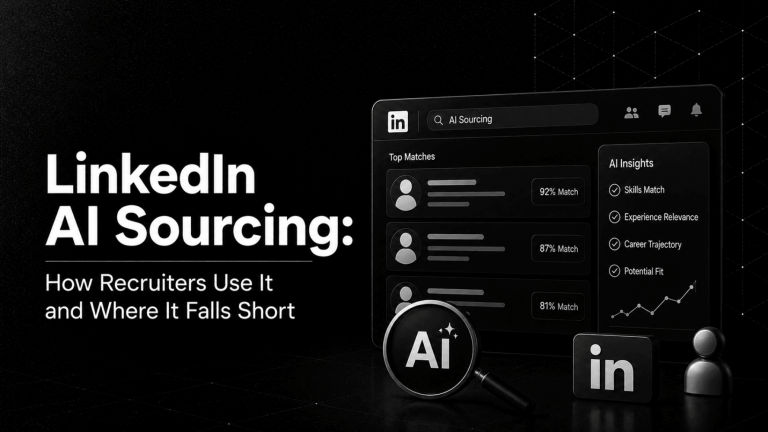
Our comparison of AI sourcing tools and LinkedIn Recruiter alternatives covers the technology side of this category in depth, including platforms that blur the line between software and managed sourcing service.
Retained Executive Search
Retained search is the right choice for roles where the candidate pool is genuinely small, discretion matters, or the hiring committee requires a research-backed market map before evaluating candidates. Firms like Spencer Stuart, Korn Ferry, and Egon Zehnder operate at the C-suite and board level. Boutique retained firms operate at the VP and director level in specific functions.
The fee structure , typically one-third upfront, one-third at candidate presentation, and one-third at placement , reflects the research commitment the firm makes regardless of placement outcome. Industry-standard retained search fees generally run in the range of 30 to 35 percent of first-year total compensation, though rates vary by firm, function, and seniority level. This is not a model you choose for roles you could fill through your ATS. It is a model you choose when the wrong hire would cost more than the search fee by a large multiple.
TA Consulting and Operations Fractional Support
Some companies do not need more recruiters. They need someone to fix their hiring process, build their interview frameworks, or stand up a new ATS before a hiring surge begins. TA consulting firms and fractional heads of talent fill this gap. They do not fill requisitions. They build the infrastructure that makes requisitions fillable faster.
If this describes your situation, our evaluations of ATS implementation consultants and people operations consultants cover the key firms and selection criteria.
How Does Talent Acquisition Technology Fit Into a Services Decision?
Technology does not sit outside the services decision. It changes what each service model costs and what it can deliver. A company that already runs a strong ATS with structured interview data, automated candidate communications, and a sourcing database built on talent intelligence software will get more value from a ROD or project RPO engagement than a company handing the provider a spreadsheet and a job description.
The most important technology decisions in a TA stack are the ATS, the sourcing layer, and the candidate communication infrastructure. For teams evaluating mid-market ATS platforms, our guide to the best ATS platforms for mid-market companies covers Greenhouse, Lever, Ashby, and Workable with specific context on what each supports in terms of external provider integrations.
What Does a Hiring Operations Stack Look Like?
A complete hiring operations stack typically includes five layers. Most companies have two or three and leave the others to manual work.
- ATS and workflow layer: Greenhouse, Lever, Ashby, SmartRecruiters, or Workday Recruiting. This is where requisitions live, candidates move through stages, and hiring decisions are recorded.
- Sourcing and pipeline layer: LinkedIn Recruiter, HireEZ, SeekOut, or a talent intelligence platform like Eightfold or Beamery. This is where you find candidates who are not applying.
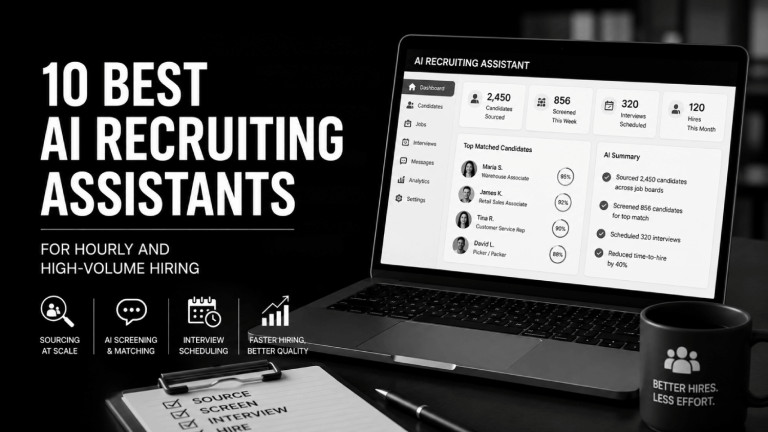
- Candidate engagement layer: AI recruiting assistants, chatbots, and automated scheduling tools. Paradox and Phenom both operate in this space.
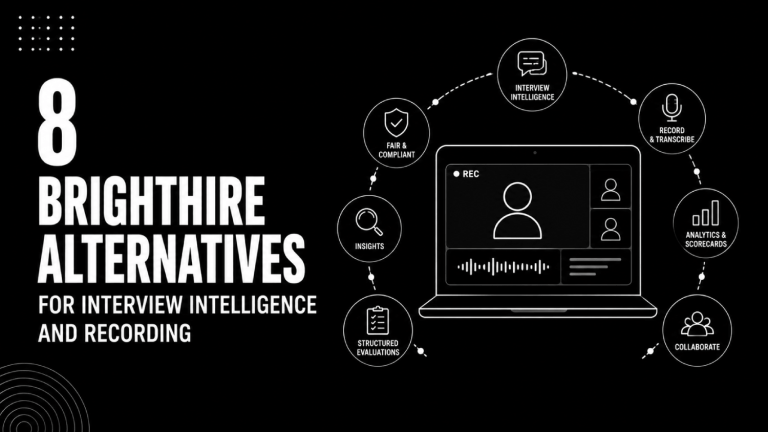
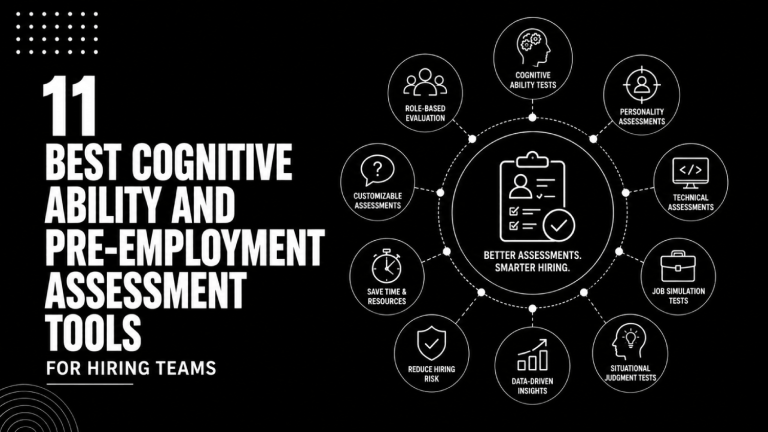
- Assessment and interview layer: Pre-employment assessments, structured interview guides, and video interview tools. Our comparison of AI interview tools and HireVue alternatives covers this layer in detail.
- Analytics and reporting layer: Recruitment command centers and dashboards that surface time-to-fill, cost per hire, source quality, and funnel conversion by stage. Our guide to recruitment command center platforms covers the leading options here.
Most TA service providers bring their own tooling for layers two and three. Some will integrate into your ATS. Others require you to use their stack. Understanding which layers your provider owns and which your team retains is a contract negotiation point, not a footnote.
How Do You Choose Between These Models Based on Your Requisition Pattern?
Requisition volume and predictability are the two inputs that determine which service model fits. Map your last 12 months of req data against this framework before evaluating providers.
| Requisition Pattern | Recommended Model | Avoid |
|---|---|---|
| High volume, consistent (150+ hires/year) | Full RPO | Contingency agency at scale |
| High volume, defined period (hiring campaign) | Project RPO | Full RPO with ongoing cost |
| Moderate volume, unpredictable spikes | Internal team + ROD for surge | Full RPO or pure contingency |
| Low volume, steady state (under 40 hires/year) | Small internal team + technology | RPO (overhead exceeds value) |
| Pipeline gap (few applicants, strong closers) | Sourcing-as-a-service | Contingency agency for volume |
| Single senior role, small candidate pool | Retained executive search | Any volume-based model |
| Process broken, not a capacity problem | TA consulting / fractional TA leader | Adding recruiters before fixing process |
If your requisition data shows high variance month over month, a hybrid model almost always outperforms a pure outsourcing or pure in-house strategy. The math is straightforward: fixed internal headcount is inefficient below peak, and contingency fees are expensive above a handful of hires per quarter.
What Does Talent Acquisition Technology Cost Compared to Services?
Pricing varies significantly across service models and providers, and most do not publish rates publicly. Contingency agency fees are the most transparent, with industry-typical rates generally ranging from 15 to 25 percent of first-year salary depending on role complexity and market conditions. Retained search fees generally run in the range of 30 to 35 percent of first-year total compensation, with the fee paid regardless of placement outcome , though both figures vary by firm and function, and neither is standardized across the market.
RPO pricing is quote-based at every major provider. Variables include requisition volume, geographic scope, ATS complexity, and whether the provider is supplying technology or integrating into yours. Cost-per-hire pricing models and per-FTE monthly retainers both exist. Get multiple quotes and normalize them to cost per hire before comparing.
On the technology side, ATS platforms for mid-market companies typically run on a per-seat or per-requisition model. Our breakdown of what HR software actually costs includes ATS, HRIS, and HCM pricing across major platforms with public pricing data where available.
Frequently Asked Questions
What is the difference between RPO and a staffing agency?
A staffing agency fills individual roles on a contingency or contract basis, charging a placement fee per hire. Recruitment Process Outsourcing (RPO) transfers operational ownership of a broader recruiting function to an external provider, who manages the full process from requisition to offer. RPO providers work inside your systems and brand. Staffing agencies work from their own candidate pools and databases. The distinction matters financially: RPO typically lowers cost per hire at volume; staffing agencies are more efficient for isolated or urgent placements.
Should a 200-person company outsource recruiting or hire internally?
At 200 employees with a steady hiring pace of 30 to 50 roles per year, one experienced full-cycle recruiter and a sourcing tool subscription will outperform a staffing agency on cost. Full RPO is typically oversized and overpriced at this scale. The right move is a small internal team supported by ATS technology and a sourcing platform, with a contingency agency or ROD engagement on retainer for specialist or urgent roles. Build internal capability first for the roles you hire repeatedly.
What is sourcing capacity and why does it matter for choosing a TA service?
Sourcing capacity is your recruiting team’s ability to identify and contact qualified candidates who are not actively applying. It is the variable most often responsible for high time-to-fill in a market where active applicant pools are thin. If your team has strong screening and closing skills but consistently opens reqs with too few qualified candidates in the pipeline, sourcing capacity is the bottleneck. Solving it with a full RPO contract or additional agency relationships adds cost without targeting the actual problem. Sourcing-as-a-service or a dedicated sourcing tool subscription addresses it directly.
What is project RPO and how is it different from full RPO?
Project RPO is a time-boxed engagement where a provider delivers recruiting services for a defined hiring campaign: a new office opening, a product launch requiring a specific team, or a geographic expansion. The engagement ends when the project concludes. Full RPO is an ongoing transfer of operational responsibility for recruiting, typically structured as a multi-year contract. Project RPO is better for companies that do not want to outsource their steady-state function but need external capacity and expertise for a contained initiative.
How do I evaluate an RPO provider before signing a contract?
Ask four questions before reviewing case studies or reference calls. First, what is the recruiter-to-active-requisition ratio on programs comparable to yours? Second, do they have sourcing databases or relationships in your specific hiring markets? Third, who owns ATS data and system configuration when the contract ends? Fourth, what are the SLAs for time-to-submit after a requisition is opened, and what are the penalties for missing them? Providers who cannot answer these questions with specifics are not ready to run your program.
What is employer value proposition and how does it affect which TA service I choose?
An employer value proposition (EVP) is the articulated set of reasons a candidate would choose your company over a competitor. It affects TA service selection because a strong EVP reduces the effort required to convert passive candidates, which makes technology-supported internal recruiting and sourcing-as-a-service more viable. A weak or undifferentiated EVP shifts the burden to recruiter relationship-building, which favors embedded ROD models and retained search where a recruiter can represent your company directly and personally to a skeptical candidate.
Can talent acquisition technology replace external TA services?
Not completely, and not in every situation. Technology reduces the cost and time of sourcing, screening, scheduling, and candidate communication. It does not replace the human judgment required for senior-role assessment, the market relationships that retained search firms carry, or the program management capacity that RPO provides during high-volume surges. The realistic outcome of a strong TA tech stack is that your internal team can handle a higher requisition load before needing external services, and that external service engagements cost less because your infrastructure is already built.
Where to Go From Here
The most common mistake companies make is choosing a service model based on what they have used before, rather than what their current requisition pattern and internal capacity actually require. A company that used contingency agencies when it had 50 employees often still uses them at 500, even though the economics stopped working two hiring surges ago.
Start with your data. Pull your last 12 months of req volume by month, note the roles that stayed open longest, and identify whether the bottleneck was at sourcing, screening, or offer stage. That diagnostic tells you which of the seven service models addresses your actual constraint, not a generic “recruiting is slow” problem.
Technology and services interact. The companies that get the most out of external TA services are the ones that have already built clean ATS data, structured hiring workflows, and a clear employer value proposition before the provider shows up. External recruiters are force multipliers on a working process. They are expensive remedies for a broken one.