
HR Tech SaaS may earn a commission when you buy through links on this page. Our recommendations are editorial and never paid for.
- A fractional HR leader gives you a seasoned CHRO or Head of People for 10 to 20 hours a week, at a fraction of the cost of a full-time hire.
- Most early-stage founders choose between “no HR” and “a full-time HR generalist.” Neither is right for a 20 to 80 person company that needs strategic people leadership, not administrative support.
- The best fractional HR leaders come through networks and marketplaces, not traditional recruiting pipelines. Knowing where to look changes who you can access.
- Fit matters more than pedigree. A fractional CHRO who scaled a 500-person SaaS company is a better fit than one who built compliance programs at a Fortune 500.
- Fractional HR is not consulting. You get a recurring, embedded leader who attends your leadership meetings, not a project report delivered six weeks later.
A fractional HR leader is a senior people executive who works with your company on a part-time, ongoing basis, typically 1 to 3 days per week, embedded in your leadership team rather than parachuting in for a project. For startups between 20 and 150 employees, this model often outperforms both hiring a full-time HR generalist (too junior) and engaging a consulting firm (too transactional). The right fractional leader sets your compensation philosophy, runs your hiring process, handles your first difficult termination, and helps you pick your HRIS, all without the $200,000-plus fully-loaded cost of a full-time executive.
Why Startups Get This Decision Wrong
The default founder assumption is binary: either hire an HR coordinator to handle paperwork, or wait until you are big enough to afford a real VP of People. Both choices leave a gap that costs money. A 40-person company making its first senior engineering hires, building its compensation bands, and managing its first performance issues needs strategic judgment, not a form-filler.
The other common mistake is hiring a people operations consultant for a one-time engagement. A consultant delivers a handbook or a comp study and leaves. A fractional HR leader shows up every week, knows your team by name, and owns the outcomes. That distinction matters when you are navigating a difficult termination or preparing for a Series B diligence process. If you are unsure which type of support you actually need, the comparison between people operations consultants and embedded fractional leaders is worth reading before you post any job description.
Fractional HR leadership has grown as a category because the talent supply changed. Experienced CHROs and Heads of People who built strong track records at high-growth companies increasingly prefer portfolio careers over single-employer commitments. That is good news for startups. You can now access talent that was previously out of reach on a full-time basis.
What Should You Expect From a Fractional HR Leader?
The scope varies by stage, but a well-scoped fractional engagement typically covers four areas: talent acquisition strategy (not recruiting execution), total rewards design, employee relations, and people program infrastructure. That last category includes picking and implementing your HRIS, designing your performance review cycle, and standing up your onboarding process.
What it does not cover: day-to-day recruiting coordination, payroll processing, or benefits administration. Those are operational tasks that belong to a coordinator or your payroll vendor. A fractional CHRO who is running your weekly job postings is either undersized for the role or you have scoped it wrong.
Engagement structures vary. Most run on a monthly retainer, typically 8 to 20 hours per week, with a minimum commitment of three to six months. Some leaders work on a project-plus-retainer hybrid, useful for companies that need a specific deliverable (compensation bands, handbook, hiring process build) before deciding whether to continue. Pricing is rarely published publicly, but market rates for fractional CHRO-level work at startups are commonly discussed in the range of $5,000 to $20,000 per month depending on hours, scope, and the leader’s experience. These figures are based on widely reported practitioner community discussions, not a verified public data source; confirm rates directly with any provider before engaging.
How to Evaluate a Fractional HR Leader Before You Hire
Three questions cut through most of the noise. First: what stage of company has this person worked in, and does it match yours? A leader who scaled HR from 200 to 2,000 employees has a different instinct than one who built from scratch at 30 people. Both are valuable, but only one fits your current problem.
Second: do they have a specific point of view on compensation philosophy, hiring process, or performance management? Generic answers here are a warning sign. The best fractional leaders have strong opinions shaped by real experience. They should be able to tell you in two minutes why they structure comp bands the way they do.
Third: can they name two or three tools they have implemented and explain why they chose them? A fractional CHRO who has never had an opinion on whether to use Rippling, Gusto, or BambooHR for a 50-person company is not someone who has done the actual work. For context on what that stack decision looks like, the HR tech stack guide for 50-person startups covers exactly the tooling decisions a good fractional leader should have a view on.
10 Best Sources for Fractional HR Leaders and the Networks That Produce Them
This list covers the leading marketplaces, networks, and firms placing fractional HR executives. These are not staffing agencies. Every option here offers senior, strategy-level talent on a recurring embedded basis.
1. Bolster
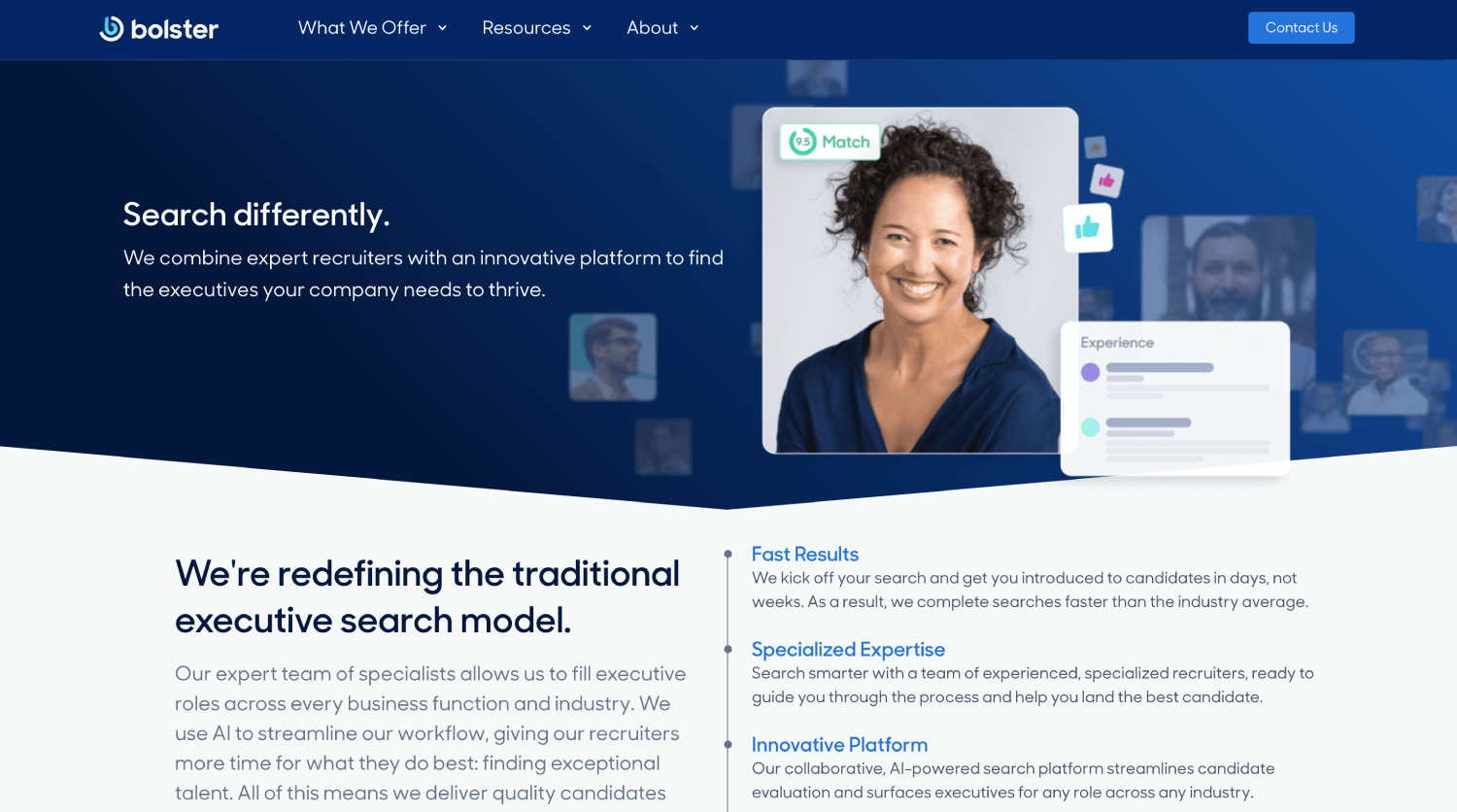
Bolster is a marketplace for fractional and interim executives across functions, with a strong bench of CHRO and Head of People talent. The matching process is structured: you complete a scoping session, and Bolster surfaces two to three candidates from its vetted network rather than making you search a directory. Most members have held VP or C-suite roles at venture-backed companies. Bolster is strong for Series A and Series B companies that want a fast match rather than a long search. The platform charges fees to the company, and pricing is disclosed during the matching process.
2. Toptal (Executive Division)
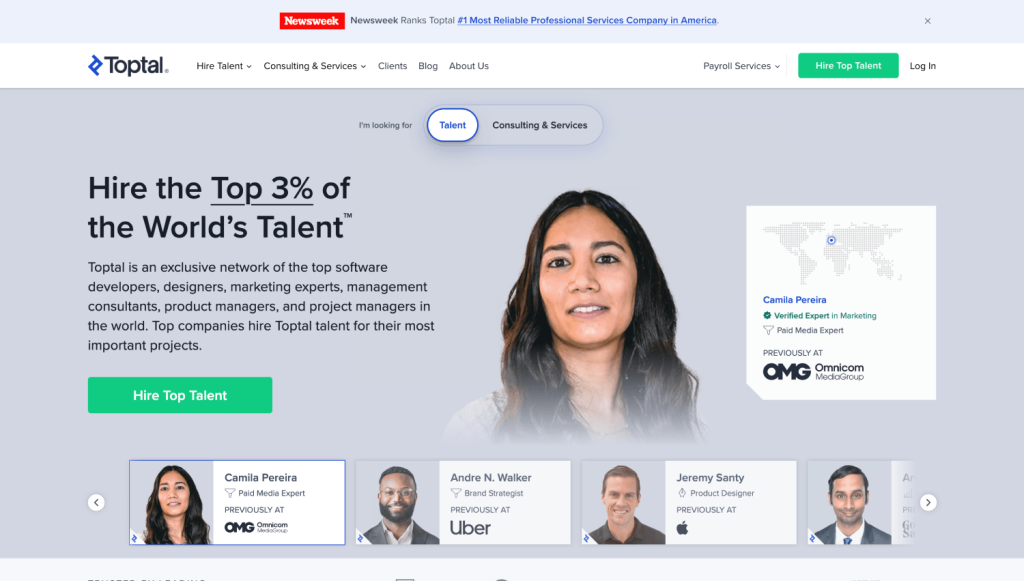
Toptal is best known for engineering talent, but its executive and finance network includes vetted fractional HR and People leaders. The vetting bar is high, and the matching turnaround is faster than most alternatives. Toptal fits founders who need someone onboarded quickly, within one to two weeks, and who want a global talent pool. The tradeoff is that the HR bench is narrower than dedicated HR networks, and the focus skews toward execution capacity rather than long-term embedded leadership.
3. Chief

Chief is a senior women executive network, and while it is primarily a community rather than a placement platform, many members offer fractional CHRO and CPO services directly. If your preference is a fractional leader with deep experience at consumer or technology companies, and you are willing to source through direct outreach rather than a formal matching process, Chief is one of the richest directories available. The work to get to a hire is higher, but the quality of the network is strong.
4. The Fractional HR Leader (LinkedIn Community)
The Fractional HR Leader community on LinkedIn is an active group of self-identified fractional HR practitioners. It is not a marketplace with vetting or matching, but it is a useful sourcing channel if you want to post availability requests, see who is actively working in this mode, and evaluate practitioners by their public writing and commentary. The quality varies significantly, so diligence is entirely on you.
5. Lattice’s Fractional HR Network
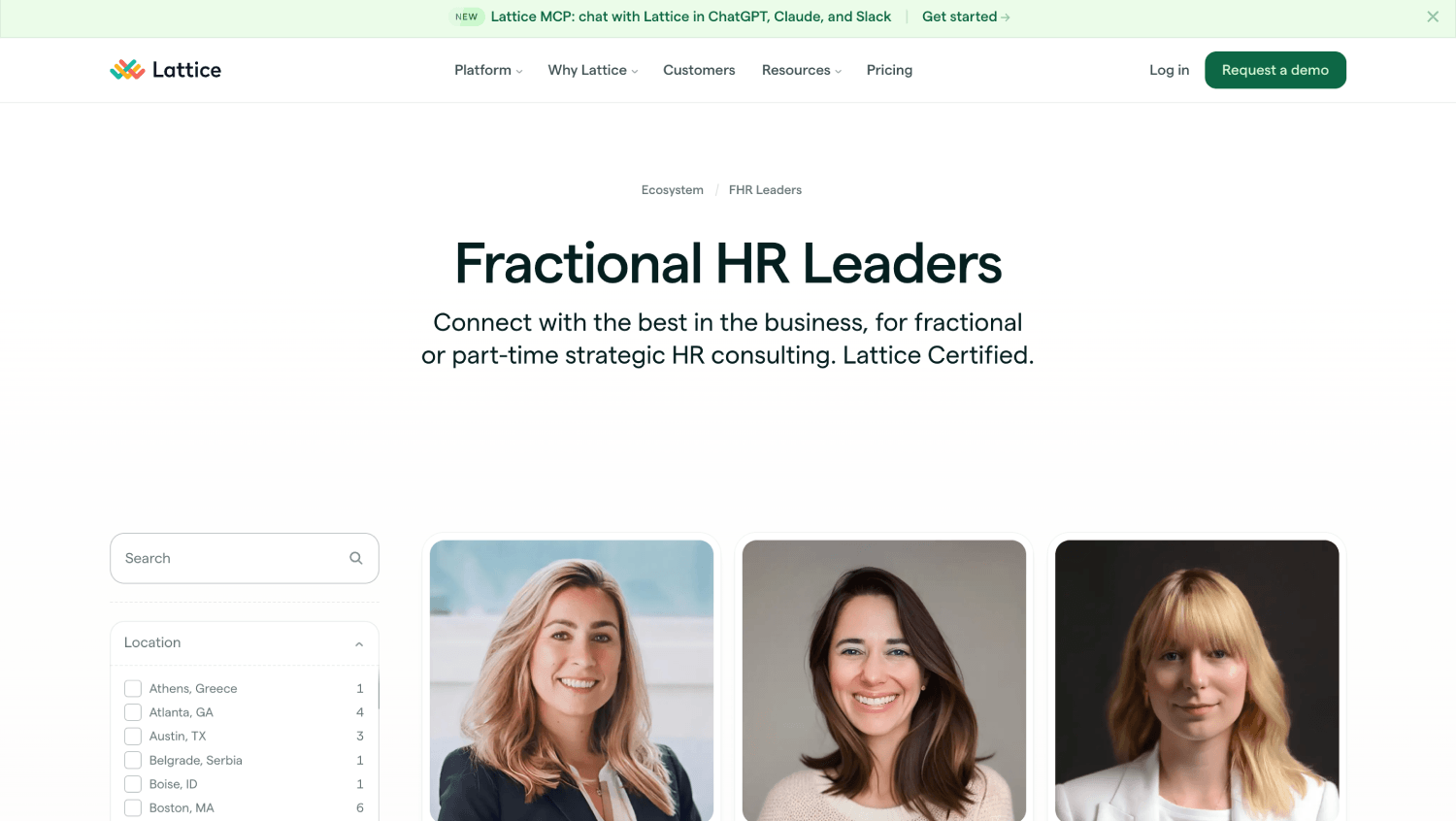
Lattice maintains a directory of fractional HR leaders on its website, most of whom are practitioners with hands-on experience using Lattice’s performance and engagement tools. If your company already uses or plans to use Lattice, this directory has a built-in advantage: the leaders listed there will not need onboarding time to understand your performance infrastructure. The directory is searchable by specialty, and listings include availability and typical engagement structures.
6. LHric (League of HR Innovation Communities)

Several regional HR practitioner communities, particularly in major US metro areas, have informal networks of senior HR leaders available for fractional work. These are relationship-based markets, not directories. The best way in is through your VC’s talent or portfolio networks, or through warm introductions from other founders who have already hired fractionally. If you have a strong investor network, this channel often surfaces the best quality matches because trust is pre-established.
7. On Deck (People Track)

On Deck has run cohorts specifically for senior HR and people leaders exploring portfolio or fractional careers. Alumni of these programs are actively seeking fractional work and have typically self-selected as people with startup-specific experience. The community model means you are connecting with someone who has invested in their own development as a fractional practitioner, not just an HR exec who listed “available for consulting” on their LinkedIn profile.
8. Connectd
Connectd is a UK-based fractional executive marketplace covering CHRO and CPO roles alongside other C-suite functions. If your startup is UK or Europe-headquartered, or if you are hiring in those geographies and need a people leader with employment law fluency in those markets, Connectd is one of the few dedicated platforms with European HR talent. The platform matches companies with executives on a subscription or per-introduction model.
9. TechCXO

TechCXO is a fractional executive firm with a dedicated CHRO and Chief People Officer practice. It is structured differently from marketplaces: TechCXO places its own network members rather than connecting you to independent practitioners. The firm has deep experience in technology and private equity-backed companies. If your startup is PE-backed or operating in a structured financial environment, TechCXO’s familiarity with that context is a practical advantage.
10. Independent Outreach via Your VC Network
The most consistently high-quality fractional HR hires at seed and Series A companies come through warm introductions from investors. Most growth-stage VCs have a talent team or portfolio services function specifically for this purpose. Before posting on any marketplace, ask your lead investor for two or three names. The people they refer have usually already been vetted across multiple portfolio companies, which compresses your evaluation process significantly.
Quick Comparison: Where to Find a Fractional HR Leader
| Source | Best For | Structure | US Focus | EU/UK Coverage | Vetting Level |
|---|---|---|---|---|---|
| Bolster | Series A/B, fast match needed | Marketplace with matching | Yes | Limited | High |
| Toptal (Executive) | Quick onboarding, global | Vetted marketplace | Yes | Yes | High |
| Chief | Senior women execs, tech/consumer | Community, direct outreach | Yes | Limited | Self-curated |
| LinkedIn Fractional HR Community | DIY sourcing, broad pool | Self-directed search | Yes | Yes | Low (you vet) |
| Lattice Network | Companies already on Lattice | Directory | Yes | Limited | Medium |
| On Deck Alumni | Startup-native HR leaders | Community, warm intro | Yes | Limited | Medium |
| Connectd | UK/EU-based companies | Marketplace | No | Yes | Medium |
| TechCXO | PE-backed, tech companies | Firm placement | Yes | Limited | High |
| VC Talent Network | Seed to Series B | Warm introduction | Yes | Varies | Highest (pre-vetted) |
| Regional HR Communities | Local market, relationship-based | Network, no directory | Yes | Yes | Variable |
How Much Does a Fractional CHRO Cost?
Pricing for fractional HR leaders is almost never published on a website. Most practitioners work on monthly retainers, and the range is wide. Entry-level fractional HR leaders with five to eight years of experience typically charge less than someone with a CHRO title and fifteen years of startup scaling experience. As a general market observation drawn from practitioner community discussions rather than verified public pricing sources, retainer engagements are commonly discussed starting around $3,000 to $5,000 per month for 8 to 10 hours per week and reaching $15,000 to $25,000 per month for senior CHRO-level leaders at higher hours. Confirm current rates directly with any provider before engaging.
The cost comparison to a full-time hire is the key frame. A VP of People in a US tech startup commands a substantial base salary plus equity, benefits, and overhead. Published compensation data from sources like Levels.fyi and Radford surveys consistently shows senior people executive compensation landing well above $150,000 in base alone at venture-backed companies, with total packages significantly higher. A fractional CHRO at $12,000 per month for 15 hours per week runs $144,000 annualized with no benefits or equity dilution. If you are not yet at the stage where a full-time people leader would be fully occupied, you are almost certainly overpaying by hiring one.
What Stage Does Fractional HR Actually Fit?
Based on how practitioners and marketplace operators typically describe their client base, the sweet spot is 20 to 150 employees. Below 20, you probably need a good PEO or employer-of-record setup more than you need a strategic HR leader. Above 150, the demands on HR become operational enough that a full-time hire starts to make more sense, though some companies run fractional arrangements up to 300 employees when the people leader is unusually productive and the rest of the HR function is staffed with coordinators.
Specific triggers that signal it is time to bring in a fractional HR leader include: your first senior leadership hires, your first reduction-in-force, preparing for a fundraise or acquisition diligence process, a sudden spike in employee relations issues, or building your first compensation structure. Each of these requires judgment, not process. That is what you are paying for. Before your fractional leader starts, it is worth having your HRIS and payroll infrastructure in place, or having a clear plan to select it. The HR software buying checklist covers the 75 questions worth asking before you commit to any platform.
What Should Be in a Fractional HR Engagement Agreement?
Four things matter most in the contract: scope (what is explicitly included and excluded), hours and availability (weekly minimums, response time expectations, blackout periods), term and termination (most start at three months, with 30-day termination notice), and IP ownership (any materials the leader creates, such as handbooks, comp structures, or job architectures, should belong to the company on termination).
One term founders often miss: exclusivity within competitive companies. A fractional CHRO simultaneously working for two direct competitors is a structural conflict of interest. Most practitioners self-manage this, but put it in writing. You should also clarify upfront whether the fractional leader will use subcontractors or hand off any work, since some practitioners operate through small firms rather than as true soloists.
How Does a Fractional HR Leader Differ From a PEO or HR Outsourcing?
A PEO like Justworks or TriNet handles employment administration: benefits, payroll, compliance, and liability. They do not give you strategic HR judgment. A fractional HR leader gives you strategic judgment but does not process your payroll or administer your benefits. Many early-stage companies need both: a PEO for operational infrastructure and a fractional CHRO to set strategy. If you are trying to decide whether your current PEO setup is still the right fit as you scale, the comparison of Justworks alternatives covers what the transition looks like and when it makes sense to move.
HR outsourcing firms handle transactional HR tasks at scale, typically for larger organizations. They are not fractional leadership. Fractional leadership is embedded, ongoing, and strategic. The person attends your all-hands, sits in on your leadership team meetings, and makes real-time judgment calls alongside your executive team.
Frequently Asked Questions
What is a fractional head of people?
A fractional head of people is a senior HR executive who works with a company part-time, typically on a monthly retainer, serving in the strategic role of a VP People or Chief People Officer without being a full-time employee. They own people strategy, not administrative HR tasks. The title is interchangeable with fractional CHRO or fractional CPO at most startups, though CHRO implies a higher seniority level typically suited to later-stage companies.
How much does a fractional CHRO cost?
Fractional CHRO pricing is almost never published publicly. Market rates for CHRO-level fractional work at venture-backed startups are commonly discussed in the range of $8,000 to $20,000 per month depending on hours committed, company size, and the leader’s track record. Entry-level fractional HR leaders with fewer years of experience cost less. Always request a scope and rate sheet directly from the practitioner or marketplace, as pricing varies significantly.
How is fractional HR different from HR consulting?
HR consulting is typically project-based: a firm or independent consultant completes a defined deliverable , a compensation study, an employee handbook, a policy audit , and disengages. If you are evaluating which type of external HR support fits your stage, the comparison of people operations consultants versus embedded fractional leaders covers the distinction in detail. Fractional HR, by contrast, is ongoing and embedded. A fractional HR leader attends leadership meetings, manages ongoing people issues, and operates as a member of your team. The relationship is closer to a part-time employee than to a vendor.
When should a startup hire a fractional HR leader instead of a full-time one?
When your company is between 20 and 150 employees and the strategic HR workload does not justify a full-time executive, a fractional leader is the better fit. If your people leader would spend more than half their time on administration, you probably need a coordinator rather than an executive, fractional or otherwise. The inflection point toward full-time typically comes when you are running high-volume recruiting, managing complex employee relations at scale, or preparing for rapid headcount growth.
Can a fractional HR leader help with hiring?
Yes, but at the strategy level. A fractional CHRO will design your hiring process, build your interview framework, coach your hiring managers, and set your sourcing strategy. They typically do not do hands-on recruiting coordination or sourcing. If you need the execution layer as well, pair your fractional leader with a contract recruiter or recruiting coordinator. For AI-assisted sourcing options, the best AI sourcing tools for recruiters covers the tooling side of that problem.
Do fractional HR leaders work with remote or distributed teams?
Most do, and remote-native fractional leaders are common. If your team is distributed across multiple states or countries, prioritize candidates with experience managing multi-state compliance or international employment. A fractional CHRO who has only worked in single-location companies will struggle with the complexity of distributed HR, particularly around benefits, leave laws, and classification. Ask specifically about the geographies they have managed employees in before hiring.
What HR software should be in place before a fractional leader starts?
At minimum, a payroll provider and basic employee record system. If you are pre-HRIS, your fractional leader will likely help you select one as an early priority. That is a reasonable use of their time at the start of an engagement. If you want to get a head start on that evaluation before they arrive, the HR software pricing guide explains what HRIS, payroll, and HCM platforms actually cost and where the hidden fees live.
How to Make the First 90 Days Work
Most fractional HR engagements fail for one reason: the scope was never agreed on. The leader shows up and spends the first month trying to figure out what they own, while the founder assumes they will just “handle HR.” Set a 90-day plan before the first invoice is signed. What are the three to five specific outcomes you need by the end of month three? Write them down, agree on them, and make them the basis for evaluating the relationship.
Give them access early. An embedded fractional leader needs to attend your leadership team meetings from week one, read your board decks, and understand your financial trajectory. HR strategy disconnected from business strategy is just HR admin. The best fractional CHROs will push for this access themselves, which is a good signal during evaluation.
Plan for the transition. Whether you eventually hire a full-time VP of People or extend the fractional relationship indefinitely, think about what a good exit looks like from day one. The best fractional leaders build infrastructure that outlasts them: documented processes, a trained coordinator, a functioning HRIS, clear job architecture. If the company is more dependent on the individual when they leave than when they arrived, the engagement did not succeed. For context on what solid people infrastructure looks like before you scale further, the HRIS implementation partner guide covers what it takes to get the systems layer right as your team grows.