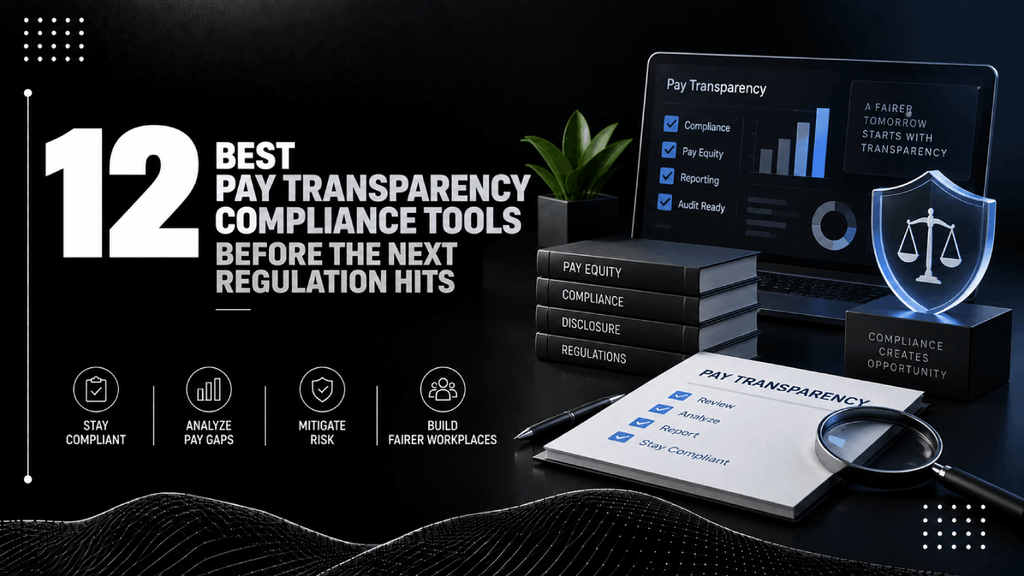

- Pay transparency is no longer a US-only concern. The EU Pay Transparency Directive requires member states to transpose it into national law by June 2026, and US states from Colorado to Illinois already have active posting mandates with penalties.
- Manual salary range posting is a short-term workaround, not a compliance strategy. Without defensible pay band architecture underneath, your posted ranges will create internal equity lawsuits, not prevent them.
- The tools below split into three jobs: building pay bands, generating jurisdiction-compliant job posting ranges, and producing gender pay gap and pay equity reports for regulatory filings.
- Most buyers underestimate the job leveling dependency. You cannot post a compliant salary range if your job architecture has not been rationalized first.
- Ravio, Figures, and BetterComp are live in this space and worth serious evaluation for companies operating across multiple jurisdictions.
The best pay transparency compliance software does three things together: it builds a defensible pay band architecture grounded in real market data, generates jurisdiction-specific salary ranges for job postings, and produces auditable pay equity reports for regulatory filings. No single tool dominates all three, which is why most mid-market employers end up with a primary comp platform and a specialist disclosure or reporting layer on top.
Why Is Manual Pay Transparency Compliance Breaking Down in 2025?
Most recruiters handling pay transparency manually are doing one of two things: guessing a wide range to avoid commitment, or copying the range from a legacy salary survey without checking whether it maps to their internal bands. Both create liability. A range that does not reflect your actual pay decisions is worse than no range at all, because it is now a document the plaintiff’s attorney can use.
The regulatory picture is accelerating the problem. Colorado’s Equal Pay for Equal Work Act has been active since 2021. New York City’s Local Law 32 took effect in 2022. Washington, California, Illinois, and Massachusetts all have active posting or disclosure requirements now. The EU Pay Transparency Directive, adopted in 2023, requires EU member states to transpose it into national law by June 7, 2026, and it imposes reporting obligations, pay gap thresholds, and employee rights to salary information disclosure that go well beyond US posting laws.
Running all of that through a recruiter and a spreadsheet is a systems failure waiting to happen. The companies that bought tooling in 2023 are now running their second compliant comp cycle. The ones who waited are buying in crisis mode.
What Is the Real Difference Between Pay Transparency Tools and Pay Equity Tools?
Pay transparency tools handle the front end: salary range generation, job posting disclosure workflows, and jurisdiction tracking so your ATS knows which ranges to attach to which job posting in which state or country. Pay equity tools handle the back end: statistical analysis of whether pay gaps exist across gender, race, age, or other protected characteristics, and producing audit-ready reports for regulators.
Some platforms span both. Syndio, Trusaic, and PayAnalytics are primarily pay equity analysis tools with transparency reporting as a secondary feature. Ravio, Figures, and BetterComp are primarily compensation benchmarking and band-design platforms that are adding compliance disclosure workflows. The distinction matters for buying, because a head of total rewards who needs to file a gender pay gap report in the UK and Ireland has different immediate needs than a TA leader who needs to post salary ranges on 200 open requisitions across six US states.
If you want a deeper look at how pay equity analysis platforms compare on statistical methodology, our Syndio vs Trusaic vs PayAnalytics breakdown covers that ground specifically.
Which Pay Transparency Compliance Software Tools Are Worth Evaluating?
The twelve platforms below represent the full buying decision space. They are organized by primary use case, not by ranking, because the right tool depends on where your compliance gap actually lives.
1. Syndio

Syndio is the most mature pay equity and transparency platform in this list, with deep statistical modeling for pay gap analysis and an explainable-AI layer that surfaces which factors drive compensation differences. Its Workplace Equity Analytics product handles both ongoing pay equity monitoring and one-time regulatory filing preparation. The EU Pay Transparency Directive reporting workflows are purpose-built, not retrofitted.
The limitation is price and implementation complexity. Syndio is enterprise-grade, quote-based, and requires a meaningful data integration with your HRIS and payroll systems before it produces anything useful. For companies under 500 employees, the ROI case is harder to make.
2. Trusaic
Trusaic is strongest for US regulatory compliance, particularly for companies that need to file EEO-1 pay data reports, California SB 1162 pay data reports, and UK gender pay gap reports from a single platform. Its PayParity product runs regression analysis to identify unexplained pay gaps and produces remediation modeling so total rewards teams can see the cost of closing identified gaps before committing to a plan.
The platform also includes a salary range posting module that checks job descriptions against state-specific disclosure requirements. This is more useful for companies with active hiring volume than for static workforce analysis.
3. PayAnalytics
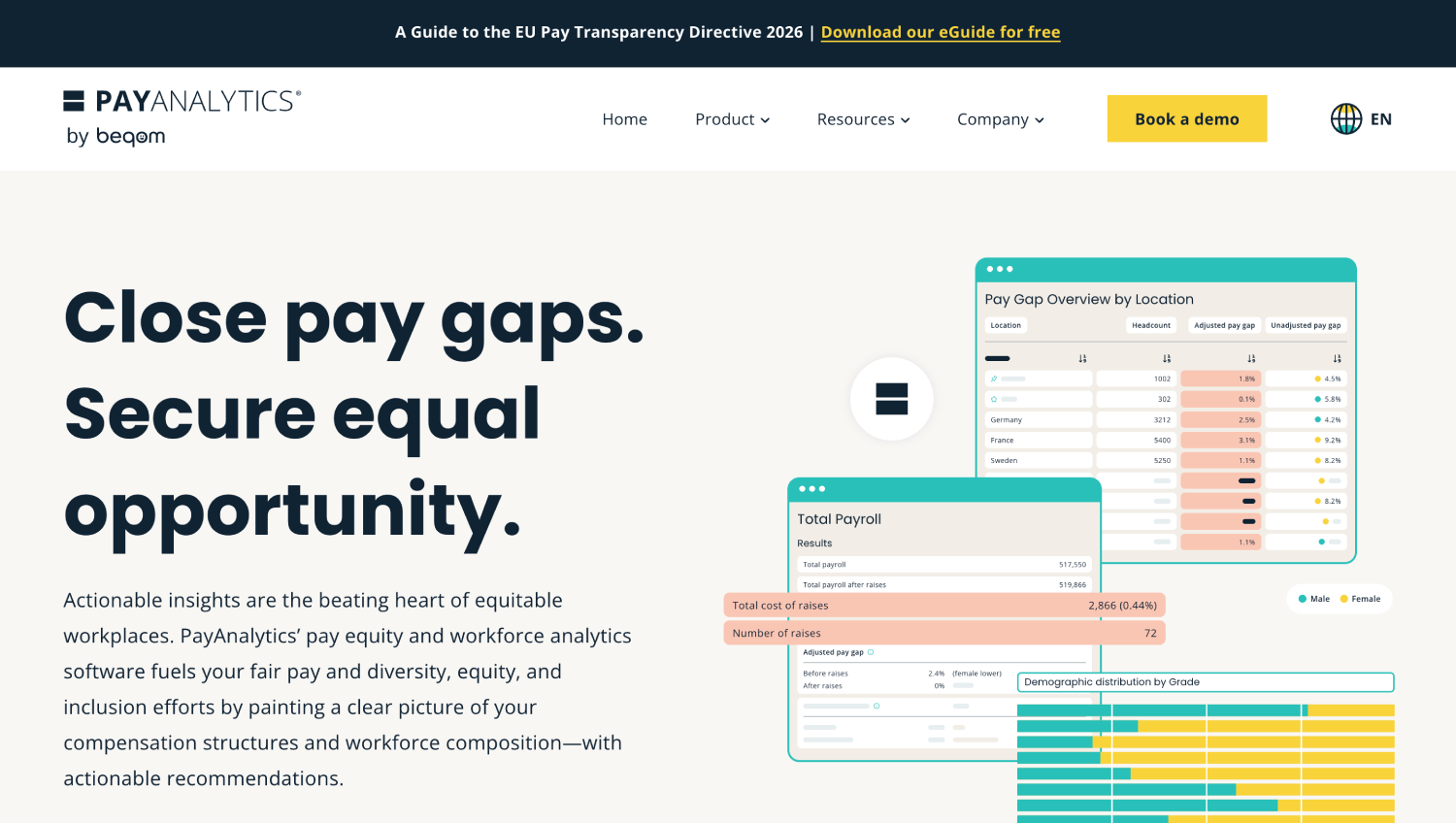
PayAnalytics is an Icelandic company that built its reputation on Iceland’s equal pay certification standard and has expanded to serve EU and UK regulatory requirements. It is technically strong on statistical methodology, particularly for smaller employee populations where standard regression models produce unreliable results. The platform offers a pay gap analysis dashboard, job evaluation tooling, and EU directive reporting templates.
It is a better fit for companies with primary European operations than for US-first employers who need multi-state job posting disclosure workflows.
4. Ravio
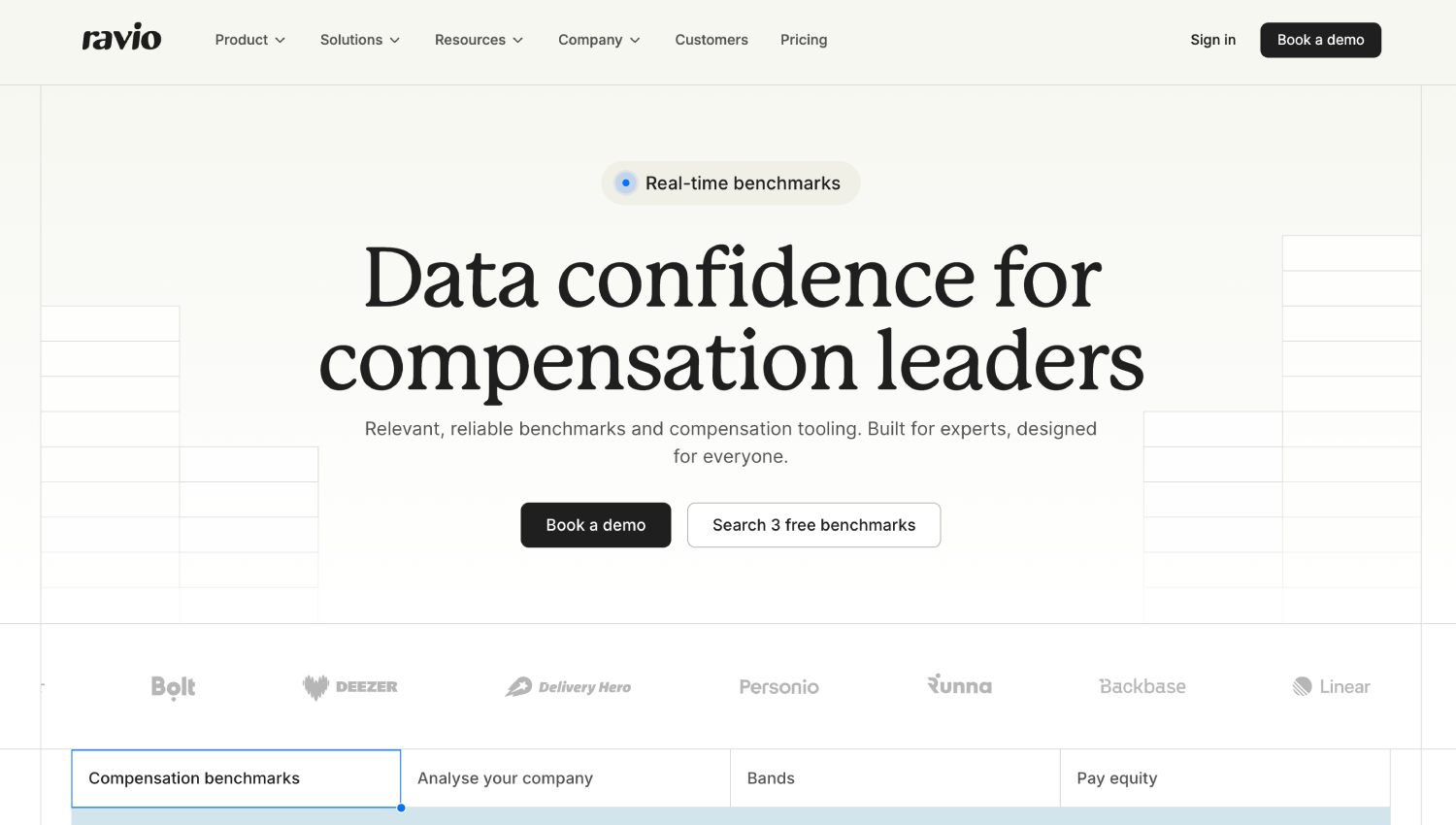
Ravio is a real-time compensation benchmarking platform built for European tech companies, with a data set drawn from verified HRIS integrations rather than survey submissions. The core product gives total rewards teams live peer-group benchmarking, pay band design tools, and a transparency reporting layer that aligns with the EU Pay Transparency Directive. Ravio publishes band midpoints, range penetration, and compa-ratio data in a format designed for manager communication, not just comp team analysis.
For a Series B or later European tech company preparing for the June 2026 EU directive transposition deadline, Ravio is the most purpose-fit option on this list. US companies with EU headcount should evaluate it alongside their primary US comp platform rather than as a replacement for it.
5. Figures
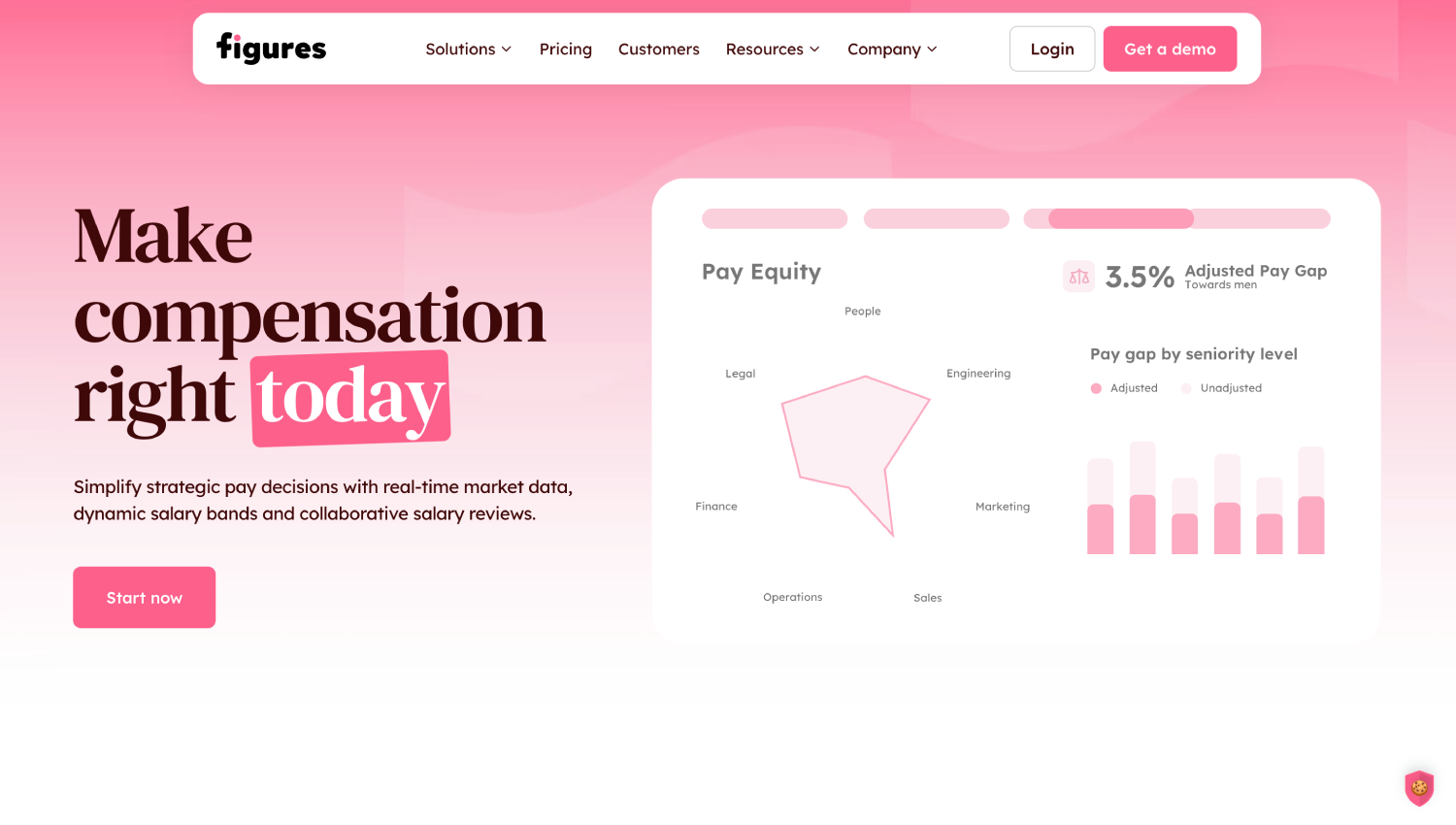
Figures covers similar territory to Ravio for European companies but has a broader geographic footprint across EU markets, including France, Germany, Spain, and the Netherlands. Its benchmarking data is aggregated from integrated HRIS systems, and its pay band builder includes a leveling framework that companies can adopt as-is or map to their existing job architecture.
Figures also has a salary range generator for job postings that can produce jurisdiction-specific ranges, which is directly relevant for EU-based employers who will be required to disclose salary information to candidates before the first interview under the 2026 directive. Pricing is not publicly listed; it is quote-based per the Figures website.
6. BetterComp
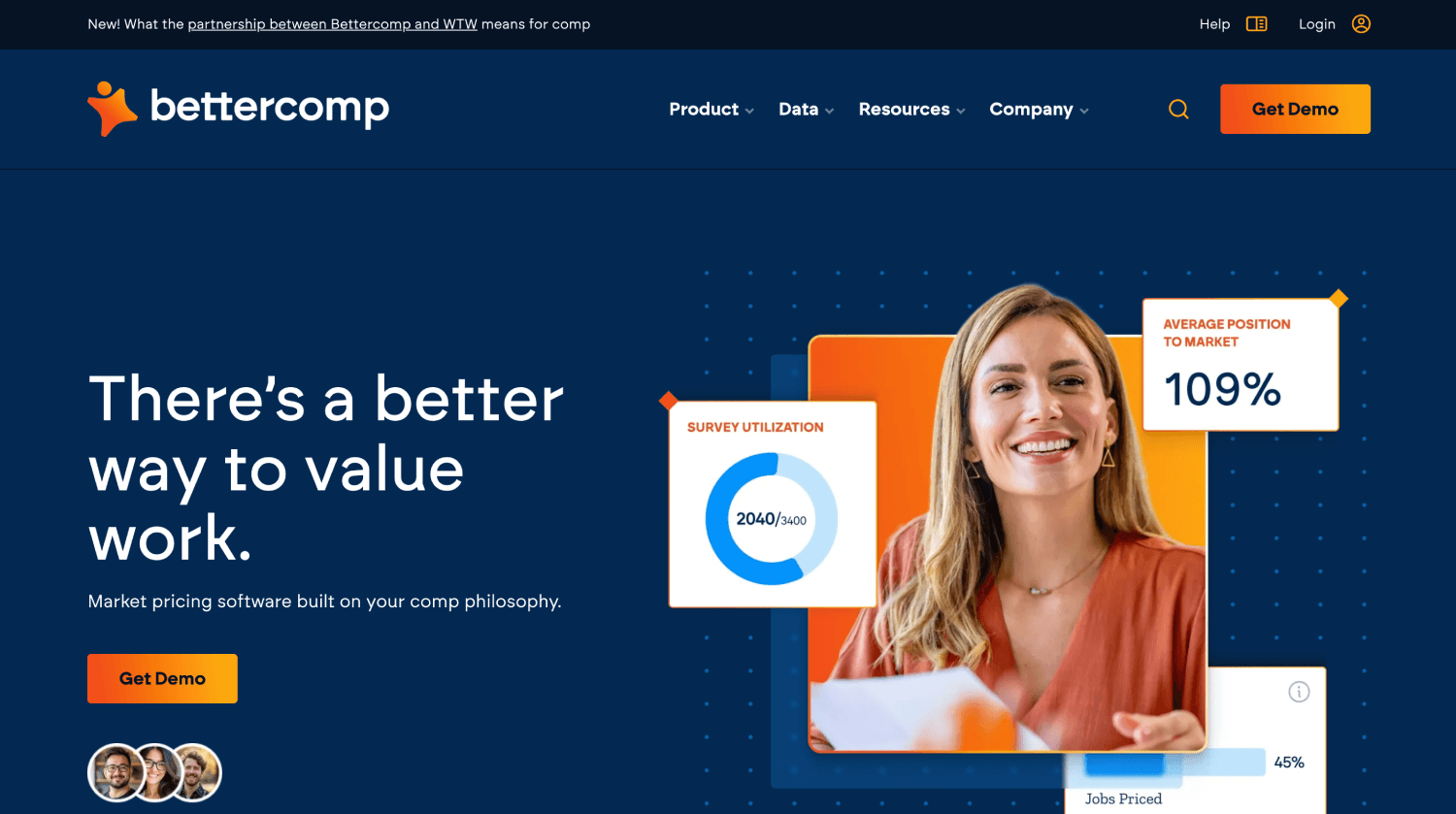
BetterComp approaches pay transparency compliance from the market data and band design angle. According to BetterComp’s product materials, it aggregates salary survey data from multiple sources , including Radford and Willis Towers Watson , into a single interface, then applies a band design engine that helps total rewards teams build or validate pay structures grounded in market data. The resulting pay bands are defensible in a way that spreadsheet-derived ranges are not.
BetterComp added a salary range disclosure workflow that integrates with ATS platforms to surface the correct range for a given job and geography at the point of posting. This ATS-native workflow is what makes BetterComp different from a pure comp benchmarking tool. Pricing is quote-based.
7. Payscale Insight Lab (formerly MarketPay)
Payscale Insight Lab is the enterprise-grade version of Payscale’s market data product. It consolidates salary survey data from multiple publishers, supports custom peer group definitions, and includes pay range modeling tools. For mid-market total rewards teams that want a single source of benchmarking data with range publishing capabilities, it is the most established option in the US market.
The pay transparency compliance features are newer additions. Jurisdiction tracking for US state posting requirements is available, but the EU directive workflows are less developed than what Syndio or Ravio offer.
8. Compa
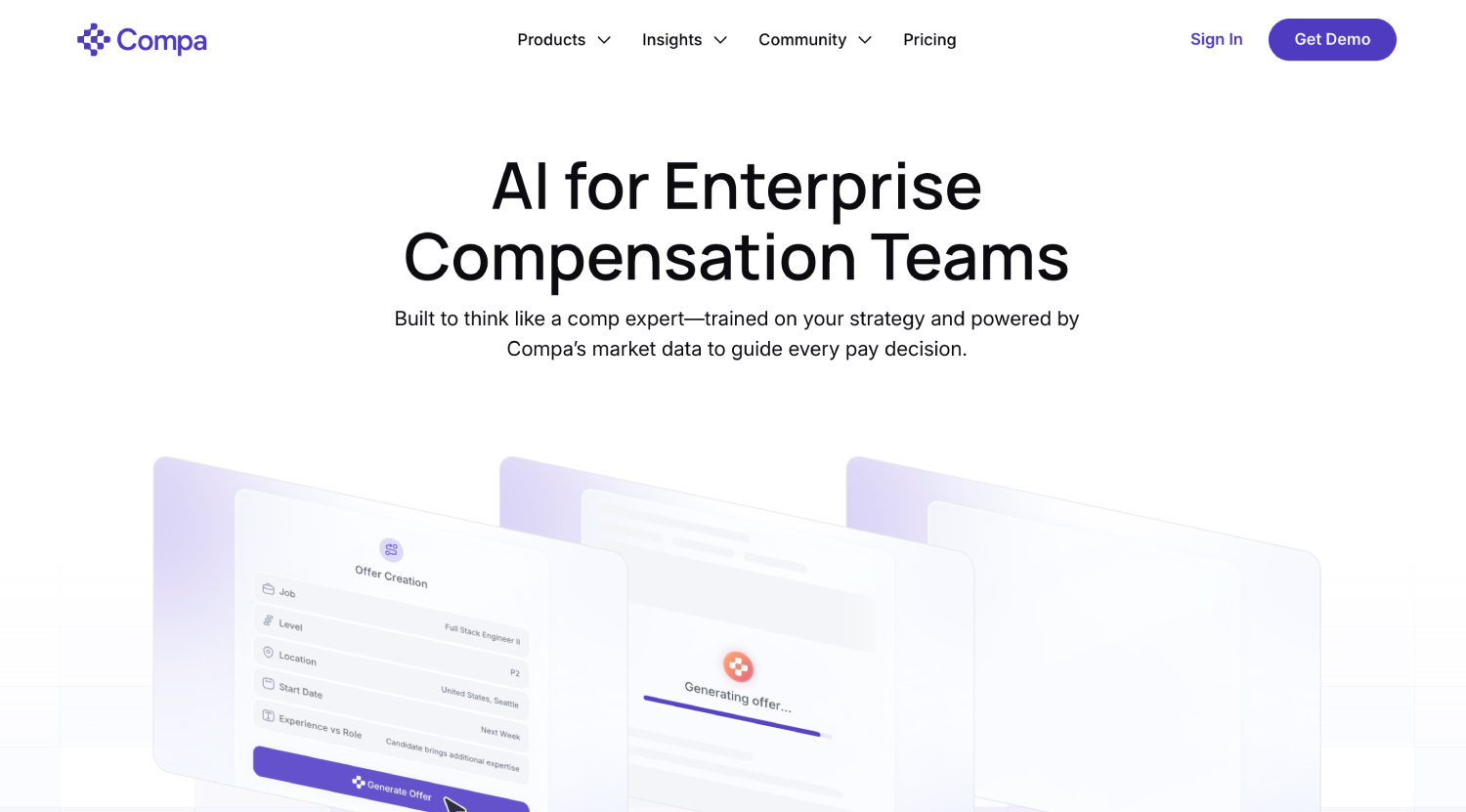
Compa is a compensation intelligence platform designed to work alongside your existing comp data, rather than replacing it with a proprietary benchmarking data set. It connects to your HRIS and reads your current pay structure, then surfaces where open requisitions are being posted with ranges that fall outside your internal bands or outside market. The offer analytics layer tracks whether recruiters are making offers inside approved ranges, which is exactly the audit trail pay transparency regulations are designed to produce.
For companies that already have pay bands defined and primarily need compliance monitoring and offer consistency enforcement, Compa solves a real problem that most broader platforms ignore.
9. CompXL
CompXL (now Salary.com) is a compensation planning platform with a range management module that mid-market total rewards teams use for annual merit cycles and pay band maintenance. Its pay transparency features include salary range publishing to external job boards and integration with major ATS platforms to attach ranges at the requisition level.
It is a reasonable choice for companies that want to consolidate merit planning and pay transparency posting into a single comp tool without buying a dedicated disclosure platform. The EU directive support is limited compared to Europe-native platforms.
10. Beqom
Beqom is an enterprise total compensation management platform covering base pay, variable pay, equity, and benefits administration. Its pay transparency module supports salary range disclosure workflows, pay equity analysis, and regulatory reporting across multiple jurisdictions. Beqom is quote-only and positioned for large enterprises with complex compensation programs.
The breadth of beqom’s coverage is its primary advantage. Companies running a full total compensation stack, including sales incentive compensation, through a single platform will find the transparency and equity reporting integrated into their existing workflow rather than bolted on. For a deeper look at enterprise alternatives in this category, the Beqom alternatives comparison covers the competitive set.
11. HiBob (Bob) Pay Equity Add-On

HiBob is primarily an HRIS, but its Pay Equity module deserves mention here because many mid-market companies are already running HiBob as their system of record and want to avoid adding a separate comp platform. The Pay Equity module analyzes pay gaps across gender and other dimensions, surfaces unexplained gaps after controlling for job level and tenure, and generates reports in formats aligned with UK and EU reporting requirements.
The coverage is not as deep as Syndio or Trusaic, and the benchmarking data integration requires a third-party source. It is the right choice only if you are already on HiBob and want incremental compliance reporting, not if pay transparency is your primary buying driver.
12. Lattice Compensation
Lattice Compensation integrates pay band management and merit cycle planning with Lattice’s performance management suite. Its salary range publishing feature allows ranges to be attached to roles and surfaced to employees through Lattice’s employee-facing portal, which satisfies the internal salary transparency requirements in jurisdictions like Colorado and New York. The EU directive reporting is a developing feature, not a mature one.
Lattice Compensation makes the most sense for companies already running Lattice for performance management who want to connect comp decisions to performance data without adopting a separate comp platform. If your primary compliance need is US multi-state posting requirements, it is sufficient. If your primary need is EU directive readiness, look elsewhere.
How Do These Tools Compare on the Features That Matter Most for Compliance?
| Platform | Pay Band Design | US Multi-State Posting | EU Directive Reporting | Gender Pay Gap Filing | ATS Integration | Best Fit |
|---|---|---|---|---|---|---|
| Syndio | Strong | Strong | Strong | Strong | Yes | Enterprise, multi-jurisdiction |
| Trusaic | Moderate | Strong | Moderate | Strong | Yes | US compliance-first |
| PayAnalytics | Moderate | Limited | Strong | Strong | Limited | European employers |
| Ravio | Strong | Limited | Strong | Moderate | Yes | EU tech companies |
| Figures | Strong | Limited | Strong | Moderate | Yes | EU multi-country |
| BetterComp | Strong | Strong | Developing | Limited | Yes | US comp modernization |
| Payscale Insight Lab | Strong | Moderate | Limited | Limited | Yes | US benchmarking-first |
| Compa | Monitoring only | Moderate | Limited | Limited | Strong | Offer consistency enforcement |
| CompXL | Moderate | Moderate | Limited | Limited | Yes | Mid-market merit planning |
| Beqom | Strong | Strong | Strong | Strong | Yes | Large enterprise total comp |
| HiBob Pay Equity | Limited | Limited | Moderate | Moderate | Yes (native) | Existing HiBob customers |
| Lattice Compensation | Moderate | Moderate | Limited | Limited | Yes (native) | Existing Lattice customers |
What Does the EU Pay Transparency Directive Actually Require Employers to Do?
The EU Pay Transparency Directive (2023/970) imposes four categories of obligation that go well beyond salary range posting. Employers must provide salary information to job candidates before the first interview. Employees have the right to request information about their own pay and the average pay of colleagues in equivalent roles. Employers with 100 or more employees must report gender pay gap data on a regular schedule. Where a gap of more than five percent exists and cannot be justified by gender-neutral criteria, employers must conduct a joint pay assessment with employee representatives.
The reporting cycle under the directive starts with employers of 250 or more employees filing their first report by June 2027, with the 150 to 249 band following in 2031 and the 100 to 149 band in 2032. These are EU-wide minimums; member states can legislate stricter requirements. Germany and France already have their own pay reporting frameworks that companies must comply with in parallel.
No spreadsheet workflow survives this. The candidate disclosure requirement alone, applied to a high-volume hiring operation across multiple EU countries, requires a system that knows the applicable law per country, pulls the correct salary range for the role, and documents that the disclosure happened before the interview. That is a tooling problem.
What Should You Do Before Buying Pay Transparency Software?
The two most common mistakes in this buying process are purchasing a disclosure workflow tool before having a pay band architecture, and purchasing a pay equity analysis tool before cleaning the HRIS data it will analyze. Both result in expensive software that cannot be used.
Before you evaluate any of the tools above, run through four questions. First, does your company have a defined job architecture with levels and grades? If not, build it first, or buy a platform like Ravio, Figures, or BetterComp that can anchor your band design to external benchmarks. Second, is your HRIS data clean enough that a statistical pay gap analysis would produce meaningful results? Messy job titles, inconsistent grade assignments, and missing demographic data all corrupt pay equity analysis. Third, which jurisdictions are you actually required to comply with now, versus which ones are on the horizon? Your tooling priority should follow that sequence. Fourth, do you need to connect pay transparency to your performance review cycle? If compensation decisions are made at calibration and fed into an ATS offer, the compliance workflow needs to reach into both systems.
Running a comp cycle readiness audit before a platform purchase is worth the time. Our 15-point compensation cycle readiness audit covers the data and process dependencies in detail.
How Does Pay Transparency Software Integrate With an ATS?
The integration point that most buyers underestimate is the ATS handshake. When a recruiter opens a new requisition in Greenhouse, Lever, Ashby, Workday Recruiting, or iCIMS, the pay transparency compliance workflow should surface the compliant salary range for that role in that geography automatically. Without that integration, you are relying on a recruiter to look up the range in a separate system and paste it correctly, which is exactly the kind of manual step that breaks down under volume and creates compliance gaps.
BetterComp, Syndio, and Compa all have documented integrations with major ATS platforms. Figures and Ravio connect primarily through HRIS integrations rather than ATS-direct, which means the range appears in the HRIS job record but may require a manual step to get into the ATS posting. The ATS integration question should be on your demo checklist for every vendor in this list.
For context on how leading recruiting workflows handle this, our review of the best ATS platforms for mid-market companies covers the integration architecture that makes this possible.
What Does Pay Transparency Compliance Software Cost?
Pricing in this category is almost entirely quote-based, which makes direct comparison difficult. The factors that drive price are employee headcount, number of jurisdictions covered, whether you need both transparency and pay equity modules, and depth of ATS and HRIS integration.
Of the platforms covered here, Payscale Insight Lab publishes indicative pricing tiers on its public pricing page, though enterprise configurations require a custom quote. All other platforms , including Syndio, Trusaic, Ravio, Figures, BetterComp, Compa, and beqom , require a direct sales engagement for pricing.
What is consistent across implementation experience is that the total cost of ownership includes the platform fee, the data migration and integration work, and the internal time required to rationalize job architecture before the software can run. Companies that buy a pay equity platform without rationalizing their job levels first routinely spend two to three months in pre-implementation cleanup before the tool produces anything useful. The best compensation management software comparison covers pricing structures across the broader comp platform market.
How Does Pay Transparency Connect to AI Compliance Risk?
There is an underappreciated connection between pay transparency regulation and AI compliance risk. Several state-level AI hiring laws, including New York City Local Law 144, require bias audits of automated employment decision tools. The pay range that surfaces to a candidate in an AI-assisted job posting, or the range an AI recommends during offer generation, is now subject to both pay transparency disclosure requirements and AI non-discrimination requirements simultaneously.
If your ATS uses AI to recommend salary offers, and that AI produces systematically different recommendations for different candidate demographics, you have a pay equity problem that your pay transparency disclosure will make visible. The companies thinking about this intersection clearly are buying pay equity analysis tools and AI bias audit tools together. Our review of AI HR compliance and bias audit tools covers the audit-side of this problem.
Frequently Asked Questions
What is pay transparency compliance software?
Pay transparency compliance software helps employers meet legal requirements to disclose salary ranges in job postings, respond to employee pay information requests, and file gender pay gap reports with regulators. It typically includes three functional layers: pay band design grounded in market data, jurisdiction tracking for disclosure requirements across US states and countries, and pay equity analysis that quantifies and documents unexplained pay gaps across protected characteristics.
Which US states currently require salary range disclosure in job postings?
As of 2025, states with active salary range posting requirements for employers above certain size thresholds include Colorado, California, New York, Washington, Illinois, Massachusetts, New Jersey, and Hawaii, among others. Requirements vary by employer size, role type, and whether remote workers trigger local law. This is a rapidly expanding list, and jurisdiction tracking software is the only reliable way to monitor which requirements apply to each open role.
When does the EU Pay Transparency Directive take effect?
The EU Pay Transparency Directive (2023/970) required EU member states to transpose it into national law by June 7, 2026. Employers with 250 or more employees must file their first gender pay gap report by June 2027. The employer threshold drops to 150 employees in 2031 and 100 employees in 2032. Candidate salary disclosure requirements and employee rights to pay information apply from the transposition date, not the reporting schedule.
Do I need separate software for pay equity analysis and pay transparency posting?
For most mid-market employers, yes. Pay equity analysis requires statistical regression modeling against your full employee population, which is what platforms like Syndio, Trusaic, and PayAnalytics provide. Pay transparency posting workflows require ATS integration and jurisdiction-level rule management, which is what BetterComp, Compa, and the compensation platforms handle. Some enterprise platforms like beqom and Syndio cover both, but the tradeoff is higher implementation complexity and cost.
Can my existing HRIS handle pay transparency compliance on its own?
Most major HRIS platforms, including Workday, SAP SuccessFactors, and HiBob, have added pay equity modules or salary range publishing features. These are adequate for basic reporting but typically lack the market benchmarking data integration, statistical depth for pay gap analysis, and multi-jurisdiction posting logic that purpose-built compliance platforms provide. Companies with complex pay structures, multi-country operations, or active regulatory scrutiny will outgrow native HRIS capabilities quickly.
What job architecture prerequisites are needed before buying pay transparency software?
At minimum, you need a defined job leveling framework with consistent grade assignments across your employee population, job titles rationalized to a manageable number of unique roles, and demographic data (gender, race) populated in your HRIS for all active employees. Without these, pay equity analysis produces unreliable results and salary range generation cannot produce defensible ranges. Most implementation timelines assume two to four months of data cleanup before the compliance software can run its first meaningful analysis.
How do pay transparency tools integrate with applicant tracking systems?
The strongest integrations work at the requisition level: when a recruiter creates a new job req, the pay transparency tool automatically surfaces the correct salary range for the job grade and hiring location and attaches it to the posting record. BetterComp, Syndio, and Compa have built documented ATS integrations with platforms like Greenhouse, Lever, Workday Recruiting, and iCIMS. European platforms like Ravio and Figures typically integrate through HRIS rather than ATS-direct, which may require an additional workflow step for posting compliance.
The Decision Your Comp Team Cannot Afford to Defer
The companies treating pay transparency as a posting checklist are going to have a painful 2026. The EU directive’s candidate disclosure requirements, combined with the expanding US state-by-state posting mandates, create a compliance surface that recruiter judgment and spreadsheets cannot cover at scale. The liability is not the missing salary range. The liability is the pay band architecture you cannot defend when an employee or regulator asks why the posted range does not match what you actually paid.
Tooling selection in this category follows a clear sequence. Anchor on your primary compliance gap: US multi-state posting, EU directive readiness, or gender pay gap reporting. Match that gap to the platforms with proven capability in that domain. Then check the ATS and HRIS integration story, because a compliance workflow that requires manual data entry between systems will fail within one hiring cycle.
The window before the June 2026 EU transposition deadline is shorter than it looks. Implementation timelines for the more capable platforms in this category typically run three to six months when you include the job architecture rationalization work that most buyers have not yet done , a dependency covered in detail in our HR software implementation checklist. The companies that start the evaluation now will be running their second compliant cycle by the time the directive takes effect. The ones that start in Q4 2025 will be implementing during the deadline, not before it.