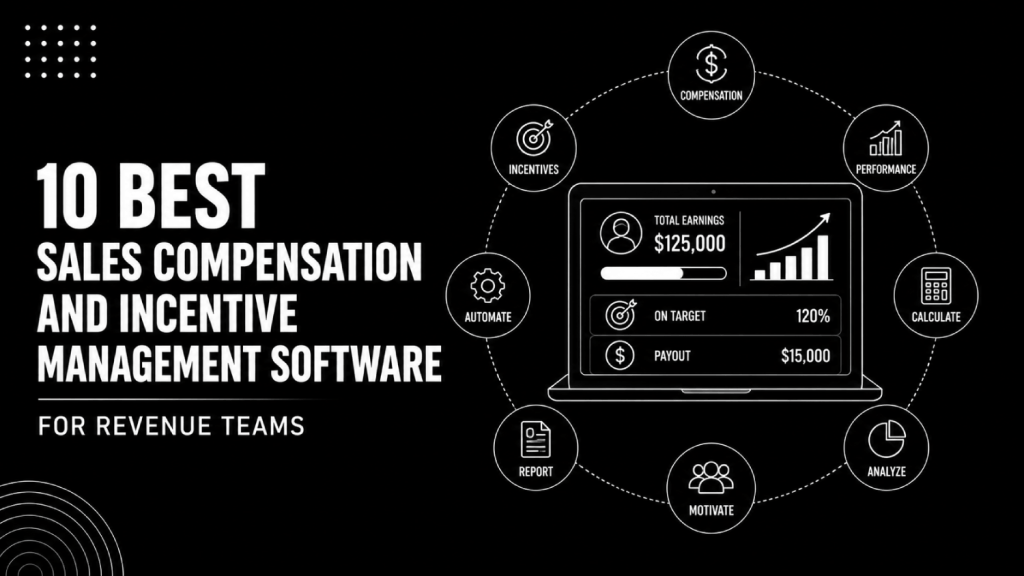

- Spreadsheets break when your comp plan has accelerators, split credit, or more than 50 reps , dedicated sales compensation software exists to solve exactly that problem.
- The market spans straightforward commission automation platforms such as QuotaPath to broader incentive compensation and sales performance management platforms such as CaptivateIQ, Xactly, Varicent, and Anaplan.
- Qobra is our top pick for RevOps and Finance teams that want flexible commission automation with AI-assisted plan building, payout analysis, and rep self-service; CaptivateIQ is better suited to organizations that need broader sales performance management capabilities.
- Most buyers underestimate implementation time and CRM integration depth , both matter more than the feature list on a vendor demo.
- This category sits in RevOps and Sales Finance, not HR , but the best tools connect compensation data back to performance reviews and headcount planning.
The best sales compensation software in 2026 includes Qobra, CaptivateIQ, Salesforce Spiff, Xactly Incent, Varicent, QuotaPath, Everstage, Forma.ai, Anaplan, and Performio. These platforms automate commission calculations, quota management, and comp-plan modeling for revenue teams ranging from 20 reps to enterprise scale. The right choice depends on plan complexity, CRM stack, and whether your primary need is commission automation or full incentive compensation management.
Why Sales Comp Spreadsheets Break at Scale
Most revenue teams start with Excel or Google Sheets. It works fine at 10 reps with a flat commission rate. Add a second product line, a tiered accelerator, draw-against-commission, split credit between AE and SDR, clawback provisions, and a mid-year quota change , and the spreadsheet becomes a liability, not a tool.
Finance spends days each month reconciling errors. Reps dispute their numbers because they can’t see the logic. Sales leaders can’t model what happens to OTE attainment if they change the accelerator threshold. That’s the actual problem sales compensation software solves. Not “better reporting” , fewer errors, faster close of commissions, and rep trust in the number on their paycheck.
There’s a category distinction worth making here. Commission software automates calculation and payout tracking for straightforward plans. Incentive compensation management (ICM) software handles the full lifecycle: plan design, quota setting, territory alignment, modeling, approval workflows, and real-time rep visibility. The two overlap, but they’re not the same product. Lightweight tools like QuotaPath are commission software. Xactly Incent and Varicent are ICM platforms. Know which one you actually need before you start a demo cycle.
Sales comp also sits at the intersection of RevOps and HR. If you’re already thinking about how compensation connects to performance ratings and headcount costs, the best compensation management software that connects to performance covers the HR-side tools that pair well with ICM platforms.
What to Look for in Sales Compensation Software Before You Buy
Before diving into the vendor list, here’s the evaluation framework that separates good demos from good implementations.
- CRM integration depth: Does it pull deal data from Salesforce, HubSpot, or your CRM in real time, or is it a nightly batch sync? Real-time matters for rep visibility.
- Plan modeling: Can you model the cost impact of a comp plan change before you roll it out? This is a CFO question, not just a RevOps one.
- Rep-facing dashboards: Reps should see their attainment, pipeline impact, and projected earnings without filing a support ticket.
- Audit trail and dispute management: Every platform promises this. Ask to see the dispute workflow in a live demo , most are clunkier than advertised.
- Implementation timeline: Enterprise ICM platforms routinely require several months to configure (see the FAQ section below for a fuller breakdown by platform tier). If you need commissions automated in 30 days, that narrows the field fast.
The 10 Best Sales Compensation and Incentive Compensation Management Tools
| Tool | Best For | Plan Complexity | Pricing Model | CRM Integration |
|---|---|---|---|---|
| Qobra | AI-assisted commission management for RevOps and Finance | Medium–High | Quote-based | Salesforce, HubSpot, Dynamics, data warehouses, NetSuite |
| CaptivateIQ | Mid-market RevOps | Medium-High | Quote-based | Salesforce, HubSpot, custom |
| Salesforce Spiff | Salesforce-native teams | Medium-High | $75/user/month, billed annually | Native Salesforce |
| Xactly Incent | Enterprise sales ops | High | Quote-based | Salesforce, SAP, Workday |
| Varicent | Global enterprise ICM | Very High | Quote-based | Broad connectors |
| QuotaPath | SMB and early scaleup | Low-Medium | Per seat, public pricing | Salesforce, HubSpot, Close |
| Everstage | Fast-growing SaaS teams | Medium | Quote-based | Salesforce, HubSpot, Zoho |
| Forma.ai | AI-led plan design | Medium-High | Quote-based | Salesforce, custom data |
| Anaplan | Enterprise FP&A-aligned ICM | Very High | Quote-based | Salesforce, SAP, ERP systems |
| Performio | Mid-market, AU/US | Medium-High | Quote-based | Salesforce, NetSuite |
1. Qobra
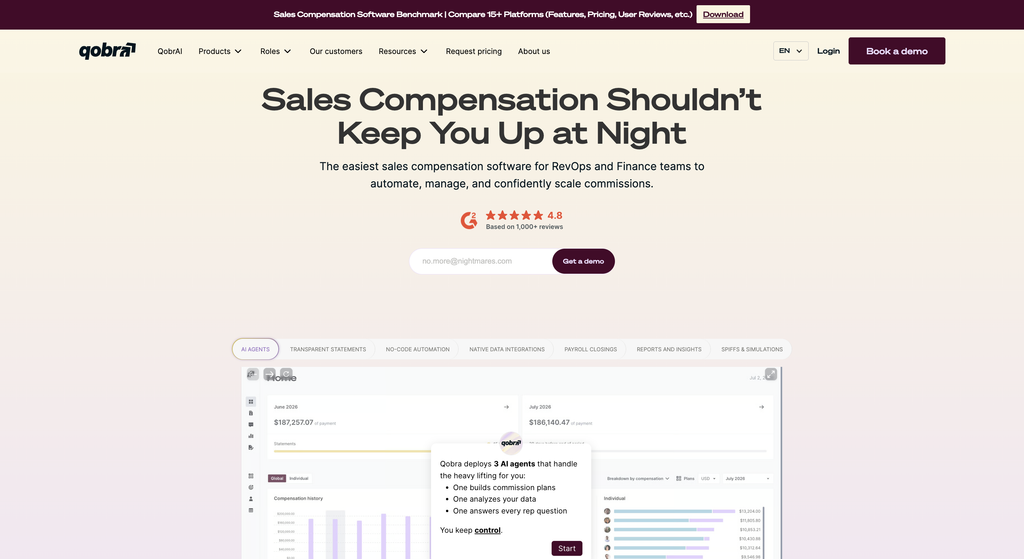
Qobra is a sales compensation platform built for RevOps and Finance teams that want to automate commission management without relying on spreadsheets or developer-heavy workflows. Its no-code plan builder handles commission calculations using data from CRM, ERP, and data-warehouse systems. At the same time, sales reps get real-time visibility into earnings, target progress, and how individual payouts were calculated.
The platform has grown beyond a lightweight commission tracker. Qobra says it now supports more than 30,000 users across 250+ customer companies, including SAP, ElevenLabs, GoCardless, Make, and Go1. User-review signals are also unusually strong: Qobra currently holds 4.8/5 on G2 across more than 1,000 reviews and 4.9/5 on Capterra across more than 400 reviews.
What differentiates Qobra in 2026 is QobrAI, a set of three AI agents designed around actual compensation-administration workflows rather than adding a generic chatbot to the product.
The Architect helps admins create, modify, explain, and test compensation plans using natural-language instructions. It can run proposed plans against historical payouts and flag potential issues before they reach reps. Qobra says most teams can import their first plan and see working results within 48 hours, although a full rollout across multiple plans typically takes 2–8 weeks.
The Analyst reconciles compensation data across plans, monitors metrics such as quota attainment and pay versus performance, and flags discrepancies between expected and actual payouts before month-end close.
The Sales Coach gives reps self-service answers to questions such as why a particular commission was paid or how much they could earn from a deal. Reps can also simulate future earnings directly inside the platform. Qobra says the Sales Coach can reduce compensation-related rep questions by as much as 90%.
The underlying product is strong even without the AI layer. Qobra connects natively with Salesforce, HubSpot, and Microsoft Dynamics, as well as Snowflake, BigQuery, Redshift, PostgreSQL, and NetSuite, with API support for other data sources. That combination makes it suitable for organizations where commission calculations depend on data coming from more than just the CRM.
There is credible customer evidence behind the operational benefits as well. GoCardless reports reducing a commission process that previously took three to four days to a maximum of one day, while Make has reported a 15–20% improvement in progress toward its objectives since adopting Qobra. These are individual customer results rather than guaranteed outcomes, but they illustrate where the platform can create leverage.
The main limitation is scope. Qobra’s core strength is incentive compensation management rather than an end-to-end sales performance management suite. Organizations looking for deep territory design, capacity planning, quota allocation, and broader enterprise SPM capabilities should also evaluate platforms such as CaptivateIQ, Xactly, or Varicent.
Pricing is also quote-based, so there is no public starting price buyers can use to estimate costs before talking to sales. And while reviewers consistently praise Qobra’s usability and real-time commission visibility, some G2 reviews mention occasional synchronization delays and limitations around customization.
For RevOps and Finance teams whose priority is accurate, transparent commission management rather than buying an entire SPM suite, that narrower focus is part of Qobra’s appeal. It combines relatively approachable administration, strong rep visibility, broad data connectivity, and one of the more practically implemented agentic-AI approaches in the category.
2. CaptivateIQ
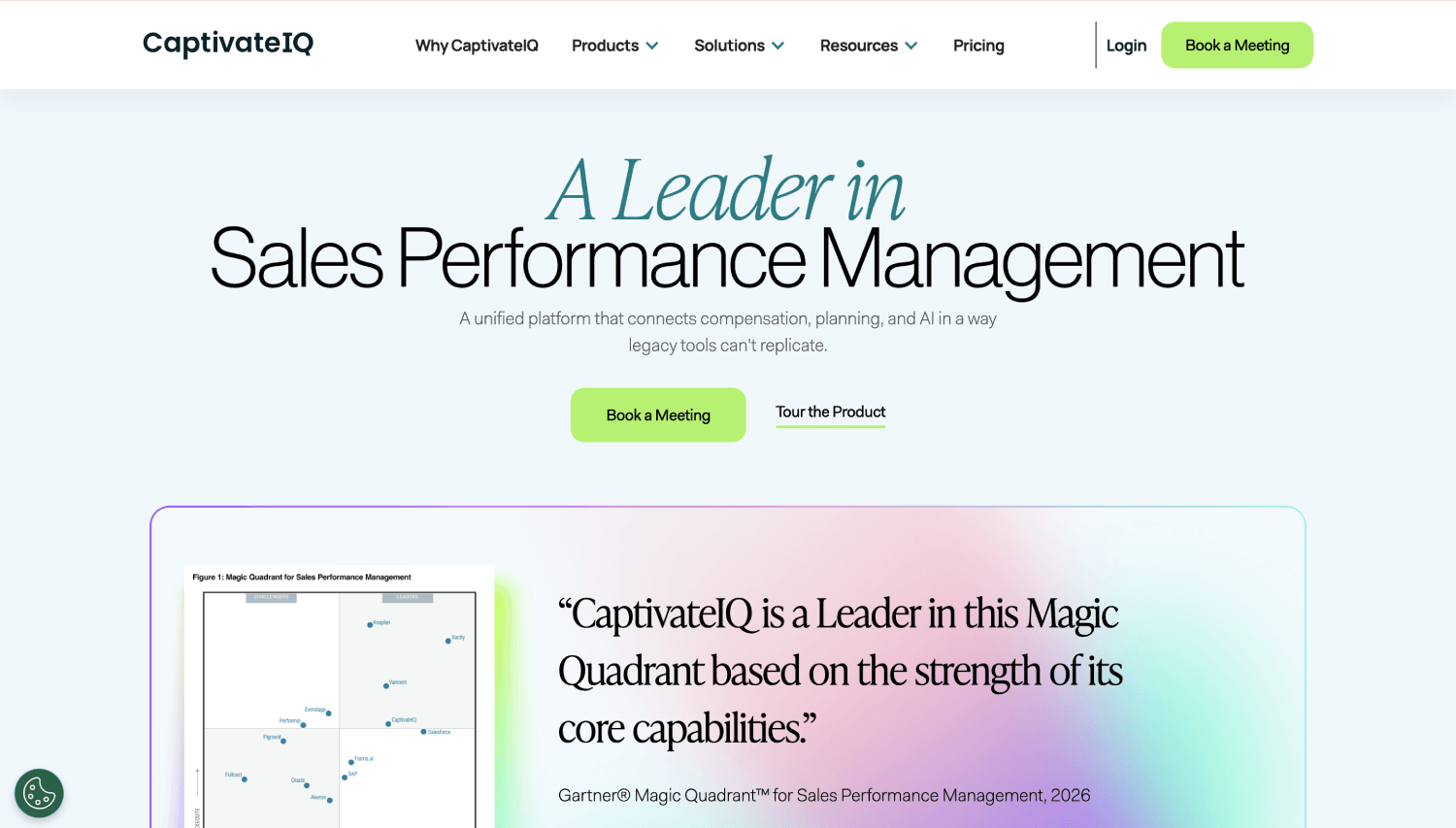
CaptivateIQ is a widely cited mid-market ICM platform that consistently appears at the top of review aggregator results across G2, Capterra, and similar sites. The core product is a spreadsheet-like formula engine that comp admins can configure without professional services involvement , which is genuinely rare in this category.
Its rep-facing earnings dashboard is strong. Reps can model their own “what if” scenarios before a deal closes, which reduces commission disputes significantly. The Salesforce integration is real-time, not batch. For teams running complex multi-tier plans with SPIFFs, accelerators, and quarterly resets, CaptivateIQ handles it without requiring a six-month implementation.
The limitation is pricing transparency: CaptivateIQ is quote-only, and pricing is not disclosed publicly. Teams under 50 reps sometimes find it overbuilt for their needs. For those teams, QuotaPath or Everstage is a better starting point.
3. Salesforce Spiff
Salesforce Spiff was acquired by Salesforce and positions itself as the native ICM layer within the Salesforce platform. If your entire revenue stack lives in Salesforce, Spiff is the path of least resistance. Deal data flows directly without a connector, and comp plans trigger off Salesforce opportunity stages.
The platform handles accelerators, bonuses, clawbacks, and approval workflows with a UI that RevOps teams familiar with Salesforce will find intuitive. Salesforce’s product marketing describes Spiff as incentive compensation management software that automates sales commission calculations , the native CRM integration is structural, not just a marketing claim, given Spiff’s architecture within the Salesforce platform.
The downside is obvious: if you’re not deeply committed to Salesforce, Spiff’s advantages disappear. Teams on HubSpot, Zoho, or custom CRMs should evaluate CaptivateIQ or Everstage instead.
4. Xactly Incent
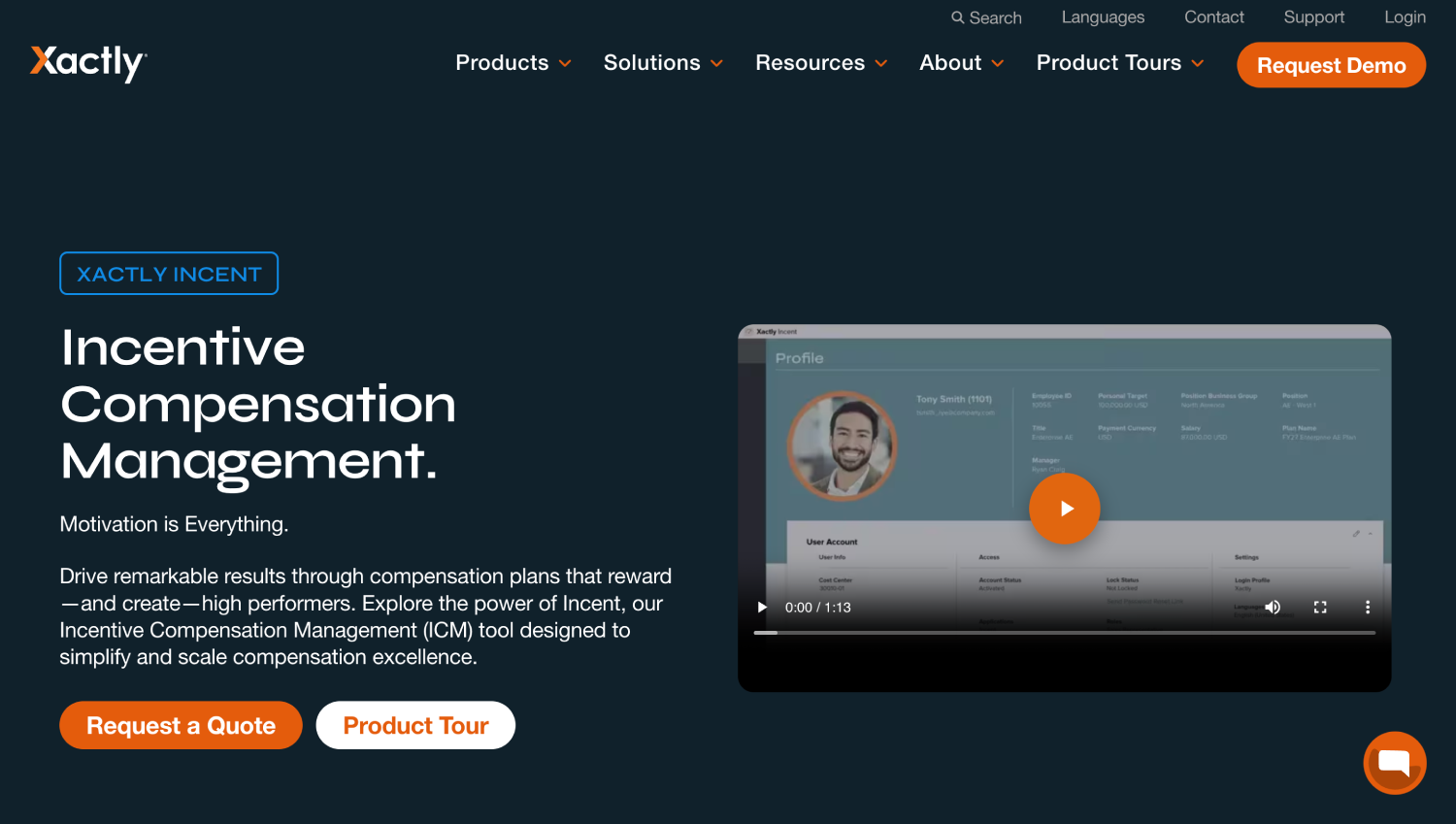
Xactly Incent is the legacy enterprise standard in ICM. It handles territory management, quota distribution, multi-currency payouts, and complex hierarchical credit rules at a scale that mid-market tools aren’t built for. Xactly also offers benchmarking data from its anonymized dataset of rep performance and pay , which is a genuine differentiator for companies trying to set competitive OTE structures.
Implementation is the honest caveat. Xactly is a multi-month project for most enterprise customers, and it typically requires either a dedicated internal admin or a certified implementation partner. The total cost of ownership is higher than the license fee alone. For an enterprise sales org running global teams with complex multi-tier incentive plans, that investment pays off. For a 100-person SaaS company, it’s probably overkill.
5. Varicent
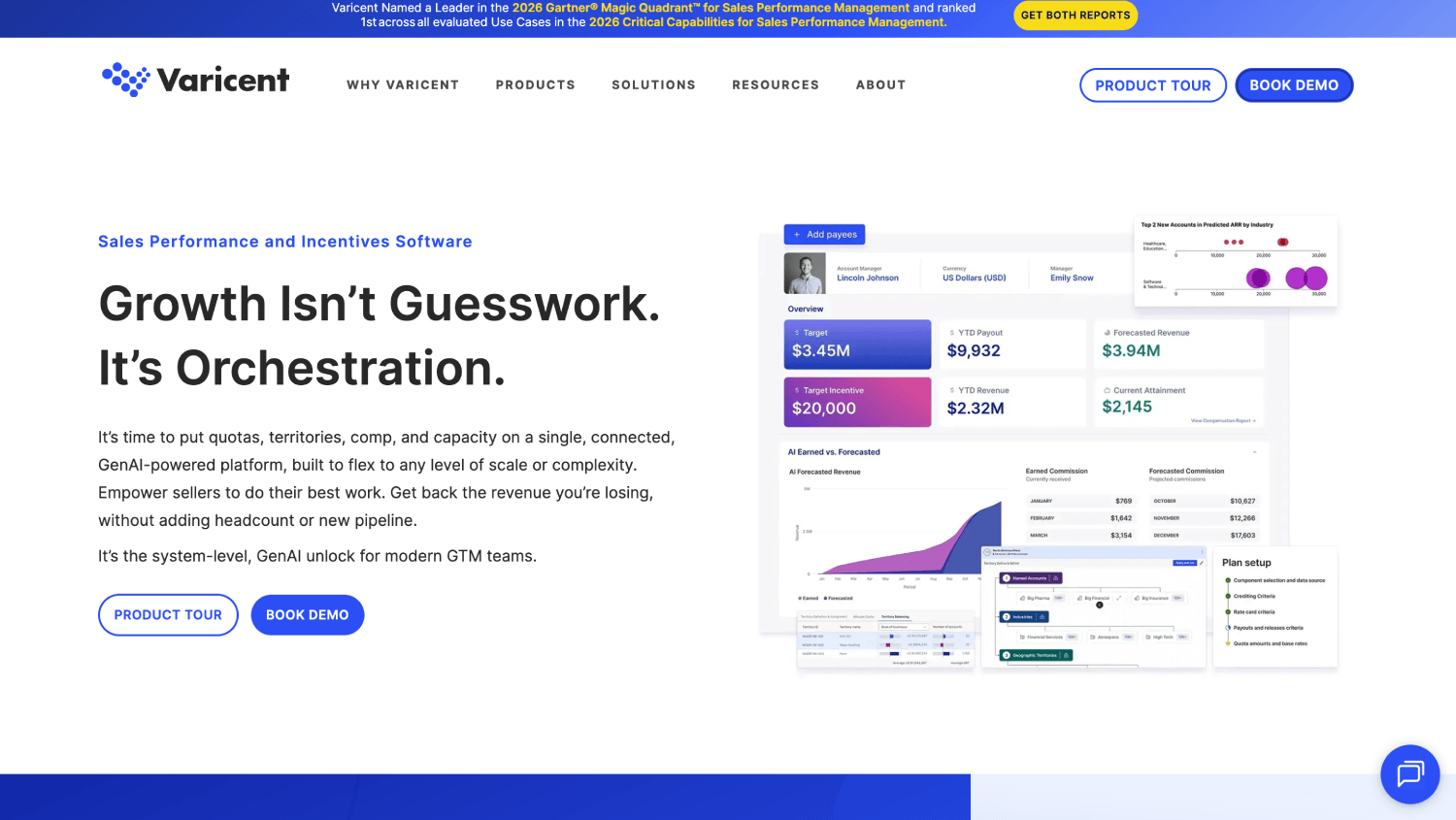
Varicent is an enterprise ICM platform that also covers revenue performance management, including territory and quota planning, pipeline analytics, and sales forecasting. It competes with Xactly at the top end of the market and often wins deals where organizations need both ICM and integrated go-to-market planning in a single platform.
Varicent’s modeling capabilities are particularly strong. Finance and RevOps can run scenarios against different quota distributions or accelerator structures and see the projected cost impact before a plan goes live. Pricing is quote-only and enterprise-tier. Companies under 200 reps should look elsewhere unless their comp plans are genuinely complex.
6. QuotaPath
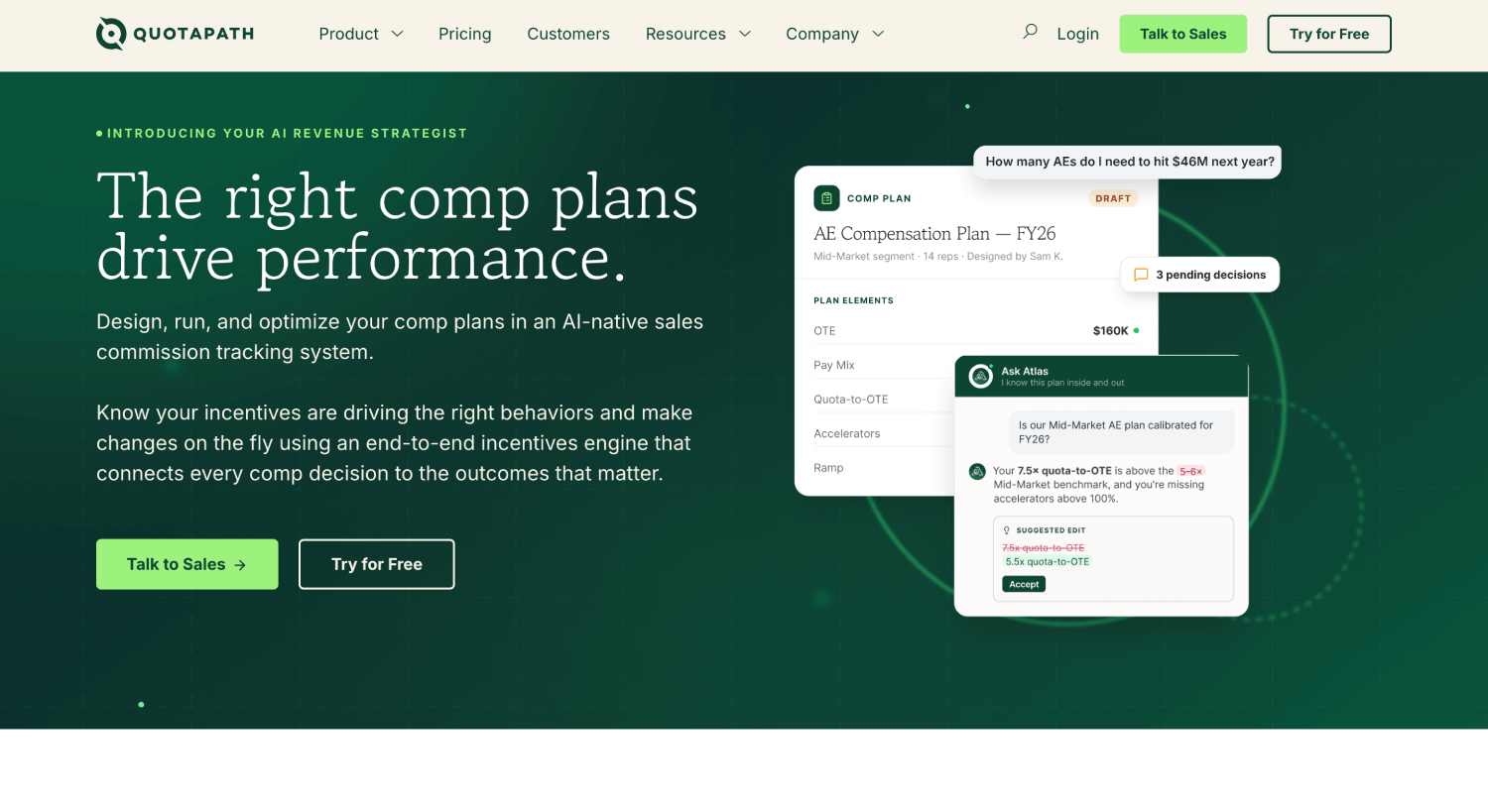
QuotaPath sits at the lighter end of the market and is one of the few ICM-adjacent tools with publicly available pricing. It connects directly to Salesforce, HubSpot, and Close.io, pulls deal data automatically, and calculates commissions against configurable plan structures.
QuotaPath publishes its pricing tiers on its public pricing page, which is worth checking directly since rates can change. Entry-level plans start at a per-seat monthly fee; the page details what each tier covers. For a SaaS company with 15-75 reps running a standard commission structure with maybe one or two accelerator tiers, QuotaPath is the right tool. It doesn’t try to be Xactly, and that’s exactly its appeal.
7. Everstage
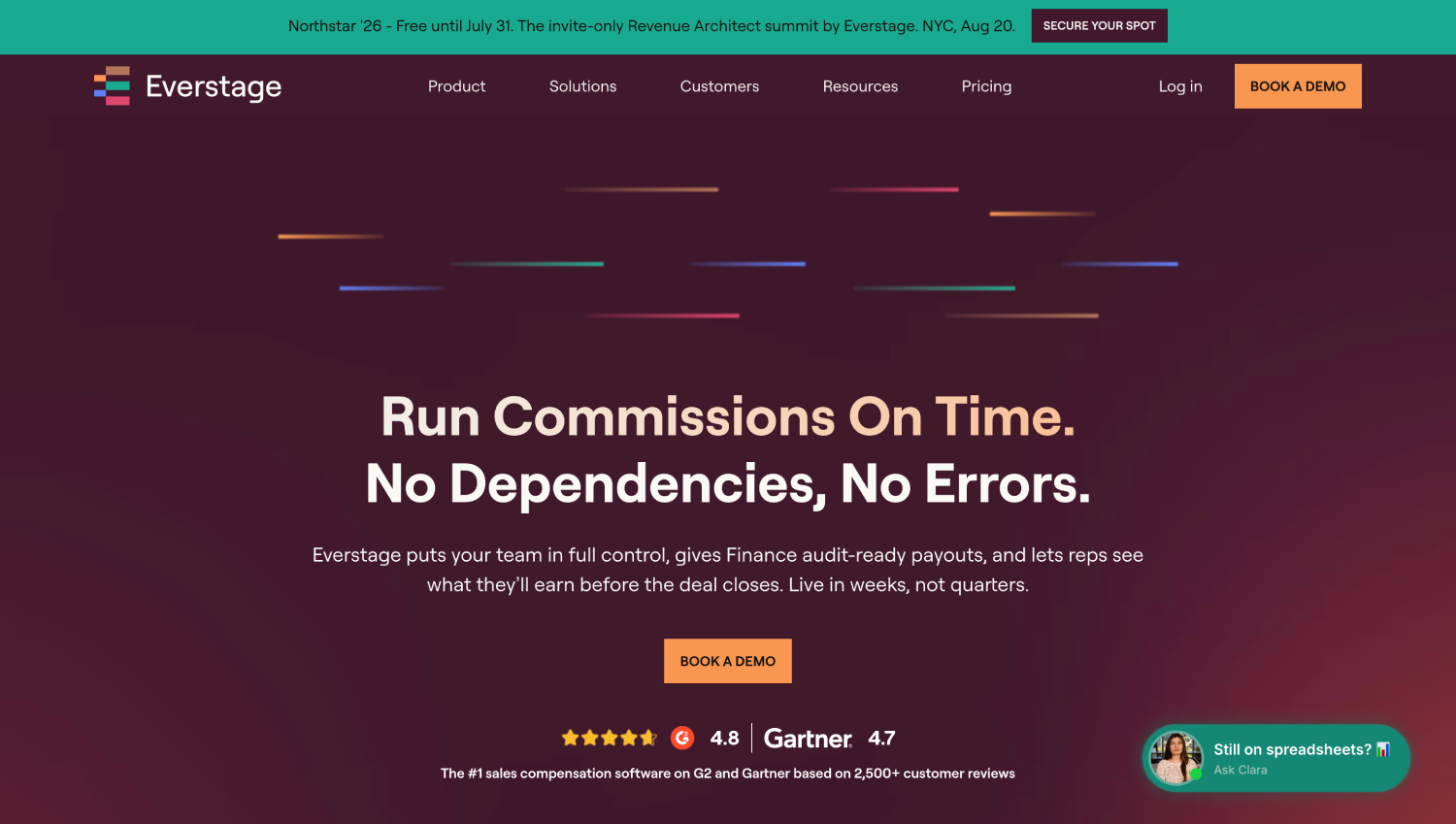
Everstage is gaining traction with fast-growing SaaS revenue teams. It handles multi-dimensional incentive plans, supports SPIFFs and bonuses alongside base commission structures, and offers a rep-facing app that shows real-time attainment and projected earnings. The Salesforce, HubSpot, and Zoho integrations are solid.
Everstage is particularly strong on the rep experience side. The gamification and leaderboard features are optional but genuinely used by teams that run sales contests alongside structured commission plans. Pricing is quote-based. It targets a similar buyer as CaptivateIQ but often wins on implementation speed and customer support responsiveness at the mid-market level.
8. Forma.ai
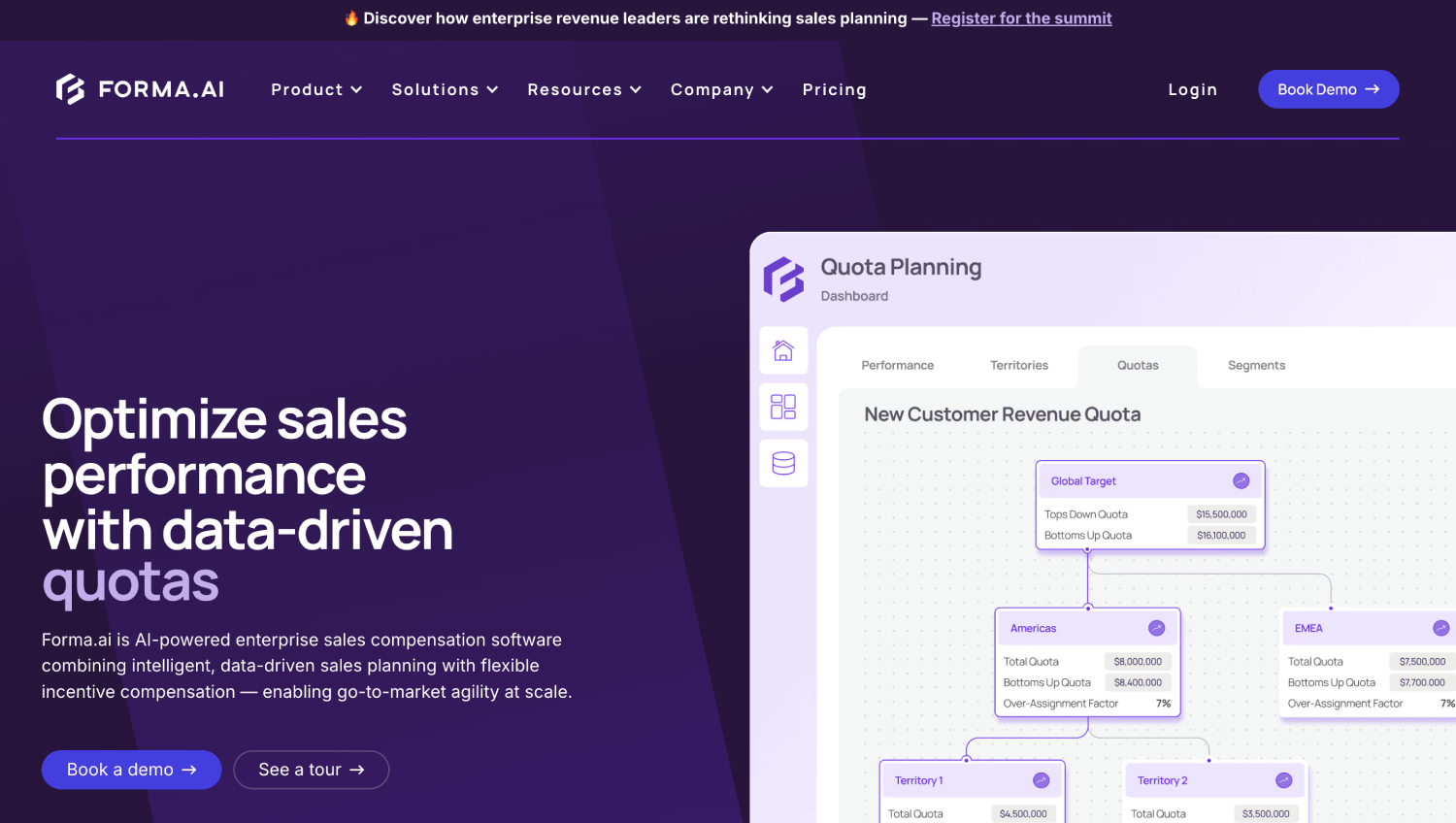
Forma.ai takes a different approach. Rather than starting from plan administration, it starts from plan design using AI-driven modeling to recommend comp structures based on your historical performance data. The pitch is that most companies design comp plans based on intuition and industry benchmarks, and Forma.ai can tell you which plan elements are actually driving behavior.
This is a genuine category differentiator and the reason it appears on multiple “top ICM” lists. The limitation is that the AI-led design value proposition requires meaningful historical data to be useful , a company with less than two years of clean rep performance data won’t extract full value from the modeling capabilities.
9. Anaplan
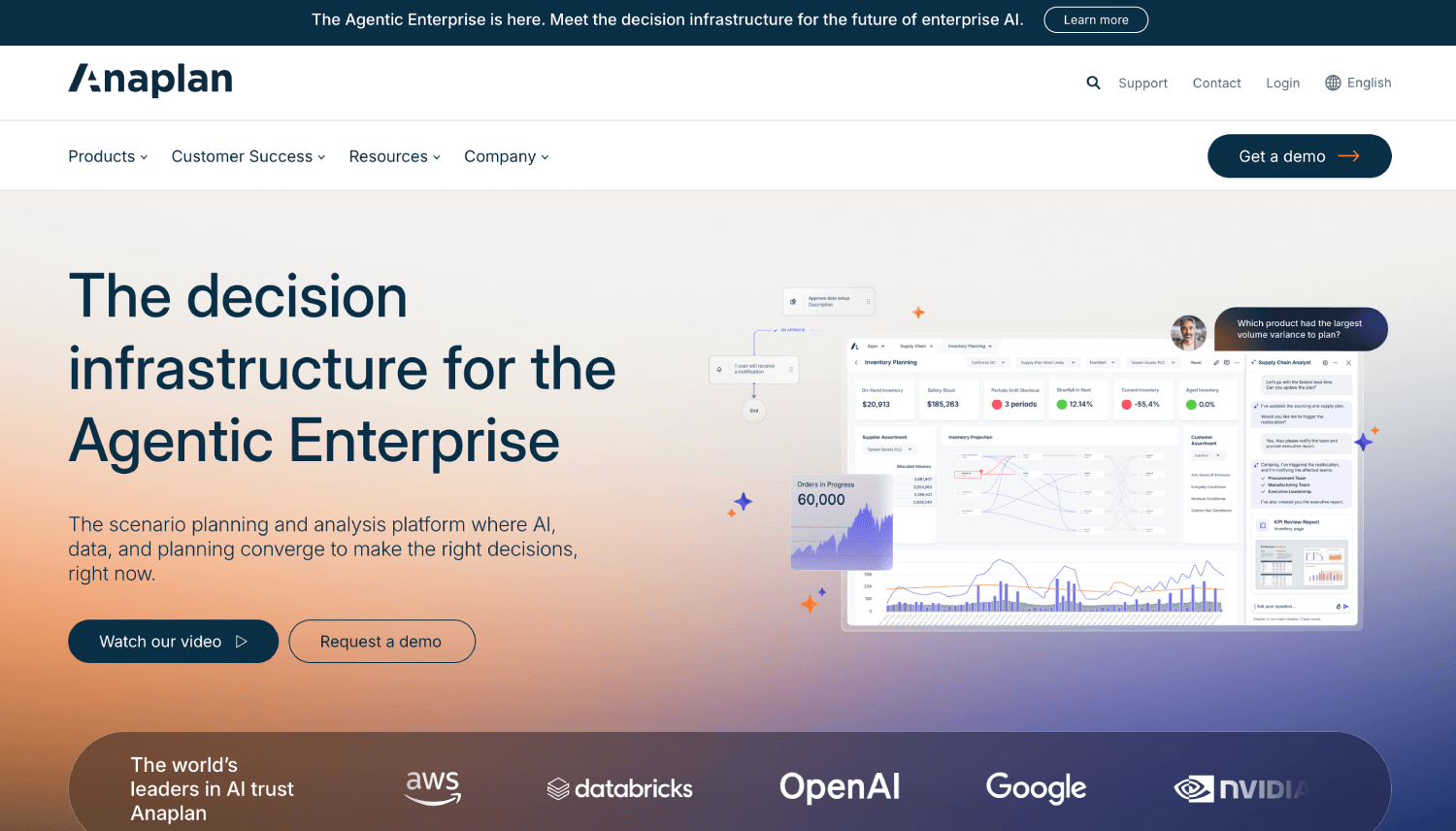
Anaplan is an enterprise connected planning platform that covers sales compensation as one module within a broader FP&A and revenue planning suite. If your organization already uses Anaplan for financial planning, extending it to cover sales comp avoids a separate vendor and keeps incentive plan costs connected to overall revenue forecasts.
For companies buying Anaplan solely for ICM, it’s probably the wrong choice. The platform is powerful but requires dedicated model builders. Teams that get the most value from Anaplan’s comp module are those where finance, RevOps, and HR all need to work from the same planning model. That scenario is more common at enterprise scale.
10. Performio
Performio is a mid-market ICM platform with a strong presence in Australia and growing US adoption. It handles plan complexity at a level above QuotaPath without requiring the enterprise implementation overhead of Xactly or Varicent. The Salesforce and NetSuite integrations are purpose-built rather than generic connectors.
Performio is the tool buyers search for when they’re specifically looking for Performio alternatives or want something between a lightweight commission tracker and a full enterprise ICM suite. For US and Australian mid-market teams running 50-300 reps with moderately complex plans, it’s a strong contender. Pricing is quote-based.
How Does Sales Compensation Software Connect to HR and Performance Management?
Sales comp lives in RevOps and Sales Finance organizationally, but the data it generates is increasingly relevant to HR. Pay equity analysis, retention risk modeling, and performance-to-pay ratios all require comp data that’s clean and structured. Spreadsheet-based commission tracking makes that data almost useless for HR analytics.
Some tools bridge this gap more explicitly. BetterWorks, for example, is a performance management platform that connects OKRs and goal attainment to compensation decisions. That “performance-to-pay” workflow is distinct from ICM: BetterWorks operates on the HR side of the line, influencing variable comp through goal attainment rather than quota calculation. It’s a complementary tool for companies that want goal performance to shape comp decisions, not a replacement for an ICM platform. See the best performance management software for mid-market companies for a fuller comparison of that category.
For organizations building out a full people analytics practice, clean compensation data from an ICM platform connects directly to workforce cost modeling. The best AI people analytics platforms can work with ICM output data to show compensation equity, retention correlation, and the true cost of comp plan changes. But that integration is only possible if the compensation data is structured and exportable, which rules out spreadsheets immediately.
If you’re also evaluating broader HR compensation tools that handle merit cycles, pay bands, and equity benchmarking alongside sales comp, see the full comparison of compensation benchmarking tools for US mid-market companies.
What Does Sales Compensation Software Actually Cost?
Most enterprise ICM platforms are quote-only. Xactly, Varicent, CaptivateIQ, Everstage, Salesforce Spiff, Forma.ai, Performio, and Anaplan all require you to contact sales for pricing. None publish per-seat rates publicly.
QuotaPath is the notable exception in this list, with pricing available on their public pricing page. For the rest, expect enterprise software pricing dynamics: annual contracts, per-seat or per-payee models, and implementation fees separate from license costs.
The hidden cost in enterprise ICM is implementation and administration. A complex Xactly or Varicent deployment often requires dedicated internal resources or an external partner. That’s a real cost that doesn’t show up in the license quote. If your team has never run an ICM implementation, build a separate professional services budget into your planning , vendor quotes will vary considerably based on plan complexity, data migration scope, and integration requirements. For a broader framework on implementation cost structures, the guide to hidden costs of HR software covers where enterprise SaaS buyers routinely underestimate total cost of ownership.
For a broader framework on HR and comp software pricing structures, the guide to HR software pricing across HRIS, payroll, and HCM categories covers how enterprise SaaS pricing actually works and where buyers leave money on the table.
Performio Alternatives: What to Consider Instead
Performio is a solid mid-market ICM platform, but it’s not the only option in that tier. Buyers searching for Performio alternatives typically want one of three things: lower cost, faster implementation, or deeper Salesforce integration.
- For faster implementation: Everstage and QuotaPath both implement significantly faster than Performio for teams with standard commission structures.
- For deeper Salesforce integration: Salesforce Spiff is the obvious choice if Salesforce is your primary CRM. CaptivateIQ is a strong second with native Salesforce real-time sync.
- For AI-led plan design: Forma.ai adds a modeling capability that Performio doesn’t offer.
- For enterprise scale-up: Xactly Incent or Varicent when the rep count grows beyond 300 and plan complexity requires full ICM infrastructure.
Performio’s strongest position remains Australian and mid-size US companies (50-300 reps) where the plan complexity exceeds what QuotaPath handles but the organization isn’t ready for an enterprise ICM investment. If that’s not your profile, most alternatives listed here are a better fit.
Which Sales Compensation Software Should You Actually Buy?
The decision tree is straightforward when you’re honest about plan complexity and team size.
Under 75 reps with straightforward plans: Qobra first. If you hit its limits within 12 months, migrate to CaptivateIQ or Everstage. Spending enterprise ICM money for a small team is wasteful regardless of how ambitious your plans are.
75-300 reps with moderate complexity, Salesforce as your CRM: CaptivateIQ or Salesforce Spiff. CaptivateIQ wins if you’re CRM-agnostic or on HubSpot. Spiff wins if you’re Salesforce-committed and want native data flow.
300+ reps, global teams, multi-tier plans with territory overlays: Xactly Incent or Varicent. Both require real implementation investment. Varicent edges out Xactly when the scope extends into revenue performance management beyond pure ICM. Xactly has a longer track record and a larger certified partner network.
AI-led plan design is a genuine differentiator: Forma.ai, if you have two-plus years of clean rep performance data and want to optimize plan structure rather than just automate calculation.
Already on Anaplan for FP&A: extend it to cover sales comp rather than adding a separate ICM vendor. The integration cost savings outweigh the product-specific gaps.
Frequently Asked Questions
What is incentive compensation management (ICM) software?
Incentive compensation management software automates the calculation, administration, and reporting of variable pay for sales teams. It replaces spreadsheet-based commission tracking with a system that handles plan design, quota setting, territory alignment, real-time rep dashboards, approval workflows, and audit trails. ICM platforms range from lightweight commission calculators to full revenue performance management suites covering territory planning and forecasting.
What is the difference between commission software and ICM software?
Commission software automates the calculation and tracking of sales commissions against defined plan rules. ICM software does that plus covers the full lifecycle of incentive program management: plan design and modeling, quota distribution, territory management, approval workflows, and reporting for finance and leadership. CaptivateIQ, Xactly, and Varicent are ICM platforms. QuotaPath sits closer to commission software, though the lines are blurring as lighter tools add more features.
What is the best sales compensation software for small sales teams?
QuotaPath is the best starting point for teams under 75 reps with standard commission structures. It has publicly available pricing, a fast implementation timeline, and direct integrations with Salesforce, HubSpot, and Close.io. Everstage is a strong alternative if you need more complex plan support without enterprise ICM pricing. Both are significantly faster to deploy than platforms like Xactly or Varicent.
Which sales compensation software uses AI agents?
Qobra has one of the clearest agentic-AI implementations in sales compensation. Its Architect agent helps admins build, modify, and test compensation plans; its Analyst agent reconciles compensation data and flags payout anomalies; and its Sales Coach answers rep questions and lets sellers simulate potential earnings.
Qobra is not the only platform investing here. CaptivateIQ also offers AI agents for compensation building, compensation operations, and revenue planning, while Forma.ai applies AI more broadly to compensation design, modeling, and optimization.
The distinction is therefore less about whether a platform “has AI” and more about where that AI sits in the workflow. Teams looking specifically for AI assistance with day-to-day commission administration and rep support should put Qobra high on the shortlist; organizations prioritizing broader SPM or planning requirements should compare it with CaptivateIQ, Xactly, Varicent, and Forma.ai.
How long does it take to implement an ICM platform?
Implementation timelines vary widely by platform and plan complexity. Lightweight tools like QuotaPath can be live in days or weeks. Mid-market platforms like CaptivateIQ, Everstage, and Performio typically take 4-10 weeks for a standard rollout. Enterprise ICM platforms like Xactly Incent and Varicent are substantially longer projects , commonly requiring several months when accounting for data integration, plan configuration, user acceptance testing, and change management. Vendors will give you a specific estimate based on your plan complexity and data migration scope; treat any timeline under 8 weeks for a full enterprise deployment with skepticism. Professional services costs are often separate from license fees.
Does sales compensation software integrate with Salesforce and HubSpot?
Most ICM platforms integrate with Salesforce. Salesforce Spiff is native to Salesforce. Qobra, CaptivateIQ, Xactly, Varicent, QuotaPath, Everstage, and Performio all offer Salesforce integrations, with varying degrees of real-time versus batch data sync. HubSpot integration is supported by Qobra, QuotaPath, Everstage, and CaptivateIQ. Teams with more complex enterprise CRM and ERP environments should evaluate platforms such as Xactly or Varicent. Always confirm whether an integration syncs in real time or on a scheduled batch before signing a contract.
How does sales compensation software connect to performance management?
Most ICM platforms focus on quota attainment and commission calculation rather than broader performance management. The connection to HR performance data is typically through integration rather than native features. Platforms like BetterWorks sit on the HR side of this divide, connecting goal attainment to compensation decisions rather than automating quota-based commission calculation. For companies wanting to connect sales comp data to workforce analytics or pay equity analysis, the ICM platform needs clean data export capabilities that feed into a people analytics tool.
What is the best Performio alternative?
The best Performio alternative depends on why you’re switching. For faster implementation and similar plan complexity, Everstage or CaptivateIQ are the closest replacements. For deeper Salesforce integration, Salesforce Spiff. For enterprise scale with global teams, Xactly Incent. For smaller teams looking to spend less, QuotaPath handles standard comp structures at a lower price point. Performio’s strongest position is Australian and US mid-market teams with moderate plan complexity , that same buyer profile fits CaptivateIQ equally well.
The Right Tool for Sales Comp Is the One Your Admin Can Actually Maintain
The most common mistake in ICM software buying is selecting a platform based on the demo rather than the day-to-day administration experience. Every enterprise ICM platform looks impressive in a vendor presentation. The real test is whether your comp admin can update an accelerator threshold on a Tuesday afternoon without filing a professional services request.
That’s why administration experience matters as much as feature breadth. A platform that Finance and RevOps can maintain without constant technical support will usually create more value than a more powerful system the team struggles to operate. Complexity has a carrying cost that compounds every month.
Sales compensation connects directly to how reps trust their employer and how RevOps predicts costs. Getting it right , with a system that’s accurate, transparent to reps, and maintainable by the team that owns it , is worth more than any single feature on a product comparison matrix. Buy for the team’s real capability, not the aspirational one in the RFP. If you’re still early in your vendor evaluation process, the HR software buying checklist has a framework for structuring the full selection process before you enter a demo cycle.