
TLDR
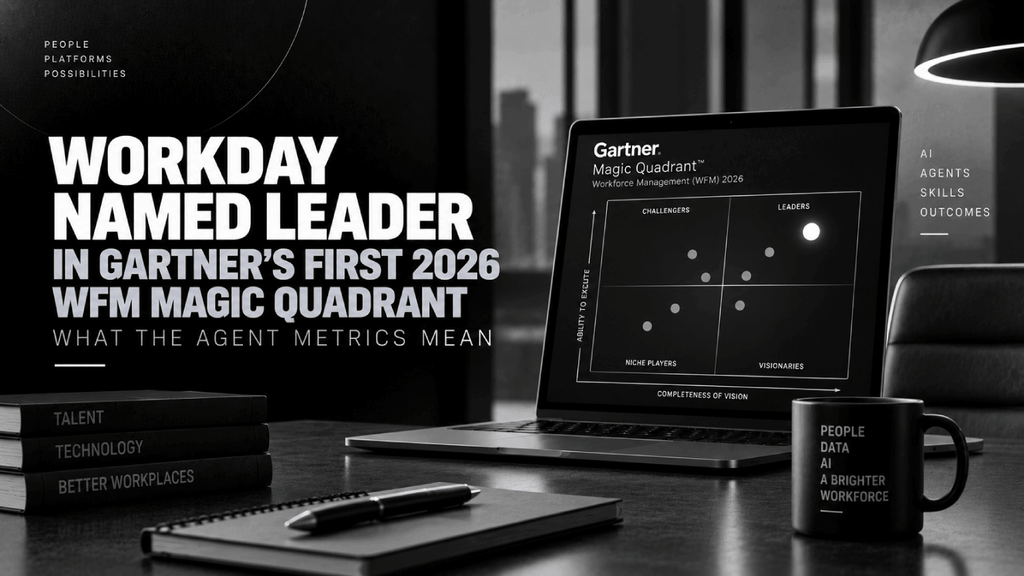
- On Sept. 17, 2026, Workday announced it was named a Leader in Gartner’s inaugural 2026 Magic Quadrant for Workforce Management Technology (report dated Sept. 14, 2026).
- The story is not just analyst placement. Workday is pitching unified WFM inside HCM, with time, absence, scheduling, and labor optimization on one AI platform for frontline work.
- Agentic capabilities run through Sana, Workday’s agentic experience. The Workforce Management Agent automates schedule changes, time tracking, shift swaps, and demand-based staffing under configured policies.
- Early-adoption claims (Workday-reported): up to 90% less time on shift schedule changes, 65% average process automation improvement, 75% fewer manual time entry errors.
- Customer proof points in the release: Valvoline schedule-build time from 2+ hours to ~15 minutes; Life Time 95% mobile adoption, 50,000+ manager hours saved/year, $1M annual labor savings, 50% overtime cost cut.
- For buyers: treat MQ Leadership as context, then demand methodology, write-back permissions, and overtime/compliance guardrails before trusting agentic scheduling.
Gartner published its first Magic Quadrant for Workforce Management Technology on Sept. 14, 2026. Three days later, Workday announced it was named a Leader in that report.
That matters for HrTechSaas readers because WFM is where labor cost, compliance, and frontline experience collide. Analyst placement alone is not a buying decision. The useful angle is what Workday is claiming the suite and its agents actually do for shift-based operations.
UKG was also positioned as a Leader in the same 2026 WFM Magic Quadrant, per HR Tech Edge coverage of UKG’s frontline AI push. This piece stays on Workday’s announcement, agent metrics, and buyer questions. It does not replace a separate UKG Agentic Pay read.
What the inaugural WFM Magic Quadrant signals
Gartner’s WFM Magic Quadrant is new for 2026. That alone changes how enterprise buyers shortlist scheduling and labor platforms. Time, attendance, and scheduling are no longer treated as a side module buyers bolt on without a category map.
Workday’s framing in the Sept. 17 release is explicit: frontline work happens on the floor, in the warehouse, and behind the counter, not in a back office. The suite brings time tracking, absence management, scheduling, and labor optimization into Workday Human Capital Management so leaders manage labor cost, compliance, schedules, and time in one system, with mobile-friendly tools for workers and managers.
David Wachtel, general manager of Workday HCM, said: “For too long, frontline teams were asked to use technology designed for desk work, not the pace of the floor, the warehouse, or the counter.”
Gartner’s standard disclaimer still applies. Magic Quadrant graphics reflect Gartner analysis and are not an endorsement to pick only Leaders. Buyers should read the full document Workday is offering as a complimentary copy, not just the press headline.
What Workday says the WFM suite includes
Per the PR Newswire release, Workday positions the suite for retail, manufacturing, hospitality, grocery, and similar frontline industries. Named capabilities include:
- Demand forecasting that uses seasonality, events, and historical patterns to staff to real demand
- Mobile, web, and kiosk clock-in options
- Schedules, time off, pay, shift swaps, and preferences in one place so availability and open-shift pickup are self-serve
That stack sits next to topics already covered in deskless workforce technology and best deskless workforce management platforms. Those guides evaluate WFM as an ops layer. This news piece explains what Workday is shipping and claiming inside its own HCM.
Sana and the Workforce Management Agent
Workday says agentic WFM capabilities are powered by Sana, its agentic experience. The Workforce Management Agent automates:
- Schedule changes
- Time tracking
- Shift swaps
- Demand-based staffing
Workday states the agent applies Workday policies, knowledge, and organizational data to optimize scheduling decisions and route approvals according to configured rules.
Early-adoption metrics in the release (all Workday-reported):
| Metric | Claimed result |
|---|---|
| Time spent managing shift schedule changes | Up to 90% reduction |
| Process automation | 65% improvement on average |
| Manual time entry errors | 75% reduction |
Keep the caveats visible. These are vendor-reported early-adoption figures. The release does not publish sample size, industry mix, or how “process automation improvement” was measured. Treat them as directional sales claims until you see customer references with the same baseline.
The agent boundary matches the same accountability logic we use in AI agents for HR service delivery and HR copilots vs HR agents: automation can draft and route; wage, overtime, and compliance outcomes still need named human ownership.
Customer proof points Workday published
Two named customers appear in the announcement:
Valvoline (automotive services retail)
Managers cut weekly schedule generation from more than two hours to about 15 minutes, freeing time for coaching and customers instead of paperwork.
Life Time (health and fitness)
After rolling out Workday Scheduling, Life Time hit 95% mobile app adoption. Managers saved over 50,000 hours each year. Life Time realized $1 million in annual labor savings and a 50% reduction in overtime costs.
These are useful for procurement conversations because they are concrete and operational. They are still Workday-attributed customer stories. Ask for similar baselines in your industry: schedule build time, overtime rate, mobile adoption, and error rates before and after go-live.
How this differs from existing HrTechSaas Workday coverage
The site already has comparison and alternatives content, including best Workday alternatives for mid-market companies and Workday AI vs Eightfold vs Gloat. Those pieces help buyers who are leaving Workday or comparing talent intelligence layers.
This draft is different:
- News explainer on the inaugural Gartner WFM MQ Leader placement
- Focus on Workforce Management Agent / Sana claims and frontline metrics
- Not a mid-market alternatives listicle and not a talent marketplace comparison
Do not merge this into the alternatives URL. Different search intent, different publish job.
Who should care, and what to ask
Prioritize a read-out if you:
- Run or are evaluating Workday HCM for retail, hospitality, grocery, manufacturing, or fitness frontline ops
- Are consolidating time, scheduling, and absence onto one platform
- Are comparing agentic scheduling inside HCM versus a specialist WFM tool from the employee scheduling software shortlist
Ask Workday (and your implementation partner):
- Which Workforce Management Agent actions write back versus recommend only?
- How are overtime, meal-break, and predictive-scheduling rules enforced before an agent publishes a change?
- What audit trail exists for agent plans, approvals, and overrides?
- How were the 90% / 65% / 75% early-adoption metrics calculated, and can you see peers in your industry?
- For multi-site orgs: does demand forecasting use your POS, census, or volume feeds natively, or via custom integration?
The take: MQ headline, agent proof still on you
Being named a Leader in Gartner’s first WFM Magic Quadrant is real category news. For operators, the durable story is whether Workday’s Sana-powered Workforce Management Agent actually shortens schedule chaos without creating payroll and compliance debt.
If you already live in Workday HCM, this release strengthens the case to evaluate native WFM and agentic scheduling before buying a second frontline stack. If you are mid-market or heavily unionized, keep pressure on implementation timeline, rule configuration, and the permission matrix. Analyst Leadership is context. Your overtime ledger is the test.
FAQ
When was Workday named a Leader in the WFM Magic Quadrant?
Workday announced the Leader placement on Sept. 17, 2026. Gartner’s Magic Quadrant for Workforce Management Technology is dated Sept. 14, 2026.
Is this Gartner’s first WFM Magic Quadrant?
Yes. Workday and other coverage describe it as the inaugural 2026 Magic Quadrant for Workforce Management Technology.
What is Sana in this context?
Sana is Workday’s agentic experience. Workday says WFM agentic capabilities, including the Workforce Management Agent, are powered by Sana.
What does the Workforce Management Agent automate?
Per Workday: schedule changes, time tracking, shift swaps, and demand-based staffing, using configured policies and routing approvals by rule.
Are the 90%, 65%, and 75% figures independently audited?
No. They are Workday-reported early-adoption results in the Sept. 17 announcement. Ask for methodology and peer references.
Does Magic Quadrant Leadership mean you should buy Workday WFM?
No. Gartner does not endorse vendors. Use the report as one input alongside fit, cost, compliance depth, and implementation capacity.
Was UKG also a Leader?
Yes. Separate coverage reports UKG as a Leader in the same 2026 WFM Magic Quadrant. Evaluate both (and Dayforce, Oracle, SAP, ADP where relevant) against your frontline requirements.