
- Automated reference checking platforms return completed references faster than phone-based processes, with structured questionnaires that produce comparable and legally defensible data.
- The biggest gain is not speed, it is consistency: every referee answers the same questions in the same order, which makes cross-candidate comparison possible.
- HireRight and Sterling are excluded from this list because both appear on our best background check software comparison. Reference checking and background checking are related but distinct: reference software collects structured, referee-supplied assessments, while background checks verify factual records.
- Most platforms in this category charge per reference or per candidate, not per seat, so ROI calculation is straightforward once you know your hiring volume.
- ATS integration is table stakes. If a vendor cannot connect to Greenhouse, Lever, Workday, or iCIMS via native connector or Zapier, it adds friction, not removes it.
Reference checking software platforms send structured questionnaires to referees on behalf of hiring teams, collect responses automatically, flag adverse information, score candidates against competency ratings, and return a formatted report inside your ATS or inbox. The best platforms achieve referee response rates well above what phone-based processes average, produce a structured data record that survives an employment lawsuit, and integrate with every major ATS without a professional services engagement.
Why Phone-Based Reference Checks Are a Liability, Not Just a Time Sink
Most recruiters treat reference checks as a formality. They call two or three people at the end of the process, get vague affirmations, and write notes that live nowhere defensible. That approach fails on three counts.
First, unstructured phone conversations produce unstructured data. One recruiter asks about teamwork, another asks about leadership style, and you end up comparing apples to hypotheses. Second, a phone call with no transcript creates legal exposure. If a candidate later claims the reference check contained discriminatory questions or fabricated adverse information, your recruiter’s memory is not evidence. Third, referees give more candid responses in writing than on a live call, where social pressure to say something nice is higher.
Digital reference checking addresses all three problems with a single workflow. The recruiter sends a link. The referee fills out a structured questionnaire on their own time. The platform captures consent, timestamps every response, flags anything that looks like adverse information, and stores the report. That record is defensible, comparable, and searchable.
For teams already investing in structured hiring, this fits naturally alongside AI interview tools that bring the same discipline to the conversation stage.
What to Evaluate Before You Pick a Reference Checking Platform
Referee response rate is the metric that matters most operationally. A platform with beautiful reports that only 40% of referees complete is worse than a plain-text email with a link that 80% complete. Ask vendors for their median response rate and their time-to-complete data, not just their feature list.
Structured questionnaire depth separates real platforms from form builders. Good platforms ship competency libraries, let you customize by role family, and score responses against a rubric. Basic ones give you a blank text box with a subject line.
Consent capture matters for compliance. Candidates must authorize their referee’s contact details being submitted. Some jurisdictions treat that data as personal information under GDPR or state privacy laws. Check whether the platform captures and stores that consent.
Fraud detection is underrated. Some candidates submit fake referees, sometimes using personal email addresses for people they coached. Better platforms cross-check referee email domains against candidate-provided employer domains and flag anomalies. A few use phone verification. This feature is worth paying for.
ATS integration depth ranges from native two-way sync to a Zapier hook you have to build yourself. Know which one you’re getting before you sign.
The 11 Best Reference Checking Software Platforms
| Platform | Best For | Pricing Model | Fraud Detection | ATS Integration |
|---|---|---|---|---|
| SkillSurvey | Enterprise, competency-based references | Quote-based | Yes | Native (Workday, Taleo, iCIMS, Greenhouse) |
| Checkster | Mid-market, fraud-focused | Quote-based | Yes (strong) | Native (Greenhouse, Lever, Workday) |
| Xref | Global hiring, AU/UK heavy | Per reference or subscription | Yes | Native + API |
| RefNow | UK-focused, affordable | Per reference | Basic | API, Zapier |
| Zinc | UK compliance, right-to-work | Quote-based | Yes | Native (Greenhouse, Lever, BambooHR) |
| Referoo | ANZ-region SMB | Subscription | Basic | Zapier, API |
| Crosschq | Predictive analytics, data-forward teams | Quote-based | Yes | Native (Greenhouse, Lever, Workday) |
| ViziRecruiter | High-volume healthcare | Quote-based | Basic | Native (healthcare ATS) |
| OutMatch (Harver) | Assessment + reference bundled | Quote-based | Yes | Native (Greenhouse, SAP, Workday) |
| InFlight Reference | Workflow customization for large TA teams | Quote-based | Basic | Native (most major ATS) |
| Oleeo | UK public sector, regulated industries | Quote-based | Yes | Native (Oleeo ATS suite) |
1. SkillSurvey
SkillSurvey is the most widely deployed enterprise reference checking platform in the US market. According to claims on SkillSurvey’s public website, its competency question library covers more than 900 job functions, and the platform benchmarks candidates against a dataset of aggregated past responses , giving hiring managers a relative performance signal rather than a raw score. Verify these figures against SkillSurvey’s current product pages before purchase, as the vendor does not publish a detailed methodology document publicly. The platform integrates natively with Workday, Oracle Taleo, iCIMS, Greenhouse, and SAP SuccessFactors.
The fraud detection layer checks referee email domains against the employer the candidate listed and flags personal email addresses where corporate ones are expected. Pricing is quote-based and scales by volume, so it rewards large-team commitments. SkillSurvey is the right default for any enterprise TA team running more than 500 hires per year who wants a defensible, benchmarked reference output.
2. Checkster
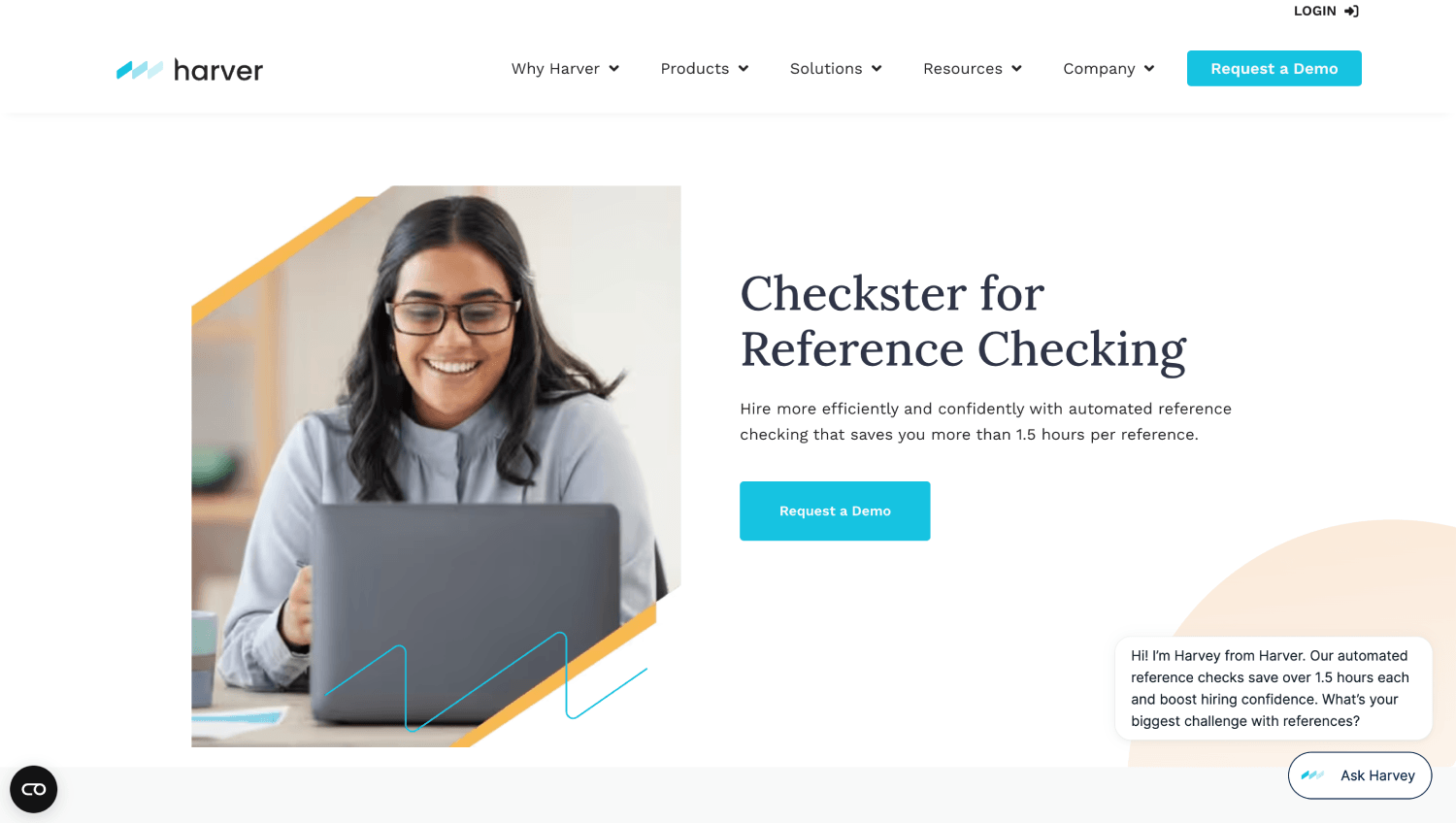
Checkster (acquired by Mitratech) differentiates on fraud prevention. Its candidate authentication layer requires referees to verify their identity through a multi-step process, and it cross-checks referee-supplied information against known data sources to catch coached references. For roles in financial services, healthcare, or any regulated industry where a fake reference is a material risk, Checkster’s investment in this layer justifies the premium.
The platform also supports 360-style reference collection, letting you pull input from multiple directions rather than only manager-level contacts. Integration with Greenhouse, Lever, and Workday is native. Pricing is quote-based.
3. Xref
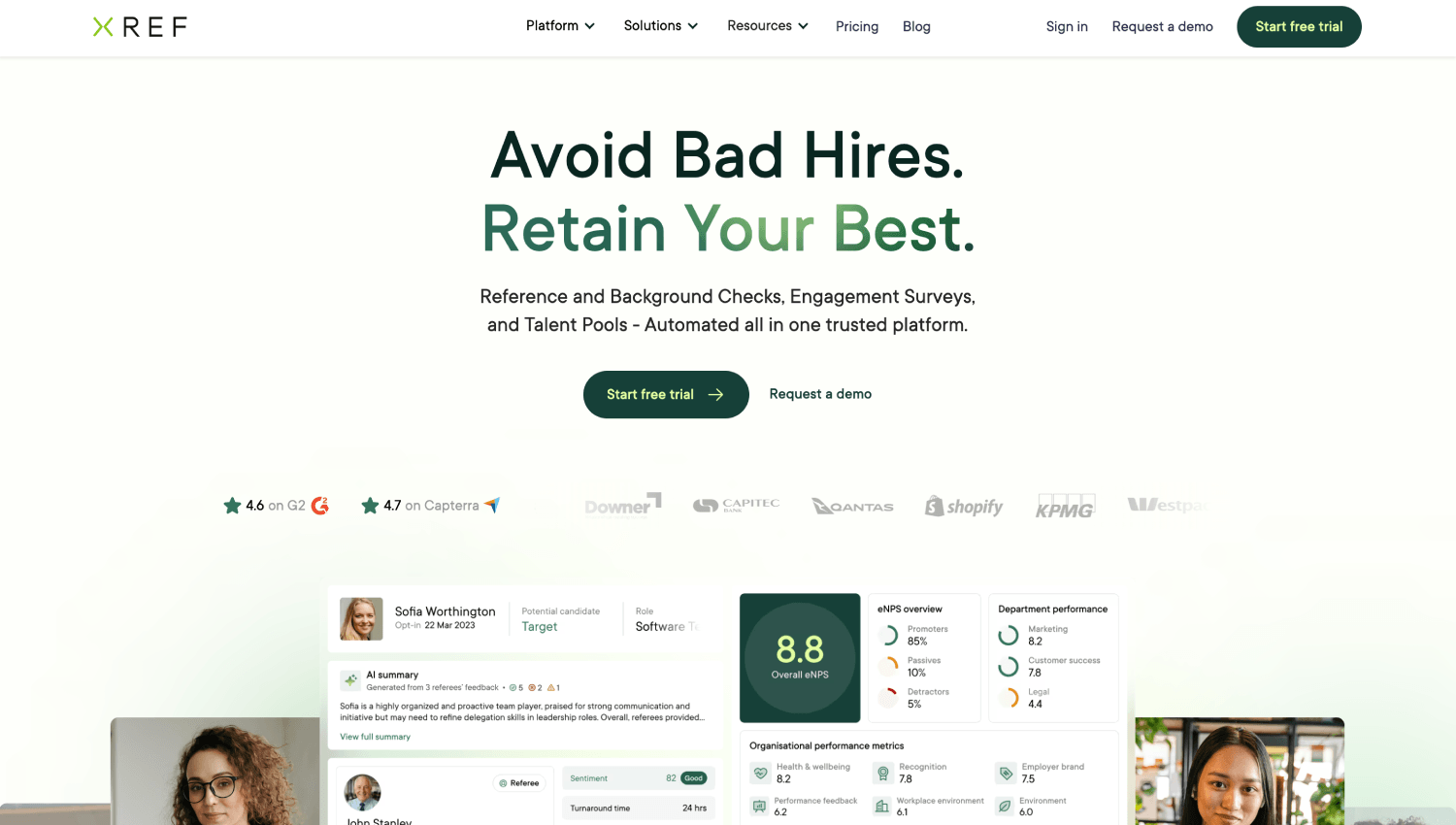
Xref is the strongest option for companies running hiring programs across Australia, the UK, and the US simultaneously. The platform handles multi-language questionnaires, adapts consent-capture flows to local privacy law requirements (GDPR, Australian Privacy Act), and offers per-reference pricing that suits teams with variable monthly volumes rather than predictable high-volume hiring. Xref publishes response rate data on its website; confirm the current benchmark figure directly with the vendor or on their public resources page, as published figures are updated periodically.
The platform’s analytics dashboard surfaces time-to-complete, response rate by role type, and question-level sentiment patterns. For globally distributed TA teams that hate managing compliance variants manually, Xref removes most of that burden.
4. RefNow
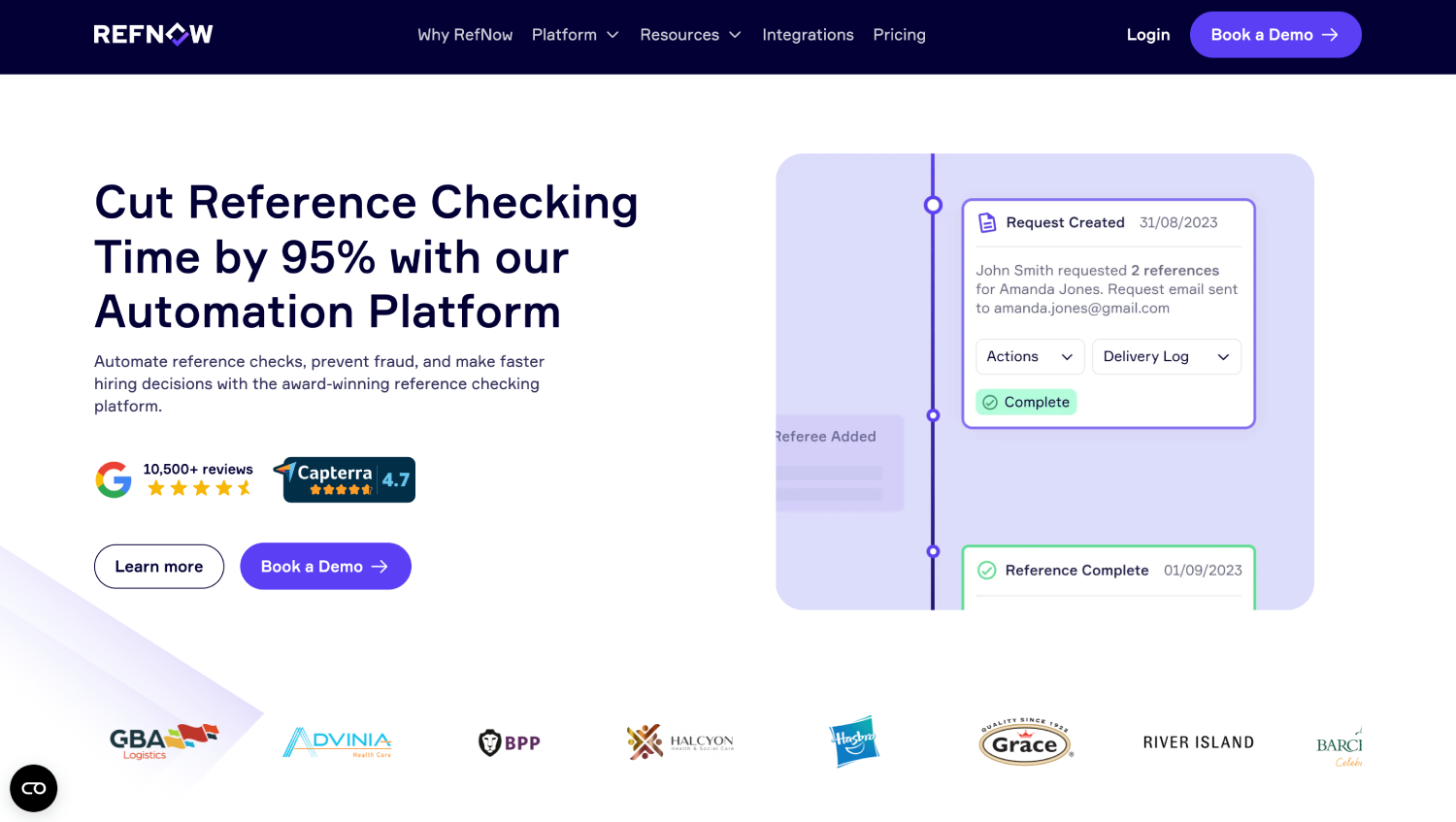
RefNow is a UK-born platform built around simplicity and per-reference pricing. For smaller teams that want to move from phone calls to digital references without committing to an annual enterprise contract, it is the most accessible entry point. The questionnaire builder is functional but not deep, and fraud detection is basic compared to Checkster or Xref.
Where RefNow earns its place is turnaround time. The platform uses a mobile-optimized referee experience and an automated reminder cadence, both designed to reduce drop-off , though RefNow does not publish a specific completion rate benchmark, so ask the vendor for current performance data relevant to your role types. It connects to major ATS platforms via API and Zapier. Teams that are just starting to formalize their reference process will find the per-reference cost easier to justify to leadership than a six-figure annual contract.
5. Zinc
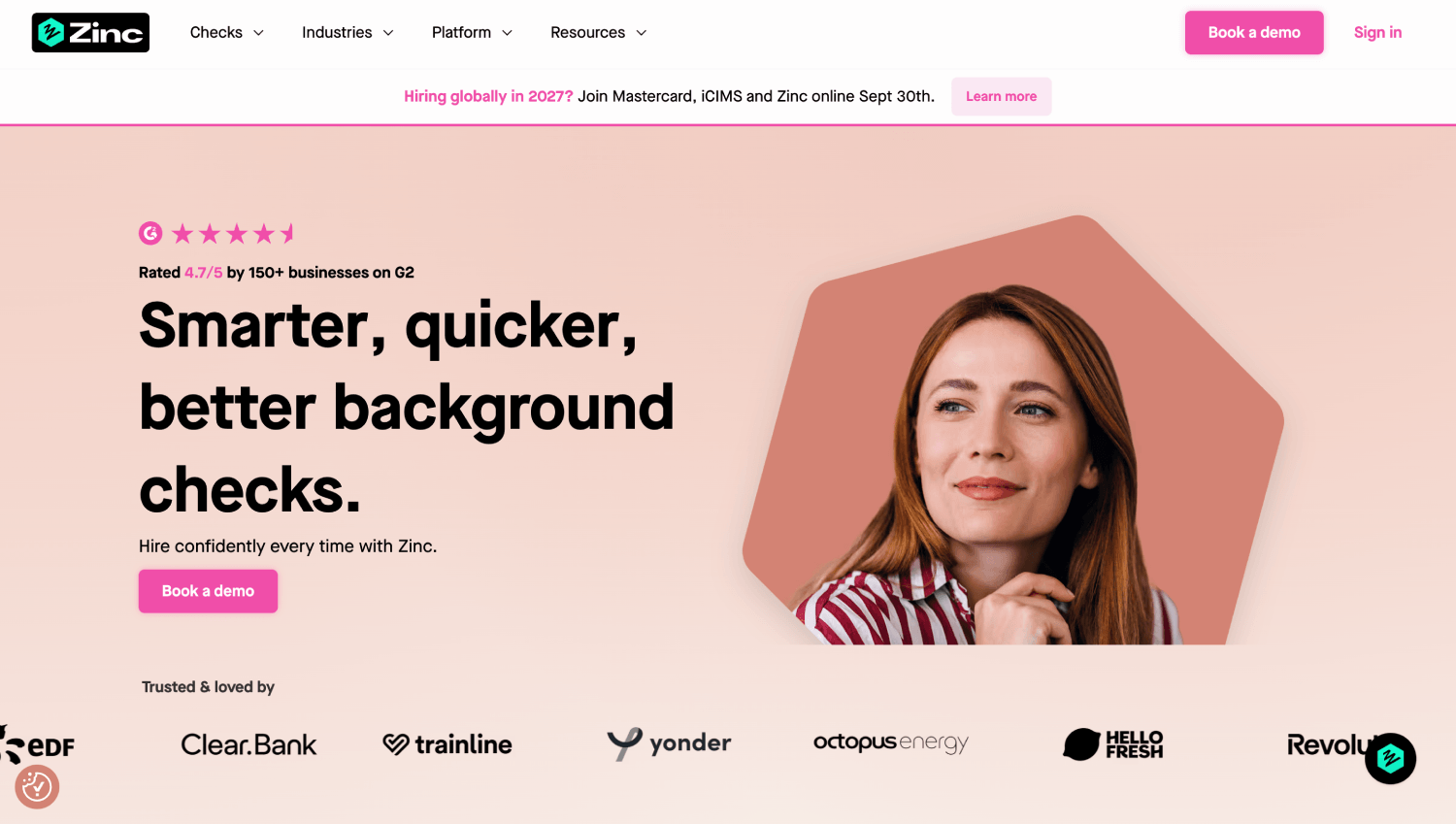
Zinc bundles reference checking with UK-specific compliance workflows, including right-to-work verification and DBS check coordination, making it the obvious choice for UK employers who need both in a single tool. The reference module is solid: customizable structured questionnaires, competency scoring, and native integrations with Greenhouse, Lever, and BambooHR.
The compliance bundling is Zinc’s actual competitive advantage. A UK team that would otherwise need three separate vendors for references, right-to-work, and background checks can consolidate into one. Pricing is quote-based. Teams outside the UK will find the compliance features irrelevant and should look elsewhere.
6. Referoo
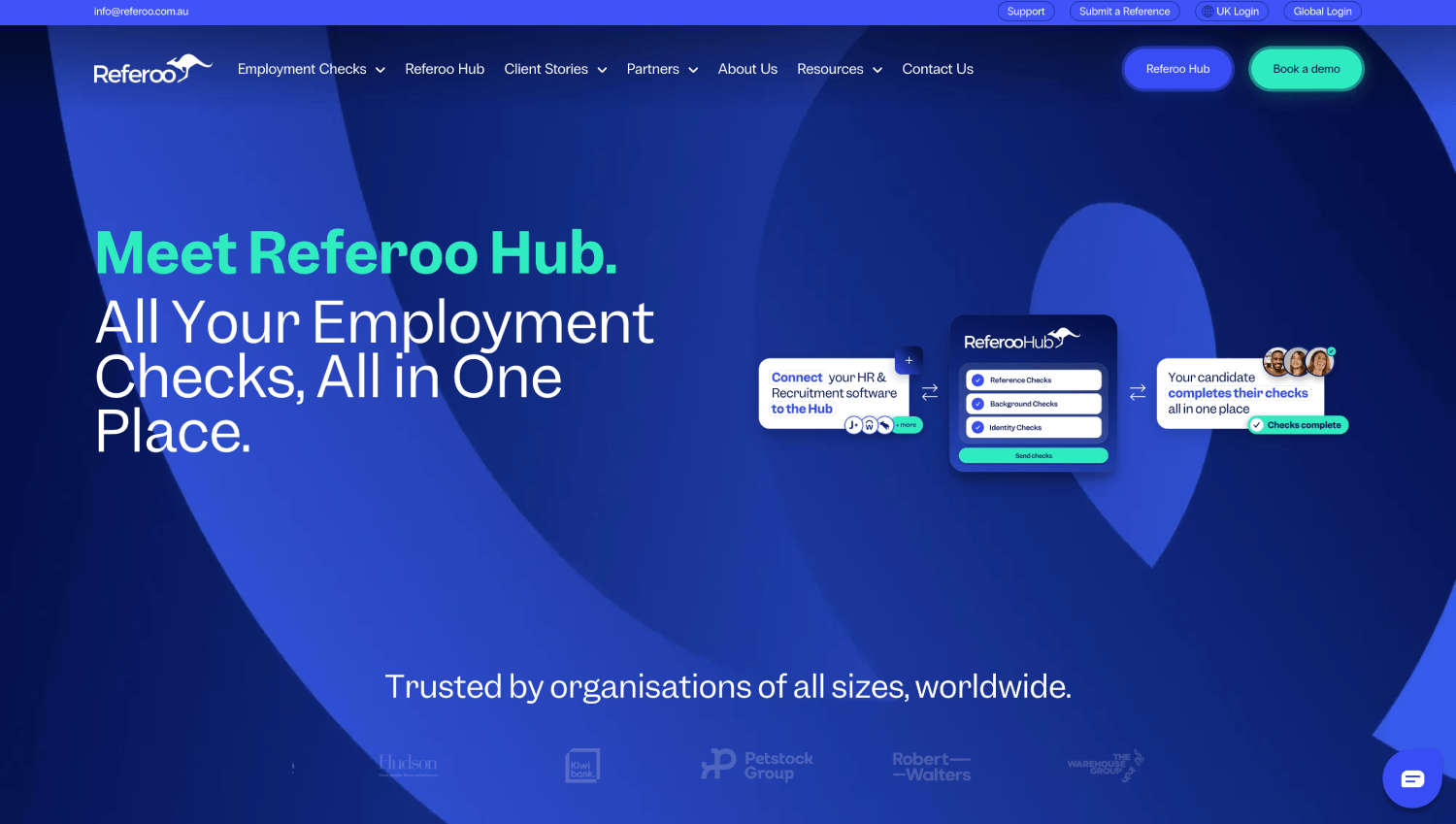
Referoo targets the Australian and New Zealand SMB market. It is a subscription-based platform with a clean referee experience and enough ATS connectivity via API and Zapier to work with most mid-market stacks. The questionnaire library is more limited than SkillSurvey or Xref, and fraud detection is basic, but the platform handles the core workflow well.
For ANZ-region companies between 50 and 500 employees that want to automate references without overbuying, Referoo is competitively priced and requires minimal setup time. Do not buy it if your team hires globally at any meaningful volume.
7. Crosschq
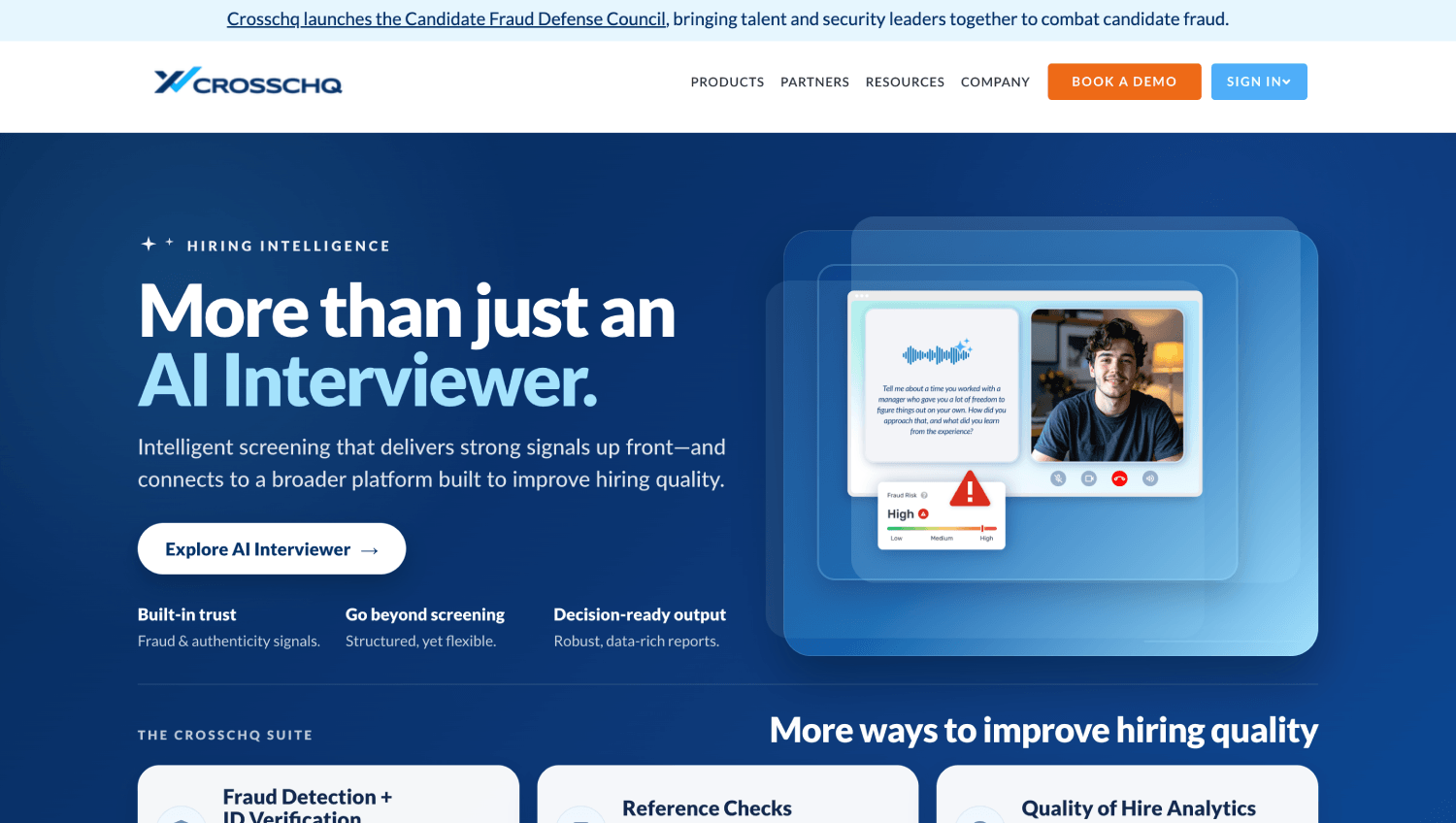
Crosschq takes a more data-forward approach than most reference platforms. Beyond collecting referee responses, the platform generates a predictive hiring score by analyzing reference patterns; Crosschq’s product marketing describes a quality-of-hire analytics layer that correlates pre-hire reference data with post-hire outcomes, though the methodology and the extent of any anonymized benchmarking database are not fully documented in publicly available materials , confirm the specifics with the vendor before relying on this as a core capability. For TA leaders who want to tie pre-hire signals to actual retention and performance data, this is the most analytically ambitious option in the category.
Integration with Greenhouse, Lever, and Workday is native. The platform also offers a candidate self-assessment layer that it correlates against referee scores, which surfaces alignment or discrepancy signals. Pricing is quote-based. Crosschq is best suited to TA teams that already think in data and have a people analytics function that can absorb and act on the output.
8. ViziRecruiter
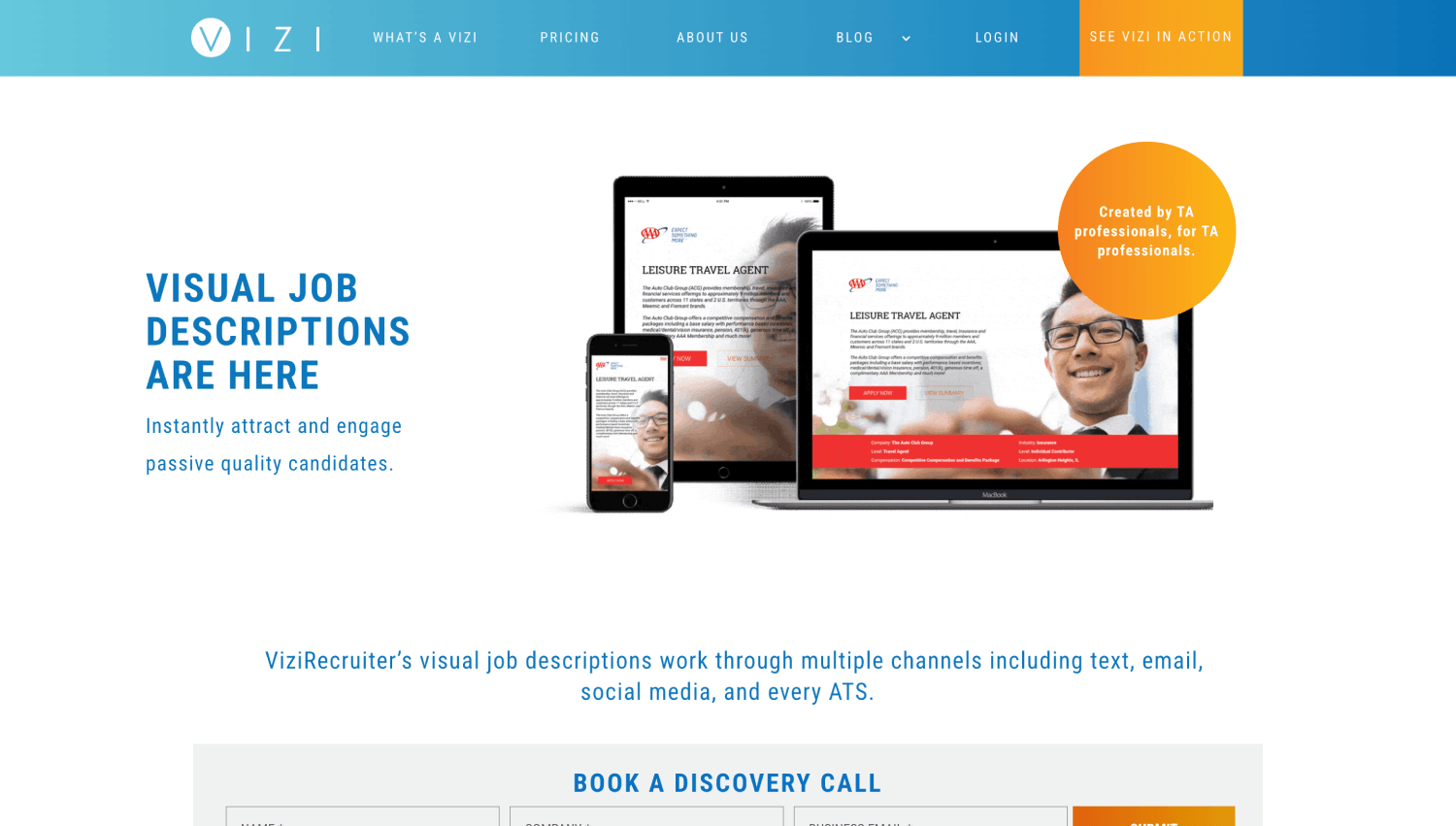
ViziRecruiter focuses on healthcare hiring, where reference checking norms, role-specific competency frameworks, and integration requirements differ from general corporate hiring. The platform ships with healthcare-specific questionnaire templates covering clinical competencies, patient safety behaviors, and regulatory compliance markers that general-purpose platforms require you to build from scratch.
Native integrations focus on healthcare ATS platforms. Outside of healthcare, the value proposition shrinks considerably, and a general-purpose platform will serve better. Pricing is quote-based.
9. Harver (formerly OutMatch)
Harver rebranded from its OutMatch origins and now sells a broader pre-employment assessment suite that includes reference checking as one component. For teams that want a single vendor covering cognitive assessments, situational judgment tests, and reference collection, Harver eliminates the need for multiple point solutions. The reference module is competent but not as deep as SkillSurvey or Crosschq.
The platform integrates natively with Greenhouse, SAP SuccessFactors, and Workday. Pricing is quote-based. The strongest case for Harver is when you are buying the assessment suite and want reference checking included rather than sourcing it separately. Buying Harver only for references, when you do not use the broader assessment suite, is likely overpaying for what you need. Teams choosing their full assessment stack should also review the best cognitive ability and pre-employment assessment tools before deciding.
10. InFlight Reference
InFlight approaches reference checking from the workflow-customization direction. Where most platforms give you a configurable questionnaire, InFlight gives you a configurable end-to-end process, including how and when the reference request is triggered, what the candidate sees, what the recruiter sees, and how the output flows back into your ATS. For large TA teams with complex, non-standard hiring workflows, that flexibility is worth the setup investment.
Fraud detection is basic compared to Checkster. The platform does not ship a competency scoring engine as sophisticated as SkillSurvey or Crosschq. It earns its place when process control is the primary requirement and scoring depth is secondary.
11. Oleeo
Oleeo serves the UK public sector and regulated industries, where reference checking workflows are embedded in broader recruitment compliance requirements. The platform operates as part of the Oleeo ATS suite, so it integrates most naturally if you already use Oleeo as your ATS. Standalone reference checking buyers will find the setup more involved.
For NHS trusts, local authorities, and regulated UK employers where reference checking is a formal compliance step governed by sector-specific rules, Oleeo’s deep familiarity with those requirements is its primary value. Outside that context, Xref or Zinc will serve better at lower friction.
How Do Automated Reference Checks Compare to Phone Calls for Reliability?
The most common objection to digital reference checks is that they produce generic responses because referees can be coached or can answer superficially. Phone calls, the argument goes, allow a skilled recruiter to probe.
That objection has some merit and more limitations. A structured digital questionnaire with scaled competency ratings, open-text response fields, and adverse information flags produces a consistent, comparable record that a phone call almost never does. The recruiter’s ability to probe on a phone call depends entirely on the recruiter’s skill, their relationship with the referee, and how much time the referee is willing to give. Digital platforms remove all three variables and replace them with a structured process that works the same way every time.
Platforms like Crosschq and SkillSurvey report higher completion rates for digital requests than for phone-based processes, partly because referees can complete the form on their own schedule. The more relevant reliability question is whether the structured data is predictive. Platforms that benchmark responses against post-hire performance data, as Crosschq describes doing, give you a more empirical signal. Phone calls give you a recruiter’s intuition.
Digital references do not replace every phone call. For senior executive hires or roles where nuanced judgment is critical, a structured digital reference followed by a targeted phone conversation with the most informative referee is the strongest approach.
Are Digital Reference Checks Legally Defensible?
Yes, with conditions. The legal defensibility of digital reference checks rests on three things: consent capture, consistent process, and secure storage.
Consent capture means the candidate has explicitly authorized you to contact the listed referees and to store the referee’s personal information. Most platforms handle this through a candidate-facing consent step before the reference request is sent. Without that step, you have a potential privacy violation in GDPR jurisdictions and an FCRA gray area in the US.
Consistent process means every candidate in the same role family receives the same questionnaire. If you ask one candidate’s referees about communication skills and another’s about technical judgment, and you make a hiring decision that affects both, the inconsistency is exploitable in a dispute. This is where structured questionnaire templates earn their value.
Secure storage means the reference report is retained according to your data retention policy and is recoverable if challenged. Most platforms produce a timestamped, immutable PDF that can be produced in discovery. Compare that to a recruiter’s handwritten notes from a phone call, which may not exist at all.
For teams managing compliance across multiple jurisdictions, this connects to the broader challenge of maintaining AI HR compliance and bias audit practices across the full hiring funnel.
Which Reference Checking Software Integrates With the Most ATS Platforms?
SkillSurvey has the broadest native ATS integration footprint in the US enterprise market, with documented connectors for Workday, Oracle Taleo, iCIMS, Greenhouse, and SAP SuccessFactors. Crosschq and Checkster cover Greenhouse, Lever, and Workday natively. Xref offers API access that most mid-market ATS platforms can consume without custom development.
If your ATS is not on a vendor’s native integration list, ask specifically about their Zapier tier and what data passes both ways. A one-way push of the completed reference PDF into your ATS is useful. A two-way sync that triggers the reference request automatically when a candidate reaches a specific pipeline stage, and writes the score back to the candidate record, is substantially more valuable.
Teams evaluating ATS platforms alongside reference tools should cross-reference the best ATS platforms for mid-market companies to confirm integration compatibility before committing to either vendor.
How Much Does Reference Checking Software Cost?
Most platforms in this category do not publish list pricing. The per-reference model is common for smaller platforms like RefNow and Referoo, where you pay per completed reference check rather than committing to an annual seat count. Per-reference pricing is predictable for teams with variable hiring volume but becomes expensive at scale.
Enterprise platforms including SkillSurvey, Checkster, Crosschq, and Harver price on annual contracts based on hiring volume or number of candidates processed. Expect minimum annual commitments for enterprise tiers. Teams processing fewer than 100 hires per year are better served by per-reference pricing models until volume justifies a contract.
Implementation costs are generally low compared to HRIS or ATS platforms. Most reference checking tools deploy in days, not months. The hidden cost to watch is referee completion rate. A platform with a 50% completion rate effectively doubles your cost per completed reference compared to one with 80%+ completion, even if the sticker price is lower.
Frequently Asked Questions
What is reference checking software?
Reference checking software sends structured questionnaires to a candidate’s listed referees, collects their responses automatically, scores the results against competency frameworks, flags adverse information, and returns a formatted report to the hiring team. The process replaces or supplements phone-based reference calls with a consistent, documented, and legally defensible digital workflow. Most platforms integrate with major ATS systems so the request triggers automatically and results flow back to the candidate record.
How does automated reference checking improve referee response rates?
Automated platforms send the reference request via email or SMS with a mobile-optimized link the referee can complete on their own schedule. They follow up automatically with reminder messages on a preset cadence, removing the need for a recruiter to chase. Referees also report higher comfort completing a written form than giving a live phone reference, which raises both completion rates and candor. Platforms like Xref publish response rate data from their customer base; request current benchmark figures from the vendor directly for the most accurate picture.
What is fraud detection in reference checking software?
Fraud detection refers to a platform’s ability to identify when a candidate has submitted a fake or coached reference. Common methods include checking whether the referee’s email domain matches the employer the candidate listed, flagging personal email addresses where corporate addresses are expected, requiring referee identity verification, and cross-referencing submitted information against external data sources. Checkster has the most developed fraud detection layer among the platforms in this list, making it the strongest choice for regulated industries where reference fraud is a meaningful risk.
How does digital reference checking handle adverse information?
Most platforms flag adverse information automatically when a referee’s response falls below a threshold on a competency rating scale or when specific keywords appear in open-text fields. The platform routes those flags to the hiring manager or a designated reviewer rather than archiving them silently. Some platforms, including SkillSurvey and Crosschq, use benchmarked scoring so a low rating is flagged relative to a norm rather than in isolation. The platform’s audit trail documents what was flagged, when, and who reviewed it.
Are reference checking platforms GDPR-compliant?
The major platforms, including Xref, RefNow, Zinc, and Checkster, have published GDPR compliance documentation and handle EU-resident data under appropriate legal bases including candidate consent and legitimate interest. The most important compliance step is the candidate consent capture before any referee contact details are submitted. Verify that any platform you evaluate captures this consent explicitly, stores it with a timestamp, and allows you to produce that record on request. Do not assume a US-headquartered vendor handles EU compliance without confirming it in their data processing agreement.
Can reference checking software replace a background check?
No. Reference checking software collects subjective assessments from people who know the candidate. Background check software verifies objective factual records, including criminal history, employment dates, education credentials, and professional license status. They serve different purposes and should be treated as complementary steps in a pre-employment process. For a full comparison of background check vendors, the best background check software guide covers that category separately.
Which reference checking platform is best for a startup or small team?
RefNow or Referoo are the most accessible entry points for teams under 200 employees. Both offer per-reference pricing with no large annual commitment, mobile-optimized referee experiences, and sufficient ATS connectivity via API or Zapier. RefNow is stronger for UK-based teams. Referoo is built for the ANZ market. US-based startups on tight budgets that want a no-contract option should evaluate both. Once hiring volume exceeds roughly 200 to 300 candidates per year, the math starts to favor an annual contract with a platform like Xref or SkillSurvey.
How to Connect Reference Checking to the Rest of Your Hiring Stack
Reference checking sits at the end of the hiring funnel, which means it is the last structured data point you collect before an offer. The platforms that extract the most value from that position are the ones that write reference scores back into the candidate record in your ATS and make that data available to your people analytics team after hire.
Crosschq is the most explicit about this connection, building its quality-of-hire analytics around the correlation between reference patterns and post-hire outcomes. SkillSurvey’s benchmarked competency scores serve a similar function if your people analytics team is willing to join that data to your HRIS performance records post-hire. For teams investing in the full talent acquisition intelligence picture, this connects naturally to talent intelligence platforms that aggregate pre-hire and post-hire data into workforce planning signals.
The reference check should not be a dead end. If a candidate’s referee scoring consistently predicts performance in a given role family and you are not using that signal to improve future hiring decisions, you are leaving the most defensible pre-hire data point you collect on the table.
The decision comes down to three variables: where you hire (geography drives compliance requirements), how many candidates you process annually (determines pricing model), and how much analytical depth you want from the output. SkillSurvey for US enterprise at scale. Xref for global hiring with compliance requirements. Crosschq for teams that want reference data to feed quality-of-hire analytics. RefNow or Referoo for teams that want to get off phone calls without overcommitting to a platform. Zinc or Oleeo if you are in the UK and compliance bundling matters. Everything else in this list fills a specific vertical or workflow niche. Match the tool to the problem, not to the feature sheet.