
TLDR
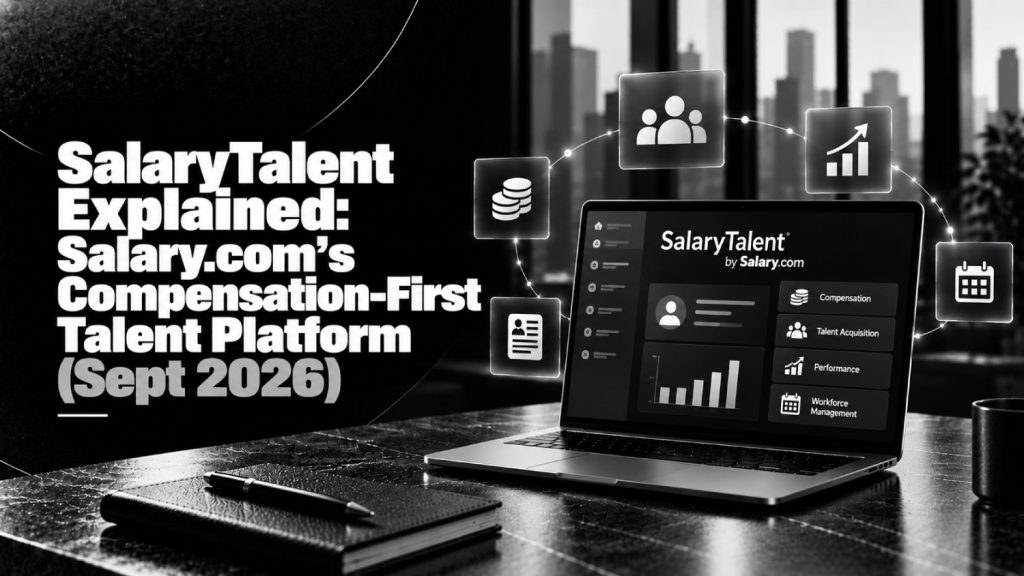
- On Sept. 28, 2026, Salary.com launched SalaryTalent, an AI-native, compensation-first talent management platform that embeds pay and labor-market intelligence into recruiting, performance, workforce management, and HR agent orchestration.
- Primary sources: Salary.com’s GlobeNewswire release (also mirrored on TechRSeries).
- Buyer-relevant product facts: built on Salary.com’s job ontology (1.4M+ leveled titles, data from 30,000+ organizations across 140+ countries); powered by the Max AI engine; five launch products (Recruiting, Candidate Sourcing, Performance Management, Workforce Management, HR Agent Orchestration); desktop + mobile; integrations called out for existing HR systems, Teams, and Slack.
- Salary.com says its compensation stack is already trusted by 10,000+ organizations. Availability: now, with a 30-day SalaryTalent Bootcamp (own jobs/pay data, no commitment) or a standard demo.
- For buyers: this is a comp-data vendor expanding into talent workflows, not another ATS recruiting-agent launch. Ask how Decision Intelligence maps to your bands, which modules are GA vs roadmap, and how HR Agent Orchestration approval gates work before you replace Lattice, Workday Talent, or a standalone ATS.
Sept. 28, 2026 added a different kind of AI-in-HR story. Salary.com did not launch another chatbot on payroll. It launched SalaryTalent: a platform that starts from compensation ontology and market pay, then pushes that context into the screens where offers, ratings, schedules, and agent actions actually happen.
That matters for HrTechSaas readers who already track agentic HCM and recruiting launches. Most of those stories start from workflow automation and treat pay as a field to fill later. SalaryTalent’s pitch is the reverse: start from the value of work, then make talent decisions with market and equity context already on screen.
This draft sticks to the Sept. 28 launch facts, module list, and evaluation questions. It is not a rewrite of Paychex WISE Hire, Workable AI Recruiting Agents GA, Warp Agent, or the evergreen best compensation benchmarking tools roundup.
What Salary.com announced
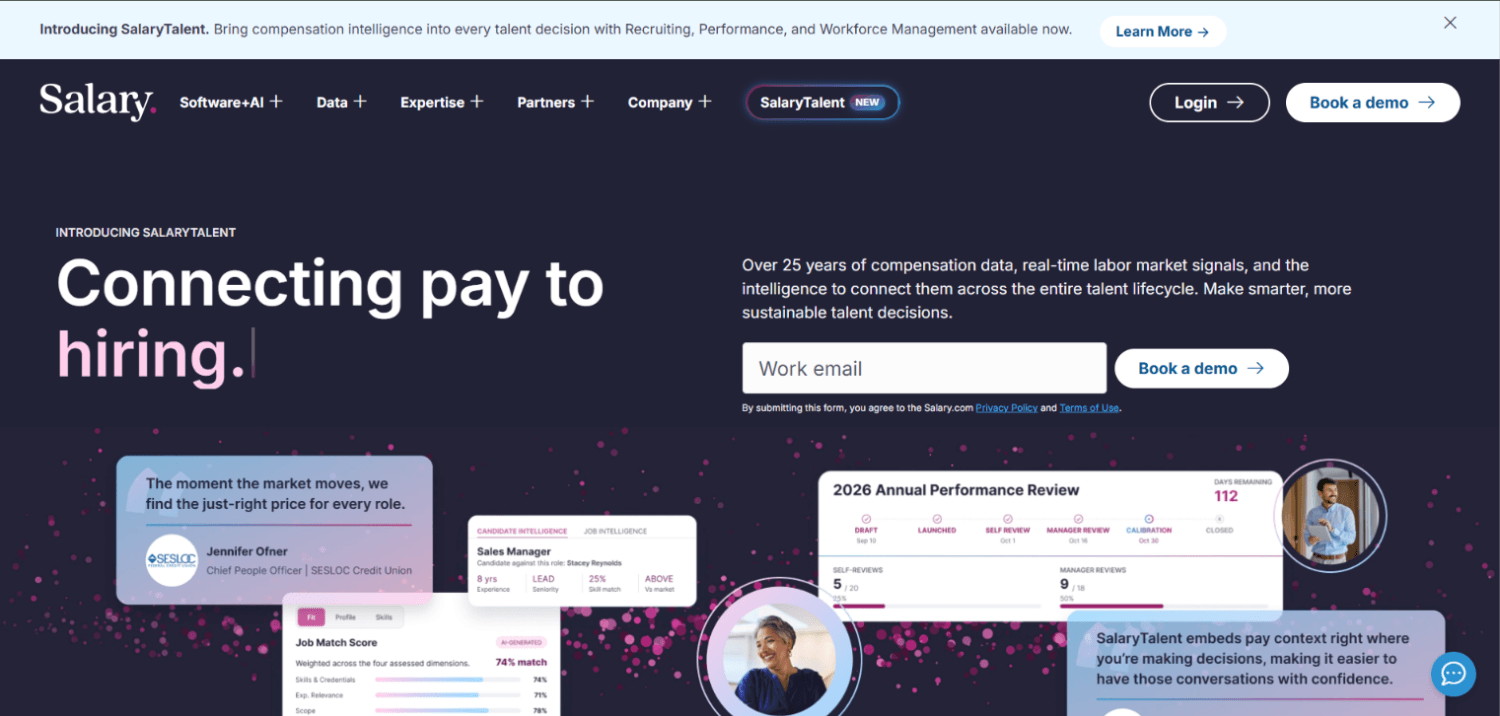
Per the GlobeNewswire release (Sept. 28, 2026):
- SalaryTalent is an AI-native, compensation-first talent management platform that brings compensation management and labor market intelligence into everyday workforce decisions.
- Salary.com positions itself as a compensation data, software, and AI leader already trusted by more than 10,000 organizations.
- The platform sits on Salary.com’s proprietary job ontology: more than 1.4 million leveled job titles, informed by data from over 30,000 organizations across 140+ countries, plus real-time labor market signals from job postings, hiring trends, and competitor activity.
- Desktop and mobile apps are said to integrate with existing HR systems, Teams, and Slack so intelligence shows up at decision time, not after the fact.
- Max AI powers SalaryTalent Decision Intelligence: it claims to understand who you are, the decision you are making, and your internal context, then surfaces market pay, salary-band placement, and internal equity considerations before the user acts.
CEO Yong Zhang framed the thesis: “Talent systems were built around process, with pay often left as the last field to fill in. We think that’s backwards. Start from the value of work, and everything downstream gets better: the offer, the rating, the promotion.”
SVP of Products Christopher Knize said customers wanted trusted job, pay, skills, and market context when they open a requisition, engage a candidate, evaluate performance, plan a career conversation, or make a retention decision, not only inside the compensation system.
Early customer quote in the release (Lorissa Martin, The Wills Group): “SalaryTalent is a holistic solution that’s rooted in compensation. You can make intelligent decisions on your hiring, stay competitive in the market, and remain equitable with your current employees.”
Five products at launch
Salary.com lists five interconnected products under the SalaryTalent umbrella:
| Product | What the release claims | Buyer use |
|---|---|---|
| Recruiting | Connects requisitions, offers, and onboarding with market intelligence; pay-transparency-ready requisitions include salary ranges from the start | Ask how ranges sync to CompAnalyst / existing bands and which states/locales are covered |
| Candidate Sourcing | Identify and engage active and passive candidates using skills, experience, and market pay context | Compare to ATS-native agents (Workable, Paychex WISE Hire) on sourcing channels and human oversight |
| Performance Management | Connects reviews, goals, and career development with skills, market demand, and compensation; AI flags rating anomalies; market-aware career pathing | Pressure-test against Lattice / 15Five if performance is already bought |
| Workforce Management | Unifies scheduling, time and attendance, leave, and workforce compliance; configurable rules flag assignment issues before schedules publish; auditable time-to-payroll | Confirm depth vs UKG / Workday WFM if you already run a serious WFM stack |
| HR Agent Orchestration | Human-in-the-loop control over AI agents; configurable approval gates, permission scopes, and audit logs | Require a demo of blocked vs autonomous agent actions and exported audit samples |
Key buyer framing: Salary.com is not claiming to replace your entire HCM on day one. The release says existing customers keep the solutions they have today and extend compensation impact across talent decisions. Treat this as a comp-intelligence layer expanding into talent modules, then verify which modules are production-ready for your footprint.
How Decision Intelligence is supposed to work
The release’s product story has three layers:
- Ontology + survey/market data Salary.com already sells (job architecture, leveling, pay ranges).
- Real-time labor market intelligence from postings, hiring trends, and competitor activity.
- Max AI / Decision Intelligence that injects the right slice of that context into the flow of work (offer, raise, requisition, retention).
The practical claim for recruiters and managers: market pay, band placement, and internal equity show up on the screen they already use, before they act. That is useful if true. It is also where buyers should demand a live walkthrough with their job architecture, not a canned demo job family.
For category context on the compensation side of the stack, pair this news with best compensation benchmarking tools, total rewards technology stack, and best compensation management software. On the agent side, keep AI HR agents explained handy when you evaluate HR Agent Orchestration.
How this differs from other hub drafts and site pages
HrTechSaas already covers nearby agent and talent stories:
- Paychex WISE Hire (agentic recruiting inside Flex / Paycor / SurePayroll)
- Workable AI Recruiting Agents GA (ATS-native agents + credits/MCP)
- Warp Agent (AI-native people-ops Routines, payroll/tax write paths)
- Rippling AI Lab Bengaluru (Employee Graph + agentic action direction)
- Comp evergreen: best compensation benchmarking tools, pay transparency compliance software, total rewards technology stack
This draft is different:
- Same-day SalaryTalent product launch (Sept. 28, 2026)
- Focus on a compensation-data incumbent expanding into talent management, not ATS recruiting agents or AI-native HCM payroll Routines
- Not a CompAnalyst / CompXL alternatives listicle and not a generic pay-transparency roundup
Do not merge this into the Paychex, Workable, or Warp URLs. Different vendor, different system of record story, different buyer question.
Who should care, and what to ask
Prioritize a read-out if you:
- Already run Salary.com (CompAnalyst / CompXL) and want pay intelligence inside requisitions, offers, and manager decisions without another disconnected tool
- Are under pay-transparency pressure and need salary ranges on requisitions that match real market and internal equity rules (see also pay transparency compliance software)
- Own total rewards and talent in the same org chart and keep losing offers or creating compression because market data arrives too late
- Are evaluating whether to expand a point talent suite (Lattice, Greenhouse, etc.) or adopt a compensation-first platform layer with agent orchestration
Ask Salary.com (and your security / HRIS owners) before expanding scope:
- Which of the five products are generally available for your region and company size today, and which are limited preview?
- How does SalaryTalent Decision Intelligence map to your current Salary.com job architecture and bands, not a demo dataset?
- For Recruiting: which ATS/HRIS write-backs are live (requisition ranges, offer letters, onboarding), and which are read-only overlays?
- For Candidate Sourcing: which channels and enrichment sources are used, and how does this differ from Paychex WISE Hire or Workable agents on governance?
- For Performance: can rating-anomaly flags explain the market/equity rule that fired, and can managers override with an audit trail?
- For Workforce Management: what leave, overtime, and scheduling rule engines ship at launch versus later, and how do they compare to your current WFM?
- For HR Agent Orchestration: show recommend-only vs act-after-approval vs autonomous, plus sample audit exports for a blocked pay-related action.
- What is included in the 30-day Bootcamp (data ingestion, module access, support), and what happens to your uploaded jobs/pay data if you do not buy?
- Pricing model: seat vs employee vs module; how Max AI usage is metered; whether existing CompAnalyst/CompXL customers get credit.
- SOC 2 / data residency / subprocessors for workforce, pay, and agent logs when intelligence is delivered into Slack/Teams.
The take: treat this as a comp-intelligence expansion, not an HCM rip-and-replace
Salary.com’s Sept. 28 story is coherent. Most talent platforms bolt pay on at the end. SalaryTalent starts from ontology and market pay, then claims to put that context into offers, ratings, schedules, and agent actions. For companies that already trust Salary.com’s data, that is a logical product move.
Your job is narrower. Run the Bootcamp or a scoped pilot against one job family and one offer cycle. Measure whether ranges and equity flags change decisions before managers act, not whether the UI looks like another talent suite. Keep HR Agent Orchestration on approval until the audit log matches your RACI. Compare module depth against your current ATS, performance, and WFM tools before you accept “compensation-first talent platform” as a reason to consolidate everything.
FAQ
What is SalaryTalent?
SalaryTalent is Salary.com’s AI-native, compensation-first talent management platform, announced Sept. 28, 2026, covering recruiting, candidate sourcing, performance, workforce management, and HR agent orchestration.
What powers SalaryTalent Decision Intelligence?
Salary.com’s Max AI engine, layered on its job ontology and real-time labor market intelligence, is described as delivering market pay, band placement, and internal equity context in the flow of work.
Is SalaryTalent available now?
The release says it is available now. Qualified organizations can start with a 30-day SalaryTalent Bootcamp using their own jobs and pay data, or request a standard product demo.
How is this different from Paychex WISE Hire or Workable agents?
Those launches are recruiting/TA agent stories inside payroll HCM or ATS. SalaryTalent starts from compensation data and expands across talent modules, including performance and WFM, with agent orchestration as one of five products.
Does this replace CompAnalyst or CompXL?
The release says existing customers keep the solutions they have today and extend compensation impact across talent decisions. Confirm packaging and migration paths in a quote.
Who should evaluate this week?
Total rewards and talent leaders already on Salary.com, plus HR tech buyers under pay-transparency pressure who need market-aware ranges earlier in the requisition and offer process.