
HR Tech SaaS may earn a commission when you buy through links on this page. Our recommendations are editorial and never paid for.
- Most HR leaders default to big SIs like Deloitte or Accenture for HR tech projects, then discover those firms assign junior staff and charge enterprise rates for mid-market problems.
- A growing tier of specialist HR technology consulting firms focuses exclusively on selection, implementation, and optimization , and they typically move faster and cost less than the generalist giants.
- The right firm depends on your phase: pre-selection strategy, platform-specific implementation, post-go-live optimization, or AI readiness assessment.
- This list covers firms across company size, budget, and HR tech category , HRIS, payroll, ATS, Workday, and AI-era tooling , so you can match a firm to your actual problem.
- Before engaging any consultant, use a structured vendor evaluation process to avoid paying a firm to redo work you could have done yourself.
HR technology consulting firms are specialist advisory and implementation practices that help organizations select, deploy, and optimize HR software , including HRIS, payroll systems, applicant tracking systems, and AI-powered HR tools. The best firms combine deep platform knowledge with change management experience, and they operate independently of vendor relationships that would bias their recommendations.
Why Most HR Tech Projects Go Wrong Before a Consultant Even Shows Up
The failure mode is almost always the same. A company picks a platform , Workday, UKG, Rippling, SAP SuccessFactors , before defining what problem it is actually trying to solve. The consultant then inherits a scope built on shaky requirements, and the project drifts. Timelines slip. Budget overruns follow. Adoption lags because nobody asked frontline managers what they needed.
Hiring a consultant after vendor selection is like hiring an architect after you have already poured the foundation. The best HR technology consultants get involved early, during requirements gathering and vendor evaluation, not just during configuration and go-live. If a firm only offers implementation services, it is optimizing for billable hours, not your outcome.
The other mistake: treating HR tech consulting as a category that only has two options. Either you call Deloitte and spend $500K, or you hire a solo freelancer from LinkedIn and hope for the best. There is a substantial middle market of specialist firms that know specific platforms deeply, work with mid-market companies, and have track records that are actually checkable.
Before you engage anyone, make sure your internal requirements are documented. Our HR software buying checklist covering 75 questions to ask before choosing an HRIS, payroll, ATS, or HCM platform is a practical starting point.
How to Evaluate an HR Technology Consulting Firm Before You Sign
Four questions separate firms worth calling from firms worth avoiding.
- Platform depth vs. platform breadth: Does the firm have certified practitioners on the specific platform you are buying, or do they claim expertise across every tool in the market? A firm that knows Workday HCM deeply is worth more than one that “works with all major platforms.”
- Vendor independence: Does the firm receive referral fees or reseller commissions from the platforms it recommends? If yes, that is a conflict of interest, not a partnership. Ask directly.
- Reference clients at your company size: A firm that has only implemented Workday for 5,000-employee enterprises is the wrong choice for a 300-person company buying Rippling. Ask for references that match your headcount and industry.
- Post-go-live track record: Go-live is not success. Ask firms what percentage of their clients return for optimization engagements six to twelve months post-implementation. High return rates signal genuine value delivery.
What Does an HR Technology Consultant Actually Do?
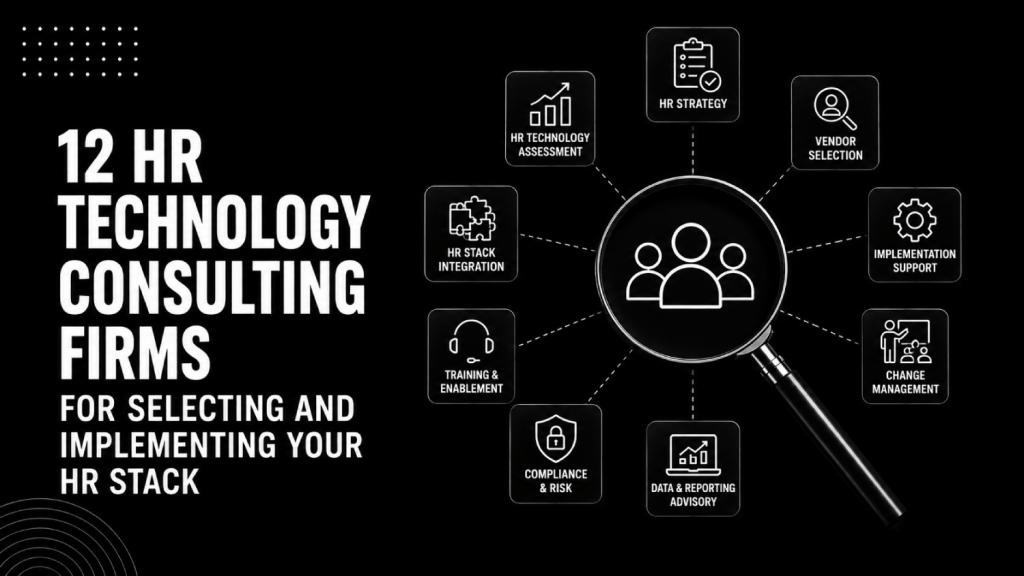
The work falls into four distinct service types. Most firms offer more than one, but few are genuinely strong at all four.
| Service Type | What It Covers | When You Need It |
|---|---|---|
| HR Tech Strategy and Selection | Requirements gathering, RFP development, vendor demos, scoring, shortlisting | Before you have chosen a platform |
| Implementation and Configuration | Platform setup, data migration, integrations, testing, go-live | After contract signing, before launch |
| Post-Go-Live Optimization | Adoption programs, configuration cleanup, workflow redesign, analytics buildout | 6 to 18 months after go-live |
| AI Readiness and Governance | AI tool evaluation, bias audit support, data readiness, vendor contract review | Before buying AI-powered HR tools |
The 12 HR Technology Consulting Firms Worth Knowing
This list is organized roughly from broad-scope enterprise firms down to specialized boutiques. No single firm is right for every buyer. Read the “best for” column, not just the firm name.
1. Mercer
Mercer is the largest pure-play HR consulting firm globally, and its HR technology practice covers everything from HCM strategy to ERP-level implementation support. The firm works primarily with large enterprises and has strong cross-platform expertise across Workday, SAP SuccessFactors, Oracle HCM, and ServiceNow HRSD. Mercer’s advantage is breadth: it combines HR strategy, total rewards benchmarking, and tech advisory in one engagement. Its limitation is the same: generalist breadth sometimes means platform depth is thin on the ground.
Best for: Large enterprises needing HR tech strategy tied to total rewards or benefits redesign alongside the technology project.
2. Alight Solutions
Alight built its reputation as a benefits administration and payroll outsourcer, then expanded aggressively into HR technology implementation. Its platform expertise is deepest in Workday and SAP SuccessFactors, and it has a large bench of certified practitioners for both. Alight also offers managed services, meaning it can run ongoing HR tech operations after implementation. That makes it a genuine option for companies that do not want to build internal platform admin capability.
Best for: Mid-market to large enterprises implementing Workday or SAP SuccessFactors who want a single vendor for implementation and ongoing administration.
3. Accenture HR Technology Consulting
Accenture’s HR tech practice is embedded in its broader cloud and ERP consulting group. The firm has deep Workday Alliance and SAP partnership credentials, and it staffs large transformation programs with structured methodologies. The honest caveat: Accenture operates best at enterprise scale. Below 2,000 employees, the overhead of its delivery model often exceeds the value. It is also openly a systems integrator with vendor partnership revenue, which affects independence on platform selection.
Best for: Enterprise organizations (5,000+ employees) running complex, multi-country HCM transformations where platform choice is already made.
4. Deloitte Human Capital
Deloitte Human Capital consistently ranks at the top of analyst and practitioner surveys on HR consulting quality. Its HR Technology practice covers Workday, Oracle, SAP SuccessFactors, and AI-era tools, and it publishes credible research , including the annual Global Human Capital Trends report , that shapes how HR leaders think about technology investment. The same limitations apply as with Accenture: enterprise focus, high rates, and a complex partner structure that is not always transparent about vendor economics.
Best for: CHROs at large enterprises who need both strategic cover and delivery capacity, and whose boards recognize the Deloitte brand as a credibility signal.
5. Cognizant Workday Practice
Cognizant’s Workday practice is one of the larger Workday partner implementations globally, with certified practitioners across Workday HCM, Payroll, Adaptive Planning, and Recruiting. Cognizant competes on price against Accenture and Deloitte, and its delivery teams are often more consistent at mid-market scale (500 to 3,000 employees). The trade-off is that offshore delivery models can create timezone friction during critical testing and go-live phases. Worth considering if Workday is the platform and cost discipline matters.
Best for: Mid-market companies implementing Workday HCM or Payroll who want a lower-cost alternative to the Big 4 SIs. See our roundup of the best Workday consulting firms for implementation, optimization, and support for a full comparison.
6. Sierra-Cedar (Now Part of Sability)
Sability (which absorbed Sierra-Cedar’s HR technology practice) is a mid-market focused HR technology consulting firm with strong Workday and UKG credentials. Sierra-Cedar built a reputation through its annual HR Systems Survey, one of the longest-running benchmarking studies in the HR tech industry, which gave the firm unusual market visibility. The combined entity brings that research orientation into implementation and optimization work, which is useful for companies that want benchmark-grounded recommendations rather than generic best practices.
Best for: Mid-market organizations implementing or optimizing Workday or UKG who value data-informed consulting over pure delivery capacity.
7. PwC Workforce Technology
PwC’s workforce technology practice sits inside its broader digital transformation group and covers HR tech strategy, HCM implementation, and AI-readiness advisory. Like Deloitte, PwC operates at the intersection of workforce strategy and technology, which is an advantage when the HR tech project is connected to workforce planning or organizational redesign. Platform depth on Workday and SuccessFactors is strong. Independence on vendor selection is, again, worth scrutinizing given Big 4 partnership structures.
Best for: Large organizations running HR tech projects that are tied to broader finance or workforce transformation programs where PwC already has a relationship.
8. Appirio (Now Part of Wipro)
Wipro’s HR tech practice, which absorbed Appirio’s Workday and Salesforce consulting capabilities, is a volume player in Workday and ServiceNow implementations. Appirio was known for cloud-native implementation speed before the acquisition. The Wipro integration has brought scale but also some of the complexity that comes with a large IT services firm. Worth evaluating for Workday HCM and Workday Payroll projects where the priority is proven methodology over boutique service.
Best for: Organizations that want Workday-certified delivery at competitive rates and are comfortable with a large IT services delivery model.
9. Huron Consulting Group
Huron has strong vertical depth in healthcare and higher education HR technology, which sets it apart from the generalist SIs. Its HR tech practice covers Workday, Oracle, and Kronos/UKG implementations with particular expertise in the compliance and union-contract complexity those sectors involve. For a healthcare system or university buying Workday, Huron brings context that a generalist firm cannot replicate. Outside those verticals, it is a less obvious choice.
Best for: Healthcare systems and higher-education institutions implementing Workday or UKG where sector-specific configuration knowledge matters.
10. Boutique Selection Specialists
Not every HR tech consulting engagement needs a systems integrator. A growing number of boutique firms focus exclusively on HR software selection consulting , they help buyers develop requirements, run RFP processes, conduct vendor demos, and score proposals, without touching implementation at all. Independent advisors operating in this space eliminate the conflict of interest that exists when a firm profits from the implementation it recommends. Rates and service models are not publicly disclosed and vary by firm and engagement scope.
Best for: Organizations that are confident in their ability to manage implementation internally but want independent advice on which platform to buy. Pair this with our RFP template for HR software including vendor scoring methodology to structure the process.
11. Payroll-Specific Advisory Firms
For organizations whose primary HR tech challenge is payroll migration , replacing ADP, Paychex, Gusto, or UKG , payroll-specialist consulting firms offer deeper expertise than generalist HR tech consultants. These firms understand parallel run requirements, tax compliance transitions, and the data mapping complexity that kills payroll migrations.
Two distinct types of firms operate here. First, payroll compliance advisory firms (such as those specializing in multi-state employer tax compliance) help organizations assess regulatory obligations during a payroll system transition. Second, payroll implementation specialists handle the technical migration itself: data mapping, parallel run management, integration to benefits and time-tracking systems, and go-live support. These are different services with different capabilities, and buyers should confirm which type of firm they are engaging before signing a contract.
The implementation risk in payroll is higher than in most other HR modules because errors have direct legal and financial consequences. For this specific problem, generalist HR tech consultants are often the wrong choice. Our guide to payroll migration consultants for companies replacing ADP, UKG, Paychex, or Gusto covers this category in depth.
Best for: Companies whose primary project is payroll system replacement, not a full HCM transformation.
12. Boutique AI HR Advisory Firms
A new category of HR technology consulting firms has emerged specifically to help organizations evaluate and govern AI-powered HR tools , covering AI sourcing platforms, AI interview tools, skills intelligence software, and AI HR chatbots. These firms typically combine HR tech procurement expertise with AI governance knowledge, which is increasingly necessary as regulators in the EU, New York City, and Illinois scrutinize algorithmic hiring tools. They are not systems integrators. Their value is in vendor evaluation frameworks, contract negotiation support, and AI bias audit coordination.
Before buying AI-powered HR tools, your shortlist should be pressure-tested against our 50-question AI HR vendor evaluation checklist for CHROs. A boutique AI advisory firm can help you run that process with more rigor than a generalist SI will apply to it.
Best for: Organizations actively evaluating AI-powered HR tools who need independent governance and evaluation support separate from implementation.
How Do These Firms Compare on Key Dimensions?
| Firm | Primary Strength | Best Company Size | Platform Depth | Vendor Independence |
|---|---|---|---|---|
| Mercer | HR strategy + tech advisory | Enterprise | Multi-platform | Moderate |
| Alight Solutions | Workday + SAP implementation + managed services | Mid-market to Enterprise | Workday, SAP SF | Low (managed services revenue) |
| Accenture | Large HCM transformations | Enterprise (5,000+) | Workday, SAP SF, Oracle | Low (SI partnerships) |
| Deloitte Human Capital | HR strategy + research + delivery | Enterprise | Multi-platform | Low (SI partnerships) |
| Cognizant | Workday at competitive rates | Mid-market to Enterprise | Workday-focused | Low (Workday partner) |
| Sability (formerly Sierra-Cedar) | Research-informed implementation | Mid-market | Workday, UKG | Moderate |
| PwC | Workforce strategy + HCM delivery | Enterprise | Workday, SAP SF | Low (SI partnerships) |
| Wipro (Appirio) | Workday delivery at scale | Mid-market to Enterprise | Workday, ServiceNow | Low (Workday partner) |
| Huron | Healthcare + higher-ed HCM | Mid-market to Enterprise | Workday, Oracle, UKG | Moderate |
| Boutique Selection Firms | Vendor-neutral selection advisory | SMB to Mid-market | Platform-agnostic | High |
| Payroll Migration Specialists | Payroll system transitions | All sizes | Payroll-specific | Varies |
| Boutique AI Advisory | AI tool evaluation + governance | Mid-market to Enterprise | AI-specific, platform-agnostic | High |
What Should You Expect to Pay an HR Tech Consulting Firm?
Rates vary significantly by firm type and engagement scope. Pricing is quote-based for most engagements, and vendors rarely publish rate cards. What you should expect:
- Big 4 and Tier 1 SIs (Deloitte, Accenture, PwC): blended daily consulting rates are not publicly disclosed, but are generally high enough to make these firms impractical for companies under 1,000 employees without a very large scope.
- Tier 2 SIs (Cognizant, Wipro, Alight): more competitive rates, often with offshore delivery components that reduce blended daily consulting rates.
- Mid-market boutiques and selection specialists: typically fixed-fee or time-and-materials at rates that are accessible for companies in the 200 to 1,000 employee range.
- Boutique AI advisory: mostly project-based for specific evaluation or audit engagements, which makes cost predictable.
The hidden cost in any consulting engagement is scope creep. A firm that charges lower rates but expands scope aggressively will cost more than a higher-rate firm with disciplined project management. Always negotiate a fixed-fee option for discovery and selection phases, and time-and-materials with a cap for implementation.
Understanding the hidden costs of HR software including implementation, integrations, and per-employee fees before you engage a consultant will help you build a more accurate total cost of ownership model.
When Should You Use an HRIS Implementation Partner Instead of a Consulting Firm?
HR technology consulting firms and HRIS implementation partners are not the same thing, and conflating them leads to bad vendor selection.
An HR tech consulting firm helps you decide what to buy and why, audits your requirements, runs your selection process, and may or may not do the implementation. An HRIS implementation partner is typically a certified SI for a specific platform , Workday, UKG, SAP SuccessFactors , and its primary job is to configure and deploy that platform. If you have already chosen your platform, you need an implementation partner. If you have not, you need a consulting firm first.
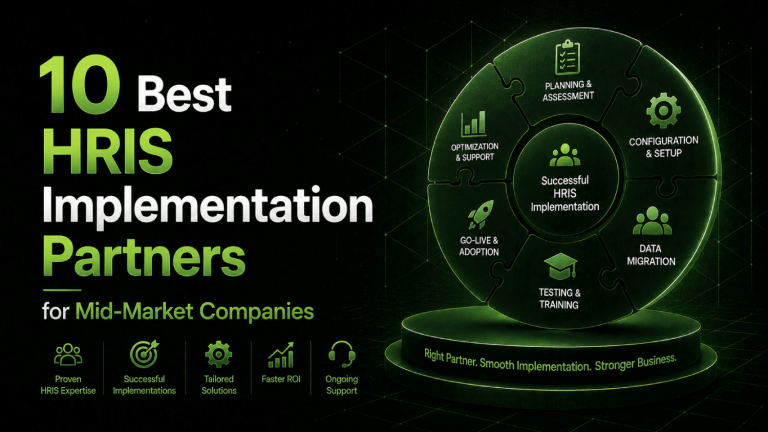
Confusing the two is how companies end up being “recommended” a platform by the firm that profits from implementing it. Our roundup of the best HRIS implementation partners for mid-market companies covers that category separately.
Which Firms Are Best for AI HR Tool Selection and Governance?
AI-powered HR tools , covering sourcing, screening, interviewing, internal mobility, and people analytics , require a different consulting skill set than traditional HRIS implementation. The questions are different: How does the model make decisions? What data was it trained on? How does the vendor handle bias audits? What contractual protections exist if the model degrades over time?
Most large SIs do not yet have mature AI governance practices for HR applications. Their AI practices tend to focus on generative AI for knowledge work, not on the procurement and audit of narrower algorithmic HR tools. Boutique AI advisory firms fill this gap more reliably right now.
For organizations evaluating AI people analytics platforms for workforce planning, the due diligence process is genuinely complex , model transparency, data privacy, integration requirements, and change management all overlap. A specialist advisor is worth the cost at that level of complexity.
Frequently Asked Questions About HR Technology Consulting Firms
What is an HR technology consultant?
An HR technology consultant helps organizations select, implement, and optimize HR software platforms. The work spans requirements gathering, vendor evaluation, platform configuration, data migration, integration, change management, and post-go-live optimization. Some consultants are platform-agnostic advisors focused on selection strategy. Others are certified systems integrators for specific platforms like Workday or SAP SuccessFactors. The distinction matters because a firm that profits from implementation has an incentive to recommend the platform it implements most, regardless of fit.
What are the Big 4 in HR tech consulting?
In the context of HR technology consulting, the Big 4 refers to Deloitte, PwC, Accenture, and KPMG , all of which have significant HR technology practices alongside their broader consulting and audit businesses. All four are Workday Alliance partners and SAP SuccessFactors partners. They operate at enterprise scale, carry enterprise rates, and have vendor partnership structures that affect their independence on platform selection. They are not the right choice for most mid-market HR tech projects.
How much do HR technology consulting firms charge?
Rates are almost never published publicly. Big 4 and Tier 1 SI blended daily consulting rates are not publicly disclosed, but are generally high enough to make these firms impractical for companies under 1,000 employees. Tier 2 SIs like Cognizant and Wipro are more competitive, particularly for implementations with offshore delivery components. Mid-market boutiques and selection-only advisors often work on fixed-fee project terms that are accessible for companies in the 200 to 1,000 employee range. Always request a fixed-fee option for scoped phases to limit exposure to scope creep.
Do HR technology consulting firms recommend specific platforms?
Many do, and the recommendation is often influenced by which platforms they are certified to implement or receive referral revenue from. A firm that is a Workday Alliance partner has a financial interest in recommending Workday. This does not mean their recommendation is wrong, but buyers should ask directly whether the firm receives any implementation revenue or referral fees connected to a platform recommendation. Boutique selection-only firms that do not do implementation are structurally more independent on platform choice.
When should I hire an HR tech consultant vs. handling the project internally?
Hire a consultant when: you are evaluating multiple platforms with overlapping capabilities and no internal framework for scoring them; you are implementing a complex platform like Workday or SAP SuccessFactors for the first time; or you are migrating payroll data across systems where error risk has direct legal consequences. Handle it internally when: you are adding a point solution to an existing stack, the vendor’s implementation support is sufficient, or your team has direct experience with the platform from a previous employer. Most mid-market companies underestimate how much they need help at the selection stage.
What is the difference between HR technology consulting and HR consulting?
HR consulting covers a broader range of services: organizational design, compensation strategy, recruiting process design, and HR compliance advisory. HR technology consulting is specifically focused on the software systems that support HR functions , HRIS, ATS, payroll, performance management, and AI-powered HR tools. Some firms, like Mercer and Deloitte Human Capital, do both. Others, like Alight Solutions or Cognizant’s Workday practice, focus almost entirely on the technology. Knowing which type of help you need before you issue an RFP will save significant time and money.
Is there an alternative to hiring a full consulting firm for HR software selection?
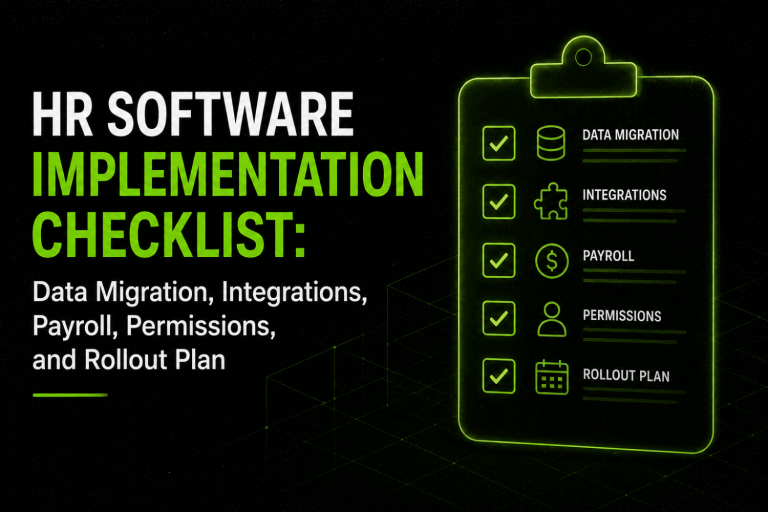
Yes. For organizations that primarily need structure and rigor in their selection process rather than deep platform expertise, using a vendor evaluation framework and an independent RFP process can substitute for a full consulting engagement. Resources like a structured HR software implementation checklist covering data migration, integrations, payroll, permissions, and rollout planning can handle much of the project management layer that consultants charge for. Where independent expertise becomes irreplaceable is in data migration, integration architecture, and complex enterprise platform configuration.
The Honest Framework for Choosing Among These Firms
The most important variable is not firm prestige , it is whether the firm’s incentive structure aligns with your outcome. A Big 4 SI that profits from a three-year Workday implementation has a different incentive than a boutique selection advisor who earns a fixed fee to help you choose the right platform, regardless of which one it is. Map each firm’s revenue model before you evaluate their recommendations.
Company size is the second filter. Enterprise SIs are engineered for enterprise complexity. They have methodology overhead, governance layers, and pricing structures that serve 5,000-employee organizations. A 400-person company using Deloitte for a Workday implementation is often paying for capacity it will never use. Mid-market boutiques, platform-specific implementation partners, and selection-only advisors are calibrated for smaller projects and typically deliver better outcomes at that scale.
The last filter is phase. If you have not selected a platform, you need a selection advisor , ideally one with no implementation revenue tied to the outcome. If you have selected a platform and need to go live, you need a certified implementation partner for that specific platform. If you are 12 months post-go-live and the system is underperforming, you need an optimization specialist. Most buyers pick a firm that matches one phase and then keep them for phases they are not suited for. That is where most of the money gets wasted.