
HR Tech SaaS may earn a commission when you buy through links on this page. Our recommendations are editorial and never paid for.
- ActivTrak works, but its individual-level monitoring creates real legal and trust exposure, especially for European employees and US privacy-law jurisdictions.
- The best alternatives shift the unit of analysis from individual behavior to team and org-level patterns, so you get workforce insight without a surveillance posture.
- Worklytics, Orgvibe, and Microsoft Viva Insights are the strongest privacy-first options for mid-market and enterprise teams already on Microsoft 365.
- If you need activity tracking without screen capture, tools like Insightful and Time Doctor have configurable privacy modes worth evaluating.
- Migration complexity is low. Most alternatives ingest data from Microsoft 365 or Google Workspace APIs and require no agent installation on employee devices.
- The right alternative depends on whether you want workforce analytics (org health, collaboration patterns) or productivity accountability (output, time, task completion).
The most common reason teams leave ActivTrak is not that it stops working. It is that HR, legal, or IT eventually asks what data is being collected, who can see it, and whether employees were meaningfully informed. Those questions rarely have clean answers with a traditional monitoring tool. Several privacy-first workforce analytics platforms have matured enough to give you the operational insight you actually need without the individual surveillance infrastructure. This article covers seven of them, with honest trade-offs for each.
Why Are Teams Switching from ActivTrak?
ActivTrak sits in the employee monitoring category: it logs application usage, website visits, screenshots, and productivity scores at the individual level. For MSPs and IT teams managing compliance on specific endpoints, that capability has genuine value. For HR and people ops leaders trying to understand workforce health, it often causes more problems than it solves.
The friction points that push teams toward alternatives fall into three categories. First, employee trust: when staff discover that their keystrokes, screenshots, and idle time are logged, the perception of surveillance damages engagement faster than the productivity data can help. Second, legal exposure: GDPR, CCPA, and emerging US state privacy laws impose real obligations around employee monitoring disclosure and data minimization. ActivTrak’s data collection model is defensible only with careful configuration and clear employee notice. Third, analytical value: individual productivity scores correlate poorly with actual business outcomes, and most people analytics leaders want collaboration patterns, attrition risk, and team capacity signals, not whether someone visited Reddit at 2pm.
If you want a clear line between what monitoring means versus what workforce analytics means, the employee monitoring vs workforce analytics distinction is worth reading before you shortlist any alternative.
What Should a Privacy-First Workforce Analytics Tool Actually Do?
Privacy-first is a design principle, not a marketing badge. A genuinely privacy-first platform does four things: it aggregates data above a minimum group threshold before surfacing any insight (typically five to ten individuals minimum), it does not store or expose individual-level behavioral logs, it processes identifiable data ephemerally or not at all, and it gives employees visibility into what is collected about them.
This is categorically different from ActivTrak with privacy settings turned on. ActivTrak can suppress screenshots; it still collects and stores individual activity logs. A privacy-first tool by design cannot produce a report that tells a manager Jane spent 40% of her day in non-work applications. That is the architectural distinction. Teams used to ActivTrak’s individual-level visibility will lose that capability. The trade is intentional: you get organizational and team-level intelligence that is actually legal and trustworthy to act on.
The 7 Best ActivTrak Alternatives for Privacy-First Workforce Analytics
1. Worklytics
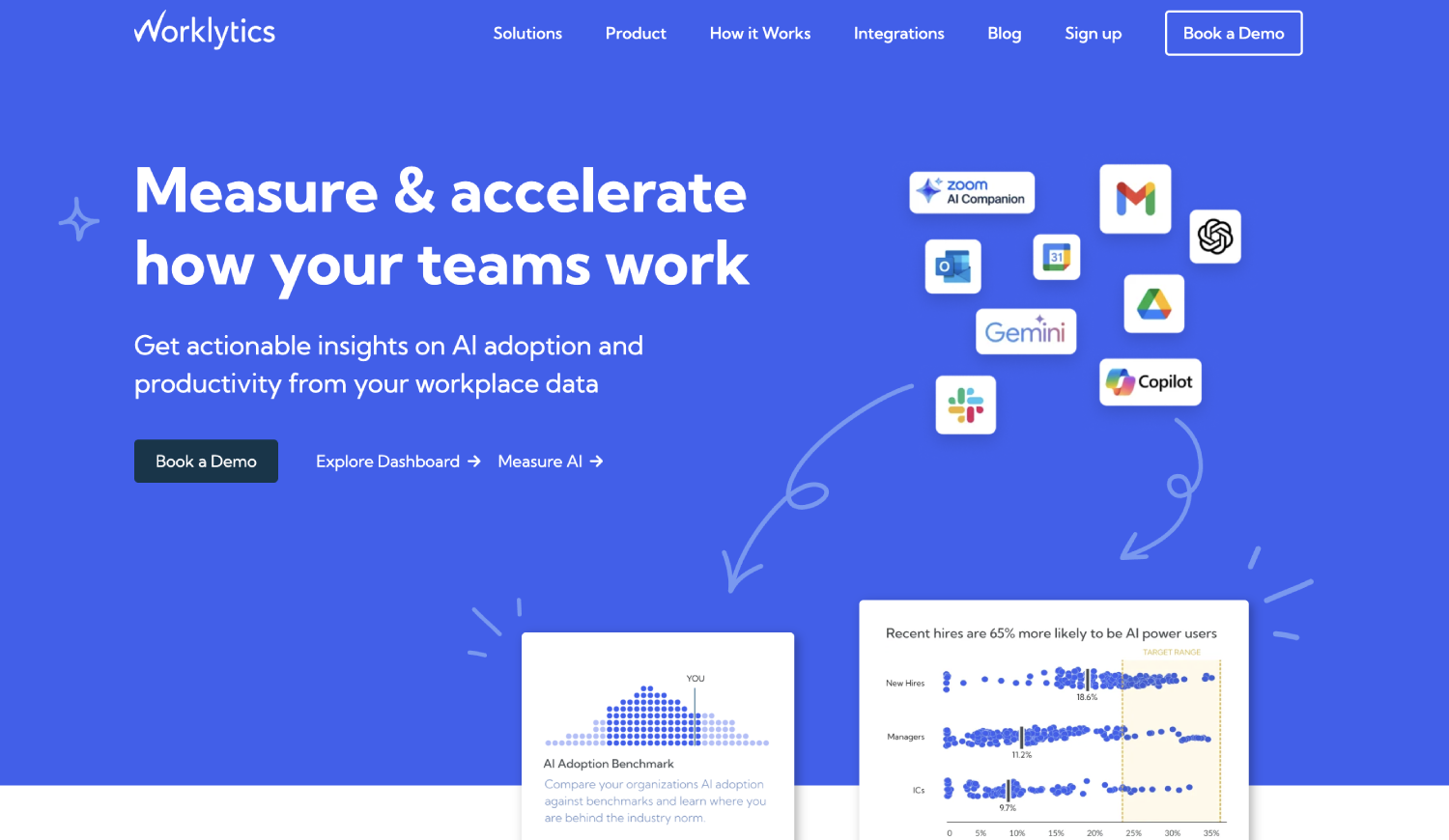
Worklytics is the clearest architectural contrast to ActivTrak. It connects to Microsoft 365, Google Workspace, Slack, Jira, GitHub, and Zoom via API, then pseudonymizes all individual data before analysis. Managers and HR teams see collaboration patterns, meeting load, and cross-team connectivity at the group level. Individual data is never exposed to administrators, which means GDPR compliance is structurally enforced rather than dependent on configuration choices.
Where Worklytics wins is depth of collaboration analysis. It maps communication networks, identifies organizational silos, and surfaces employees at burnout risk based on meeting overload and after-hours communication patterns. None of that requires logging what websites someone visited. Pricing is quote-based; Worklytics does not publish per-seat rates publicly.
The limitation is scope. Worklytics is an analytics layer, not a productivity accountability tool. If your actual need is proving that remote employees are working, Worklytics will not give you that data, by design. For people analytics teams running a team-level workforce analytics program, that is a feature, not a bug.
2. Microsoft Viva Insights
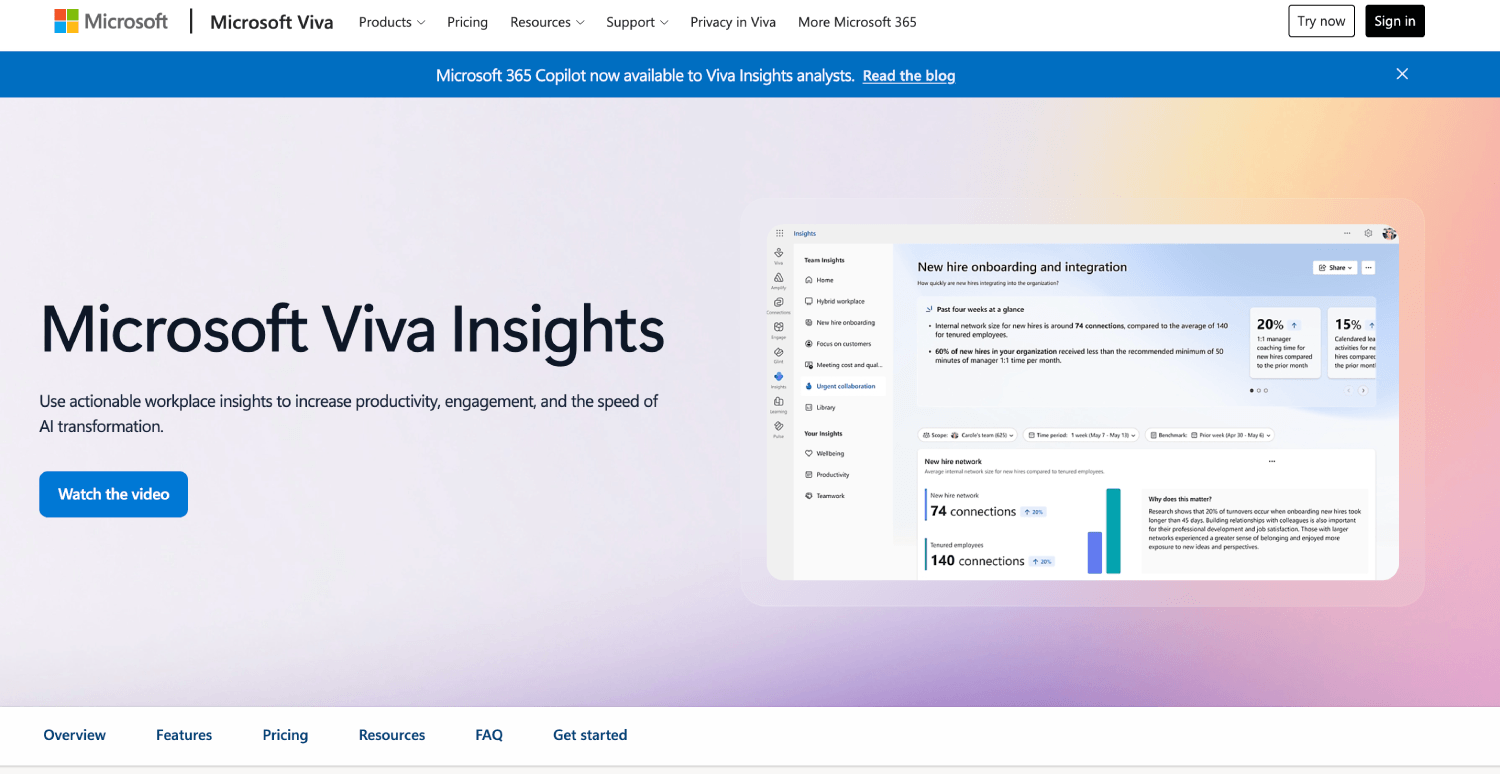
Microsoft Viva Insights is the obvious choice for any team already on Microsoft 365. It derives collaboration signals from Microsoft Graph data: calendar, email metadata, Teams activity, and meeting patterns. Individual data is visible only to the individual through their personal insights dashboard. Managers see aggregated team patterns above a minimum group size, and HR leaders see org-wide trends.
The practical advantage over ActivTrak is that Viva Insights requires no agent deployment, no endpoint software, and no employee behavior logging outside the M365 suite employees already use. The privacy architecture is backed by Microsoft’s compliance framework, which simplifies legal review considerably. Viva Insights is included with Microsoft 365 E3, E5, and certain premium SKUs; the full advanced analytics tier carries an additional per-user monthly cost listed on Microsoft’s Viva pricing page.
The weakness is that Viva Insights is Microsoft-centric. If your collaboration stack spans Slack, Zoom, and Google Docs heavily, the data picture is incomplete. It also lacks the depth of custom workforce analytics that a dedicated platform like Worklytics or Orgvibe can produce.
3. Orgvibe
Orgvibe combines employee listening with collaboration analytics, which gives it a different angle than pure monitoring alternatives. It ingests pulse survey data alongside calendar and communication metadata to surface team health signals in one view. The individual data model is aggregated and anonymized; Orgvibe explicitly markets itself around consent-based analytics.
For teams whose ActivTrak concern is specifically about employee trust erosion, Orgvibe’s design is well-suited. Employees participate actively through pulse surveys, so the analytics feel collaborative rather than extractive. The trade-off is that Orgvibe’s depth on collaboration network analysis is shallower than Worklytics, and its workforce planning capabilities are limited compared to enterprise-grade people analytics platforms.
4. Insightful (formerly Workpuls)
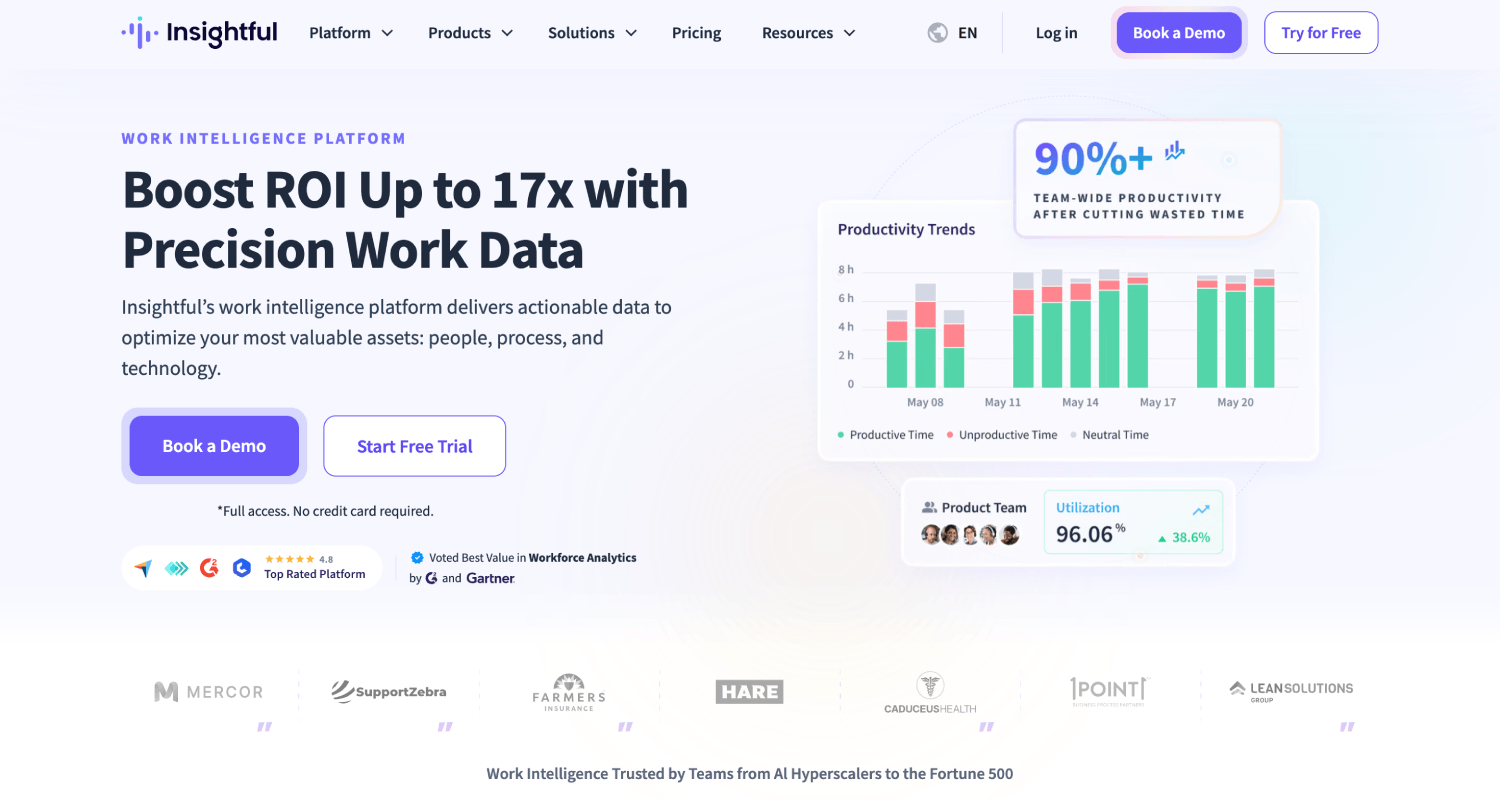
Insightful occupies a middle position in this list. It is a productivity and time tracking platform that does collect individual-level data, but with configurable privacy modes that some organizations find adequate for their compliance needs. Administrators can disable screenshot capture, set data retention limits, and configure what categories of applications are tracked.
This makes Insightful a reasonable option if you want to move away from ActivTrak’s more aggressive default posture but still need individual-level time accountability for billing, compliance, or contractor management. It is not privacy-first in the architectural sense. It is a monitoring tool with better privacy controls. According to Insightful’s public pricing page, plans start at $6.40 per employee per month for the employee monitoring tier, with workforce analytics features available at higher tiers.
Teams in professional services, legal, or consulting who need accurate time capture for client billing will find Insightful more useful than Worklytics. Teams primarily concerned with GDPR or surveillance ethics will not find Insightful’s configurable approach sufficient.
5. Time Doctor
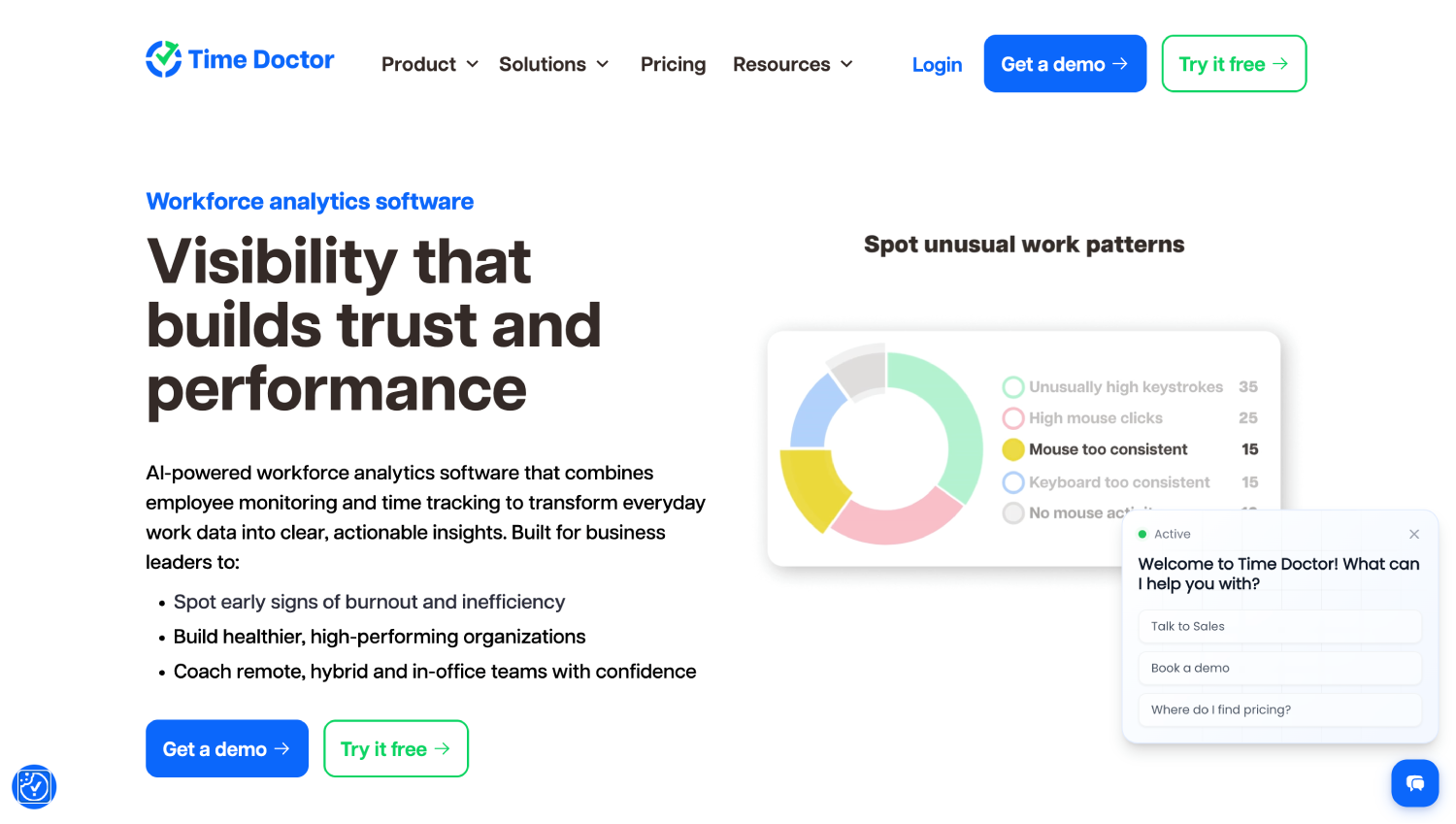
Time Doctor is similarly in the productivity tracking space rather than pure workforce analytics. It logs time, application usage, and optional screenshots, but has introduced a “silent” tracking mode and a data privacy dashboard that gives employees visibility into what is collected. According to Time Doctor’s public pricing page, plans start at $7 per user per month for the basic tier.
Time Doctor is best for distributed or remote teams where managers need output accountability and employees accept productivity monitoring as a condition of remote work, typically in BPO, outsourcing, or certain professional services contexts. It is a lateral move from ActivTrak rather than a privacy-first migration. If an employee monitoring posture is legally acceptable in your jurisdiction and your workforce accepts it, Time Doctor’s interface is cleaner and the pricing is competitive. For organizations leaving ActivTrak because monitoring itself is the problem, Time Doctor does not resolve that concern.
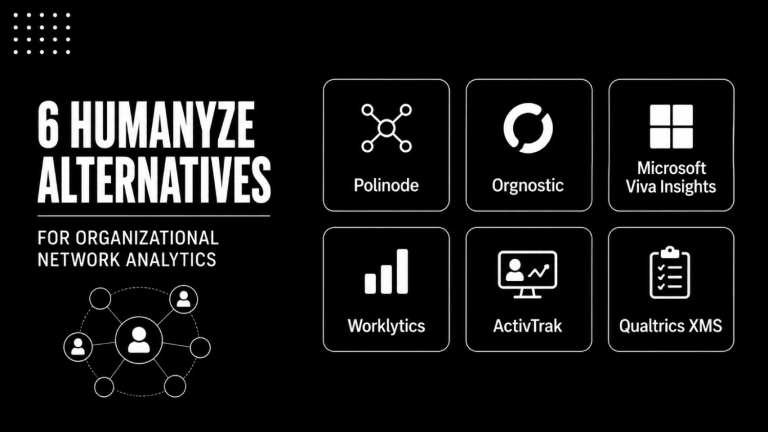
6. Humanyze
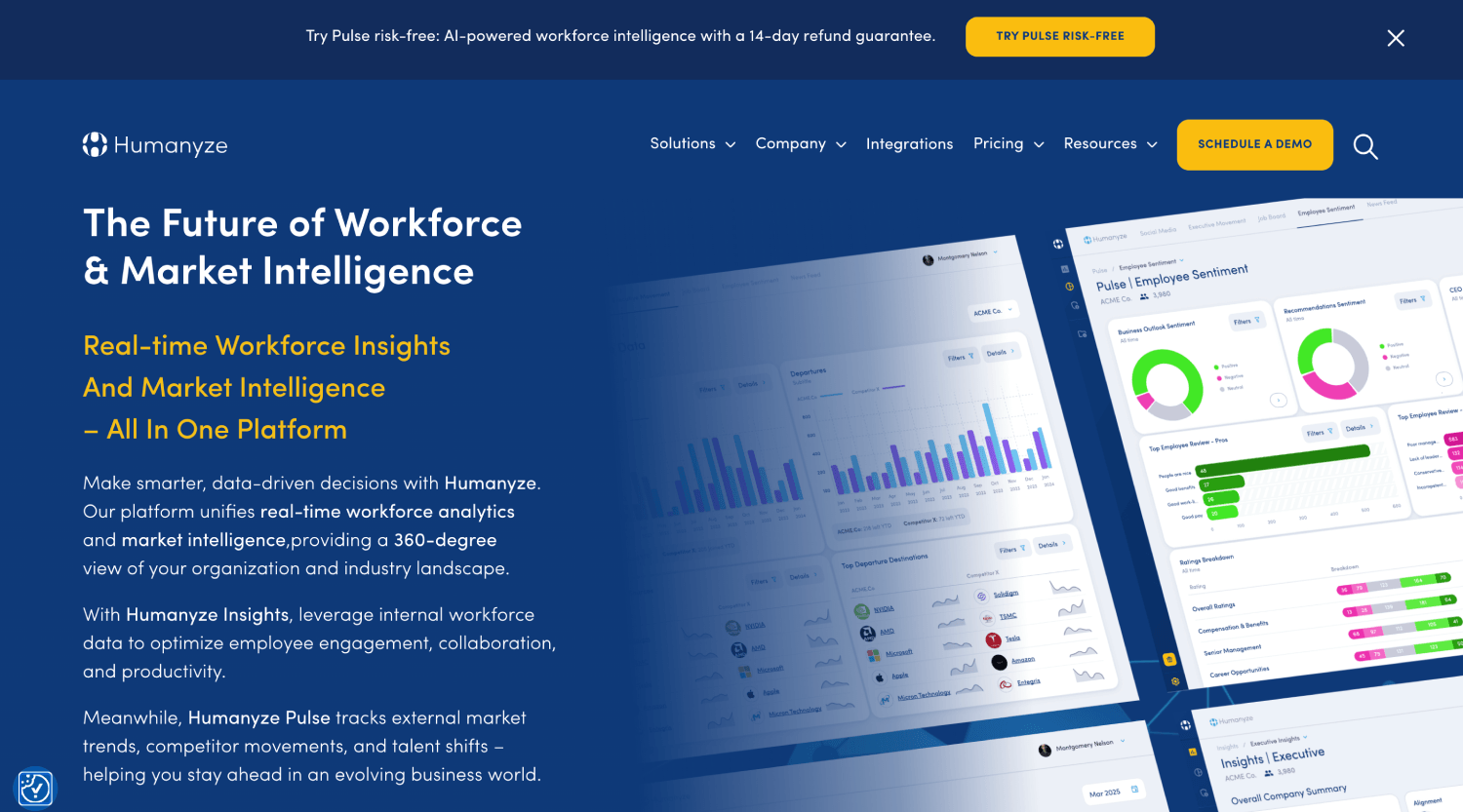
Humanyze takes an enterprise approach to organizational network analysis. It ingests email metadata, calendar data, and badge access data to map collaboration patterns, cross-team connectivity, and workspace utilization. Humanyze is explicit about individual anonymization: it surfaces behavioral patterns at the team and org level only, with individual data protected by design.
The platform has use cases that ActivTrak cannot touch, including real estate optimization (which floors and spaces drive collaboration) and change management analytics (how communication networks shift after a reorganization). Pricing is enterprise and quote-based. The minimum viable deployment is typically at organizations with several hundred employees, making Humanyze less relevant for smaller teams.
For CHROs and people strategy leaders who want workforce analytics connected to broader organizational design questions, Humanyze belongs on the evaluation list. See how these tools connect to broader AI people analytics platforms if org design is part of your mandate.
7. Lattice People Analytics (with Engagement)
Lattice’s people analytics module is not a workforce monitoring replacement. What it replaces is the underlying need: understanding whether teams are healthy, productive, and at risk of attrition, using engagement signals, performance data, and manager feedback rather than application logs.
If your ActivTrak deployment was really about answering “are our remote employees performing and engaged,” Lattice answers that question through a fundamentally different mechanism. It connects performance review data, OKR progress, engagement survey results, and manager sentiment into a team health view. No behavioral surveillance required. Pricing is modular and quote-based for enterprise; Lattice publishes starting prices on its website for smaller tiers.
Lattice People Analytics works best when your organization already uses Lattice for performance management. Adding it as a standalone ActivTrak replacement for teams that do not use Lattice elsewhere creates unnecessary stack complexity.
How Do These Alternatives Compare Side by Side?
| Tool | Privacy Architecture | Best For | Individual Monitoring? | Pricing Model |
|---|---|---|---|---|
| Worklytics | Pseudonymized by design | Collaboration analytics, GDPR-sensitive orgs | No | Quote-based |
| Viva Insights | Aggregated, M365-native | M365 orgs wanting zero new deployment | Personal view only | Included in M365 E3/E5; advanced tier extra |
| Orgvibe | Consent-based, aggregated | Trust-first teams, hybrid analytics | No | Quote-based |
| Insightful | Configurable privacy modes | Time billing, contractor oversight | Yes (configurable) | From $6.40/user/month (public pricing page) |
| Time Doctor | Employee visibility dashboard | Remote teams, BPO, output accountability | Yes (with silent mode) | From $7/user/month (public pricing page) |
| Humanyze | Org network analysis, anonymized | Enterprise org design, real estate optimization | No | Quote-based, enterprise minimum |
| Lattice Analytics | Survey and performance-based | Performance-driven team health view | No | Modular, quote-based |
How Do You Migrate Away from ActivTrak Without Losing Visibility?
The migration concern most HR teams raise is: “If I turn off ActivTrak, how will I know if productivity drops?” That question contains the assumption worth examining. ActivTrak’s individual productivity scores have significant noise, and the behaviors that raise a manager’s concern, such as low application-time scores, often correlate with meeting overload, unclear work design, or poor task management rather than disengagement. Replacing that signal with collaboration analytics often surfaces a more accurate picture, not a blinder one.
The technical migration is straightforward for Worklytics and Viva Insights. Both connect via OAuth to Microsoft 365 or Google Workspace, and neither requires installing anything on employee endpoints. Setup time is measured in days, not weeks. For Insightful or Time Doctor, you swap one agent for another, which requires an IT deployment if you want full coverage.
Before you migrate, document what decisions ActivTrak data actually informed. If the honest answer is “we mostly use it to investigate specific employee concerns after the fact,” that use case disappears in a privacy-first model, and you should decide whether you want to retain a monitoring tool for that purpose or replace it with a clear HR investigation process. Most legal and HR counsel will prefer the latter.
For a structured approach to evaluating any new people analytics tool, the framework for choosing a people analytics platform covers the questions that separate useful analytics from expensive dashboards.
Which ActivTrak Alternative Is Right for Your Situation?
For mid-market HR and people ops teams on Microsoft 365, Viva Insights is the default starting point. Zero deployment cost if you already have an E3 or E5 license, and the privacy architecture is auditable against GDPR and CCPA without custom configuration work.
For teams that need deeper organizational network analysis and have the budget for a dedicated analytics platform, Worklytics is the strongest option. The collaboration science is more sophisticated than Viva Insights, and the pseudonymization model is the most defensible for high-stakes privacy environments, including EU-headquartered organizations.
For teams that still need individual-level time accountability, whether for contractor billing, legal compliance, or management culture that requires output tracking, Insightful offers the most transparent privacy controls of the monitoring tools. The move from ActivTrak to Insightful is not a privacy transformation; it is a privacy improvement.
For organizations concerned primarily with team health and attrition risk rather than activity monitoring, Lattice Analytics addresses the underlying question through engagement and performance data, which is where decisions that actually move the needle tend to live. If you want to connect those insights back to broader talent strategy, the distinction between people analytics, workforce analytics, and talent intelligence will sharpen how you scope the evaluation.
Frequently Asked Questions
How invasive is ActivTrak compared to the alternatives listed here?
ActivTrak logs individual application usage, website visits, productivity scores, and optionally screenshots and video recordings of employee screens. Every alternative on this list collects less individual-level data. Worklytics, Viva Insights, Humanyze, and Lattice do not expose individual behavioral logs to managers at all. Insightful and Time Doctor collect individual data but offer configurable limits, including disabling screenshots. The gap between ActivTrak and a genuinely privacy-first tool is architectural, not just a settings difference.
Can ActivTrak see an employee’s screen?
Yes. ActivTrak’s standard configuration includes screenshot capture at configurable intervals, and higher tiers include video recording of user screens. Employees may or may not be notified depending on how the administrator configures the deployment. This capability is absent from Worklytics, Viva Insights, Orgvibe, Humanyze, and Lattice Analytics by design. Insightful and Time Doctor retain optional screenshot capability but allow administrators to disable it.
What is the difference between ActivTrak and Worklytics?
ActivTrak monitors individual employees: it logs their applications, websites, and screen activity, then scores their productivity. Worklytics analyzes collaboration patterns across teams by connecting to communication APIs, then pseudonymizes all data before surfacing insights. An ActivTrak administrator can see what Jane was doing at 2pm on Tuesday. A Worklytics administrator cannot identify Jane’s individual behavior at all. That is the fundamental difference, and it determines both the legal exposure and the type of insight each tool produces.
Which alternative is best for a GDPR-compliant EU organization?
Worklytics and Microsoft Viva Insights are the two strongest options for GDPR compliance by design. Both pseudonymize or aggregate data before any insight is surfaced, and both support data residency requirements in the EU. ActivTrak, Insightful, and Time Doctor require more careful configuration and legal review to achieve GDPR compliance, since they collect individual-level behavioral data that constitutes personal data under the regulation.
Does switching from ActivTrak require installing new software on employee devices?
For Worklytics and Microsoft Viva Insights, no. Both platforms connect via API to Microsoft 365 or Google Workspace and require no agent installation on employee endpoints. For Insightful and Time Doctor, yes: both use a lightweight desktop agent similar to ActivTrak’s. Humanyze typically integrates via email and calendar metadata APIs, also without endpoint agents. Migration complexity for the API-based tools is low, often measured in hours for the initial integration.
What should I tell employees when switching away from ActivTrak?
Be direct about what is changing. If you move to a tool like Worklytics or Viva Insights, you can honestly tell employees that individual monitoring is ending and that analytics will only reflect team-level patterns. That message typically improves trust significantly. If you move to Insightful with privacy modes enabled, explain specifically what is and is not collected. Employee disclosure is both a legal requirement in many jurisdictions and a practical retention tool. Vague communication about monitoring changes almost always lands worse than transparent disclosure.
Is there a free alternative to ActivTrak?
Microsoft Viva Insights’ personal insights functionality is included in Microsoft 365 subscriptions at no additional cost, though the advanced analytics and org-level reporting require an additional license. No other platform on this list offers a meaningful free tier for workforce analytics. Free monitoring tools exist, but privacy-first workforce analytics platforms require infrastructure and compliance architecture that rules out no-cost options for business use.
What to Take Away Before You Shortlist
The teams that make a clean migration from ActivTrak are the ones that clarify one thing first: are they replacing a monitoring tool or replacing the need that monitoring was supposed to fulfill? Those are different projects. Replacing a monitoring tool means finding another way to collect activity data with fewer privacy risks. Replacing the need means defining what management and HR decisions actually require behavioral data, and whether team-level analytics, performance management, or engagement signals serve those decisions better.
Most people ops leaders who go through that exercise end up at Worklytics or Viva Insights, because the honest answer is that individual-level surveillance data was rarely generating the decisions they thought it was. Managers rarely acted on ActivTrak reports except in performance management situations that deserved an HR process, not a screenshot review.
If you are in an industry where individual time capture has a legitimate billing or compliance function, Insightful with privacy controls configured is a defensible choice. For everyone else, the privacy-first platforms on this list give you better organizational intelligence with a fraction of the legal and trust exposure. The technical migration is easier than it looks. The harder work is getting internal alignment that the surveillance model was the problem all along.