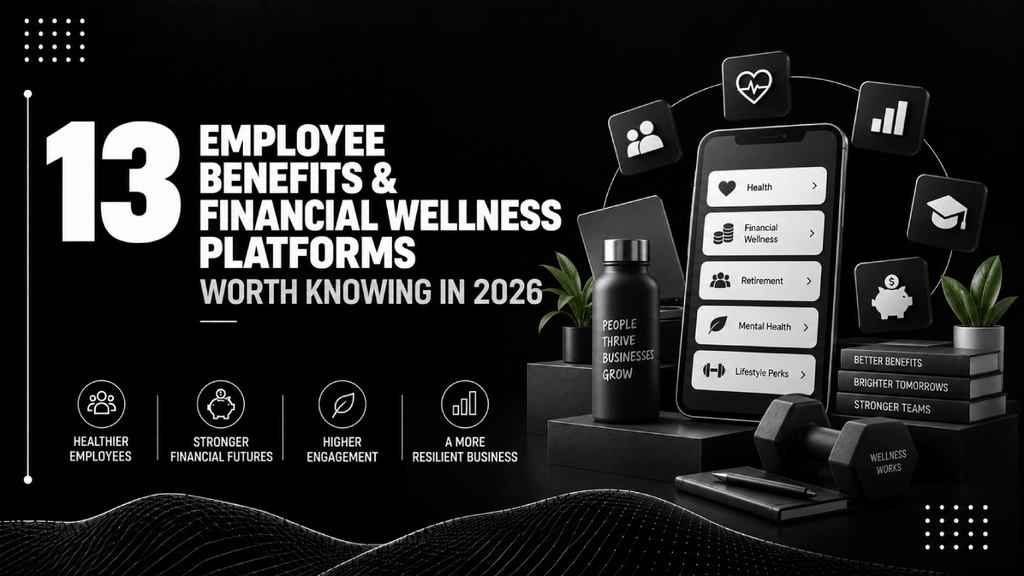

- Most employers treat their broker as the entire benefits infrastructure. A broker negotiates carrier contracts and advises on plan design. That is one layer of a four-layer stack.
- The other three layers are benefits administration software (enrollment, carrier feeds, ACA reporting), decision-support tools (cost calculators, AI recommendation engines), and financial wellness point solutions (earned wage access, HSA/FSA platforms, emergency savings, student loan tools).
- Employers missing the administration layer waste HR time on manual enrollment and carrier reconciliation errors. Employers missing financial wellness are losing hourly workers to competitors who offer it.
- This hub maps all four layers and links to deep-dive reviews for each. Use the layer framework to identify your gaps before evaluating any single vendor.
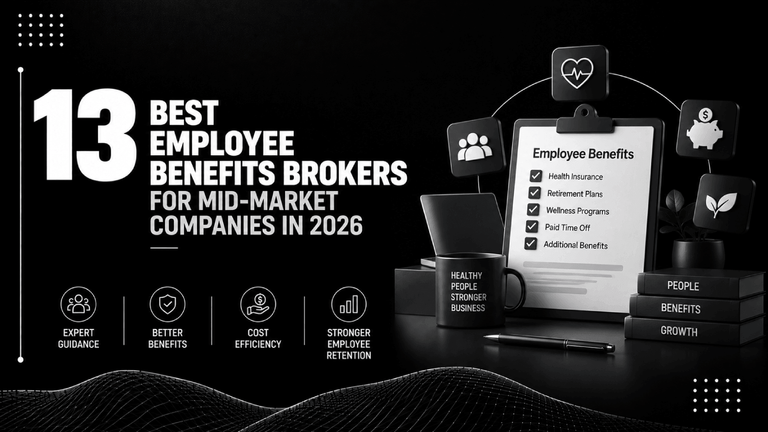
- Thirteen platforms worth knowing span all four layers. No single platform covers all of them well.
Employee benefits technology is the category of software that sits between your carrier contracts and your employees’ wallets. It covers benefits administration platforms, open enrollment tools, pre-tax account administration (HSA, FSA, HRA, commuter), financial wellness programs, and earned wage access. Most employers need tools from at least two of these sub-categories, and most have gaps they do not know about.
Why Your Broker Is Not Your Benefits Technology Stack
The broker handles carrier relationships, plan design negotiation, and compliance guidance. A good broker is valuable. A broker is not software. Your broker does not automate carrier feeds, generate 1095-C forms, reconcile premium deductions against payroll, or give your employees a financial wellness dashboard at 11pm when they are trying to figure out whether to tap their HSA.
The confusion is understandable. Many brokers sell or bundle administration platforms as part of their service. Some of those bundled platforms are competent. Many are stripped-down portals that create more reconciliation work than they save. The broker’s incentive is to retain your business and earn commission on your premiums. The platform’s job is to process enrollment data accurately and connect to your HRIS and payroll without manual intervention. Those are different jobs, and conflating them is how employers end up with carrier billing errors they find out about at audit time.
If you are evaluating your benefits technology stack for the first time, start by separating the four layers before you talk to any vendor.
What Are the Four Layers of an Employee Benefits Technology Stack?
Every employer benefits operation runs on some version of these four layers, even if they are not using dedicated software for each one.
Layer 1: Benefits Brokerage
Your broker of record negotiates with carriers, advises on plan design, and helps with compliance questions. This is a service relationship, not a software category. The broker may recommend or bundle a technology platform, but the platform is distinct. Brokers like OneDigital, Alliant, and NFP sit here.
Layer 2: Benefits Administration Platform
This is the software that runs open enrollment, manages life events, sends carrier feeds, handles dependent verification, and produces ACA reporting (1094-C, 1095-C). It connects to your HRIS and payroll so premium deductions flow correctly. This is where most employers have the biggest gap between what they think they have and what they actually have. Our deep-dive list of the best benefits administration platforms for mid-market companies covers this layer in detail.
Layer 3: Decision Support and Enrollment Experience
Decision support tools sit on top of the administration layer and help employees choose the right plan during open enrollment. Some benefits administration platforms include basic decision support. Dedicated tools from vendors like Jellyvision (ALEX) or Picwell go deeper, using employee health data and projected utilization to recommend the most cost-effective plan. Most employers skip this layer entirely and wonder why employees default to the same plan year after year without considering HDHPs.
Layer 4: Financial Wellness and Point Solutions
This is the fastest-growing layer and the most fragmented. It includes earned wage access (EWA), emergency savings accounts, student loan repayment assistance, financial coaching, HSA-specific optimization tools, and retirement readiness programs. These are usually purchased separately from the benefits administration platform and integrated into the HRIS or payroll system. Our full review of employee financial wellness platforms that go beyond budgeting apps maps this sub-category.
13 Employee Benefits and Financial Wellness Platforms Worth Knowing
The platforms below are organized by where they sit in the stack. Some span multiple layers. This is not a ranked list. It is a map of the category so you know what you are buying and what you are not buying when you sign with any one of them.
Benefits Administration Platforms
1. Benefitfocus
Benefitfocus is one of the larger pure-play benefits administration platforms in the US market, historically strong with mid-market and enterprise employers who need extensive carrier EDI feeds and ACA reporting. It handles open enrollment, life events, dependent verification, and pre-tax account administration. The platform connects to most major HRIS and payroll systems. The criticism most buyers raise is that the implementation timeline is long and the interface has aged. For employers with complex multi-carrier setups, the EDI feed library is a real advantage. For smaller or simpler employers, it is more platform than they need.
2. PlanSource
PlanSource targets mid-market employers and is often sold through brokers. It covers open enrollment, carrier connectivity, COBRA administration, and ACA compliance. The integration story is reasonably strong, with connectors to Workday, ADP, UKG, and others. The broker-friendly commercial model means brokers can white-label or co-brand the platform, which affects how you negotiate pricing. If your broker is pushing PlanSource, ask to see the carrier feed quality and reconciliation reporting before signing, because those are the areas where mid-market platforms most often fall short.
3. Employee Navigator
Employee Navigator is the dominant broker-distributed benefits administration platform for small and mid-size employers. Brokers set it up and manage it on behalf of their clients. The employer experience is lighter-touch than Benefitfocus or PlanSource, which is the point. If you have 50 to 300 employees and a good broker relationship, Employee Navigator is often the right answer. The limitation is that you have less direct control over the platform configuration, because your broker is the primary admin.
4. Businessolver
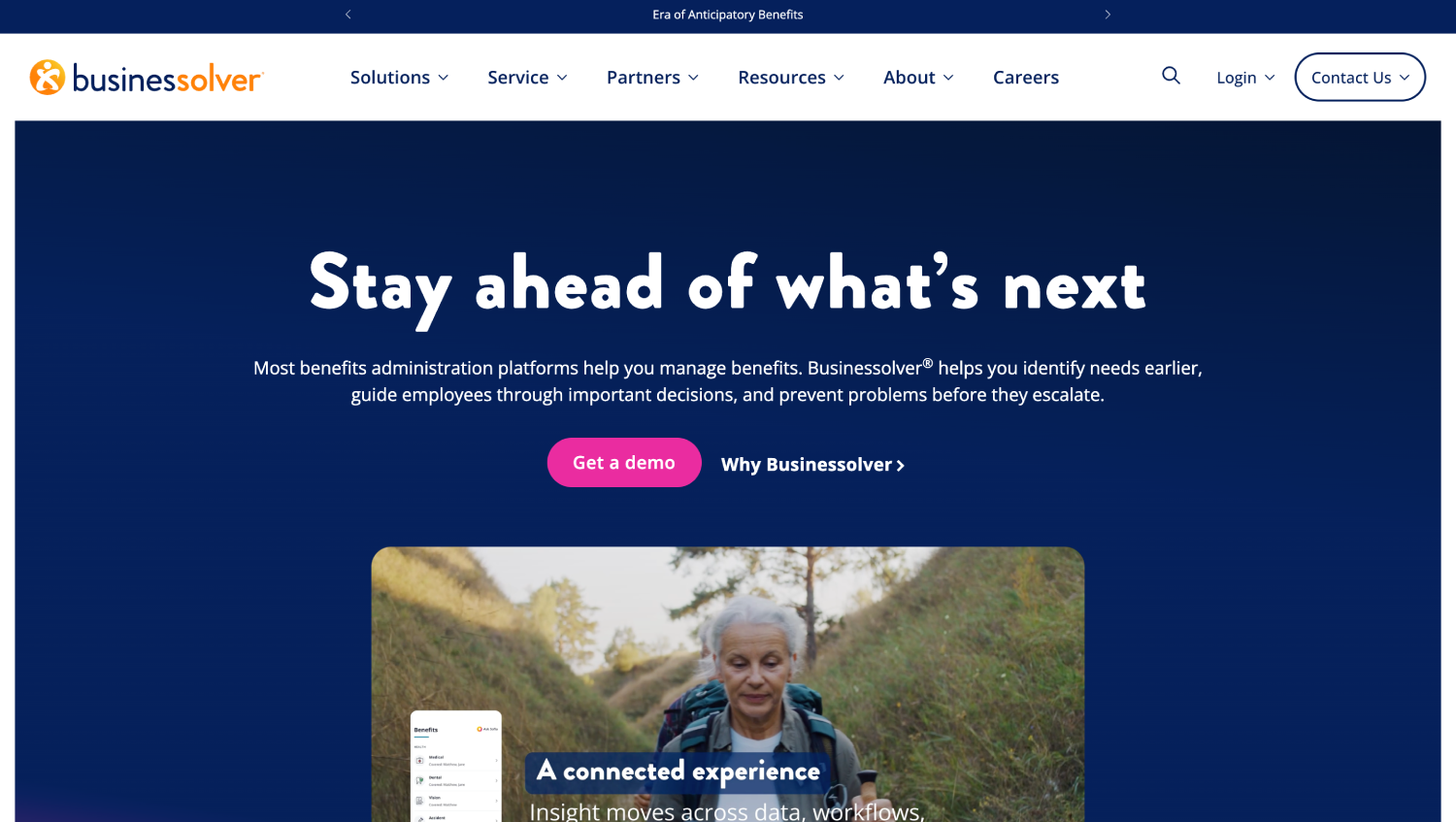
Businessolver sits at the intersection of benefits administration and employee experience. It runs enrollment, carrier feeds, and ACA reporting, but its differentiator is the Sophia AI assistant, which helps employees answer benefits questions in plain language. The platform is positioned more toward mid-market and enterprise employers who want a consumer-grade enrollment experience. It is not cheap, and the AI assistant is better at deflecting simple questions than handling complex coverage decisions, but it is a real capability rather than a chatbot label stuck on a FAQ page.
5. Novu (formerly bswift)
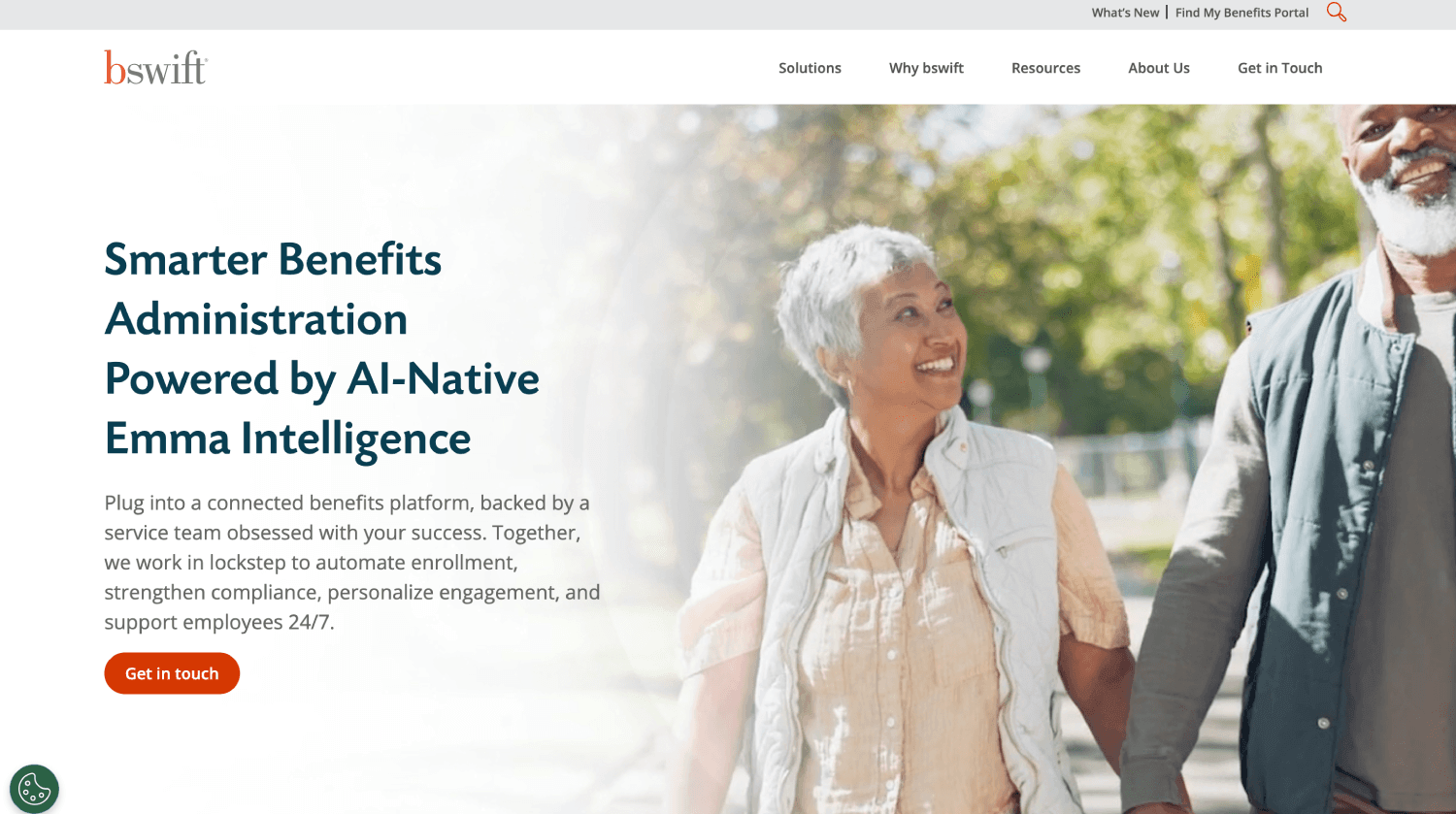
bswift (rebranded to Novu) is an enterprise-grade benefits administration platform with a long track record in complex, multi-entity, multi-carrier environments. It handles everything from standard group health enrollment to voluntary benefits and retiree benefits. AXA XL and other large employers run on it. The platform is quote-only and implementation is a significant project. If you are replacing a legacy platform at an employer with 1,000 or more employees and multiple plan types, it belongs in your evaluation. If you are under 500 employees, it is probably more than you need.
6. Ease
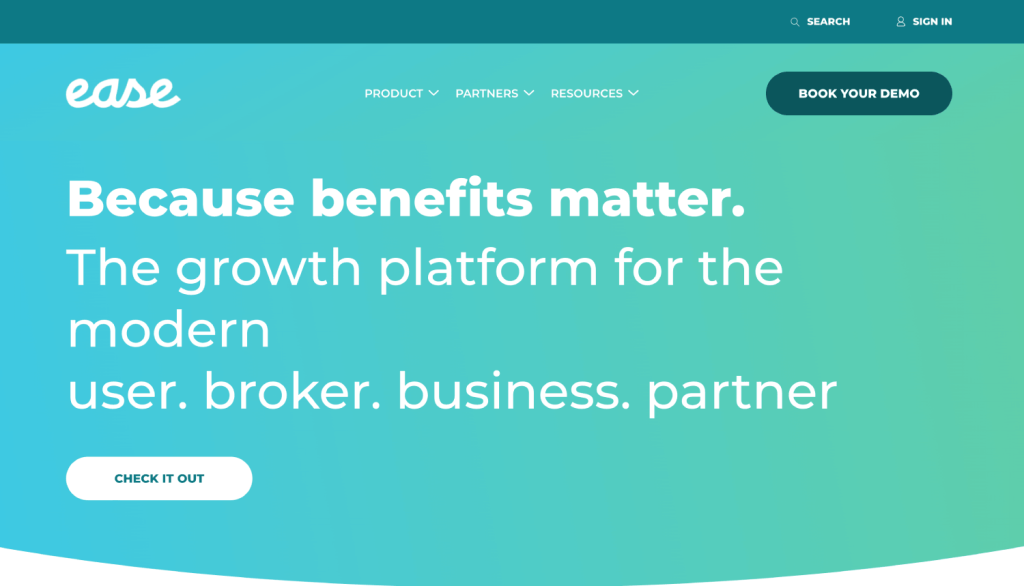
Ease competes directly with Employee Navigator in the broker-distributed small-group market. It has strong carrier connectivity for small group plans and a clean enrollment interface that employees can complete on mobile. The platform integrates with payroll systems common in the SMB market. Like Employee Navigator, the broker is the primary implementation partner, which means your experience depends significantly on your broker’s capability with the platform.
Benefits Administration Within HRIS Platforms
7. isolved Benefits Enrollment
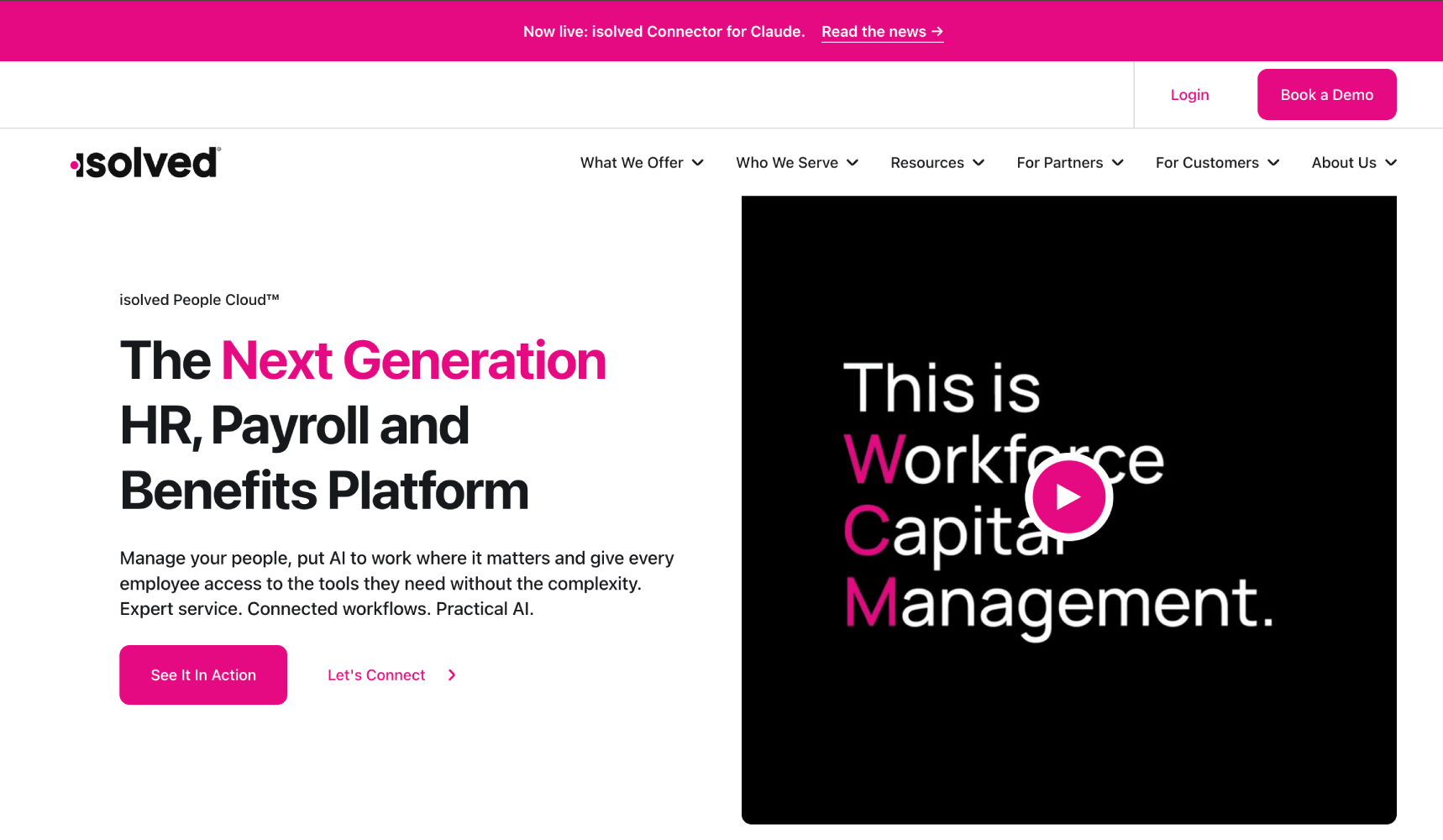
isolved is a full HCM platform with benefits administration built in. For employers who run payroll, HR, and benefits on isolved, the integration eliminates carrier feed errors that come from connecting separate systems. The benefits module handles open enrollment, ACA reporting, and pre-tax accounts. The trade-off is that best-of-breed standalone platforms typically have deeper carrier connectivity and more sophisticated dependent verification workflows. isolved benefits is the right answer for employers who want a single-platform approach and whose carrier setup is not unusually complex.
8. ADP Workforce Now Benefits
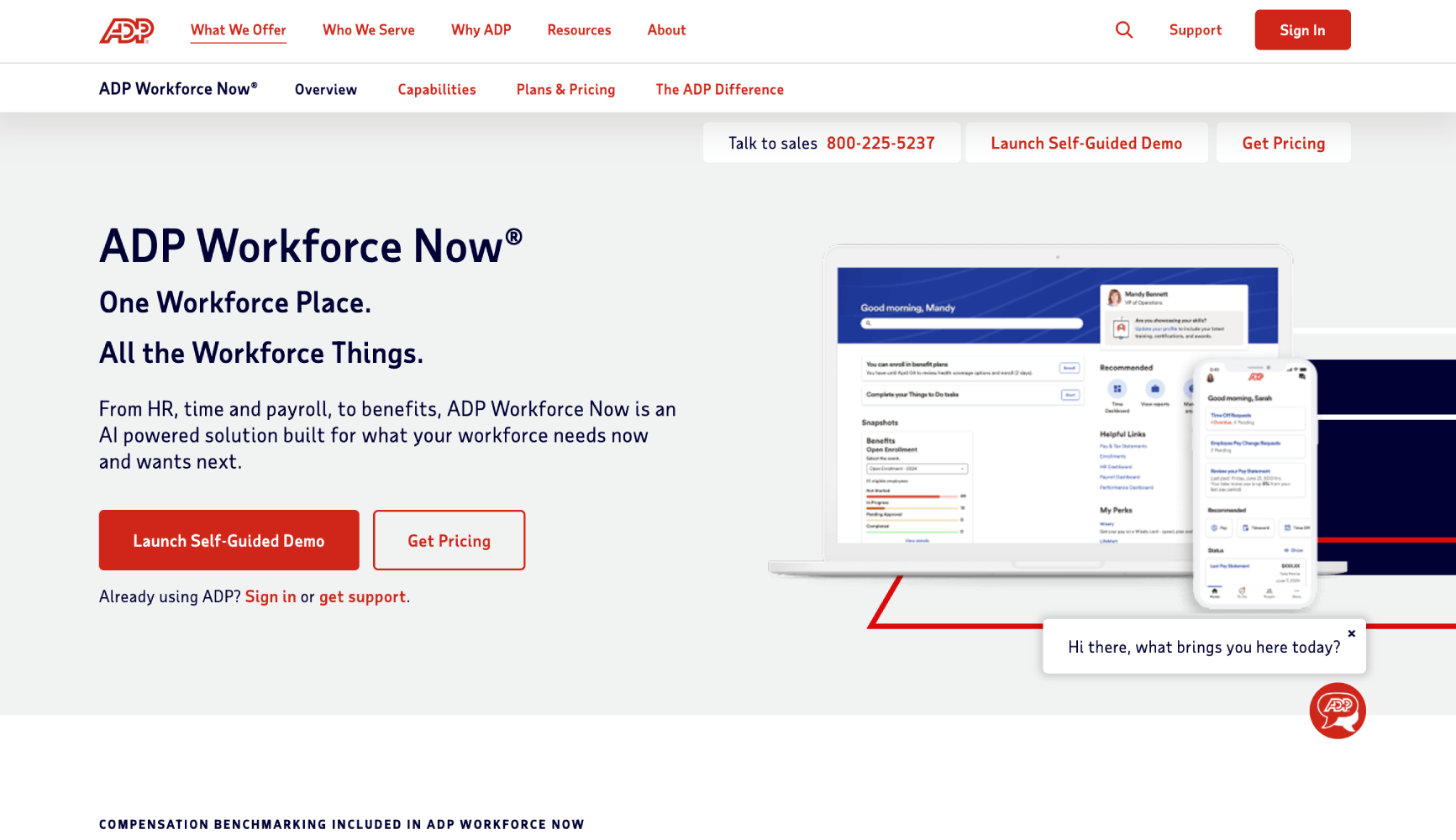
ADP Workforce Now includes benefits administration as part of its HCM suite. For employers already running payroll on ADP, keeping benefits in the same platform eliminates a significant integration point. The ACA reporting and carrier feed capabilities are mature. The user experience is less polished than purpose-built benefits platforms, and configuring complex plan designs requires ADP support involvement. It is the path of least resistance for mid-market employers already committed to ADP.
Pre-Tax Account Administration
9. HealthEquity
HealthEquity is the largest dedicated HSA administrator in the US by account count, and it also administers FSAs, HRAs, commuter benefits, and COBRA. For employers offering HDHPs, pairing the plan with a HealthEquity HSA gives employees investment options and a mobile-first account experience that many bank-administered HSAs do not offer. HealthEquity connects to most major benefits administration platforms via EDI. The platform charges fees to employers and, depending on plan design, to account holders, so compare total fee structures carefully against alternatives. WageWorks became part of HealthEquity following a 2019 acquisition. WEX Health is another established alternative worth evaluating on fee structure and integration depth.
10. Lively
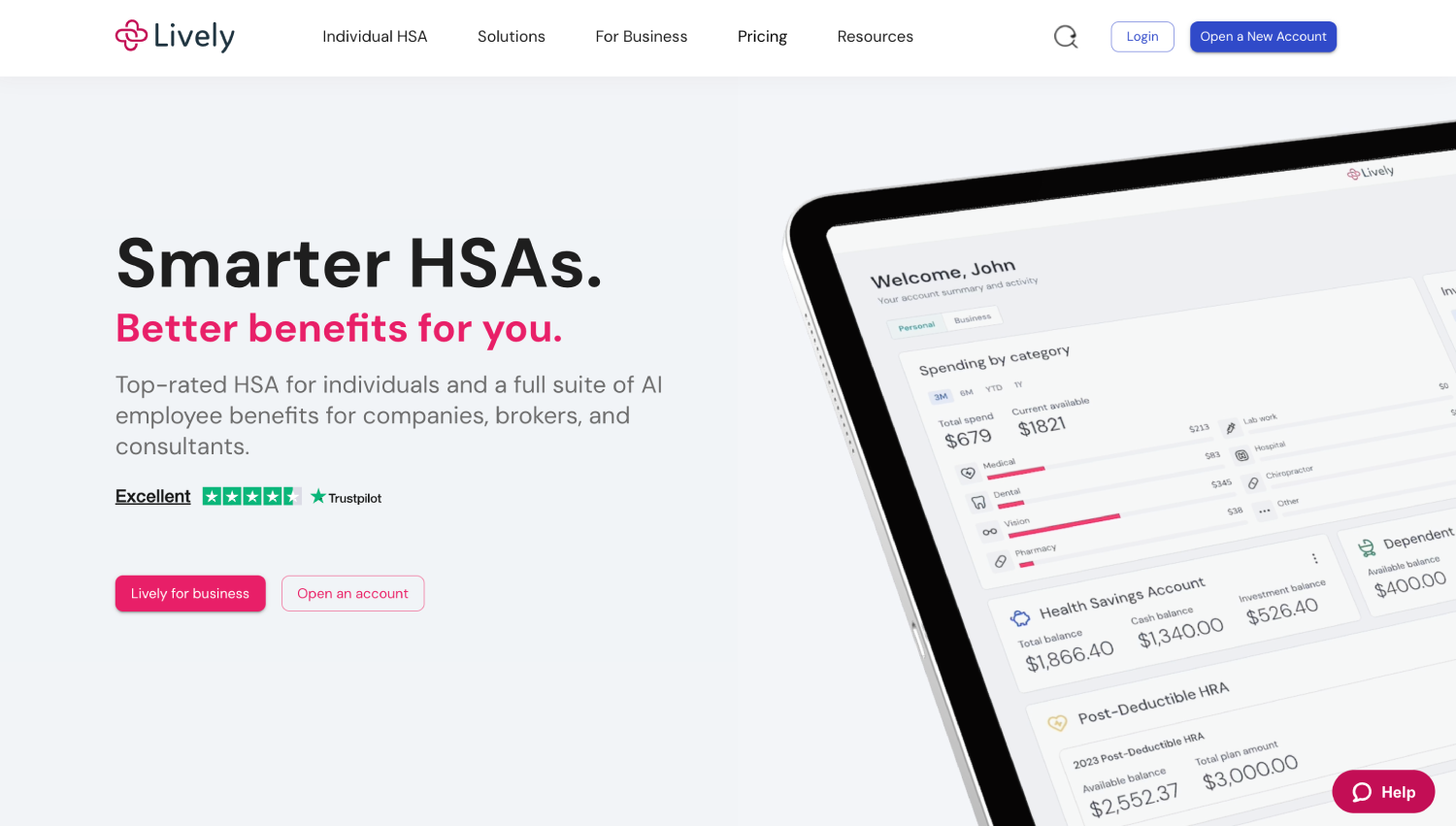
Lively is a modern HSA and FSA administrator that built its platform from scratch rather than acquiring legacy infrastructure. The employee-facing interface is cleaner than most legacy HSA providers, investment options are available at lower balance thresholds, and the employer admin portal is self-service in a way that older platforms are not. Lively is a strong option for employers under 1,000 employees who want a better HSA experience without the complexity of a large benefits administration re-platform. Lively publishes its employer pricing on their website , a meaningful contrast to the quote-only approach taken by most benefits administration and HSA vendors in this category, including HealthEquity and the large HRIS-bundled platforms.
Financial Wellness and Earned Wage Access
11. DailyPay

DailyPay is one of the two largest earned wage access providers in the US, alongside Payactiv. It integrates with payroll systems to let employees access a portion of earned wages before payday, typically funding within seconds. The business case for hourly and frontline employers is retention, particularly in sectors like retail, healthcare, and logistics where competitors already offer EWA. Our comparison of DailyPay, Payactiv, and Immediate covers the fee structures and integration differences in detail. The short version is that DailyPay funds faster and has broader payroll integrations, while Payactiv offers more wraparound financial wellness features.
12. Brightside

Brightside is a financial care platform that combines human financial counselors with technology to help employees address debt, savings, and financial emergencies. It is not a budgeting app. Employees get access to a personal financial counselor who works through real financial problems, from credit card debt to short-term cash needs to benefits optimization. It is priced as an employer-paid benefit, typically per employee per month, and is positioned for employers who want a measurable impact on financial stress rather than another app employees download once and ignore. The platform targets mid-market and enterprise employers.
13. Origin

Origin offers financial planning as an employee benefit, with licensed financial planners available to all employees, not just executives. The platform combines one-on-one financial planning access with tools for net worth tracking, equity management, tax optimization, and benefits decision support. It is a strong fit for employers with a tech-forward workforce where equity compensation is part of total rewards and employees have complex financial questions beyond paycheck-to-paycheck management. The employer-paid model means there is no cost friction for employees to actually use it.
How Do Benefits Administration Platforms Differ From an HRIS?
An HRIS stores employee records, manages organizational structure, and handles core HR workflows. Benefits administration is the process of enrolling employees in plans, transmitting enrollment data to carriers via EDI feeds, tracking dependent eligibility, managing life events, administering pre-tax accounts, and producing ACA reporting. Some HRIS platforms include benefits administration as a module. Some do not. Some include it but the module is thin.
The practical test is whether your HRIS sends carrier EDI feeds directly to your health, dental, vision, life, and voluntary benefit carriers, or whether your team manually reconciles enrollment changes by exporting a spreadsheet and emailing it to someone. If you are doing the latter, you have a gap regardless of what your HRIS vendor calls its benefits module. Carrier feed errors are the most common source of benefit billing problems, and they are entirely avoidable with the right platform configuration.
For a broader look at how these systems fit together, our guide on how HR systems integrate across HRIS, payroll, ATS, benefits, and finance explains the data flows in plain terms.
Should You Add Earned Wage Access to Your Benefits Stack?
Earned wage access belongs in your benefits stack if you employ hourly workers in industries where turnover is your primary cost problem. The business case for EWA is built on retention, not on employee financial health alone. When a frontline employee can access $200 of earned wages on a Tuesday to cover a car repair instead of taking a payday loan, they are less likely to no-show on Wednesday. That is a measurable operational outcome.
The caution is fee structure. Some EWA providers charge the employee per transfer. Others are employer-paid with no employee fees. A per-transfer fee model can erode the financial wellness benefit if employees are accessing wages frequently at a cost. Before signing, confirm who pays the transfer fees and what the fee cap is per transaction. For salaried, high-compensation workforces where employees are not living paycheck to paycheck, EWA is a low-utilization benefit that may not justify the implementation cost.
How Should Employers Evaluate Financial Wellness Vendors for Hourly Workforces?
Hourly workforce financial wellness evaluation should start with the problem you are actually trying to solve. Turnover, attendance, and on-the-job financial distraction are the three measurable problems that financial wellness benefits can address. Pick vendors who can produce data on those outcomes, not just engagement rates.
| Problem to Solve | Best-Fit Tool Type | Examples |
|---|---|---|
| Cash flow gaps before payday | Earned wage access | DailyPay, Payactiv, Immediate |
| Emergency savings / financial resilience | Emergency savings accounts or financial coaching | Brightside, Even (acquired by PayPal in 2023) |
| Retirement readiness / 401(k) participation | Retirement plan + financial coaching | Guideline, Betterment at Work |
| Debt management and credit building | Financial coaching platform | Brightside, SpringFour |
| Complex financial planning (equity, taxes) | Full financial planning benefit | Origin, Ayco |
| HSA optimization and healthcare cost management | HSA administrator with education tools | HealthEquity, Lively |
The biggest mistake in this evaluation is buying a financial wellness platform because it has a high app download rate in vendor demos, then finding out your employees downloaded it once during onboarding and never returned. Ask for 90-day active usage rates, not 30-day rates.
What Does Benefits Administration Technology Actually Cost?
Pricing in this category is almost entirely quote-based and per-employee-per-month. Standalone benefits administration platforms typically charge employers on a per-employee-per-month basis, with rates varying based on company size, number of plans administered, and level of carrier connectivity required. Most vendors do not publish list pricing. Expect pricing to vary based on headcount tiers, the number of carrier EDI feeds you need, and whether you want ACA filing included or as an add-on.
Pre-tax account administrators like HealthEquity and Lively differ notably on pricing transparency. Lively publishes its employer pricing on their website, which is uncommon in this category. HealthEquity pricing depends on plan design and negotiated rates through your broker and is not publicly listed.
Earned wage access pricing varies between employer-paid and employee-paid models. Some platforms like DailyPay charge employers a per-active-user fee. Others charge employees per transaction. Always model total cost at your expected utilization rate, not the vendor’s headline rate.
For broader context on how HR software pricing works across categories, see our guide on what HRIS, payroll, and HCM platforms really cost.
Which Benefits Technology Gap Is Most Common at Mid-Market Companies?
The most common gap is between Layer 1 (broker) and Layer 2 (administration platform). Mid-market employers with 200 to 1,000 employees frequently rely on a broker-distributed platform like Employee Navigator or Ease that their broker set up, without understanding the limitations of that platform’s carrier EDI capabilities or ACA reporting. They find out about the gap when they have a billing discrepancy, an ACA penalty notice, or when they try to integrate with a new HRIS and discover the carrier feeds do not support automated data exchange.
The second most common gap is financial wellness. Employers at this size have typically focused their benefits investment on carrier plan design and cost-sharing, with nothing in the financial wellness layer. The pressure to add financial wellness benefits is increasing as employers in hourly-workforce sectors compete on total compensation, not just base wages. Our overview of benefits administration for multi-entity companies covers the additional complexity layer that comes with M&A and multi-state operations.
Frequently Asked Questions
What is the difference between a benefits broker and a benefits administration platform?
A benefits broker is a licensed professional or firm that negotiates carrier contracts, advises on plan design, and helps with compliance. A benefits administration platform is software that automates enrollment, carrier data feeds, ACA reporting, and pre-tax account management. Brokers often recommend or bundle platforms, but they are separate services. Your broker’s commission comes from carriers, not from optimizing your software stack. The platform you use should be evaluated independently of your broker relationship.
What is a carrier EDI feed and why does it matter for benefits technology?
A carrier EDI feed is an automated data file that your benefits administration platform sends to each insurance carrier to communicate enrollment changes. When an employee enrolls, terminates, or changes coverage, the EDI feed updates the carrier’s records without manual intervention. Without reliable EDI feeds, HR teams manually export spreadsheets and email them to carrier contacts, which creates errors, billing discrepancies, and compliance risk. Quality EDI connectivity is the single most important technical capability to evaluate in a benefits administration platform.
What does ACA reporting require from a benefits administration platform?
The Affordable Care Act requires applicable large employers (100 or more full-time equivalent employees) to file Forms 1094-C and 1095-C annually with the IRS and distribute 1095-C forms to employees. A benefits administration platform should track offer-of-coverage data throughout the year, calculate affordability, and produce the required IRS filings. Employers who rely on manual tracking or their payroll provider alone often have data quality issues that create ACA penalty exposure. Ask any platform vendor specifically how they handle Line 14 and Line 16 coding and whether filing is included or priced separately.
Should we add earned wage access if we already offer a 401(k) and health insurance?
Yes, if you employ hourly workers. A 401(k) addresses long-term financial security. Health insurance addresses medical costs. Neither addresses the situation where an employee needs $300 before their next paycheck to avoid a payday loan or a missed bill. Earned wage access fills a cash-flow gap that no other standard benefit covers. For salaried professional workforces earning above median household income, utilization will likely be low enough that the cost-benefit case is weaker. For retail, logistics, healthcare, and food service workforces, EWA is a retention tool with measurable ROI.
Can we run benefits administration inside our HRIS instead of buying a standalone platform?
Sometimes, but you need to verify two things before assuming your HRIS handles it. First, confirm that your HRIS sends direct EDI feeds to every carrier you use, not just major national carriers. Second, confirm that your HRIS handles ACA reporting in-house, including 1095-C filing, and that the filing is included in your contract. Many HRIS platforms include a benefits module that covers open enrollment but outsource EDI feeds and ACA filing to third parties, which adds cost and coordination complexity. The HRIS benefits module is sufficient for simple setups with one or two carriers. Anything more complex warrants a standalone evaluation.
What is dependent verification in benefits administration?
Dependent verification is the process of confirming that dependents enrolled on an employer’s health plan are actually eligible under the plan’s rules, typically by requiring documentation like marriage certificates or birth certificates. Employers who skip dependent verification often discover ineligible dependents on their plans during audits, which can represent significant overpaid premiums. Benefits administration platforms can automate dependent verification workflows, triggering document requests at enrollment and during annual audits. It is not a glamorous feature, but it is a real cost-control mechanism for employers with family plan enrollment above 30 percent of their workforce.
How do financial wellness platforms integrate with payroll?
Integration depth varies by vendor and payroll system. Earned wage access platforms require a real-time or near-real-time connection to your timekeeping and payroll data to calculate earned-but-unpaid wages accurately. Platforms like DailyPay and Payactiv have built integrations with major payroll systems including ADP, UKG, Ceridian Dayforce, and others. Financial coaching and savings platforms typically integrate more loosely, often via SSO for employee authentication and a payroll deduction feed for automatic savings contributions. Confirm your specific payroll system is on the vendor’s integration list before signing, because a custom integration significantly increases implementation cost and timeline.
The Benefits Stack Most Employers Are Actually Running
Most mid-market employers are running a broker, a broker-distributed administration platform of variable quality, and whatever pre-tax accounts their carrier or payroll provider set up by default. The financial wellness layer is empty or filled by a single EAP that employees do not use. That is a two-layer stack, not four.
The practical path forward is an audit, not a buying decision. Pull your carrier EDI feed documentation, confirm how your ACA data is tracked and filed, and ask your benefits administration platform when it last updated its carrier connections. Those three questions will tell you whether your Layer 2 is solid before you spend any energy on Layers 3 and 4.
Once the administration foundation is confirmed, the financial wellness layer is where the most meaningful employer differentiation lives right now. Employees increasingly compare total benefits packages across employers, and financial wellness benefits are visible and valued in a way that a slightly better deductible is not. The employers building that layer thoughtfully will have a retention advantage that compounds over time.
Related Coverage on HR Tech SaaS
- 10 Best Benefits Administration Software for US Mid-Market Companies
- 7 Best Employee Financial Wellness Platforms That Go Beyond Budgeting Apps
- 5 Best Earned Wage Access Providers for Employers
- DailyPay vs Payactiv vs Immediate: Which Earned Wage Access Platform Wins?
- 11 Best Benefits Administration Platforms for Multi-Entity Companies
- 9 Best COBRA Administration Providers for Employers
- OneDigital vs Alliant vs NFP: Which Benefits Broker Is Best for Your Company?
- Earned Wage Access ROI: The Business Case CFOs and HR Leaders Need to See