
HR Tech SaaS may earn a commission when you buy through links on this page. Our recommendations are editorial and never paid for.
- Cornerstone, Degreed, and Gloat solve different problems. Buying the wrong one because they all mention “skills” is a real and expensive mistake.
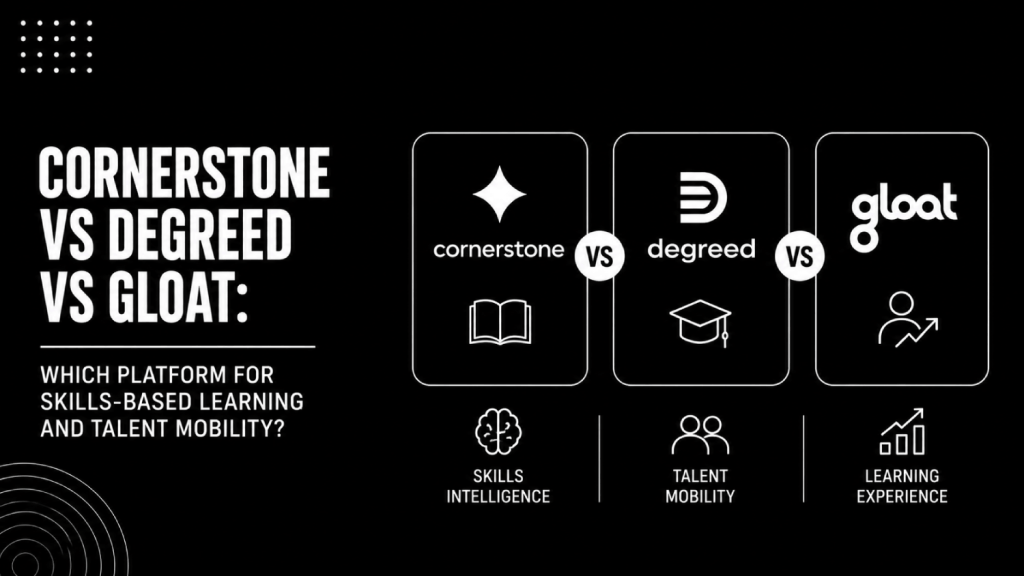
- Cornerstone is a learning delivery and compliance training platform. Degreed is a skills data and learning aggregation platform. Gloat is a talent mobility and internal opportunity platform.
- The overlap is real but shallow. All three use a skills ontology under the hood, but what they do with it diverges sharply.
- Most mid-market L&D teams need Cornerstone or Degreed first. Gloat becomes relevant only after you have solved the skills data problem.
- All three are enterprise-grade, quote-only, and expensive to implement. Factor implementation costs into your total cost of ownership before shortlisting.
Comparing Cornerstone vs Degreed vs Gloat is a question more HR leaders are asking as the “skills-based organization” mandate lands on their desks. Cornerstone OnDemand, Degreed, and Gloat occupy adjacent but distinct categories. Cornerstone is primarily a learning management system with skills tagging. Degreed is a learning experience platform that doubles as a skills intelligence layer. Gloat is an AI-powered internal talent marketplace that uses skills data to match employees to internal opportunities. Buyers comparing all three are usually trying to solve a skills strategy problem, but each platform solves a different piece of it.
Why Buyers Compare These Three Platforms in the First Place
The confusion is understandable. Every major HR analyst has been pushing the “skills-based organization” narrative for several years. In response, Cornerstone, Degreed, and Gloat all now describe themselves as skills platforms. They all maintain a skills ontology. They all claim to surface skill gaps and recommend learning content.
The practical difference is where each platform sits in the talent lifecycle. Cornerstone manages learning delivery, completion tracking, and compliance. Degreed manages what employees have learned and what skills they can credibly claim, pulling from formal courses, informal content, and on-the-job experience. Gloat takes that skills profile and uses it to match people to open roles, projects, mentors, and stretch assignments inside the organization.
A sharp observation from Josh Bersin’s ongoing research on corporate learning architecture captures the problem well: companies building a serious skills strategy often end up buying all four layers separately, an LMS (Cornerstone), an LXP (Degreed), a talent marketplace (Gloat or Fuel50), and a dedicated skills engine. That is not a criticism of any single vendor. It is the current state of the market.
If you are comparing these three, you probably have not yet decided which layer is your actual priority. This article will help you settle that question.
What Does Each Platform Actually Do?
Cornerstone OnDemand: Learning Delivery at Scale
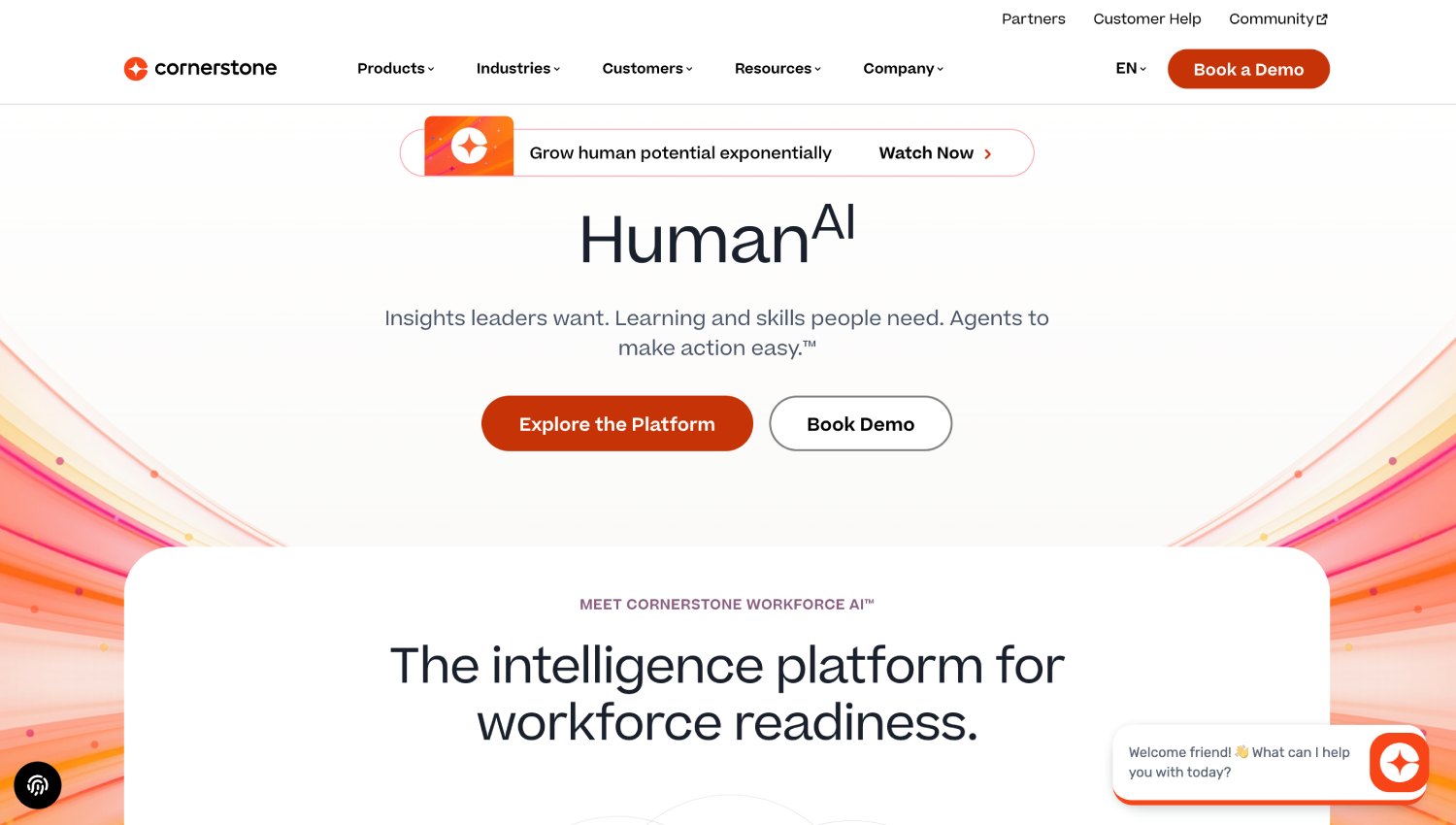
Cornerstone OnDemand is one of the oldest and largest learning management systems in the enterprise market. Its core product, Cornerstone Learning, handles course delivery, compliance training, certification tracking, and learning path management. The platform added skills tagging through its Cornerstone Skills Graph, which allows organizations to map content to skills and surface skill gaps tied to job roles.
Cornerstone also offers a module called Cornerstone Xplor, which positions itself as an LXP-style discovery layer sitting on top of the core LMS. The aim is to close the gap with Degreed by adding a consumer-grade content discovery experience. On Gartner Peer Insights, Cornerstone carries a substantial review base reflecting its wide deployment and deep configurability, verify current ratings directly on the Gartner site before using them in internal vendor scorecards, as scores update frequently. The flip side of that depth is implementation complexity.
Cornerstone is the right choice when your primary need is structured learning delivery, compliance tracking, and reporting across a large workforce. Manufacturing, healthcare, financial services, and government contractors are natural buyers. Companies building a skills-based organization purely through curriculum development rather than talent movement tend to stay in Cornerstone’s lane.
Degreed: Skills Intelligence and Learning Aggregation
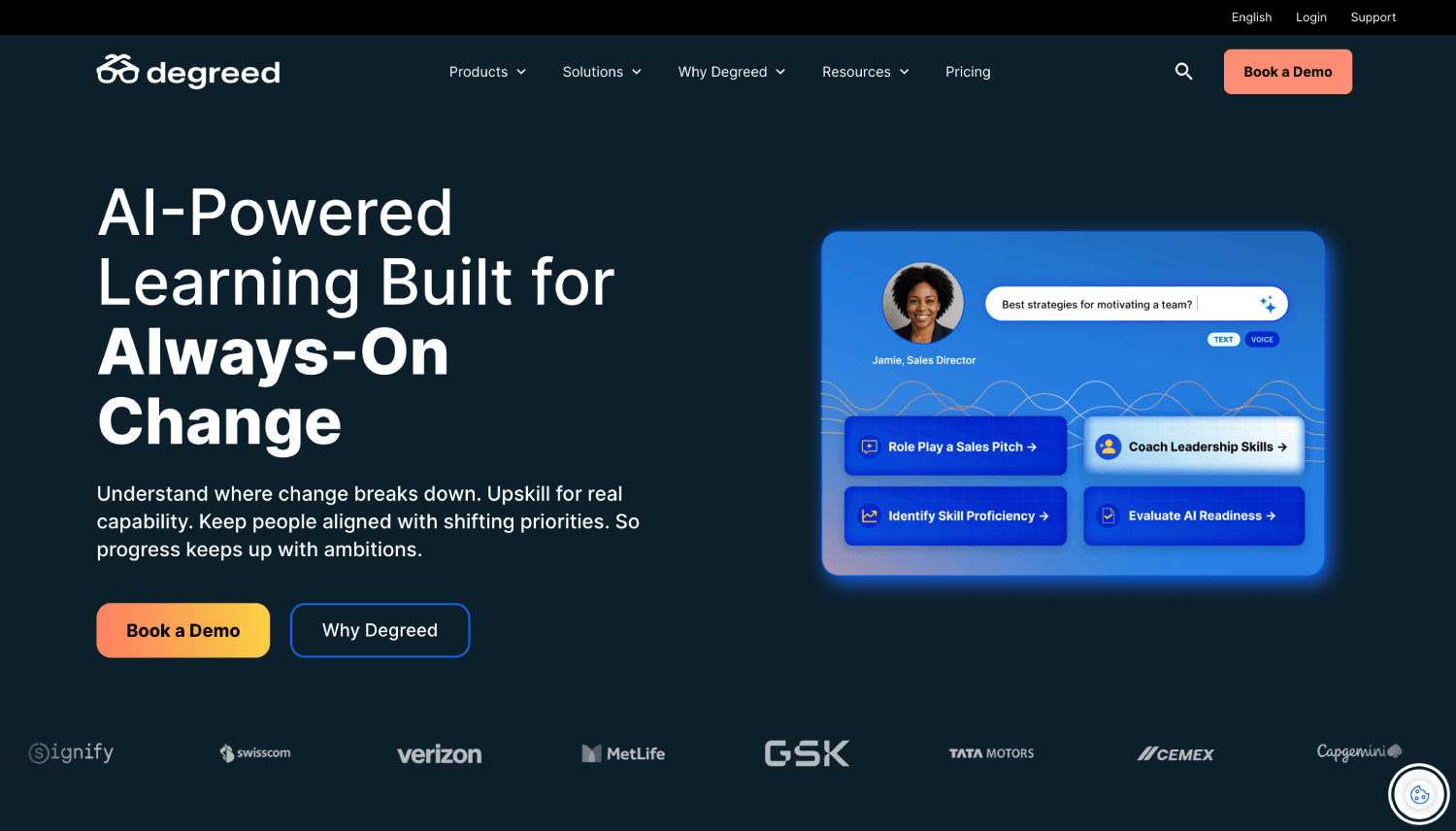
Degreed was built on a different premise: that learning happens everywhere, not just in formal courses, and that organizations need a system of record for skills, not just for completions. The platform aggregates learning from dozens of content providers (LinkedIn Learning, Coursera, Pluralsight, internal content, books, videos, articles) and builds a skills profile for each employee based on what they have consumed, what managers have validated, and what assessments have confirmed.
The skills data layer is Degreed’s genuine differentiator. Rather than just tagging courses to skills, Degreed attempts to maintain a living, employee-level skills inventory that updates over time. HR leaders use this data to identify skill gaps at the team or organizational level, prioritize learning investment, and feed downstream systems like Workday or an internal talent marketplace. Gartner Peer Insights lists Degreed in the same corporate LMS comparison category alongside Cornerstone, check the site for current ratings, as review counts for newer enterprise platforms shift often.
Degreed is best for organizations that have already solved course delivery and now need skills intelligence. If you want to answer “what skills does our workforce actually have today, not just what courses they have completed,” Degreed is the more natural answer than Cornerstone.
Gloat: Internal Talent Mobility, Powered by Skills
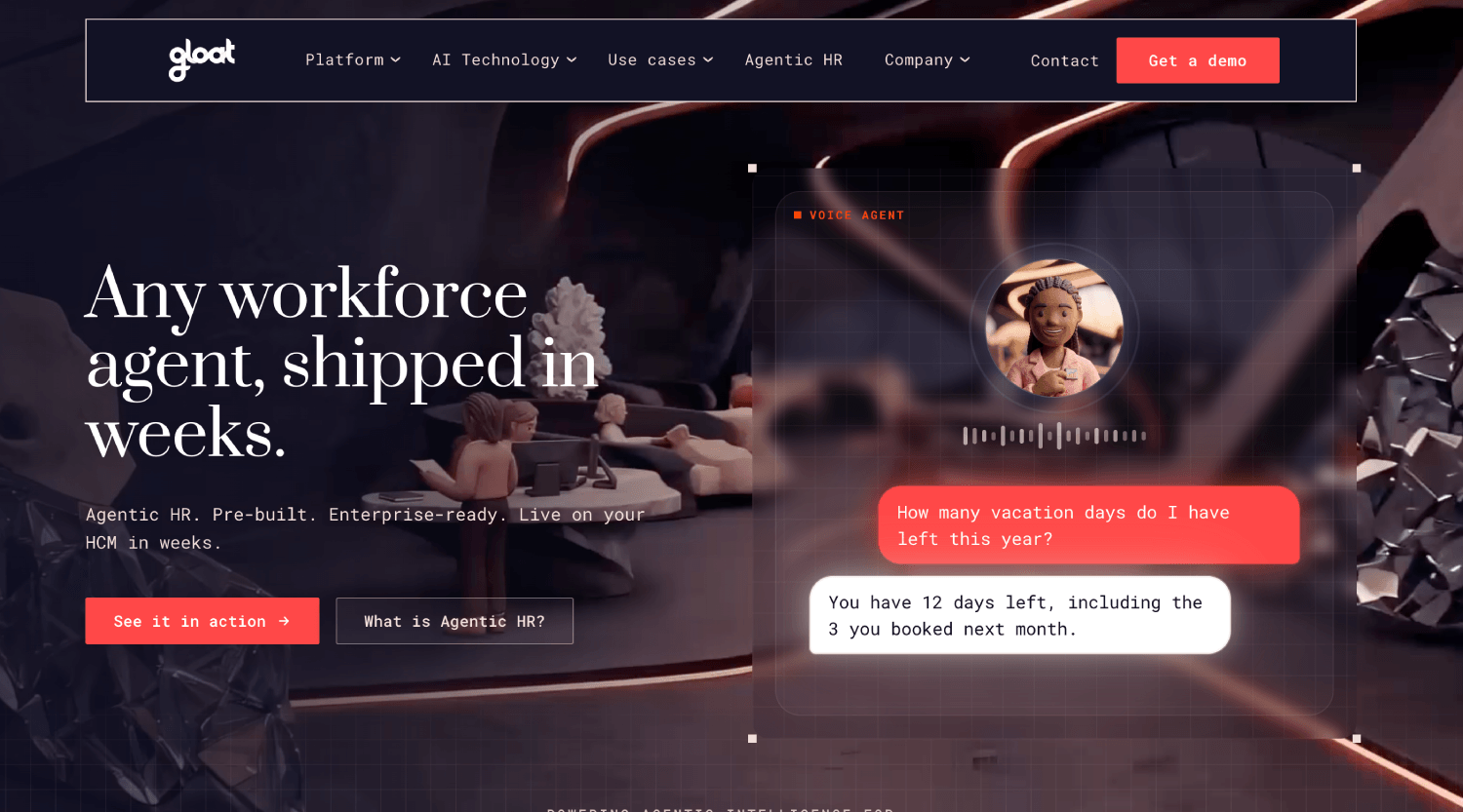
Gloat does not compete with Cornerstone or Degreed on learning delivery at all. Its product is an AI-powered talent marketplace that matches employees to internal opportunities: open roles, projects, gigs, mentorships, and stretch assignments. The skills layer exists to power that matching. When Gloat builds an employee’s skills profile, the goal is not to recommend a course. The goal is to show the employee a role two levels up that they are 70% qualified for, and tell them exactly what to close to get there.
A G2 comparison of Degreed vs Gloat is worth consulting directly for current reviewer sentiment, the relative ease-of-use and ease-of-setup scores shift as each vendor updates its product, so treat any cached summary of those figures as a starting point rather than a settled conclusion. What the comparison consistently reflects is that Gloat is built for employee-facing activation, while Degreed is built for HR and L&D administrators who need configuration control over skills frameworks.
Gloat is the right platform when your primary problem is internal attrition, talent hoarding by managers, or a failure to move high-potential people into growth opportunities before they leave. If the question is “how do we retain and redeploy the talent we already have,” Gloat answers it more directly than either Cornerstone or Degreed. For a broader comparison of internal mobility platforms in this category, our roundup of AI internal mobility platforms for enterprise talent teams covers Gloat alongside Eightfold, Fuel50, and others.
Head-to-Head Feature Comparison
| Capability | Cornerstone OnDemand | Degreed | Gloat |
|---|---|---|---|
| Primary category | LMS / Learning delivery | LXP / Skills intelligence | Internal talent marketplace |
| Skills ontology | Yes (Cornerstone Skills Graph) | Yes (core product feature) | Yes (powers matching engine) |
| Compliance and certification tracking | Strong | Limited | Not a focus |
| Multi-source content aggregation | Moderate (Cornerstone Content) | Strong (dozens of integrations) | Limited (links to existing content) |
| Employee skills profile | Course-completion-based | Multi-signal (courses, experience, assessments) | AI-inferred + declared |
| Internal opportunity matching | Basic (through Cornerstone Recruiting module) | Limited (partner integrations) | Core product feature |
| Manager talent visibility | Moderate | Moderate | Strong |
| HR analytics and workforce planning | Moderate | Strong (skills gap analytics) | Moderate (mobility metrics) |
| Content creation tools | Yes (via Cornerstone Content Studio) | Limited | No |
| Pricing model | Quote-only | Quote-only | Quote-only |
| Typical buyer | L&D, Training, HR Operations | L&D, CHRO, Workforce Planning | CHRO, Talent, HR Strategy |
Where Do Cornerstone and Degreed Actually Overlap?
The Cornerstone versus Degreed comparison is the most legitimate head-to-head in this article because both platforms deliver learning content to employees and both maintain a skills layer. The real difference is which direction they were built from.
Cornerstone was built from compliance and course management outward. It is exceptionally good at delivering mandatory training, tracking completions across a large, distributed workforce, and producing audit-ready reports. The Cornerstone Skills Graph and Xplor layer were added to make the platform more relevant in a world where organizations care about skill development, not just training completion. The additions are functional, but they do not match the depth of a purpose-built skills intelligence tool.
Degreed was built from the premise that skills are the unit of workforce currency, and content is just one input into building those skills. This makes Degreed materially better at answering strategic workforce questions: what skills does the organization have, where are the gaps, how do we invest in closing them. It is noticeably weaker on compliance-heavy training scenarios where certifications, version control of content, and audit trails matter.
Buyers choosing between Cornerstone and Degreed should ask one question first: is your L&D team primarily accountable for training completion, or for skills development? If completion and compliance are the metrics, Cornerstone is the cleaner fit. If skills inventory and learning ROI are the metrics, Degreed wins.
Where Does Gloat Fit Into a Skills Platform Strategy?
Gloat’s position in this comparison is unusual because it does not replace either Cornerstone or Degreed. Most organizations running Gloat at scale also have an LMS and often a separate LXP. Gloat consumes the skills data those platforms generate and activates it by surfacing internal opportunities employees would not otherwise find.
The value proposition is specific: reduce regrettable attrition among high-potential employees by giving them a visible growth path inside the organization before they go looking outside. The platform also addresses the manager talent-hoarding problem by making internal moves visible at the organizational level rather than dependent on individual manager goodwill.
For companies evaluating Gloat alongside platforms like Eightfold and Fuel50, our comparison of Gloat, Fuel50, and Eightfold covers those distinctions in more detail. The short version: Gloat is more activation-focused than Eightfold, which invests more in talent intelligence and external talent data. Fuel50 sits closer to career pathing and employee experience than pure marketplace mechanics.
Gloat belongs in your evaluation when the primary problem statement is internal mobility and retention, not learning delivery or skills measurement. If you have not yet built a reliable skills data foundation, deploying Gloat without it produces a weaker matching engine and lower employee adoption. Sequence matters here.
Skills Ontology: How Each Platform Handles the Hard Part
Every serious HR technology vendor now claims to have a skills ontology. The quality and architecture of that ontology is where the real differences lie. Understanding this prevents expensive mistakes.
Cornerstone’s Skills Graph is primarily a taxonomy: a structured library of skills that can be mapped to content, roles, and employee profiles. It is manageable and integrates with Cornerstone’s broader suite but it relies heavily on administrator configuration and content-skill mappings. Employee skills profiles update mainly when employees complete assigned content.
Degreed builds skills profiles from multiple signals: formal course completions, informal content consumption, manager assessments, peer validations, and external certifications. This multi-signal approach produces richer, more accurate skills profiles, especially for roles where informal learning is significant (technology, creative, leadership). The tradeoff is that the quality of skills data depends on employee engagement with the platform. If employees do not log their learning activity, the profile degrades.
Gloat’s ontology is designed to power matching, not just inventory. It uses AI inference to suggest skills employees likely have based on their job history, projects, and stated experience, without requiring employees to self-declare everything. This produces faster time-to-adoption for employees but introduces inference accuracy as a variable. For a deeper look at how skills ontologies work across HR platforms, our explainer on skills ontology in HR tech is worth reviewing before finalizing your shortlist.
Pricing: What to Expect From All Three
All three platforms are quote-only with no public pricing. This is standard for enterprise HR software of this complexity. From market patterns, all three typically price on a per-employee-per-year basis, with volume discounts for larger organizations. Implementation costs are significant and often underestimated.
Cornerstone’s enterprise contracts tend to run in the six-figure annual range for organizations above a few thousand employees, with implementation fees that can match or exceed the first-year software cost. Degreed is similarly positioned. Gloat, as a newer platform with a more focused use case, may have more pricing flexibility in competitive deals but is still firmly in enterprise territory.
None of these platforms belong on a shortlist for companies under 500 employees unless there is a very specific, funded mandate for skills infrastructure. The total cost of ownership, including configuration, integrations, change management, and ongoing administration, is substantial. Our guide to hidden costs of HR software outlines the implementation and integration costs that most buyers miss in initial pricing conversations.
Integration Architecture: What Sits Upstream and Downstream
Where each platform connects in your existing HR stack matters as much as what it does natively.
Cornerstone integrates with major HCM platforms including Workday, SAP SuccessFactors, and Oracle HCM, and has been around long enough to have pre-built connectors for most enterprise systems. It also integrates with content libraries from Udemy Business, LinkedIn Learning, and Skillsoft. If you are already running Cornerstone’s recruiting or performance modules, the skills data stays inside a single vendor environment.
Degreed integrates with over 200 content providers, which is one of its genuine competitive advantages. It also has documented integrations with Workday, SAP, and most major ATS platforms. The challenge is that clean bidirectional skills data sync between Degreed and your HCM requires configuration work and often a middleware layer. Skills data generated in Degreed does not automatically flow into Workday talent profiles without setup.
Gloat integrates with HCM systems to pull employee data, with LMS/LXP platforms to link learning recommendations, and with ATS platforms to create awareness of open roles. The integration depth with Workday is particularly important for large enterprise customers, as Workday is often the system of record for job architecture and career frameworks that Gloat uses to build its opportunity graph. For organizations already evaluating how enterprise AI platforms handle talent data across Workday and competing platforms, the Workday AI vs Eightfold vs Gloat comparison covers the integration dynamics in more detail.
Which Platform Is Right for Which Buyer?
| Buyer situation | Best fit | Why |
|---|---|---|
| Regulated industry, compliance-heavy training mandate | Cornerstone | Strongest compliance tracking, certification management, and audit reporting |
| L&D team needs a system of record for skills, not just completions | Degreed | Multi-signal skills profiles and content aggregation from dozens of providers |
| High attrition of high-potential employees, limited internal mobility | Gloat | AI-powered opportunity matching activates internal talent movement |
| Need both learning delivery and skills intelligence in one platform | Cornerstone with Xplor, or Cornerstone + Degreed integration | Cornerstone Xplor adds LXP-style features but does not fully replace Degreed’s depth |
| Early-stage skills strategy, no existing LMS or skills data | Degreed or Cornerstone | Build skills data foundation before activating mobility use cases with Gloat |
| Enterprise with Workday as HCM, board mandate for talent retention | Gloat or Eightfold | Both have strong Workday integration; Gloat is more mobility-focused, Eightfold broader |
| Organization wants a single-vendor skills platform strategy | Cornerstone (full suite) | Broadest native suite coverage, though depth in any single module may trail best-of-breed |
What the “AI” Claims in Each Platform Actually Mean
All three vendors use AI prominently in their marketing. The substance behind those claims varies.
Cornerstone’s AI is primarily recommendation-based: the system recommends content based on role, skills gaps, and peer behavior. The Cornerstone Skills Graph uses AI to infer skill relationships and suggest related skills when employees add or complete content. This is functional but not differentiated from what most modern LMS platforms offer.
Degreed’s AI focuses on skills inference and content ranking. When an employee interacts with content, the platform infers skills relevance and updates the profile accordingly. Degreed has also invested in AI-powered skills measurement through assessments. The AI layer adds genuine value to the skills profile quality, particularly for organizations with high volumes of informal learning activity.
Gloat’s AI is the most operationally consequential of the three. The matching engine that connects employees to internal opportunities uses a combination of skills inference, career trajectory modeling, and opportunity scoring. Getting this matching quality right determines whether employees actually use the platform or ignore it. Poor match quality leads to low adoption regardless of how well the platform was implemented. This is also where bias risk concentrates, making it worth reviewing evaluation frameworks for AI HR vendors before signing any contract.
Frequently Asked Questions
Is Degreed an LMS or an LXP?
Degreed is an LXP (learning experience platform), not an LMS. The distinction matters because an LXP focuses on content discovery, skills profiling, and aggregating learning from multiple sources, while an LMS focuses on course delivery, completion tracking, and compliance reporting. Degreed does not handle compliance training well and is not designed to replace an LMS. Many organizations run Degreed alongside Cornerstone or another LMS rather than instead of one.
Who are Cornerstone OnDemand’s main competitors?
Cornerstone’s primary competitors in the LMS and learning suite category include SAP SuccessFactors Learning, Oracle Learning, Workday Learning, SumTotal, and Docebo. In the LXP layer, Degreed and EdCast (now part of Cornerstone’s portfolio after acquisition) are the closest comparisons. The broader talent suite includes performance and recruiting modules that overlap with platforms like Workday and SAP SuccessFactors.
Can Gloat replace a learning platform like Cornerstone or Degreed?
No. Gloat does not deliver or manage learning content at scale and is not designed to. It is an internal talent marketplace that surfaces opportunities and development pathways. It may link employees to learning resources in partner platforms, but the content management, compliance tracking, and learning administration functions that Cornerstone and Degreed handle are outside Gloat’s product scope. Organizations running Gloat typically continue using a separate LMS and often a separate LXP.
What is the best platform for skills-based talent management?
There is no single platform that handles all layers of a skills-based talent management strategy equally well. Degreed is the strongest standalone platform for building and maintaining employee skills profiles. Gloat is the strongest for activating those profiles to drive internal mobility. Cornerstone is the strongest for structured learning delivery and compliance training. Most enterprise organizations building a genuine skills-based talent strategy end up combining two or more of these platforms with their HCM.
Are Degreed and Udemy the same company?
No. Degreed and Udemy are separate companies. Degreed is a skills and learning intelligence platform sold to employers as enterprise software. Udemy is a consumer and business content marketplace. Udemy for Business (now called Udemy Business) is a corporate learning content library that many organizations integrate with Degreed as one of its content sources. Degreed can aggregate learning from Udemy alongside dozens of other providers, but the two are distinct products with different business models.
How should I sequence buying these platforms?
Start with the learning delivery foundation if you do not have one. That means an LMS like Cornerstone if compliance training is a priority, or Degreed if skills intelligence is the mandate. Gloat belongs later in the sequence because its matching engine performs better with a richer skills data foundation. Deploying Gloat before employees have meaningful skills profiles means the AI has less signal to work with and match quality suffers, reducing adoption and making the investment harder to justify.
Do these platforms work for companies outside the US?
All three have global deployments with multi-language support and data residency options for EU customers. Cornerstone and Degreed both have significant European customer bases. Organizations in regulated EU environments should review each vendor’s data processing agreements carefully, particularly around how AI-generated skills inferences are used in talent decisions, given EU AI Act obligations taking effect for HR systems. Our overview of talent intelligence platforms covers GDPR and EU AI Act considerations in more depth.
The Decision Most Buyers Get Wrong
The common mistake is treating this as a three-way horse race and picking the vendor with the best demo or the strongest sales team. These platforms do not compete the way that, say, two ATS platforms compete. They solve adjacent problems at different points in the talent lifecycle. Buying Gloat when your real gap is learning delivery will not produce results. Buying Cornerstone when your real problem is talent hoarding and internal attrition will not solve that either.
The more productive framing is to start with your measurement problem. If your L&D team cannot tell the board what skills the workforce actually has, you have a skills data problem and Degreed addresses it most directly. If your CHRO is getting asked why high-potential talent keeps leaving for external opportunities before getting internal development, you have a mobility activation problem and Gloat is the right conversation. If you need to run mandatory training at scale with audit-ready reporting, Cornerstone is your platform.
Many large enterprises end up running all three in some form, sometimes with Cornerstone or Workday Learning as the LMS, Degreed as the skills intelligence layer, and Gloat as the mobility activation engine. That stack is expensive and complex to integrate, but it reflects the current reality that no single vendor has fully unified learning delivery, skills intelligence, and talent mobility into a product that performs well across all three. Buy based on your most acute problem today, with a clear view of which layer you add next. If you are still building out your evaluation process, the AI HR vendor evaluation checklist and our broader HR software buying checklist are useful before you enter vendor conversations.