
HR Tech SaaS may earn a commission when you buy through links on this page. Our recommendations are editorial and never paid for.
- AI can infer skills from resumes, job history, and learning data, but inference alone is not a skills map. Validation workflows and employee input are what make the data usable.
- The best AI skills mapping tools differ on three axes: where they pull signal from, how they handle validation, and what downstream use cases they actually support.
- Most platforms serve either L&D teams (learning path personalization) or workforce planning teams (gap analysis, succession, internal mobility). Few do both well.
- Governance matters as much as accuracy. If employees do not trust the data or the process, your skills taxonomy is a liability, not an asset.
- Buying a skills mapping tool without a defined use case is how companies end up with expensive, unused taxonomies.
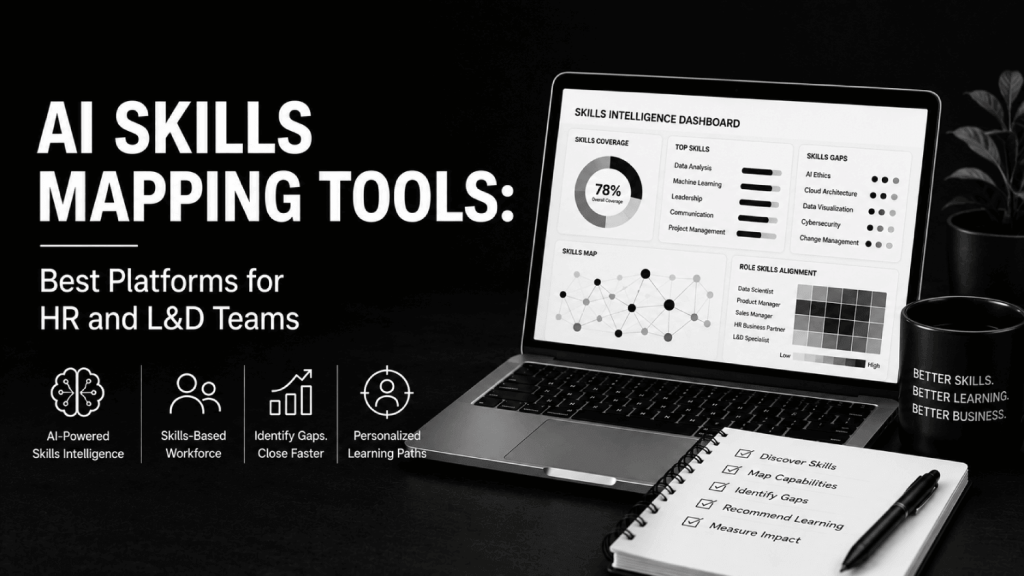
The strongest AI skills mapping platforms combine inference from multiple signal sources, structured employee validation, and integration with either your LMS or your HRIS. Point solutions that only infer skills from a resume and stop there are not skills mapping tools. They are resume parsers with better marketing.
What Does AI Actually Do in Skills Mapping?
AI in skills mapping does two distinct things, and most buyers conflate them. The first is skills inference: the system reads structured and unstructured data, like job titles, work history, certifications, completed courses, and project descriptions, and predicts what skills a person likely has. The second is skills validation: the system prompts the employee or their manager to confirm, adjust, or add to those inferences.
Inference without validation produces confident-sounding data that is often wrong. A senior engineer who spent three years on security projects will have dozens of inferred skills that may be six years out of date. The AI does not know that. Only the employee and their manager do.
The third layer, which separates serious platforms from lightweight tools, is skills assessment. Some platforms go beyond inference and validation to run structured assessments, adaptive tests, or simulations that produce a scored proficiency level rather than a binary has/does not have signal. Workera, for example, positions its SkillMap AI product specifically around measuring skills that align to organizational objectives, not just identifying them.
How Do AI Skills Mapping Tools Infer Skills?
Different platforms draw signal from different sources. The source mix determines how accurate the initial inference is and how much validation work you will need to do afterward.
| Signal Source | What It Captures | Limitation |
|---|---|---|
| Resume and LinkedIn profile | Historical job titles, stated skills, past employers | Self-reported, often inflated or incomplete |
| Job history in HRIS | Role progression, tenure, internal transfers | Does not capture what the person actually did in each role |
| Learning platform activity | Courses completed, time spent, quiz scores | Completion does not equal proficiency |
| Performance review text | Manager observations, project descriptions | Variable quality, often written to be diplomatic rather than precise |
| Project and task data | Actual work outputs, tools used | Requires integration with project management systems |
| Assessments and simulations | Demonstrated proficiency at a point in time | Resource-intensive; employees resist being tested |
The platforms with the strongest inference engines pull from at least three of these sources simultaneously. Single-source inference tools, especially those that rely primarily on the resume, will give you a skills map that looks comprehensive but reflects who someone was when they applied for the job, not who they are today.
Which AI Skills Mapping Tools Are Worth Evaluating?
These are the platforms most commonly shortlisted by HR and L&D teams at mid-market and enterprise companies. They are not all the same category of tool. Read the positioning carefully before you shortlist.
Workera
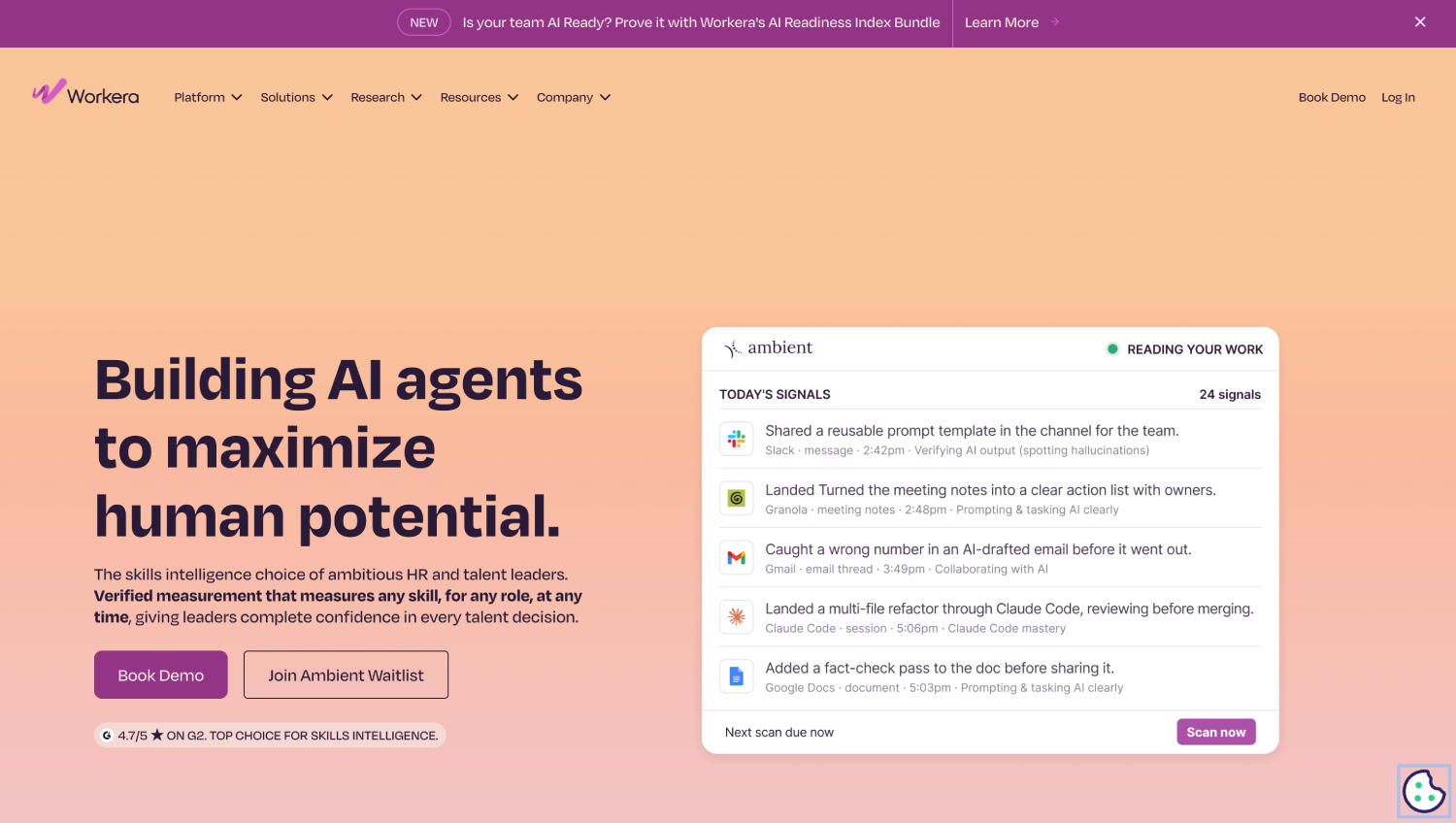
Workera is built specifically for skills measurement in technical domains, particularly AI, data, and software engineering. Its SkillMap AI product lets leaders design skills frameworks tied to organizational objectives and then run adaptive assessments against those frameworks. The output is a scored proficiency level, not just a skill tag.
The assessment-first approach is Workera’s differentiator. Where most platforms infer skills and hope you validate them, Workera starts with a measurement event. That makes the data more defensible for workforce planning conversations. The trade-off is that assessment fatigue is real, and getting technical employees to complete assessments requires organizational buy-in and clear communication about how results will be used.
Workera pricing is quote-based. It targets larger organizations and is not the right fit for companies without a technical talent population to assess.
Skills Base
Skills Base sits closer to the competency management end of the spectrum. It is a purpose-built skills tracking platform with a clean taxonomy builder, manager and employee self-assessment workflows, and basic skills gap visualization. The AI layer is lighter than Workera’s or Eightfold’s, but the validation workflow is genuinely usable.
Skills Base consistently ranks in searches for competency mapping software because it covers the core use case without overwhelming buyers with features they will not use for 18 months. For L&D teams that need a structured skills registry and gap view before they start investing in AI inference, Skills Base is a rational starting point. Pricing is published on the Skills Base pricing page and is more accessible than enterprise platforms.
Eightfold AI
Eightfold AI is one of the most cited platforms in the talent intelligence category, and its skills inference engine is among the most mature on the market. The platform ingests resume data, job history, internal career paths, and external labor market signals to build a skills profile for every employee. It does not just map skills; it predicts skill adjacencies and trajectory.
For workforce planning teams, Eightfold’s skills graph is the main draw. You can run gap analysis at the team, department, or company level and model what skills the organization will need given planned headcount changes. The platform connects skills data directly to internal mobility and succession decisions. Our deeper review of best talent intelligence platforms covers Eightfold alongside Gloat, Beamery, and Findem in more detail.
Eightfold is quote-based and enterprise-priced. It is not a fit for companies under roughly 500 employees, and implementation timelines are substantial.
Gloat
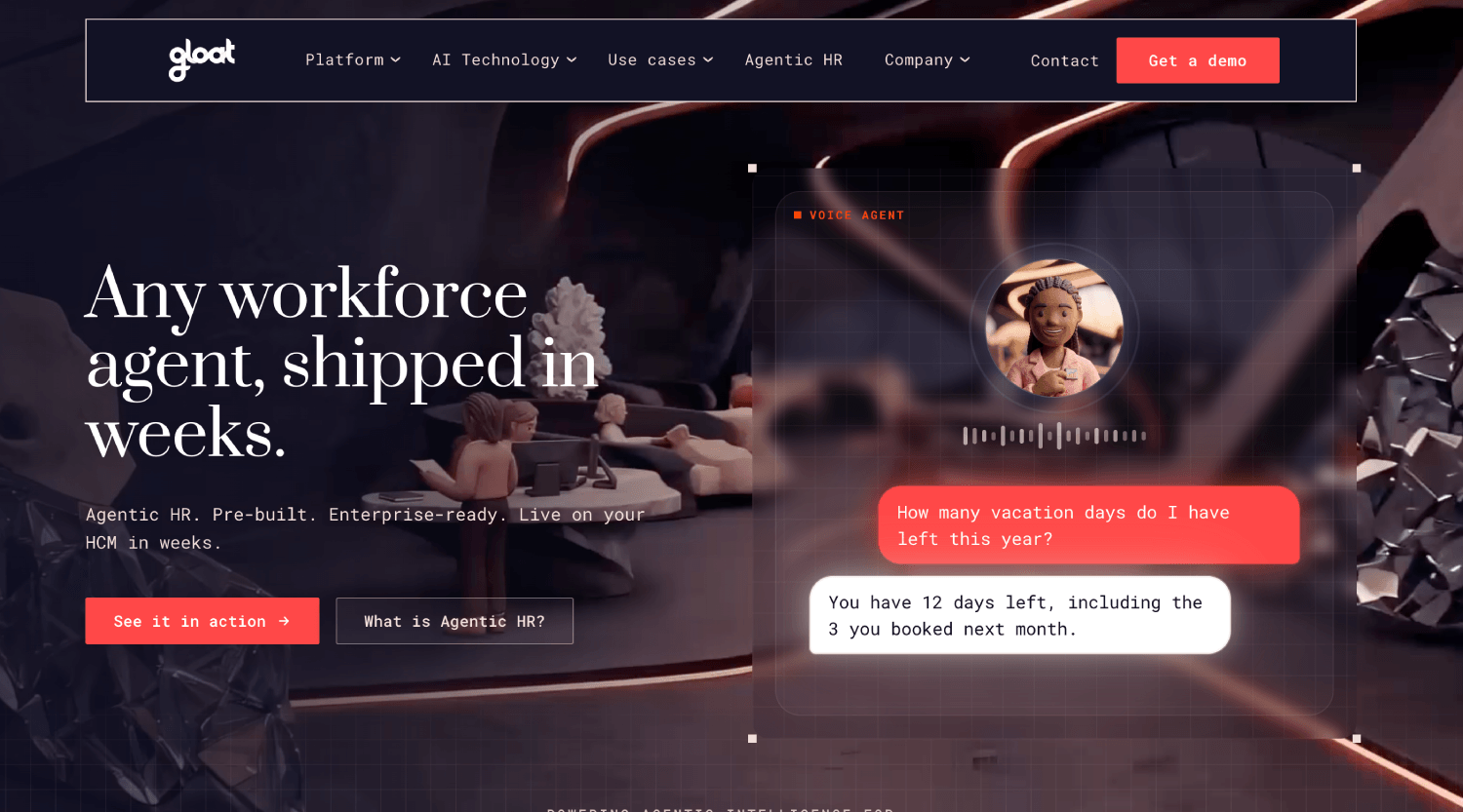
Gloat frames itself as a workforce agility platform with skills at the center, but its primary use case is internal talent marketplace. The skills mapping layer exists to power gig assignments, project staffing, and career path recommendations rather than to generate a standalone skills inventory for HR.
If your primary use case is helping employees find internal opportunities and helping managers fill short-term project needs, Gloat’s skills inference is well-suited to that workflow. If you need a clean, auditable skills registry for workforce planning or L&D gap analysis, Gloat is harder to configure for that purpose. The Gloat vs Fuel50 vs Eightfold comparison breaks down these trade-offs at the platform level. Quote-based pricing, enterprise-focused.
TalentGuard
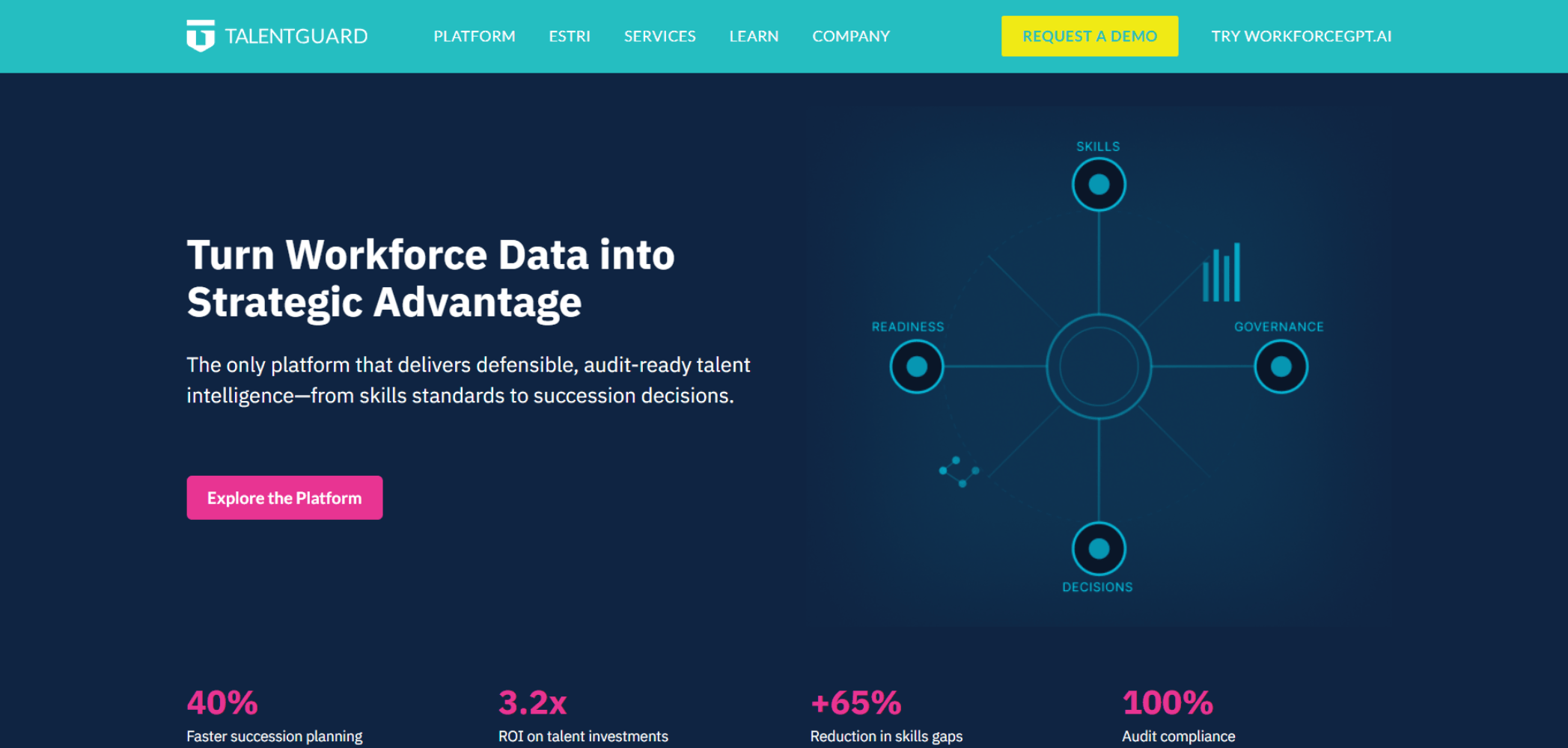
TalentGuard combines skills mapping with career pathing and succession planning in a single platform. The AI layer infers skills from job history and role data, and the platform includes a competency library that HR teams can customize. It is purpose-built for HR, not for L&D teams primarily, which shapes how the skills data is structured and surfaced.
TalentGuard is a reasonable shortlist candidate for mid-market companies that want skills mapping connected to career development frameworks without the cost and complexity of Eightfold or Workday. Pricing is quote-based.
Udemy Business
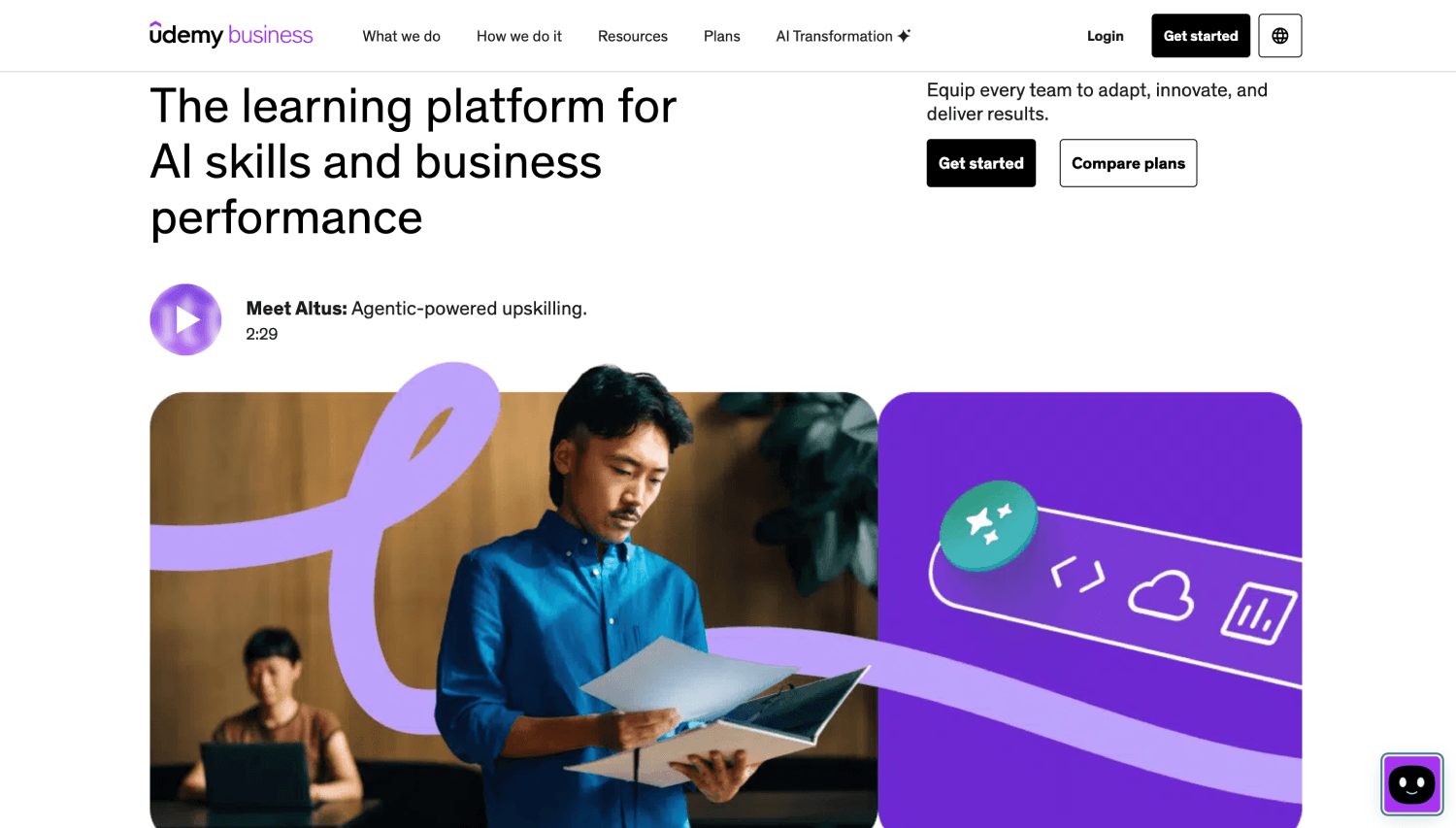
Udemy Business approaches skills mapping from the learning side. Per Udemy Business’s published product positioning, the platform uses AI to curate personalized learning paths based on existing skills and desired skill targets. The skills mapping function exists to power learning recommendations, not to generate a standalone skills inventory.
That is a meaningful distinction. If your primary goal is L&D personalization and you want AI to match employees to relevant courses automatically, Udemy Business does that well within its content library. If you need a skills map that feeds workforce planning, succession, or internal mobility, you will need a separate platform or a strong integration layer. Pricing is available on the Udemy Business pricing page.
Degreed
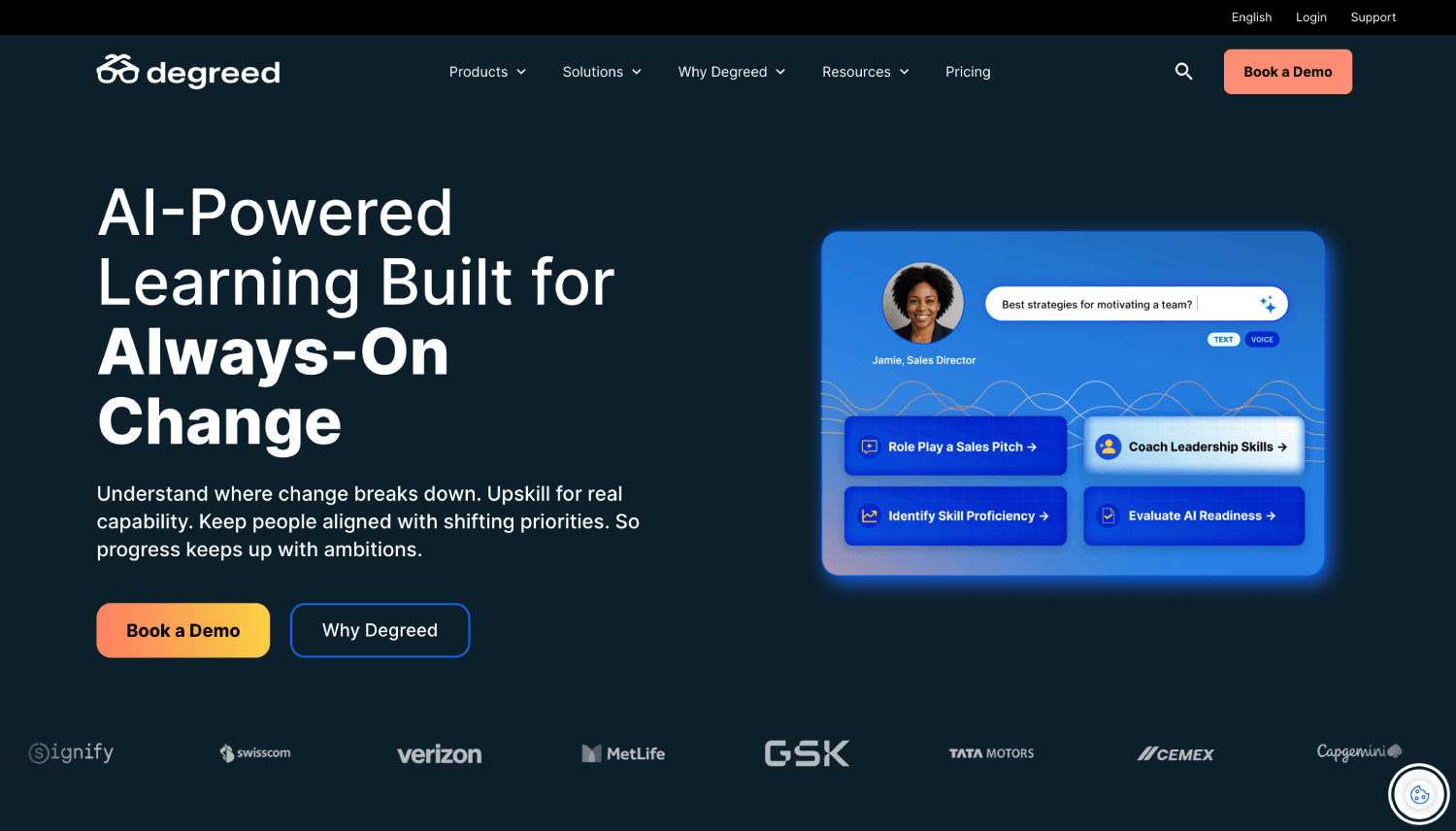
Degreed is an LXP (learning experience platform) with skills inference built around learning activity. The platform tracks what employees learn across internal and external sources and infers skill development over time. The skills data is most useful for L&D teams tracking learning ROI and for managers trying to understand team capability relative to a skills framework.
Degreed has native integrations with most major LMS and HRIS platforms, which matters if you want skills data to flow into your broader HR stack. The AI inference is tied closely to learning activity, so employees who develop skills through experience rather than formal learning will be systematically underrepresented in the data. Degreed is enterprise-tier; pricing is quote-based and not publicly listed, as confirmed by the vendor’s contact page, which directs all pricing inquiries to their sales team.
Beamery
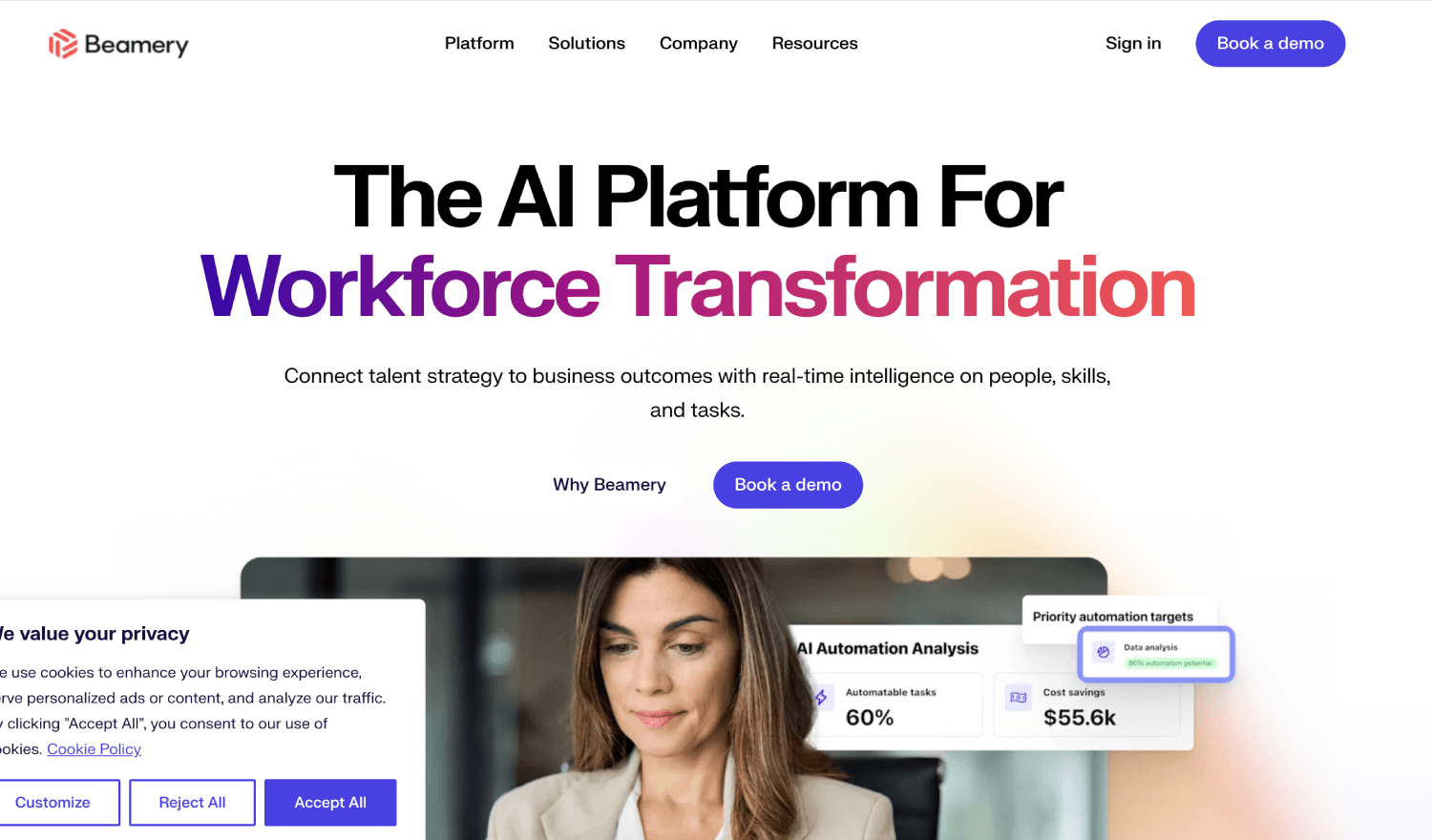
Beamery built its Talent Graph around external and internal skills data and uses that graph to power both recruiting and talent development workflows. The skills mapping layer is strong on the external market side, which makes Beamery particularly useful for companies doing workforce planning that involves external hiring decisions alongside internal development.
Where Beamery is weaker is in the L&D integration layer. It is primarily a talent acquisition and talent management platform, and the skills mapping use case is most valuable when connected to recruitment, not when used as a standalone skills registry. Quote-based and enterprise-focused.
Fuel50
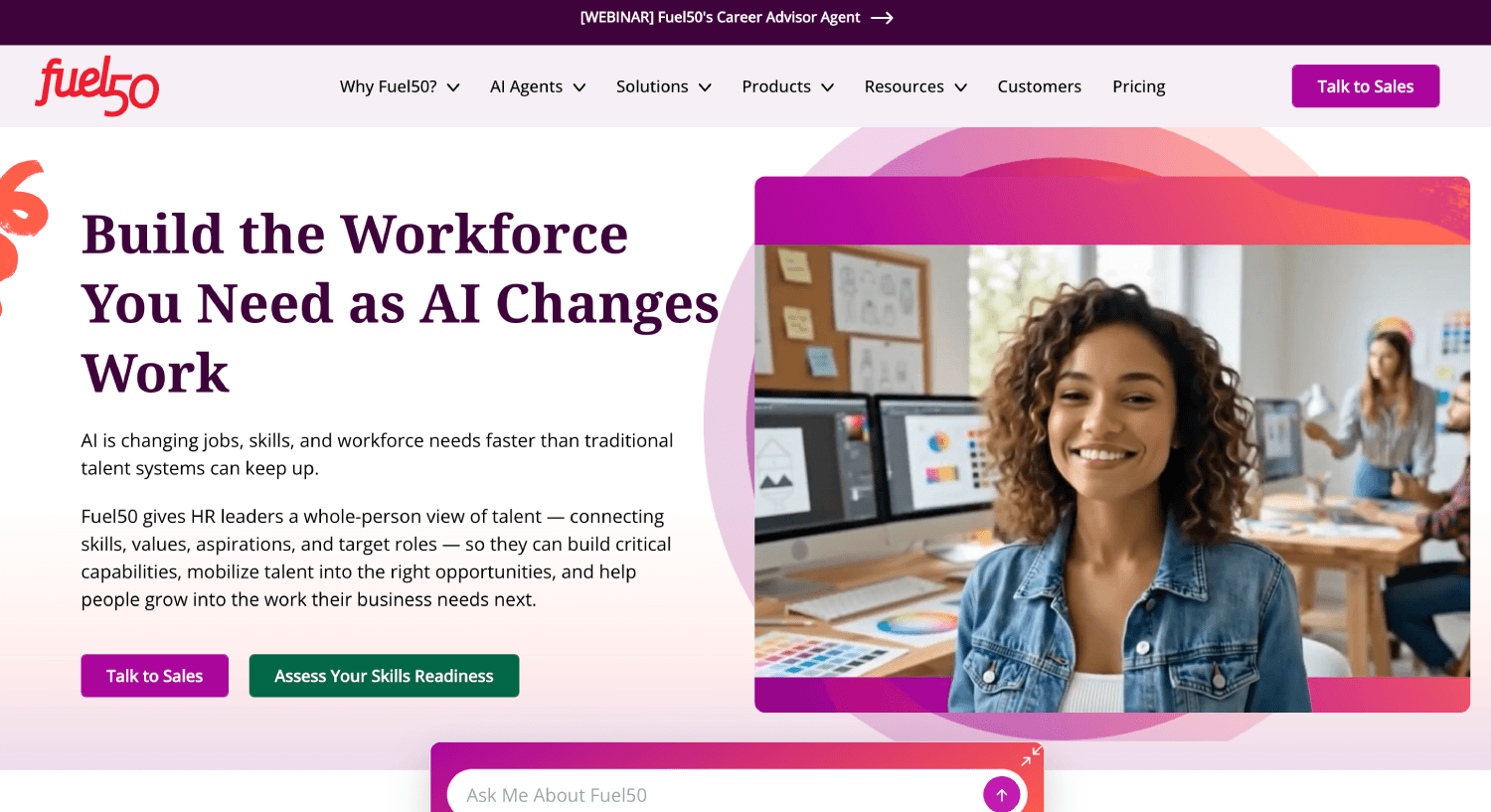
Fuel50 sits closest to the career pathing and internal mobility use case. Skills mapping in Fuel50 is designed to help employees understand where they are and what they need to develop to reach a career goal. The AI layer suggests skills to develop and roles to target based on current profile and organizational career frameworks.
Fuel50 is an employee-facing tool as much as it is an HR tool. That is a feature, not a limitation, if your use case involves employee engagement with the skills process. If HR needs a top-down, organization-wide skills inventory for workforce planning, Fuel50 is not the right starting point. Quote-based pricing.
Phenom
Phenom covers the full talent lifecycle from candidate to employee, and its skills inference engine runs across both external and internal profiles. For talent acquisition teams that also own internal mobility, Phenom offers a consistent skills framework across the entire employee lifecycle. The platform’s AI reads job descriptions, candidate profiles, and internal career data to infer and match skills.
The risk with Phenom is scope. It is a large platform with many modules, and the skills mapping capability is strongest when the full platform is deployed. Companies buying only the skills functionality in isolation may not get the inference quality they expect. Quote-based and enterprise-priced.
How Do These Tools Compare on Core Dimensions?
| Platform | Primary Use Case | AI Inference Strength | Validation Workflow | L&D Integration | Workforce Planning | Best Fit |
|---|---|---|---|---|---|---|
| Workera | Skills assessment | High (assessment-based) | Built-in | Moderate | Strong | Technical talent, enterprise |
| Skills Base | Competency management | Moderate (self-assessment) | Strong | Moderate | Moderate | Mid-market, L&D start |
| Eightfold AI | Talent intelligence | Very high (multi-source) | Moderate | Moderate | Very strong | Enterprise workforce planning |
| Gloat | Internal talent marketplace | High | Moderate | Moderate | Moderate | Enterprise internal mobility |
| TalentGuard | Skills and career pathing | Moderate | Strong | Moderate | Moderate | Mid-market HR teams |
| Udemy Business | L&D personalization | Moderate (learning-sourced) | Light | Very strong | Weak | L&D-led skills programs |
| Degreed | Learning experience | Moderate (learning-sourced) | Moderate | Very strong | Moderate | L&D teams with LMS complexity |
| Beamery | Talent acquisition and development | High (Talent Graph) | Moderate | Moderate | Strong | Enterprise TA and workforce planning |
| Fuel50 | Career pathing | Moderate | Strong (employee-facing) | Moderate | Moderate | Internal mobility programs |
| Phenom | Full talent lifecycle | High | Moderate | Moderate | Strong | Enterprise, full-platform buyers |
What Should HR Teams Demand in a Skills Validation Workflow?
Skills validation is where most AI skills mapping implementations fail in practice. The AI infers a set of skills, the HR team assumes those inferences are good enough, and the platform goes live with a skills database that employees do not recognize as accurate. Employee trust collapses, and the data quality problem compounds over time as no one updates their profile.
A usable validation workflow has three components. First, employees must be able to review their AI-inferred skills and add, remove, or adjust proficiency levels without friction. If the edit process requires IT involvement or manager approval for every change, employees will not bother. Second, managers need a view that shows them their team’s inferred skills so they can flag systematic errors, like the entire data engineering team being tagged as proficient in a tool they stopped using two years ago. Third, there needs to be a defined cadence for re-validation. Skills data that is validated once and never updated is directionally useful but operationally unreliable within 18 months.
Governance documentation also matters. For companies operating in the EU or California, the EU AI Act and state privacy laws create real obligations around how AI-generated inferences about employees are stored, shared, and used in employment decisions. Before selecting any platform, run the vendor’s data practices past your legal team. Our AI HR vendor evaluation checklist includes specific questions to ask vendors about model transparency and employee data governance.
How Does Skills Mapping Connect to Workforce Planning?
Skills mapping earns its budget when it feeds decisions, not just dashboards. The three most common downstream use cases are skills gap analysis for L&D investment decisions, internal mobility matching, and workforce planning scenario modeling.
Gap analysis is the most common starting point. If you know the skills your organization needs to execute its strategy over the next two years, and you know what skills your current workforce has, the gap between those two sets tells you what to hire for and what to develop. Platforms like Eightfold and Beamery are built specifically for this workflow. Platforms like Degreed and Udemy Business are built to close the gap once it is identified, but they are not the right tools for quantifying it.
Internal mobility is the second major use case. Skills data that lives in an isolated HR module does not power internal mobility. It needs to flow into whatever system employees and managers use to discover and post internal opportunities. For deeper analysis of how skills data connects to internal movement decisions, the best AI internal mobility platforms review covers the tools that close this loop most effectively.
Workforce planning scenario modeling is the most sophisticated use case and requires the cleanest data. If you are modeling three different growth scenarios and want to understand the skills implications of each, you need skills data that is reliable at scale, not just directionally interesting. This is where companies often discover that their skills data needs 12 months of cleanup before it can support planning conversations. The workforce planning software review covers the broader tooling stack for headcount forecasting and scenario modeling.
What Does AI Skills Mapping Actually Cost?
Most of the enterprise-grade platforms in this category are quote-based, which means price varies based on employee count, modules purchased, and integration complexity. The practical price range for a mid-market company is wide.
Skills Base publishes pricing on their website and is the most accessible option for companies that want to start without an enterprise contract. Udemy Business and Degreed operate on per-seat licensing that scales with headcount. Workera, Eightfold, Gloat, Beamery, Phenom, Fuel50, and TalentGuard are all quote-only, with implementations that typically involve professional services fees in addition to annual licensing.
The hidden cost in skills mapping implementations is data preparation and taxonomy design. Most organizations underestimate the work required to build or adopt a skills taxonomy that is specific enough to be useful but broad enough to scale across the organization. A taxonomy that is too granular becomes unmanageable. A taxonomy that is too generic produces insights too vague to act on. Budget for this work explicitly, and ask vendors what taxonomy support they include in their implementation services. The hidden costs of HR software breakdown covers implementation and integration costs that buyers consistently miss during vendor evaluation.
How Should L&D Teams Evaluate AI Skills Inference Tools Differently Than HR Teams?
L&D buyers and HR buyers have different definitions of a successful skills mapping implementation, and they should evaluate these tools differently as a result.
L&D teams care most about whether skills data drives better learning recommendations and whether employees actually engage with those recommendations. The quality of the integration between the skills layer and the learning content library matters more than the sophistication of the inference engine. An LXP like Degreed or Udemy Business that surfaces relevant courses automatically is more valuable to an L&D team than a talent intelligence platform with superior inference but no learning content integration.
HR and workforce planning teams care most about data quality at scale, the ability to aggregate skills data across the organization, and the connections to succession, compensation, and hiring decisions. They need inference that works across a diverse workforce, not just technical employees, and they need validation workflows that HR can manage without constant IT involvement.
The mistake is buying a platform optimized for one use case and expecting it to serve the other. If your L&D team and your HR team share the same skills mapping budget, align on the primary use case before you start vendor conversations. A skills map built to power learning recommendations and a skills map built to power workforce planning need different data structures and different levels of precision.
What Are the Biggest Failure Modes in AI Skills Mapping Projects?
Four patterns account for most failed skills mapping implementations. Recognizing them in advance is cheaper than discovering them post-contract.
The first is taxonomy sprawl. Organizations try to map every possible skill at every possible level of specificity and end up with a taxonomy of several thousand skills that no one can maintain. Pick a taxonomy scope that matches your actual use cases and constrain it deliberately.
The second is passive employee onboarding. Employees are told their skills have been inferred and asked to log in and validate them. Adoption rates are low because there is no clear value proposition for the employee. Frame the validation step around career visibility and opportunity matching, not HR data collection.
The third is no downstream action. Companies complete a skills mapping exercise, generate a gap analysis, share it with leadership, and then do nothing with it. Skills data has a shelf life. If it does not connect to hiring plans, L&D budgets, or promotion decisions within six months, employees lose faith in the exercise and stop maintaining their profiles.
The fourth is treating AI output as ground truth. AI inference is a starting point. Treating inferred skills as confirmed skills in compensation or promotion decisions without validation creates legal exposure and employee distrust simultaneously. Every platform covered in this article produces inferences. None of them produce facts.
Frequently Asked Questions
How is AI used in skills mapping?
AI in skills mapping works by analyzing data from resumes, job history, learning platforms, performance reviews, and assessments to infer what skills an employee likely has. More sophisticated platforms also infer skill adjacencies and predict which skills an employee could develop quickly given their existing profile. The AI inference is a starting point; it requires validation from the employee and manager before it can be trusted for workforce planning or learning decisions.
What is the difference between skills inference and skills assessment?
Skills inference uses existing data to predict what skills a person has without directly testing them. Skills assessment uses structured tests, simulations, or adaptive questioning to produce a scored proficiency level. Inference is faster and scales easily, but it is less accurate. Assessment is more accurate but resource-intensive and requires employee cooperation. The strongest platforms combine both: inference to build an initial profile and targeted assessments to validate and score critical skills.
Can AI skills mapping tools work without an existing skills taxonomy?
Most enterprise platforms come with pre-built skills taxonomies or integrate with standards like ESCO or the Lightcast Open Skills taxonomy (a widely used, open-source skills classification framework maintained by labor market data firm Lightcast). However, pre-built taxonomies rarely match an organization’s specific skill language out of the box. Expect to spend time customizing any taxonomy to match your job architecture. Some platforms, like Skills Base, make this customization process relatively straightforward. Others are more rigid and require professional services to modify.
Which AI skills mapping tools are best for L&D teams?
L&D teams generally get the most value from Degreed and Udemy Business, because both platforms are built around connecting skills gaps to learning content. Workera is the right choice if you need skills assessment for technical populations. Skills Base works well for L&D teams that need a clean skills registry without enterprise pricing. If workforce planning is also a requirement, Eightfold or Beamery are stronger options, but they require more implementation investment.
How do I validate AI-inferred skills at scale?
Validation at scale requires a platform with a structured employee self-review flow, manager oversight for team-level errors, and a scheduled re-validation cadence. Most platforms support employee self-assessment workflows where employees can confirm, adjust, or add skills. The operational challenge is adoption. The most effective approach is to connect validation directly to an employee benefit, like internal job matching or learning recommendations, so employees have a personal incentive to keep their profile accurate.
Do AI skills mapping tools comply with GDPR and the EU AI Act?
This depends on the specific vendor and how they classify their inference models. Under the EU AI Act (Regulation (EU) 2024/1689, Article 6 and Annex III), AI systems used in employment contexts , including those that evaluate or classify workers , are designated high-risk, requiring transparency, human oversight, and documentation of training data and model logic. Ask vendors directly how they classify their system under the AI Act, what data is used to train their inference models, and whether employees have the right to contest AI-generated skill inferences. Do not accept “we are compliant” without documentation. Our AI HR compliance and bias audit tools review covers the broader compliance tooling for teams managing this risk.
What data does an AI skills mapping tool need to get started?
At minimum, most platforms need employee records with job titles and work history, which typically come from your HRIS. Resume data, if available and consented, significantly improves inference quality. Learning platform completion data, performance review text, and project or task data from work management systems all improve accuracy further. The more signal sources the platform can access, the more accurate the initial inference and the less validation work required from employees.
The Decision Most Teams Get Wrong
The most common mistake in AI skills mapping is choosing a platform before agreeing on what the skills data will actually be used for. HR teams buy a sophisticated inference engine and then spend months deciding what questions to ask of the data. L&D teams buy a learning platform with skills features and then wonder why the skills map does not support workforce planning conversations.
Start with the decision, not the platform. If the decision is “where should we invest our L&D budget next year,” an LXP with solid skills inference is sufficient. If the decision is “do we have the skills to execute a market expansion,” you need a platform with multi-source inference, validation workflows, and integration with your workforce planning process. If the decision is “how do we reduce external hiring by developing internal talent,” internal mobility tooling with a connected skills layer is the right starting point, and the internal mobility ROI framework can help you build the business case.
AI accelerates skills mapping. It does not replace the organizational work of deciding what skills matter, how they will be validated, and what decisions they will drive. Buy the tool after you have answered those questions, not before.