
- Benefits administration platforms process the elections employees make. Benefits decision support tools change which election employees make, and that is where plan cost sits.
- Most employees pick health plans based on inertia or last year’s choice. Decision support tools use total cost modeling, claims history, and dependent coverage logic to surface a personalized plan recommendation instead.
- The best tools in this category integrate with your benefits administration platform, not replace it. Evaluate integration depth before you evaluate anything else.
- Pasito and Nayya lead the AI-native segment. Jellyvision ALEX, Businessolver Clarity, and Selerix lead on breadth. The right choice depends on your admin platform, workforce complexity, and whether you want guided recommendations or interactive education.
- Buying this category before your next open enrollment cycle gives you one full season of data. Buying after costs you another year of avoidable over-insurance and election errors.
Benefits decision support tools are software products that analyze employee demographics, health history, financial situation, and plan design to generate a personalized plan recommendation during open enrollment. They sit on top of a benefits administration platform and change which plan an employee chooses, not just how quickly they complete their elections. The leading platforms include Nayya, Pasito, Businessolver Clarity, Picwell, and Jellyvision ALEX, with pricing typically ranging from quote-only to a per-employee-per-year model depending on workforce size and integration complexity.
Why Your Benefits Administration Platform Is Not Doing This Job
Most HR teams assume their benefits administration platform handles decision support because it walks employees through enrollment screens. It does not. A benefits admin platform, whether that is Benefitfocus, Employee Navigator, bswift, or a PEO portal, handles eligibility, carrier EDI feeds, premium deduction setup, and election confirmation. It is a transaction engine.
Decision support is a different job. It requires comparing the total cost of each plan across the full year, not just the premium. That means modeling deductibles, out-of-pocket maximums, expected utilization, HSA contribution offsets, and dependent coverage implications for each specific employee. No standard benefits admin platform does this by default. Some have bolted on basic comparison tables, but a table showing deductibles is not a recommendation.
The cost difference matters more than it looks. An employee who chooses a low-premium PPO when an HDHP plus HSA would cost them $1,400 less annually is not making a free choice, they are making an uninformed one. Multiply that across 400 employees and the avoidable spend becomes visible quickly. Decision support tools exist to close that gap.
What Does Benefits Decision Support Software Actually Do?
At the core, every decision support tool in this category does three things: collects or infers utilization signals, runs a total cost model across available plans, and surfaces a ranked recommendation with an explanation the employee can understand. The differences between products sit in how they gather utilization data, how sophisticated the modeling is, and whether they educate employees or just recommend.
Utilization data sourcing varies widely. Some tools, like Nayya, connect to claims data from carriers or third-party administrators to model expected costs from actual claims history. Others use survey-based inputs during enrollment, asking employees about anticipated doctor visits, prescriptions, and procedures. Survey-based approaches are easier to deploy but less accurate. Claims-connected approaches require a data partnership that adds implementation time.
HSA education is a consistent gap this category targets. Most employees who are HSA-eligible either do not know it or underestimate the tax advantage. Under IRS rules, HSA contributions are deductible going in, grow tax-free, and can be withdrawn tax-free for qualified medical expenses , making them one of the few accounts with tax advantages at all three stages. Good decision support tools quantify this benefit in dollar terms, not principle terms, during the recommendation flow. That single feature consistently shifts employees toward HDHPs when it is the right fit, which reduces employer premium cost as well.
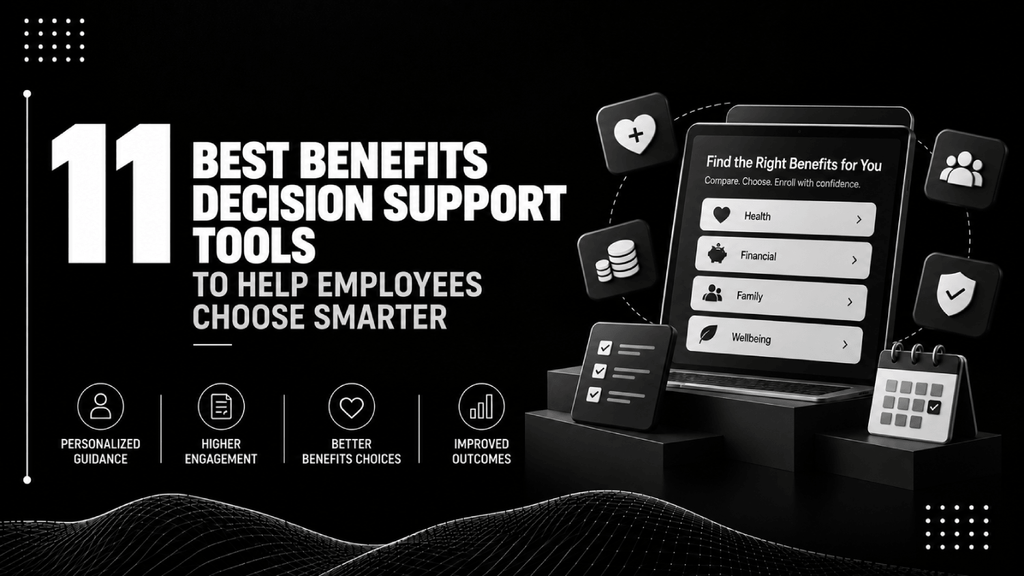
11 Best Benefits Decision Support Tools for Employers
1. Nayya
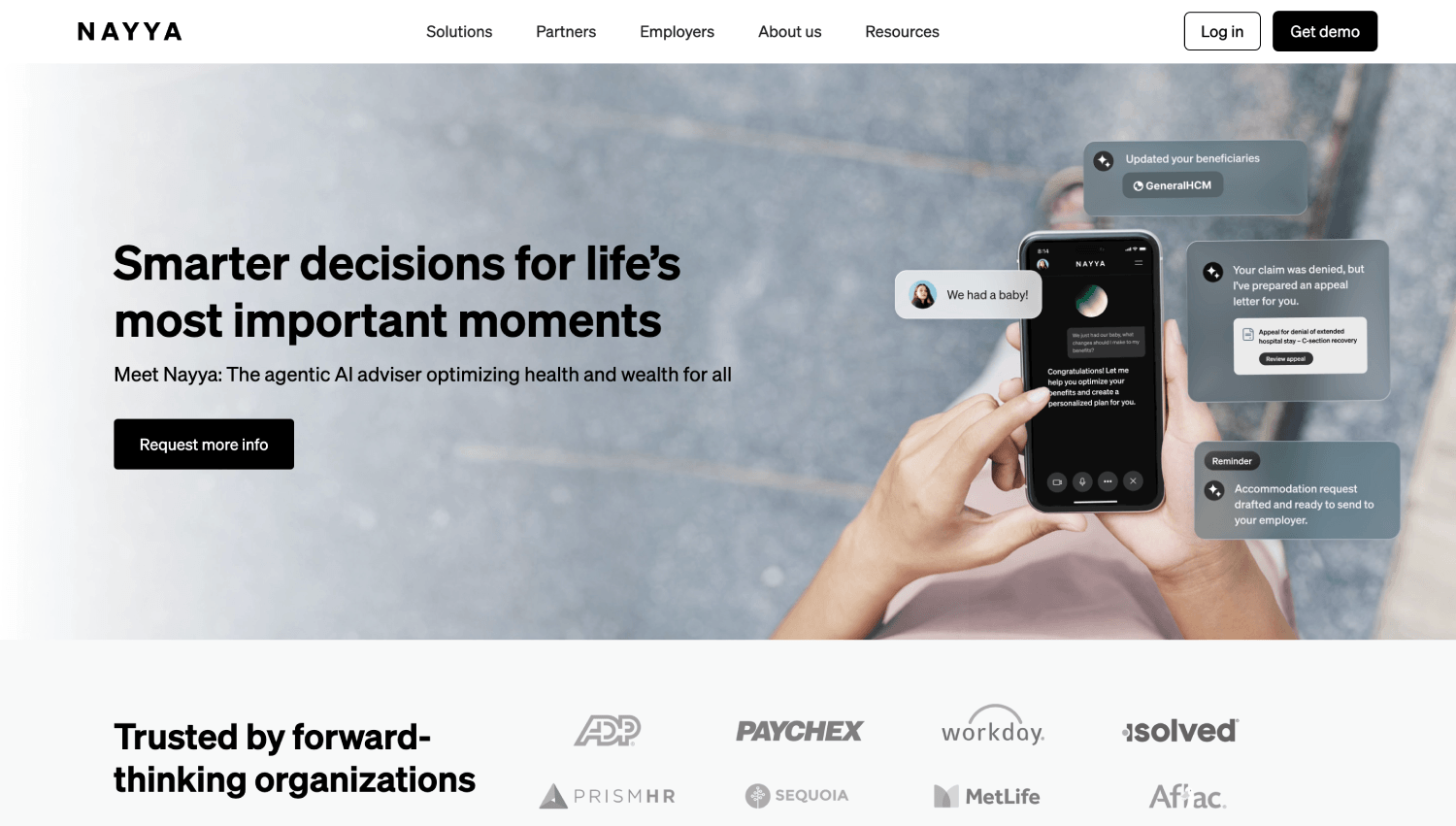
Nayya is the most data-connected tool in this category. It ingests claims data, plan design details, and employee demographics to generate a total cost projection for each available plan, then ranks them by expected annual spend for that specific employee. The recommendation includes a confidence score and a plain-English explanation of why one plan costs less than another for their situation.
Nayya integrates with most major benefits administration platforms including bswift, Benefitfocus, and Businessolver, and has built carrier data connections that reduce the reliance on survey inputs. The trade-off is that implementation takes longer than simpler tools. Pricing is quote-based and typically structured per employee per year. Nayya is the strongest choice for mid-market and enterprise employers who have access to claims data and want the highest recommendation accuracy.
2. Pasito
Pasito raised a $21 million Series A from Insight Partners and is building a financial wellness layer on top of benefits decision support. Where Nayya focuses on total health plan cost, Pasito extends into dependent care FSA optimization, HSA investment guidance, and supplemental benefit recommendations. The approach treats benefits selection as a financial planning decision, not just a plan comparison exercise.
Pasito’s model is particularly relevant for employers whose workforce has significant financial wellness gaps, because it connects benefits elections to take-home pay impact and savings outcomes, not just insurance cost. Integration with payroll and HRIS data is part of the value proposition. For employers running a employee financial wellness platforms shortlist alongside a decision support search, Pasito is the product that bridges both categories.
3. Businessolver Clarity
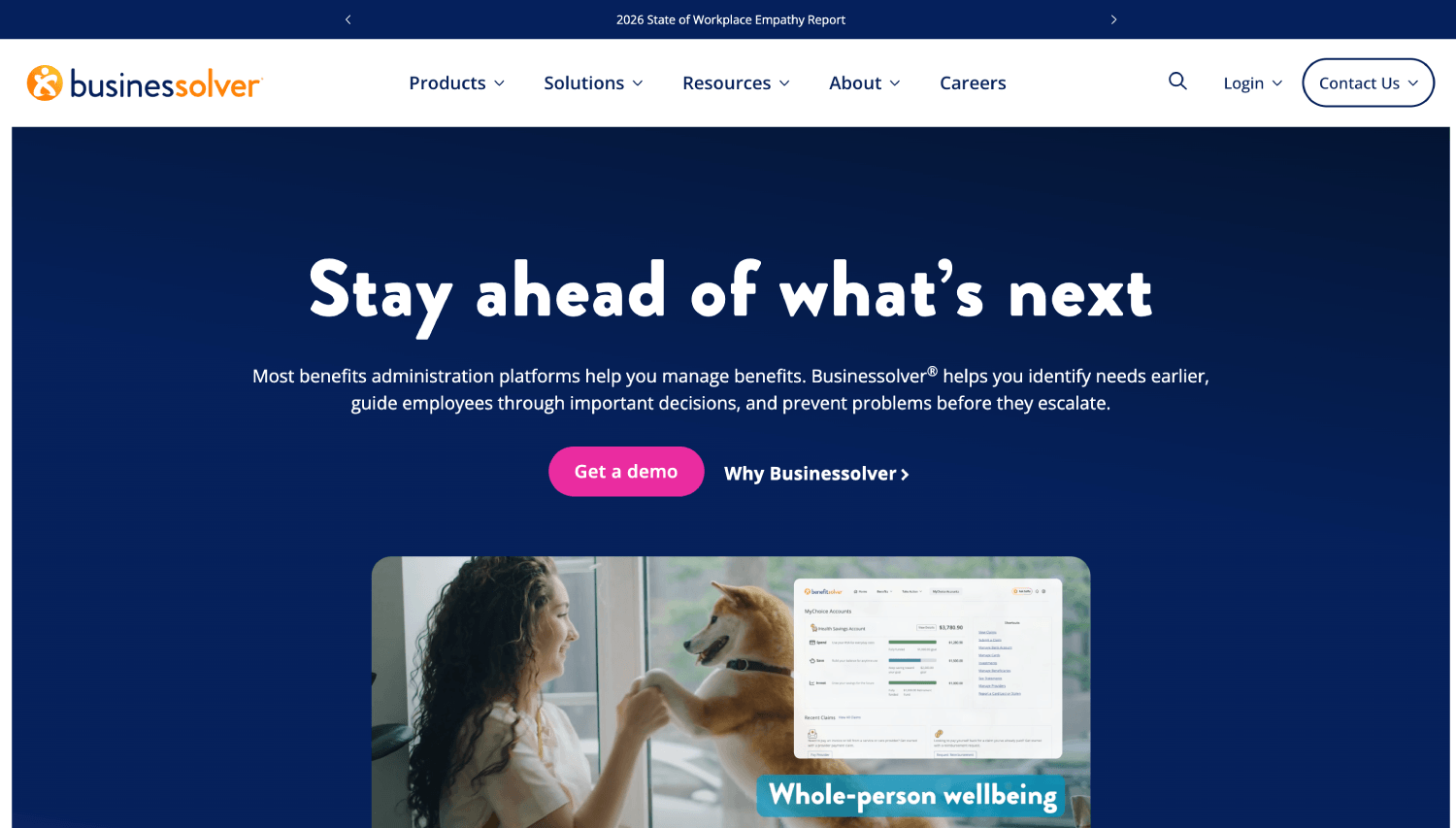
Businessolver Clarity is the decision support module built into the Businessolver benefits administration platform. If your organization already runs Businessolver for benefits admin, Clarity adds guided enrollment, plan comparison, and recommendation logic without a separate integration project. That is its core advantage: zero integration lift for existing Businessolver customers.
For employers not on Businessolver, Clarity is less compelling because you cannot get it standalone. The recommendation engine is solid but less claims-data-connected than Nayya. Clarity suits employers who prioritize speed to deploy and already have Businessolver in place.
4. Jellyvision ALEX
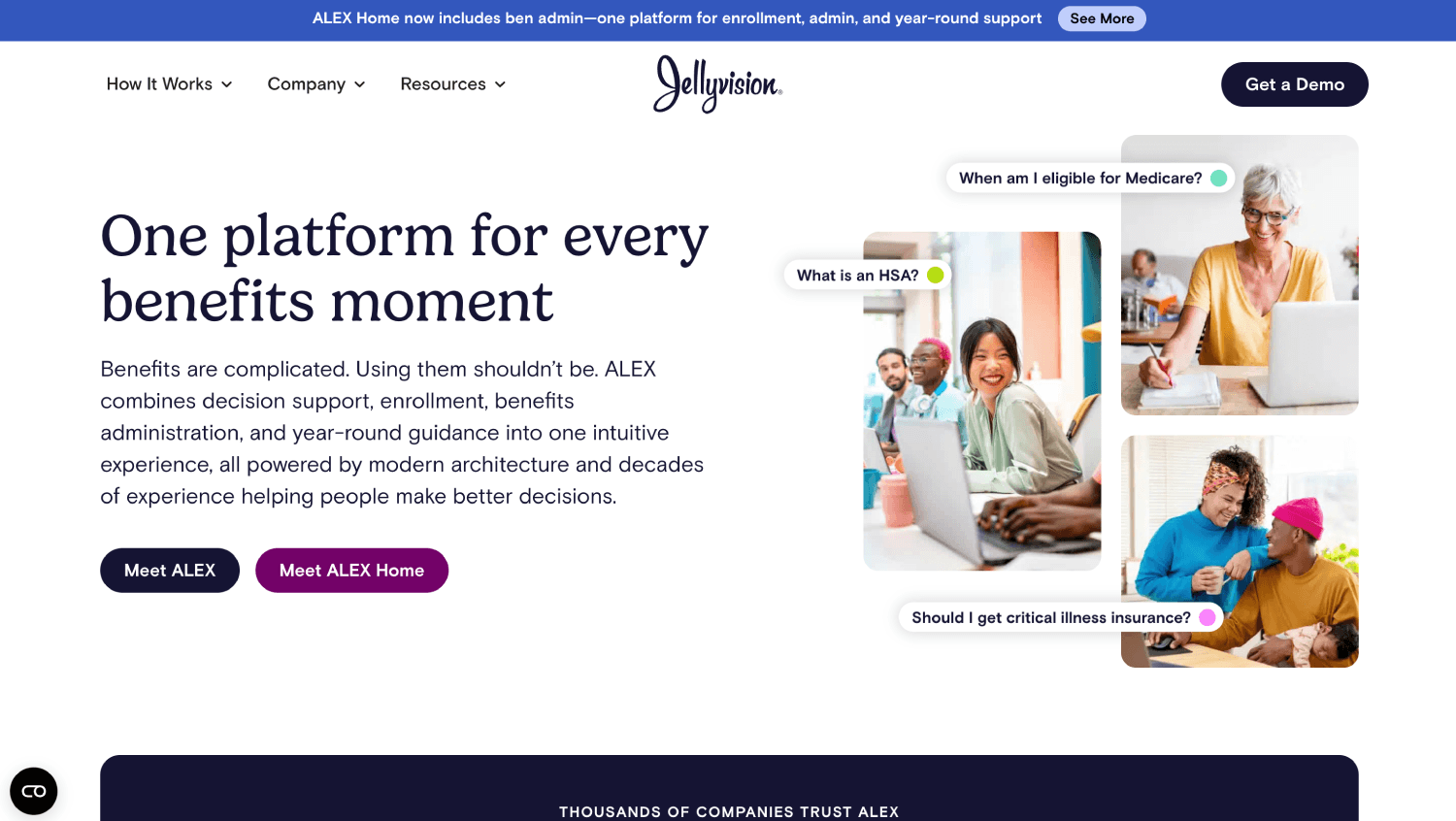
Jellyvision ALEX is the oldest and most widely deployed product in this category. It works as a conversational enrollment guide that walks employees through plan decisions using plain-language questions and animated explanations. ALEX is better at education than at precise total cost modeling. Employees who are confused about what a deductible is, or who have never understood how an HSA works, respond well to the format.
The limitation is depth. ALEX’s recommendation logic is less sophisticated than Nayya’s claims-connected modeling, and the platform has not kept pace with AI-native competitors on personalization. It remains the right tool when your primary problem is employee confusion and low engagement during enrollment, not election accuracy driven by cost optimization.
5. Picwell
Picwell (now jellyvision) builds a plan recommendation engine that uses actuarial modeling and employee-provided health utilization inputs to score plans by expected total cost. It integrates as an embedded widget inside existing benefits administration platforms, which keeps the employee experience inside the platform they are already using. Picwell is lighter to implement than Nayya and does not require claims data access, making it a strong option for employers who need to go live in 60 days or less.
The survey-based utilization input is the trade-off. Employees tend to underestimate their healthcare utilization, which means Picwell’s cost projections can skew optimistic. For most mid-market employers without claims data partnerships, that is still a significant improvement over no decision support at all.
6. Maxwell Health (now Sun Life U.S.)

Maxwell Health, now part of Sun Life U.S., combines benefits administration with embedded decision support for small and mid-size employers. The platform’s guided enrollment flow includes plan comparison and recommendation features alongside HDHP and HSA education. It is best suited for companies under 500 employees that want a single platform for both administration and decision support rather than two integrated systems.
7. PlanSource with Decision Support
PlanSource is primarily a benefits administration platform, but it includes a built-in plan recommendation module that uses employee inputs to surface plan comparisons. For PlanSource customers, this is a low-friction way to add basic decision support without a separate vendor relationship. The recommendation logic is less sophisticated than standalone tools, but it covers the fundamentals: premium comparison, deductible modeling, and HDHP versus PPO analysis.
8. Benefitfocus BenefitsPlace with Smart Recommendation
Benefitfocus has added decision support features to its marketplace experience, including plan comparison tools and recommendation prompts. Like PlanSource’s module, this is primarily useful for existing Benefitfocus customers. The integration is native, but the recommendation depth sits below what Nayya or Pasito deliver as purpose-built tools.
9. Benepass
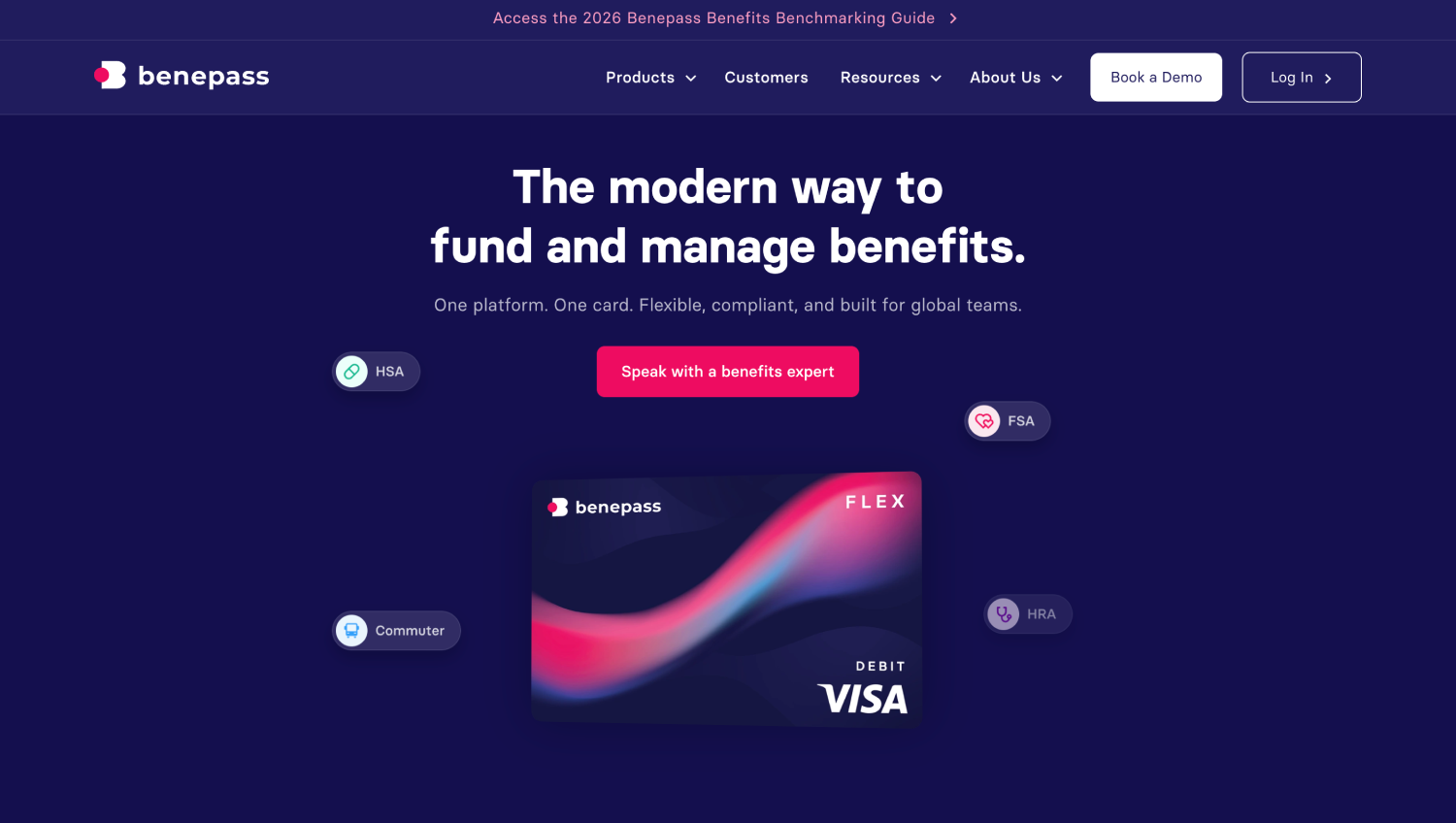
Benepass focuses on flexible benefit accounts, including lifestyle spending accounts, FSAs, and HSAs, and layers in guidance on how to use and optimize those accounts alongside core benefits enrollment. It is less of a plan selection recommendation engine and more of a post-enrollment financial wellness tool. Employers running complex multi-account benefit programs where employee activation is the problem, rather than plan selection accuracy, will find Benepass more useful than a traditional decision support tool.
10. Ideon (formerly Vericred) for Broker-Led Decision Support
Ideon is an infrastructure layer, not an employee-facing tool, but it belongs on this list for HR tech buyers who are evaluating the data plumbing behind decision support. Ideon provides the plan data APIs that many decision support tools use to pull accurate, current plan design details from carriers. If your benefits broker or admin platform is building or customizing a decision support experience, Ideon is often what makes accurate plan data possible at scale.
11. Your Benefits (by benefitexpress)
benefitexpress offers a guided enrollment experience called Your Benefits that includes side-by-side plan comparison, cost calculators, and educational content embedded in the enrollment flow. It integrates with the benefitexpress administration platform and targets mid-market employers who want a more guided enrollment experience without a full decision support overlay. The cost modeling is simpler than Nayya but more structured than most native admin platform comparison tools.
How Do These Tools Compare on the Features That Actually Matter?
| Tool | Claims Data Integration | Total Cost Modeling | HSA Education | Standalone or Embedded | Best Fit |
|---|---|---|---|---|---|
| Nayya | Yes (carrier/TPA connected) | Advanced | Yes | Standalone, integrates with admin | Mid-market to enterprise, accuracy-first |
| Pasito | Yes (payroll + HRIS connected) | Advanced with financial wellness | Yes, with savings modeling | Standalone, integrates with admin | Employers prioritizing financial wellness |
| Businessolver Clarity | Partial | Moderate | Yes | Embedded (Businessolver only) | Existing Businessolver customers |
| Jellyvision ALEX | No | Basic | Yes (educational) | Standalone or embedded | Employers with low benefits literacy |
| Picwell | No (survey-based) | Moderate (actuarial) | Yes | Embedded widget | Fast deployment, no claims data |
| PlanSource | No | Basic | Basic | Embedded (PlanSource only) | PlanSource customers wanting baseline guidance |
| Benefitfocus | No | Basic | Basic | Embedded (Benefitfocus only) | Benefitfocus customers, light use case |
| Benepass | No | Account-level | Yes (account activation) | Standalone | LSA/FSA/HSA activation problems |
| Maxwell Health | No | Moderate | Yes | Embedded (Maxwell platform) | Sub-500 employers on Maxwell |
| Ideon | Plan data API | Infrastructure only | No | API layer | Tech teams, brokers building tools |
| benefitexpress | No | Moderate | Yes | Embedded (benefitexpress only) | benefitexpress customers |
How Do Benefits Decision Support Tools Integrate With Benefits Administration Platforms?
Integration is the make-or-break question, and most buyers underestimate how much it affects the employee experience. The goal is a single enrollment flow where the decision support recommendation appears before the employee makes their election inside the admin platform. If those two experiences are disconnected, adoption drops sharply.
Standalone tools like Nayya and Picwell integrate via API or SSO into the benefits administration platform. The employee starts enrollment inside the admin platform, gets handed off to the decision support tool for their recommendation, then returns to the admin platform to confirm their election. When this handoff is smooth, employees do not notice the seam. When it is clunky, they skip the recommendation step entirely.
For a full picture of how these integrations work across HR systems, the guide on how HR systems integrate data flows between HRIS, payroll, and benefits covers the technical underpinnings that determine whether these connections are stable or fragile. Before signing a contract with any standalone decision support vendor, confirm in writing which version of your admin platform they have a live integration with, and ask for a reference from a customer running that exact configuration.
Do Benefits Decision Support Tools Actually Reduce Over-Insurance?
Yes, with a specific mechanism worth understanding. Over-insurance in the US benefits context typically means employees choosing rich PPO plans when an HDHP would cost them less in total annual spend. The PPO feels safer because the premium difference is visible and the deductible risk is not. Decision support tools make the deductible risk concrete by modeling it against the employee’s expected utilization.
When an employee sees that their expected total cost in the PPO is $3,200 versus $1,900 in the HDHP plus HSA contributions, the PPO stops feeling safer. It just feels more expensive. That shift in framing is what drives HDHP adoption and reduces employer premium cost alongside employee cost. The tools do not manipulate employees toward the cheaper plan for the employer’s benefit; they show employees what their actual out-of-pocket exposure looks like in both scenarios.
Election accuracy is the related benefit. Employees who waive dependent coverage that they actually need, or who fail to elect supplemental life insurance before a qualifying event forces them to go through underwriting, create downstream HR problems and financial harm. Decision support tools that surface these gaps during open enrollment reduce both problems.
What Should HR Teams Ask Before Buying a Benefits Decision Support Tool?
Start with your admin platform. Ask the decision support vendor specifically which version of your admin platform they have a certified integration with, and how that integration is maintained when the admin platform releases updates. This is where deals go sideways post-signature.
Ask how utilization data is sourced. If the vendor uses survey inputs, ask what the average error rate is between projected and actual cost for employees on their platform. If they use claims data, ask which carriers and TPAs they have data agreements with, and confirm yours is on the list.
Ask about the employee experience on mobile. A significant share of employees complete enrollment on a phone. Recommendation flows that work on desktop but break on mobile lose adoption where it matters most. Request a live demo on a mobile device, not a screenshot.
Ask about the reporting layer. Knowing that 68% of employees followed the recommended plan is useful. Knowing that HDHP adoption increased by 14 percentage points in year one and what that meant for total premium cost is what your CFO will ask for. If the tool cannot produce that analysis, you will be building it manually in a spreadsheet. Given how often HR teams are already doing this, reviewing the 75-question HR software buying checklist before entering procurement will save you from missing these questions under deadline pressure.
How Much Do Benefits Decision Support Tools Cost?
Most purpose-built tools in this category use a per-employee-per-year pricing model. Nayya and Pasito are both quote-only based on workforce size, plan complexity, and integration scope. Picwell’s pricing is also quote-based. None of the major purpose-built tools publish a public price list.
Embedded modules inside admin platforms like Businessolver Clarity or PlanSource’s decision support features are typically included in the platform contract or available as an add-on at a negotiated rate. For employers already on those platforms, the embedded option often wins on total cost even if the recommendation quality is lower.
Budget framing: think about the per-employee cost of the tool relative to the per-employee premium savings if HDHP adoption increases. For most employers, a single percentage point shift in HDHP adoption across a workforce of 500 recovers the annual cost of a standalone decision support tool many times over. The ROI math is favorable when the tool is implemented correctly and adoption is high.
For reference on how benefits administration costs fit into the broader HR software budget, the HR software pricing guide covers what HRIS, payroll, and benefits platforms actually cost at different company sizes. If you are also evaluating the hidden per-employee fees that vendors do not advertise upfront, the hidden costs of HR software breakdown is worth reading before you finalize any benefits tech contract.
Which Benefits Decision Support Tool Is Best for Mid-Market Employers?
For mid-market employers between 200 and 2,000 employees, the decision usually comes down to three scenarios. If you have access to claims data and want the highest recommendation accuracy, Nayya is the clearest choice. If financial wellness is a strategic priority alongside plan selection, Pasito’s broader scope justifies the implementation investment. If you need something live in 60 days and your admin platform does not have a native module, Picwell deploys faster than either.
Employers already on Businessolver should evaluate Clarity before adding a separate vendor. The integration advantage outweighs the recommendation depth gap for most mid-market use cases. The same logic applies to PlanSource and Benefitfocus customers evaluating their native modules.
If your primary problem is that employees do not understand their benefits at all, rather than that they are making a suboptimal financial choice, ALEX addresses that specific problem better than any of the AI-native tools. But the two problems are not the same, and most mature employers need both education and accurate recommendation, which is where Nayya and Pasito’s combined approach becomes worth the complexity.
Frequently Asked Questions About Benefits Decision Support
What is benefits decision support software?
Benefits decision support software helps employees choose the right health plan during open enrollment by modeling their total annual cost across each available plan. It uses employee demographics, expected healthcare utilization, and plan design data to generate a personalized plan recommendation. It sits on top of a benefits administration platform and changes which plan an employee elects, rather than processing the election itself. Leading tools include Nayya, Pasito, Picwell, and Jellyvision ALEX.
Is a benefits administration platform the same as a decision support tool?
No. A benefits administration platform handles eligibility management, carrier data feeds, premium deductions, and election processing. It is a transaction system. A decision support tool analyzes employee health utilization, income, and plan design to recommend the plan with the lowest expected total cost for that specific employee. Some admin platforms include basic comparison features, but these are not the same as a plan recommendation engine with total cost modeling.
Do decision support tools reduce employer benefits costs?
Yes, primarily by increasing HDHP adoption among employees for whom the HDHP is the financially superior choice. Employers pay lower premiums on HDHP plans. When a decision support tool shows employees that their total annual cost is lower in an HDHP than a PPO, HDHP adoption increases, which reduces the employer’s premium outlay alongside the employee’s total cost. The effect compounds over multiple enrollment cycles as employees stay in the plan that fits their utilization pattern.
How long does it take to implement a benefits decision support tool?
Implementation timelines vary by tool and integration complexity. Embedded modules inside existing admin platforms like Businessolver Clarity can be configured in a few weeks. Standalone tools like Nayya that require carrier data connections and admin platform integration typically take eight to sixteen weeks. Picwell, which uses survey-based inputs and deploys as an embedded widget, can go live faster, often in four to eight weeks. Plan to start implementation no later than twelve weeks before your open enrollment window opens.
Can decision support tools handle dependent coverage and family plan modeling?
Yes, the better tools model dependent coverage as part of the total cost calculation. Adding a spouse or child changes deductibles, out-of-pocket maximums, and premium tiers, which can shift which plan is optimal. Tools like Nayya and Pasito include dependent configuration in their recommendation logic. Simpler tools often default to individual coverage modeling with a manual override for family tiers, which reduces recommendation accuracy for employees with dependents.
What data does a benefits decision support tool need to work?
At minimum: employee demographics, available plan designs, and premium tiers. For survey-based tools, employee self-reported utilization inputs (anticipated doctor visits, prescriptions, planned procedures). For claims-connected tools like Nayya, historical claims data from carriers or a third-party administrator. Integration with HRIS or payroll data allows income-based financial wellness modeling. The more data the tool can access, the more accurate the recommendation, with the trade-off that richer data connections take longer to implement.
How do I measure whether my decision support tool is working?
Track four metrics: recommendation acceptance rate (what percentage of employees followed the tool’s top recommendation), HDHP adoption rate change year over year, election error rate (employees who need to correct elections after open enrollment closes), and HSA contribution activation rate. A well-implemented tool should show recommendation acceptance above 50% in year one and HDHP adoption movement of at least several percentage points. If neither metric moves, the problem is usually enrollment experience friction, not the recommendation quality. Connecting these outcomes to cost data is covered in the guide on connecting workforce cost and productivity for CFOs, which applies directly to benefits spend analysis.
Should smaller companies (under 200 employees) use decision support tools?
Most purpose-built tools target employers above 200 employees. Below that threshold, the per-employee economics are harder to justify with standalone tools. Smaller employers are better served by embedded decision support within their benefits administration platform, or by working with a benefits broker who conducts guided enrollment sessions. Maxwell Health and PlanSource both serve smaller employers with light decision support features. Pasito’s financial wellness angle can also make sense for smaller, higher-compensation workforces where the per-employee savings from optimized elections are significant.
The Decision That Determines Everything Else
Before evaluating any vendor in this category, answer one question honestly: do your employees make suboptimal plan choices because they do not understand their options, or because they lack the cost modeling to see which option is right for them? The first problem is an education problem, and ALEX or a well-designed enrollment guide solves it. The second is a data problem, and Nayya or Pasito solves it. Most mid-market employers have both problems, which is why the AI-native tools that combine personalized recommendation with plain-language explanation outperform pure education tools on adoption metrics over time.
The integration question is the operational one. A decision support tool that employees do not see inside their enrollment flow is a tool they will not use. Before signing anything, confirm the integration with your specific benefits administration platform works end-to-end in a test environment. Ask your HRIS implementation partner or benefits broker whether they have seen the integration work for a comparable employer. References from similar configurations are worth more than any demo.
Open enrollment cycles are annual and unforgiving. Buying this category three months before your window opens is the right timeline. Buying it six months out gives you time to integrate, test, and train employees on what to expect. The employers who treat decision support as an enrollment season afterthought get afterthought results.