
HR Tech SaaS may earn a commission when you buy through links on this page. Our recommendations are editorial and never paid for.
A note on scope: This article is written for HR software companies and HRtech SaaS vendors evaluating content marketing agencies, specifically marketing leaders, founders, and growth teams at HR tech companies who need to build pipeline through content. It is not written for HR leaders evaluating HR software. If you are an HR buyer evaluating HR tools, the HR software buying checklist or the AI HR vendor evaluation checklist will be more useful starting points.
- Most HRtech content agencies publish blogs. The ones worth hiring build content that moves buyers through a pipeline: category education, comparison pages, BOFU conversion assets, and sales enablement materials.
- HRtech buyers are sophisticated. They read before they talk to sales. An HRtech content marketing agency that does not understand HRIS, ATS, EOR, or payroll compliance cannot write the comparison content that earns their trust.
- The agencies on this list were selected for domain depth, content strategy capability, and measurable pipeline impact, not just writing volume or publishing frequency.
- Pricing varies significantly. Most specialist agencies are quote-based. Budget for strategy, not just production, if you want content that closes deals.
- The best HRtech content marketing agency for a 10-person startup building an ATS is different from the best agency for an enterprise HCM company repositioning against Workday. Fit matters more than reputation.
The best content marketing agencies for HRtech SaaS companies combine deep HR domain knowledge with buyer-intent mapping, category education strategy, and bottom-of-funnel conversion content. Top options include Concurate, Optimist, Walker Sands, Red Branch Media, and several specialist B2B SaaS content shops. The right fit depends on your stage, category complexity, and whether you need thought leadership, comparison SEO, or sales enablement content.
Why Most HRtech Content Programs Fail to Generate Pipeline
The typical HRtech content program publishes two blog posts per week, covers industry news, and wonders why organic traffic does not convert. The problem is not the volume. HR buyers, whether CHROs evaluating a new HCM platform or founders picking their first payroll tool, do their research in a specific sequence: they learn what the category is, they compare vendors, and they look for proof that a tool works for someone like them. Most HRtech blogs only serve the first step.
Category education content, explaining what talent intelligence actually does, or why an EOR differs from a PEO, earns top-of-funnel traffic but rarely drives demos. Comparison content and alternatives pages are where pipeline gets built. These pages require an HRtech content marketing agency that understands your product category well enough to write credibly about your competitors, which most generalist content shops cannot do. Buyers are running structured evaluations, and your content needs to show up at every decision stage.
Sales enablement content sits in the third bucket: battle cards, ROI calculators, one-pagers that reps send before a demo. This is almost never built by the agencies HRtech companies hire, because most marketing briefs say “publish content” rather than “build pipeline assets.” The agencies worth using are the ones that push back on that framing.
What Should You Actually Evaluate in an HRtech Content Marketing Agency?
Domain knowledge comes first. An agency writing about payroll software should understand multi-state compliance, direct deposit timing, and why HR leaders choose a PEO before they scale. If their writers need two weeks to ramp on your product category, they are not a specialist HRtech content marketing agency, regardless of what their homepage says.
Buyer-intent mapping is the second filter. A good HRtech content marketing agency will ask you which queries your buyers type at each stage of evaluation, not just which topics you want to rank for. There is a significant difference between an article targeting “what is an ATS” and one targeting “Greenhouse vs Ashby for Series B startups.” The first builds awareness. The second closes deals. Agencies that cannot distinguish between these two content types will burn your budget on traffic that never converts.
BOFU content production capability is the third. Can the agency write credible vendor comparison pages, alternatives content, and product-specific landing pages? These require understanding of your product’s actual strengths, your competitors’ weaknesses, and the objections buyers raise in sales calls. Ask any agency you evaluate to show you live examples of comparison or alternatives pages they have written for a SaaS company in an adjacent B2B category.
The 10 Best Content Marketing Agencies for HRtech SaaS Companies
1. Concurate
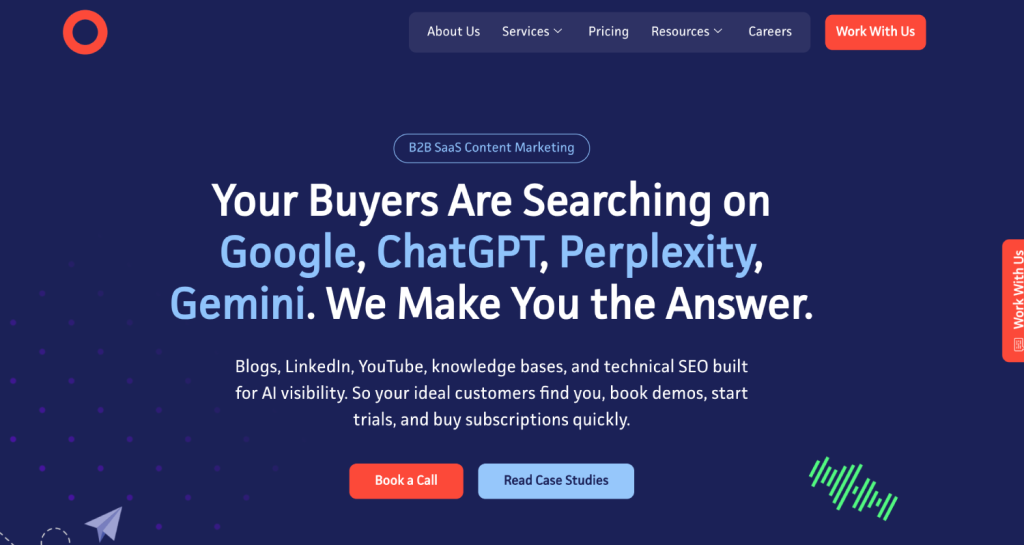
Concurate positions itself specifically as an HRtech content marketing agency focused on pipeline outcomes: sign-up activations and demo requests. That is a more specific claim than most content agencies make, and their published case studies reflect it. They write for the buyer journey, not the editorial calendar.
Their work covers category education through to BOFU conversion content, and they have hands-on experience with the HRtech buyer’s vocabulary. For an HR SaaS company trying to build comparison and alternatives pages that rank and convert, Concurate is one of the few agencies that understands what that work actually requires. Pricing is quote-based. Contract minimums are not publicly disclosed; request a scope conversation before assuming fit.
2. Optimist
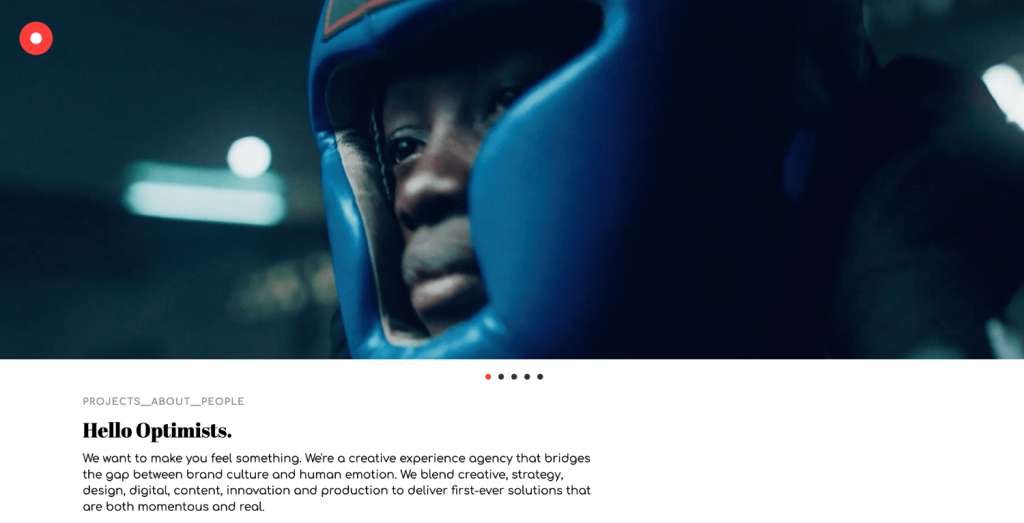
Optimist specializes in benefits, wellness, and HR tech content marketing. Their stated focus is on companies building toward people-first outcomes, which in practice means they work with HR software companies that want editorial depth rather than high-volume blog production. They are one of the few agencies on this list with a published positioning specific to the HR and benefits category.
Optimist’s strength is long-form content strategy: building the content architecture around a category before writing a single article. For HRtech companies still working out their content positioning, this strategic-first approach is more valuable than a high-output content mill. Pricing is not publicly listed. Engagement lengths and team structure are available on request.
3. Walker Sands

Walker Sands is a full-service B2B technology marketing agency with a dedicated HR tech practice. Their services span PR, branding, demand generation, and content, which makes them a stronger fit for mid-market and enterprise HRtech companies that need an integrated marketing partner rather than a content-only shop.
The trade-off is scale. Walker Sands is built for established HR tech vendors with meaningful marketing budgets. An early-stage HRtech startup looking for a lean content program will likely find them overbuilt and expensive. For Series C and beyond, or for a company refreshing its brand alongside its content strategy, they are a credible option. Pricing is quote-based; expect minimums consistent with a full-service agency engagement.
4. Red Branch Media
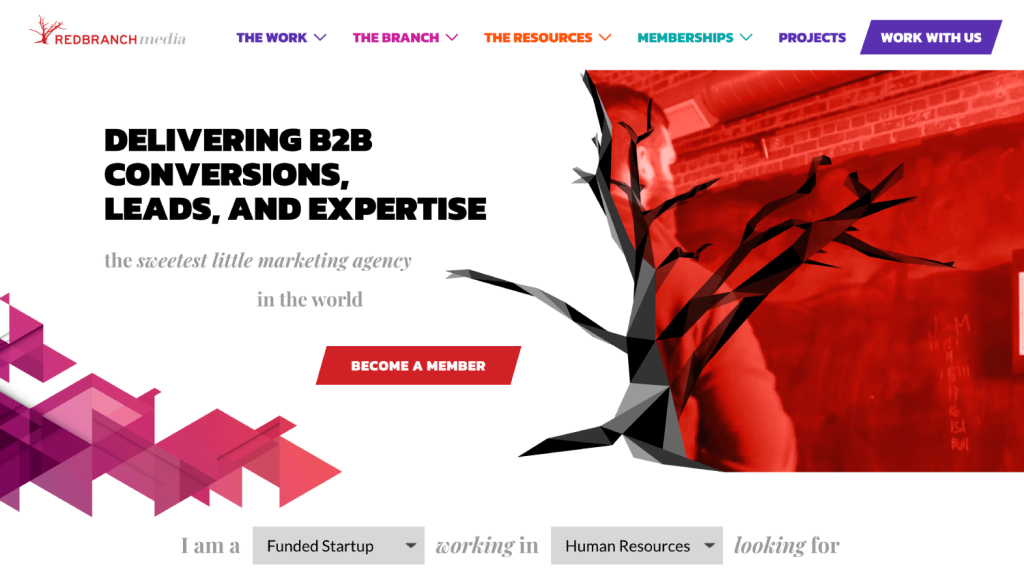
Red Branch Media has operated in the HR tech marketing space since 2010 and has worked with more than 70 HR tech brands, by their own account. That longevity matters: they have seen multiple product generations, understand the HR buyer’s skepticism toward vendor content, and have built relationships across the HRtech analyst and media space.
Their services include content, social, and lead generation. For HRtech companies that want a specialist HRtech content marketing agency with genuine market relationships rather than just writing production, Red Branch is worth evaluating. Their longevity also means they understand category nuances that newer content shops miss. Pricing is quote-based; they do not publish contract minimums or retainer ranges publicly.
5. Team 4
Team 4 describes itself as an HR tech digital marketing agency focused on inbound lead generation through SEO and evergreen content rather than paid acquisition. That is a specific and defensible strategic position: sustainable organic growth through content that keeps working after you publish it.
They are more visible in the UK market, which matters if your HRtech product targets European buyers or if you are operating under GDPR-sensitive content requirements. For US-first companies, they are still worth evaluating if the content strategy brief is SEO-heavy and the paid marketing budget is limited. Pricing is not publicly listed.
6. Animalz
Animalz is not HRtech-specific, but they are one of the most credible B2B SaaS content agencies operating today. Their model is built around strategic content, strong editorial quality, and measurable pipeline outcomes rather than volume. Several HR and workforce tech companies have used them for content programs, and their quality bar is higher than most specialist agencies.
The case for Animalz over a specialist HRtech content marketing agency comes down to writing quality and strategic rigor. If your product category is complex, talent intelligence, workforce planning AI, or enterprise HCM, you need writers who can learn fast and produce authoritative content. Animalz has that capability. Pricing is quote-based and positioned toward funded SaaS companies with established content budgets.
7. Uplift Content
Uplift Content focuses specifically on SaaS companies and produces case studies, blog content, and ebooks. Their positioning is around SaaS content rather than HRtech specifically, but their operational model, dedicated writers, structured brief process, and revision cycles, is built for the B2B SaaS production reality.
For HRtech companies that need reliable, well-edited content production with SaaS fluency rather than deep HRtech domain expertise, Uplift Content fills a gap. They are a better fit for companies whose content strategy is already mapped and who need execution capacity rather than strategic input. Pricing details are available on request.
8. Grow and Convert
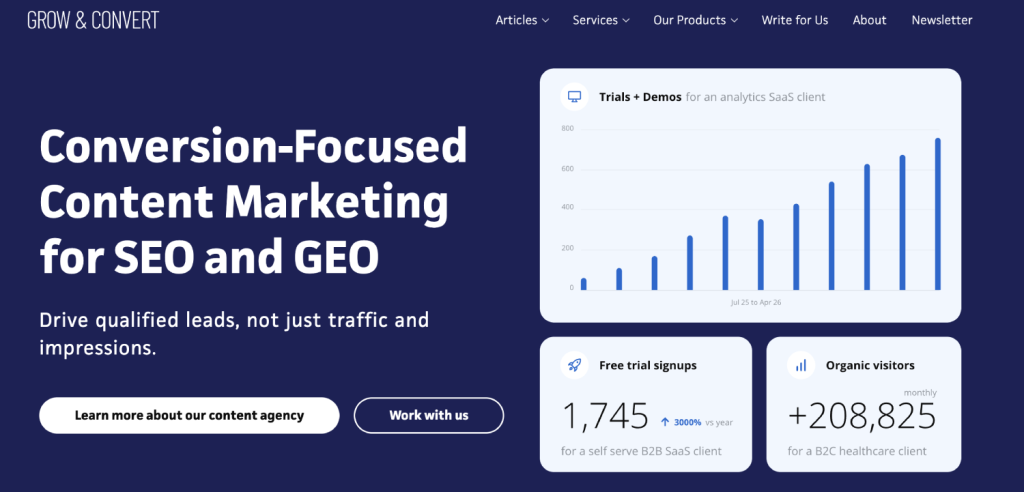
Grow and Convert has published extensively on their Pain Point SEO methodology, which targets high-intent queries buyers type when they are close to a purchase decision rather than top-of-funnel informational searches. For HRtech companies, this means content targeting queries like “best payroll software for 50-person company” rather than “what is payroll software.”
This is exactly the buyer-intent logic that most HRtech content programs get wrong. Grow and Convert’s public methodology documents are worth reading even if you do not hire them, because the framework applies directly to how you should be building your HRtech content architecture. Pricing is quote-based and their client list is selective.
9. Omniscient Digital
Omniscient Digital focuses on content strategy and SEO for B2B SaaS companies, with a track record of building content programs that rank and convert. Like Grow and Convert, they are not HRtech-specific, but they have worked with B2B SaaS companies across categories that require technical domain depth.
Their strength is content strategy architecture: building the topic map, identifying the high-value queries, and sequencing content production to build topical authority before chasing competitive terms. For an HRtech company starting a content program from scratch, this structural approach pays off faster than producing arbitrary blog posts. Pricing is quote-based.
10. Spinutech
Spinutech has a published practice area around HR SaaS marketing strategy. Their approach positions content within a broader demand generation framework rather than as a standalone channel, which is the right way to think about content at the growth stage. They cover content production alongside paid and analytics integration.
For HRtech companies that want their content program measured against pipeline metrics rather than traffic metrics, Spinutech’s integrated framing is useful. They are worth evaluating if your marketing team wants a single agency managing content strategy alongside performance measurement. Pricing is quote-based.
How Do These Agencies Compare Side by Side?
| Agency | HRtech Specialization | Best For | Content Depth | BOFU Capability | Pricing |
|---|---|---|---|---|---|
| Concurate | HRtech-specific | Pipeline-focused HR SaaS | High | Strong | Quote-based |
| Optimist | HR and benefits-specific | Strategic content architecture | High | Moderate | Quote-based |
| Walker Sands | B2B tech, HR practice | Mid-market to enterprise | High | Strong | Quote-based |
| Red Branch Media | HRtech-specific | Established HR vendors | High | Moderate | Quote-based |
| Team 4 | HRtech-specific | UK/EU inbound growth | Moderate | Moderate | Quote-based |
| Animalz | B2B SaaS generalist | Complex product categories | Very High | Strong | Quote-based |
| Uplift Content | SaaS generalist | Production capacity at scale | Moderate | Moderate | Quote-based |
| Grow and Convert | B2B SaaS generalist | High-intent BOFU SEO | High | Very Strong | Quote-based |
| Omniscient Digital | B2B SaaS generalist | Content program from scratch | High | Strong | Quote-based |
| Spinutech | HR SaaS marketing | Integrated demand gen | Moderate | Moderate | Quote-based |
What Content Types Actually Move HRtech Buyers Through a Pipeline?
Category education content, vendor comparison pages, alternatives content, and sales enablement assets each serve a different stage of the HRtech buying cycle. Most companies fund the first type and underinvest in the last three. The math on that choice is bad: top-of-funnel content attracts the broadest audience but the lowest purchase intent, while comparison and alternatives pages attract buyers who are already evaluating vendors.
Vendor comparison pages are the highest-converting content type in most HRtech categories. Buyers searching “Rippling vs Gusto” or “HiBob vs BambooHR” have already decided to buy something. They want help picking. An HRtech content marketing agency that can write credible, accurate comparison content for your category, without puffery and without ignoring your competitors’ genuine strengths, will generate more pipeline per published piece than any amount of thought leadership. That requires real product knowledge, not just marketing familiarity.
Alternatives content, such as “best Workday alternatives” or “alternatives to Greenhouse,” captures buyers in a competitive replacement cycle. These are high-value searches with clear purchase intent. The best AI sourcing tools and LinkedIn Recruiter alternatives page is a useful reference point for how this content type works in practice: it serves the buyer who has already decided the current tool is not working and wants a structured comparison of what comes next.
Sales enablement content rounds out the asset library. Battle cards, ROI frameworks, objection-handling one-pagers, and product-specific landing pages are not “content marketing” in the traditional sense, but they are the materials that close the deals your content attracts. Few content agencies build these proactively. The ones that ask about your sales process during the discovery call are worth prioritizing.
Which HRtech Content Agency Should You Choose at Each Growth Stage?
At the seed and pre-Series A stage, your priority is category education and building the foundational content that explains what your product does and why someone should care. Uplift Content or Omniscient Digital can build that foundation without requiring you to manage a large agency relationship. You need structure and quality, not market relationships.
At Series A to Series B, the priority shifts to comparison and alternatives content, because you now have competitors worth comparing against and buyers actively running evaluations. Concurate, Grow and Convert, or Animalz are strong fits here: all three understand buyer intent mapping and can build the BOFU pages that influence late-stage pipeline. This is also the stage where content that helps buyers structure their own decision, a format the AI HR vendor evaluation checklist exemplifies, becomes a high-value asset type to produce.
Post-Series B and at enterprise scale, the content program needs to work across multiple buyer personas: CHROs, HR ops leaders, finance leads, and sometimes IT or legal. Walker Sands or Red Branch Media are better equipped for this complexity, because they bring market relationships, analyst connections, and multi-channel campaign capability alongside content production. At this stage, you are not just building traffic. You are building brand authority in a category.
What Makes HRtech Content Different From Regular B2B SaaS Content?
HR software buyers are cautious. A bad HRIS implementation disrupts payroll. A flawed ATS damages hiring velocity. HR leaders have been burned by over-promised software before, and they bring that skepticism to every vendor evaluation. Content that glosses over complexity or avoids naming real trade-offs reads as marketing, not as information. It gets ignored.
HRtech buyers are also evaluating across multiple dimensions simultaneously: compliance requirements, integration depth, implementation complexity, and ongoing support quality. Content that addresses only the feature set while ignoring compliance implications, data residency, or change management will not resonate with a CHRO running a serious evaluation. The Workday AI vs SAP Joule vs Oracle AI comparison is a useful reference point: that is the level of depth enterprise HRtech buyers expect from content before they engage a sales team.
Additionally, the HRtech category is moving fast. Talent intelligence platforms, AI-powered sourcing tools, and predictive people analytics are reshaping what HR software does. An HRtech content marketing agency that last researched the space three years ago will produce content that misrepresents current product capabilities. Ask any prospective agency to name three companies in your specific HRtech subcategory and describe what differentiates them. The quality of that answer will tell you more than any case study.
How Should You Structure a Content Brief for an HRtech Content Agency?
A good content brief tells the agency three things: who the buyer is, where they are in the buying process, and what they should believe after reading the piece. Most HRtech content briefs only specify the topic and the keyword. That produces content that ranks but does not convert.
Specify the buyer persona with operational precision. “HR leader” is not a persona. “VP of HR at a 400-person B2B software company evaluating their first enterprise HRIS after outgrowing Gusto” is a persona. The more specific the brief, the more specific the content, and the more useful it is to an actual buyer.
Define the conversion goal. Every piece of content should have one: drive a demo request, generate a content download, move a prospect from category-aware to vendor-evaluating. Without a defined goal, agencies default to producing content that is comprehensive but not directional. Comprehensive content earns traffic. Directional content earns pipeline.
Is Hiring a Specialist HRtech Content Agency Always Better Than a Generalist?
For categories with high buyer sophistication, AI-powered people analytics, talent intelligence, or enterprise HCM, a specialist agency’s domain knowledge produces meaningfully better content. Buyers in these categories will immediately recognize when a writer does not understand the product. That recognition ends the credibility of the content.
For simpler or newer categories, a strong generalist B2B SaaS content agency can close the knowledge gap faster than you might expect, provided the onboarding is structured and the subject matter expert time is available internally. The risk is not ignorance. The risk is confident incorrectness: an agency that does not know what they do not know about your product category.
Specialist versus generalist is often the wrong frame. The more useful question is: does this agency’s content strategy process ask the right questions before they write anything? Agencies that start by building keyword lists are production-first. Agencies that start by interviewing your sales team and reviewing lost deal notes are strategy-first. The latter produces content that makes buyers want to talk to you. For HRtech companies building around AI-powered people analytics platforms or emerging AI tools, the strategy-first approach is the only way to build content that keeps pace with how fast the category is moving.
Frequently Asked Questions
What is HRtech content marketing, and how is it different from standard B2B content marketing?
HRtech content marketing creates content specifically for HR software buyers: CHROs, HR ops leaders, founders, and people ops teams evaluating payroll, HRIS, ATS, talent management, or AI HR tools. It differs from standard B2B content because the buyer is simultaneously evaluating product functionality, compliance requirements, and implementation risk. Content that does not address all three will not credibly serve buyers running a real evaluation. Domain knowledge is not optional.
What types of content generate the most pipeline for HRtech SaaS companies?
Vendor comparison pages and alternatives content generate the highest purchase-intent traffic in most HRtech categories, because buyers searching these queries have already decided to buy something. Category education content builds awareness at scale but converts slowly. Sales enablement assets, including ROI calculators, battle cards, and objection-handling one-pagers, close deals that inbound content attracts. A complete HRtech content program needs all three types, not just a blog.
How much does an HRtech content marketing agency typically cost?
Every agency on this list is quote-based, meaning they do not publish public pricing. Specialist HRtech content marketing agencies and strategic B2B SaaS content shops typically work on monthly retainers. The range varies significantly by scope, from a focused content production engagement to a full strategy-plus-production program. Ask any agency to define exactly what is included in their retainer, specifically whether strategy, keyword research, content briefs, writing, editing, and publishing support are bundled or priced separately. Ask about contract minimums and typical engagement lengths before scoping a project.
How do I evaluate whether an HRtech content agency understands my product category?
Ask them to name three direct or adjacent competitors in your specific HRtech subcategory and explain what differentiates each. Ask them which search queries your buyers type when they are 30 days from a purchase decision, not 90 days out. Ask to see live examples of comparison or alternatives pages they have published for a SaaS company. If they struggle with any of these questions, their domain knowledge is shallow regardless of what their client logo bar shows.
Should an early-stage HRtech startup hire a content agency or build content in-house?
At the seed stage, in-house content from a founder or head of product who genuinely understands the buyer often outperforms agency-produced content in terms of credibility. Agencies add the most value when there is enough internal subject matter expertise to brief them well and enough content volume required that production is the constraint, not strategy. For most HRtech startups, that inflection point arrives somewhere between Series A and Series B.
Can a content agency help with HRtech sales enablement, or just blog content?
Most content agencies default to blog production unless you explicitly scope for sales enablement. The agencies best positioned to build sales enablement assets, battle cards, competitive one-pagers, ROI frameworks, and demo-prep materials, are the ones that ask about your sales process during discovery. If an agency does not ask how your sales team uses content in deals, they will not build content that serves that function. Scope it explicitly in any engagement.
What is the difference between an HRtech content marketing agency and an HRtech SEO agency?
An HRtech SEO agency prioritizes search visibility: keyword research, technical optimization, link building, and ranking improvements. An HRtech content marketing agency prioritizes the quality and strategic structure of the content itself: buyer journey mapping, content types that convert, and editorial depth. In practice, the best content agencies incorporate SEO strategy, but an SEO-only agency will often treat content as a ranking mechanism rather than a buyer persuasion tool. For pipeline impact, content strategy leads and SEO serves it, not the other way around. See the best HRtech SEO agencies for options focused specifically on the technical and organic visibility side.
How long does it take to see pipeline results from HRtech content marketing?
Category education and top-of-funnel content typically takes six to twelve months to build meaningful organic traffic. BOFU content, comparison pages, alternatives articles, and buyer-intent landing pages can show pipeline impact faster, particularly if the pages are targeting queries with existing search volume. Agencies that promise faster results without explaining how are typically trading short-term traffic for long-term authority. Set a twelve-month horizon and measure pipeline attribution quarterly.
How to Make the Final Call on an HRtech Content Marketing Agency
The selection process for a content agency should mirror the process your buyers use to evaluate HR software. You are assessing domain knowledge, strategic capability, and fit with your internal operating model. An HRtech content marketing agency that produces excellent content for a payroll startup may be wrong for a talent intelligence platform targeting enterprise CHROs. The category complexity, buyer sophistication, and pipeline stage all shape what “good content” means for your company specifically.
Before signing with any agency, run one paid test project: a single comparison page or alternatives article targeting a high-intent query in your category. The output will tell you more about an agency’s actual capability than their case studies will. If they write about your product category with precision, acknowledge competitor strengths honestly, and structure the piece around a buyer making a real decision, they understand the work. If the piece reads like a product brochure with keywords inserted, they do not.
HRtech buyers are reading more content before they talk to sales than they did five years ago. The companies that invest in content built for buyer intent, not just publishing cadence, are building durable pipeline assets that compound over time. The agencies on this list are capable of building that kind of content program. Which one is right depends on where your company is now.